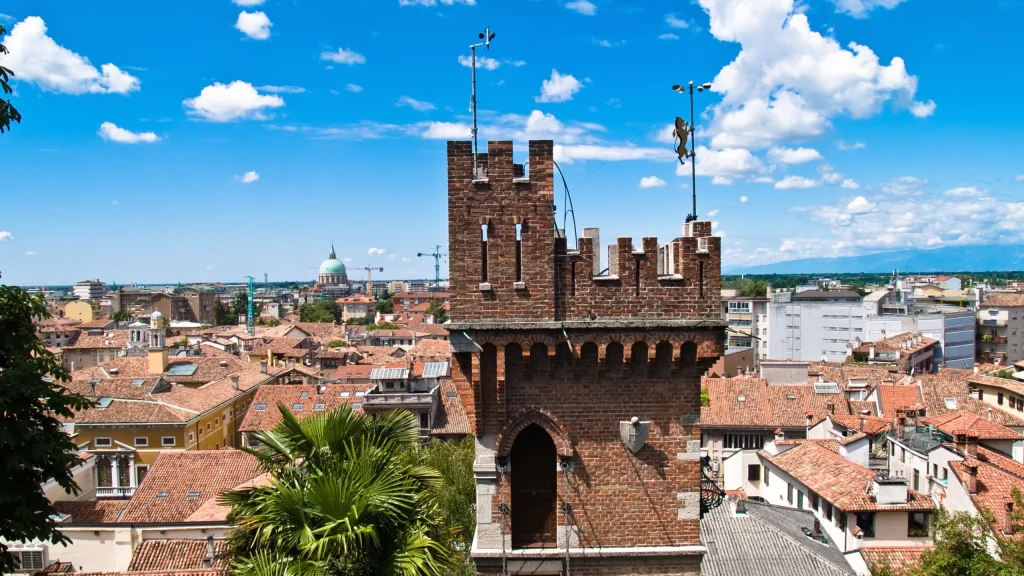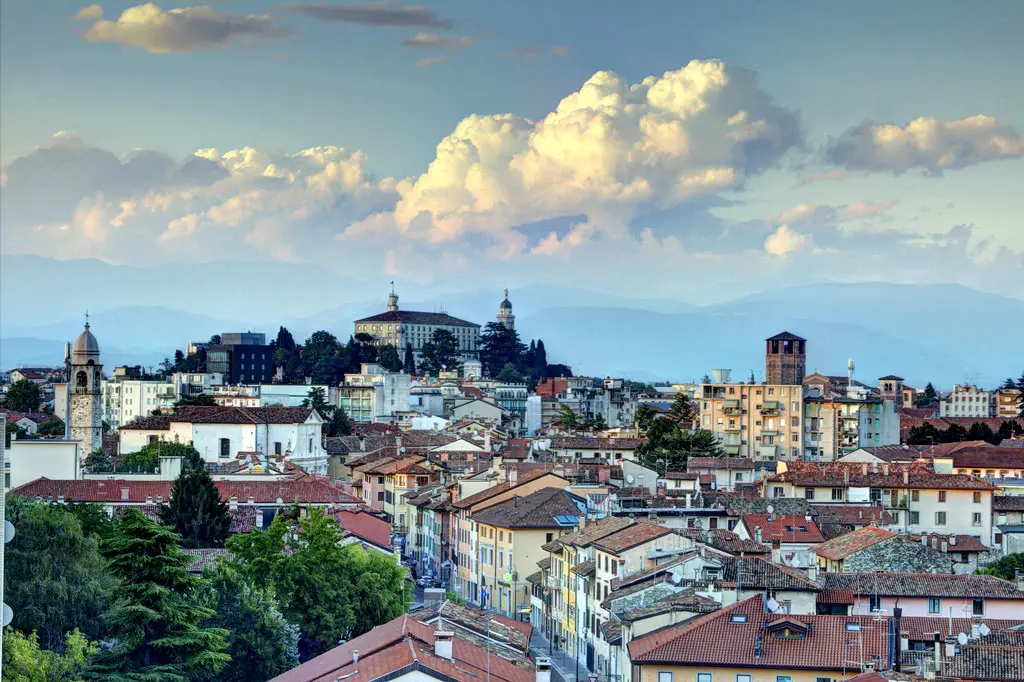
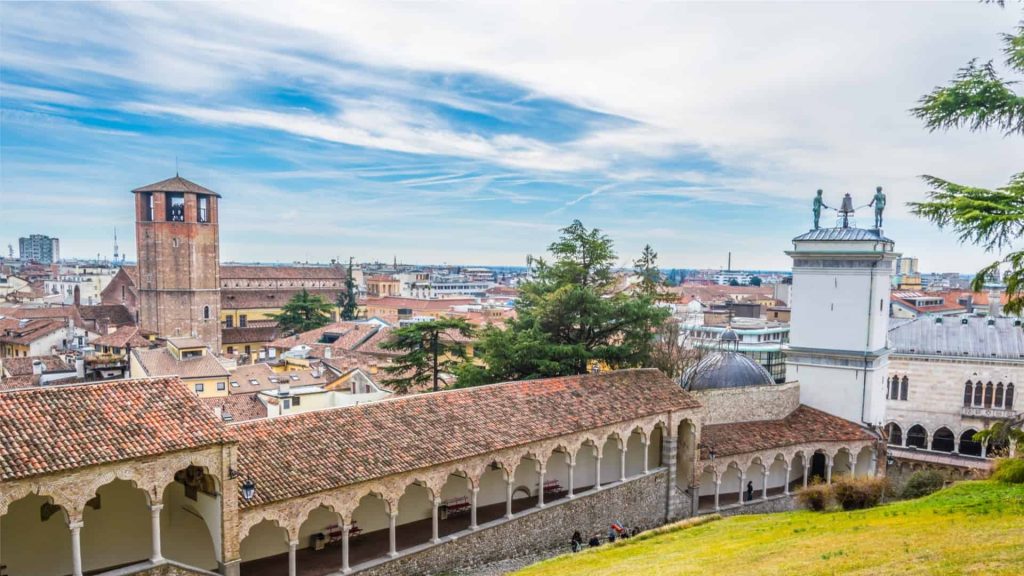
Despite its status as the capital of the province of the same name, Udine remains a quiet and rarely visited city. Most people familiar with the city likely associate it with football, as it is home to one of Italy’s oldest clubs, Udinese.
For almost its entire history, Udine has rivaled neighboring Trieste, which boasts a convenient coastline, while Udine is located in the relatively remote plains and foothills of its interior. It’s clear that at first glance, the more attractive cities on the map are those located west of Venice, such as Padua, Vicenza, and Verona. However, if you have a couple of days to spare, it’s worth heading north to enjoy prosciutto di San Daniele and montasio cheese in the beautiful Piazza della Libertà.
Attractions
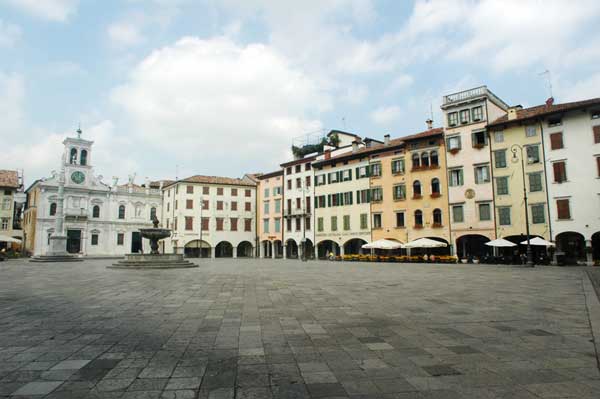
Udine’s historic center is a small square, approximately 1 square kilometer, formerly enclosed by fortified walls. The central feature of the district is the Piazza del Duomo, home to the Cathedral of Santa Maria Annunziata, considered the city’s main and most beautiful church. The church was founded in the early 13th century in the Romanesque style, but over time underwent modifications from Gothic to Baroque. Its current appearance was acquired in the 20th century.
Nearby is another church, the Oratorio della Purità. This building is notable for its beautiful frescoes, including works by artists such as Giambattista Tiepolo with his “Immaculate Virgin Mary” on the altar and Giandomenico Tiepolo with his “Angels in Glory.”
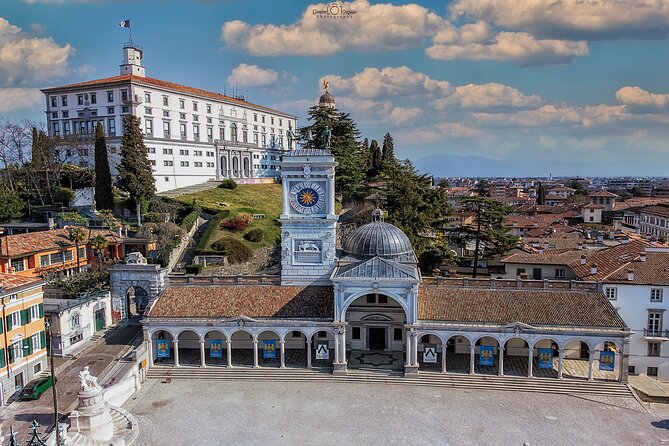
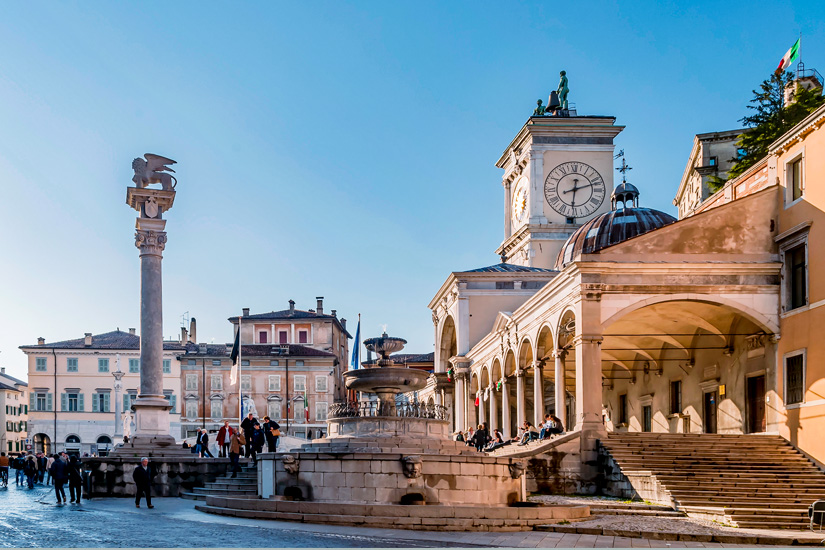
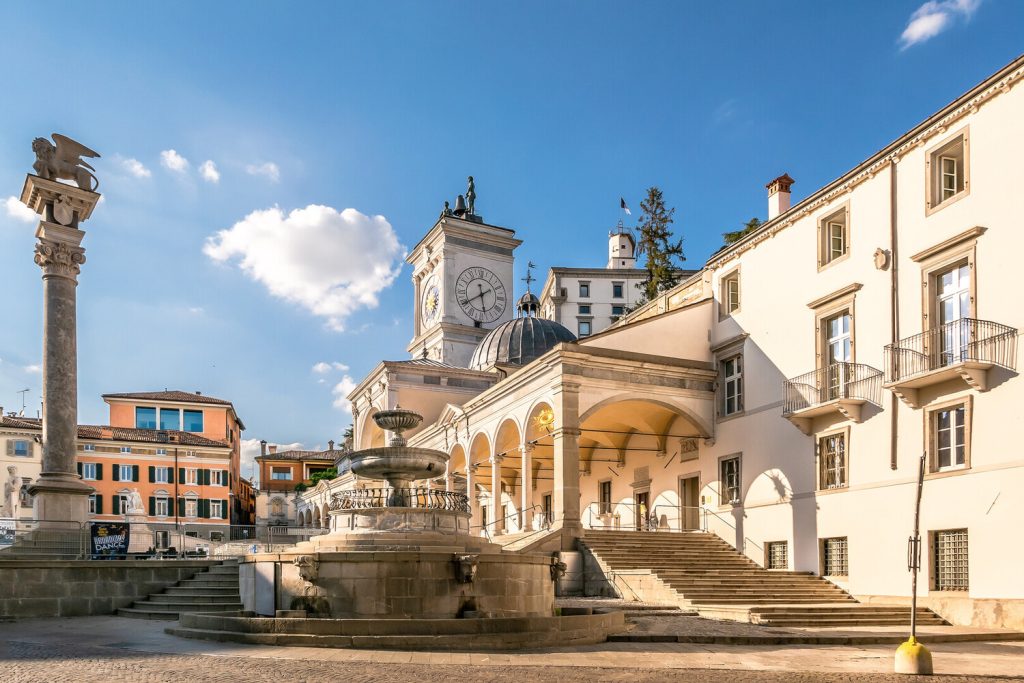
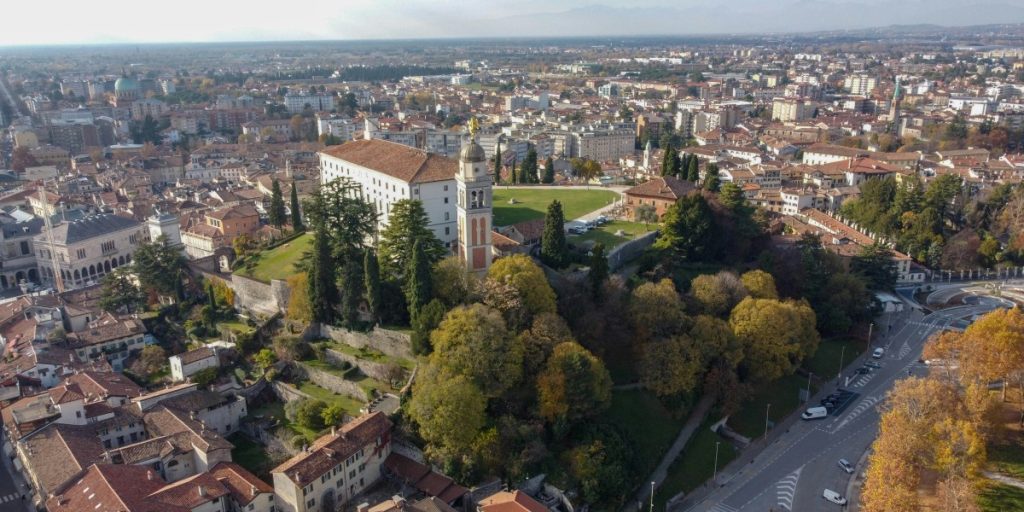
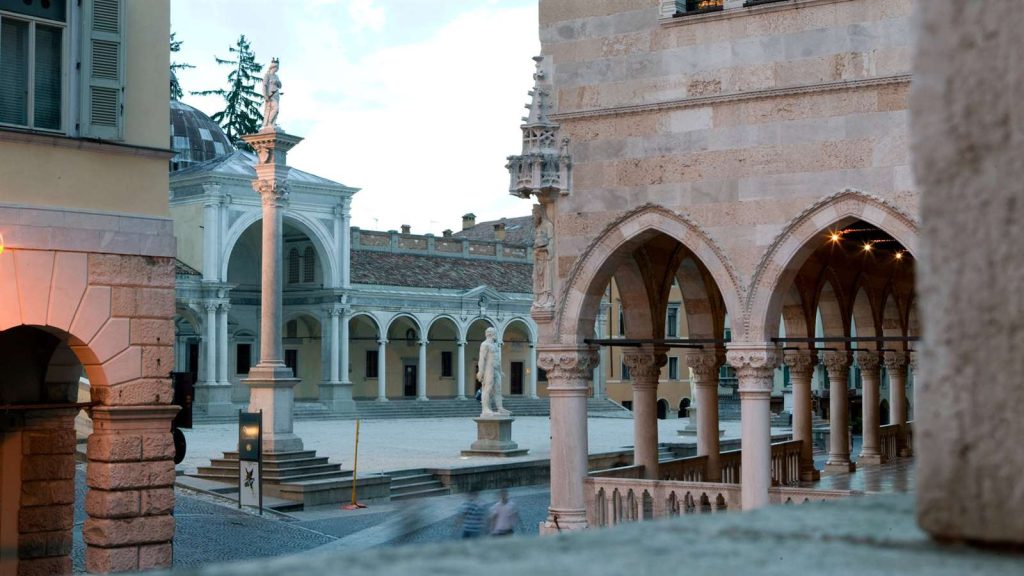
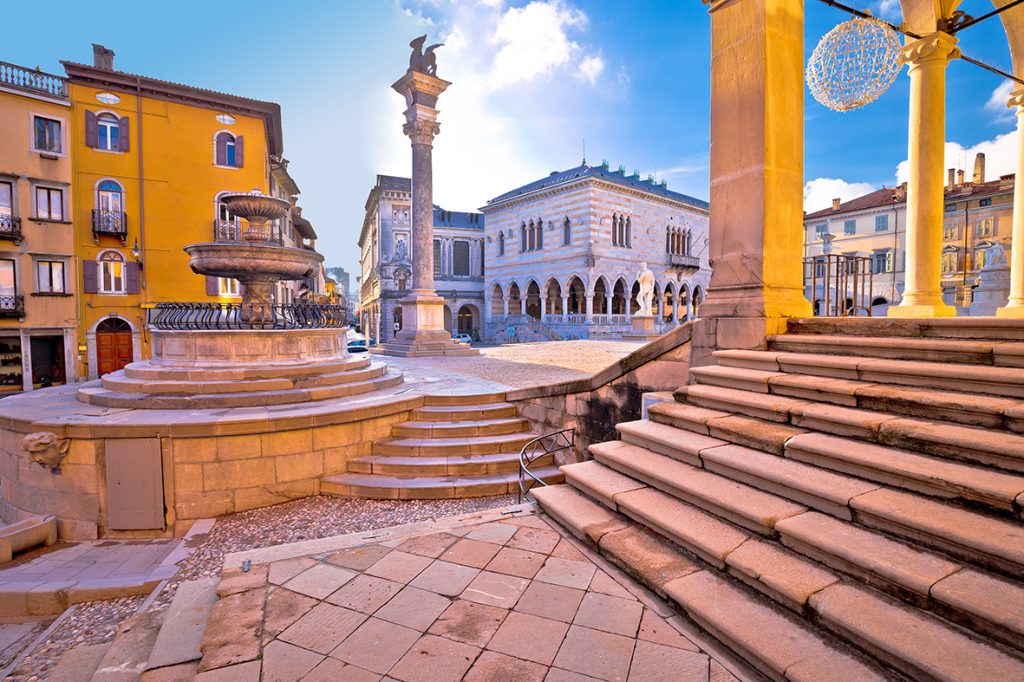
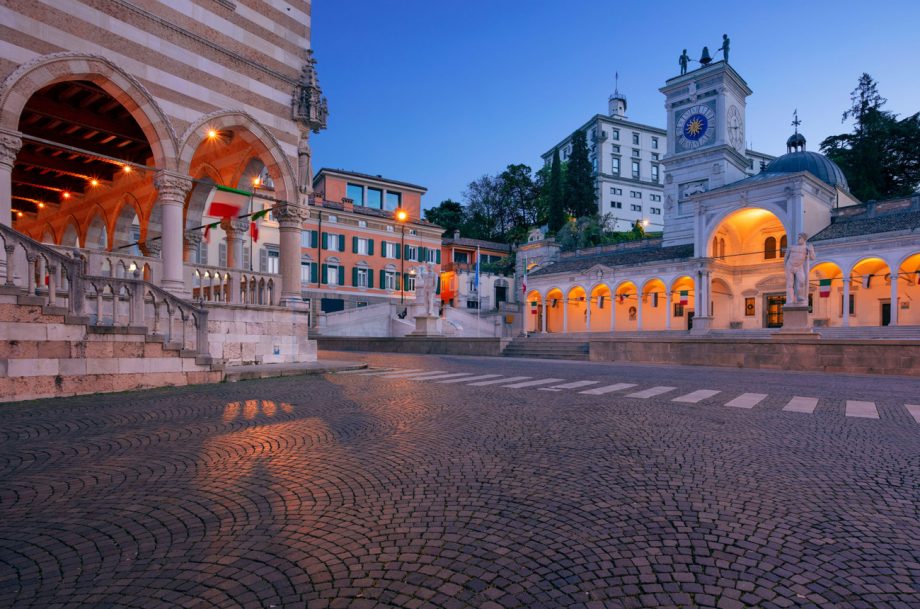
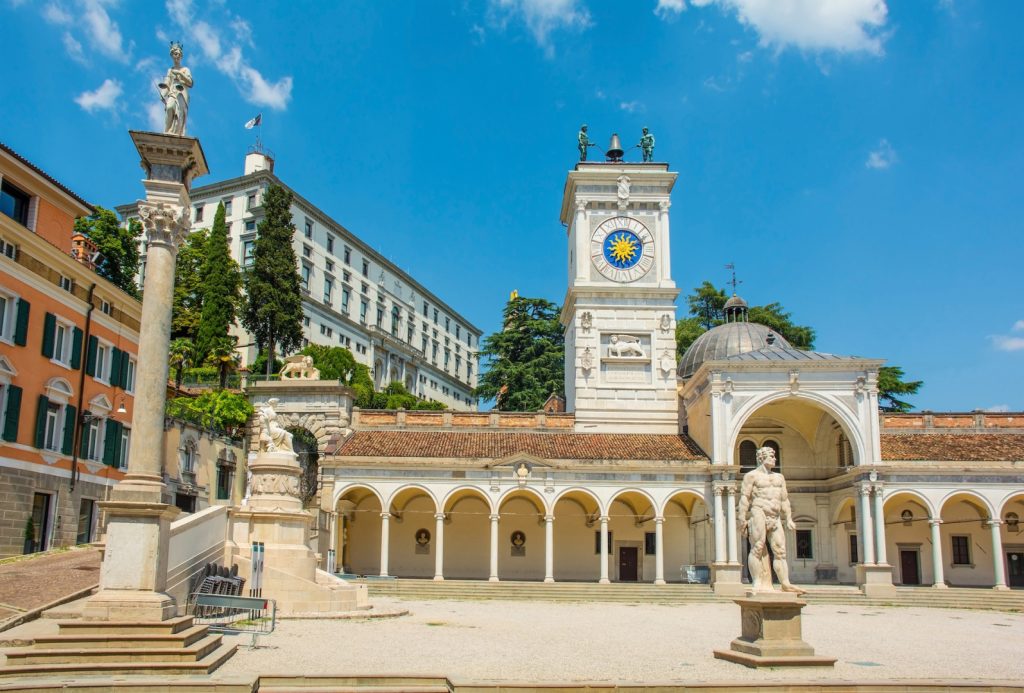
The main square of Udine is Piazza della Libertà. The square’s architectural ensemble is composed of Renaissance buildings blending in a unified style. Many consider the Libertà to be one of the most beautiful monuments of Venetian style outside of Venice itself. Among the buildings in the square is the Loggia Lionello, an elegant Gothic palazzo of white and pink marble. Opposite stands the 16th-century Chapel of San Giovanni with its Lippomando portico and clock tower. To the left of the chapel stands the Arch of Bollani with the Venetian Lion of St. Mark, leading to the castle hill, as well as the Peace Monument, erected by Napoleon in 1819.