Skopje, the capital of North Macedonia, is located in the Vardar River valley, surrounded by mountains. The city’s history begins with a Roman fortress, which later became the capital of the province of Dardania.
During the Ottoman Empire, Skopje experienced a period of prosperity, but was devastated by an earthquake in 1555. During the Yugoslav era, Skopje emerged as a major cultural center, but in 1963, a devastating earthquake virtually wiped the city off the map. Despite this, the Old Town, with its Ottoman buildings, survived. Today, it is the most picturesque part of the capital, with narrow streets, mosques, hammams, and oriental caravanserais.
Skopje Attractions and Entertainment
Most of Skopje’s historical monuments, which survived numerous earthquakes, are located on the left bank of the Vardar River, in the Old Town area, which is predominantly inhabited by Muslims of Albanian origin. Narrow, winding streets lined with low, two-story houses connect numerous mosques. The entire Old Town resembles one large oriental bazaar, filled with shops, hookah bars, colorful coffee shops, craft workshops, and Turkish baths. The city’s oldest bathhouse, Daut Pasha, now houses the National Gallery of Macedonia.
Among the ancient buildings of the Old Town, it’s easy to miss the Orthodox Church of the Holy Savior. According to the rules in Muslim Skopje, no Christian church could be taller than the most modest mosque, so this church is half-buried. It’s worth a visit for its impressive 6-meter-tall carved walnut iconostasis, executed in the Balkan Baroque style.
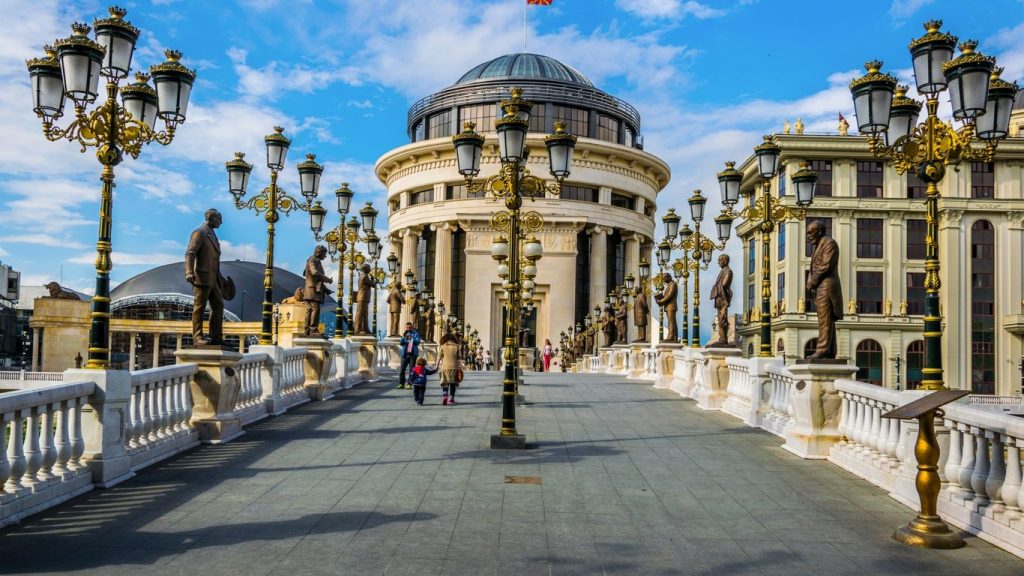
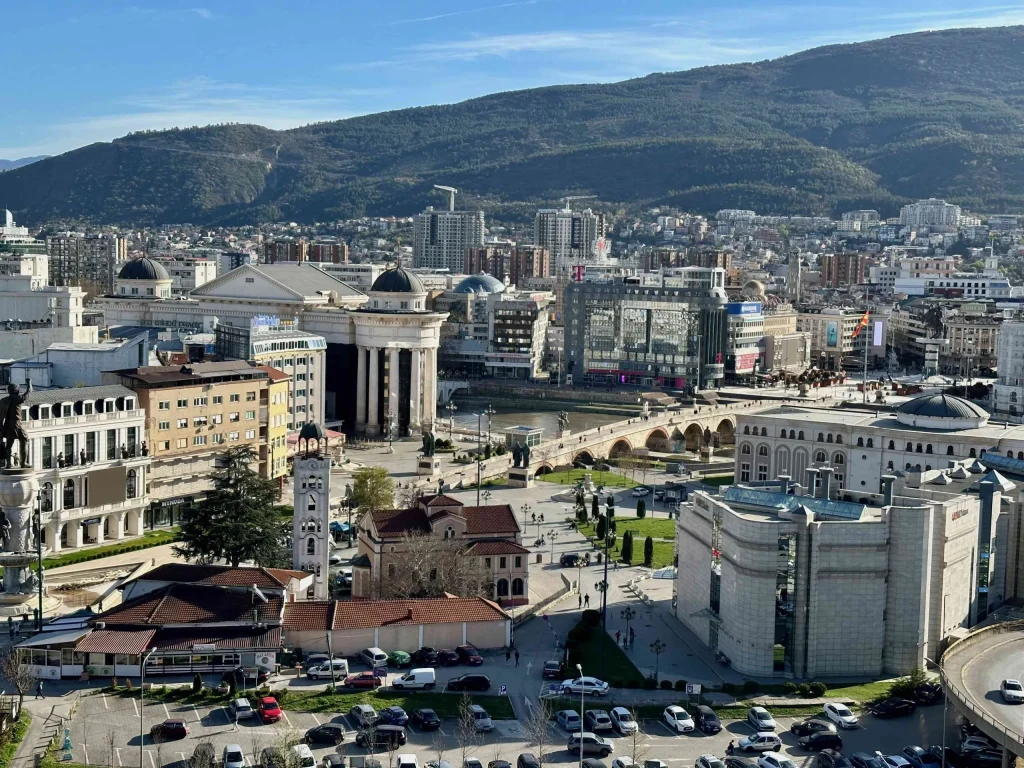
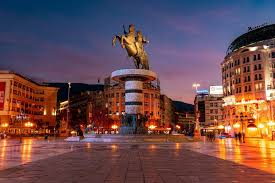
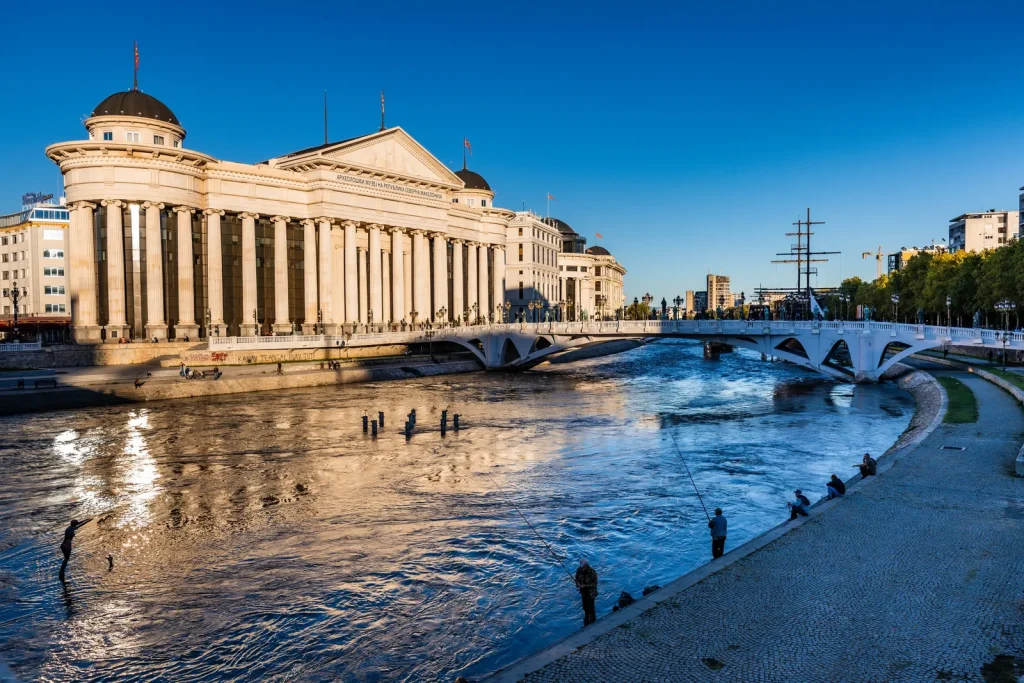
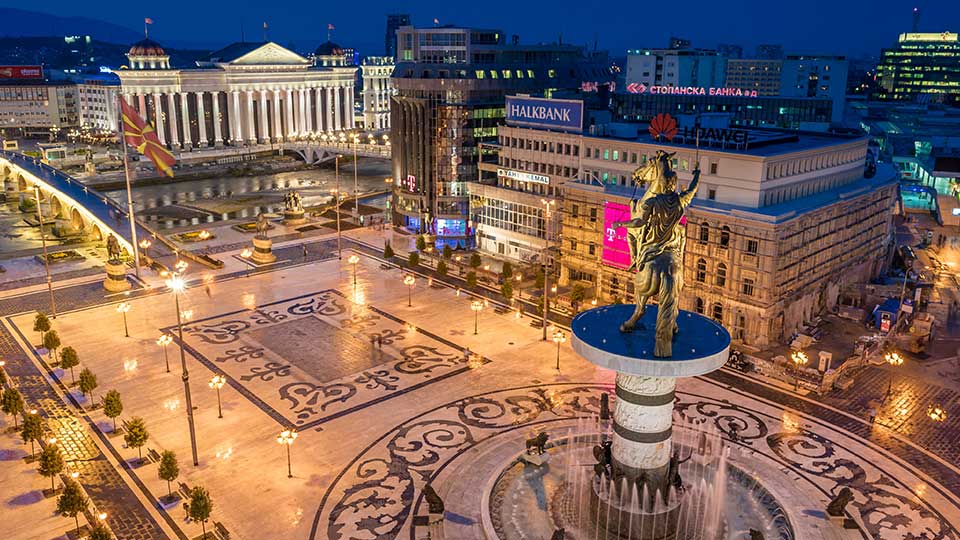
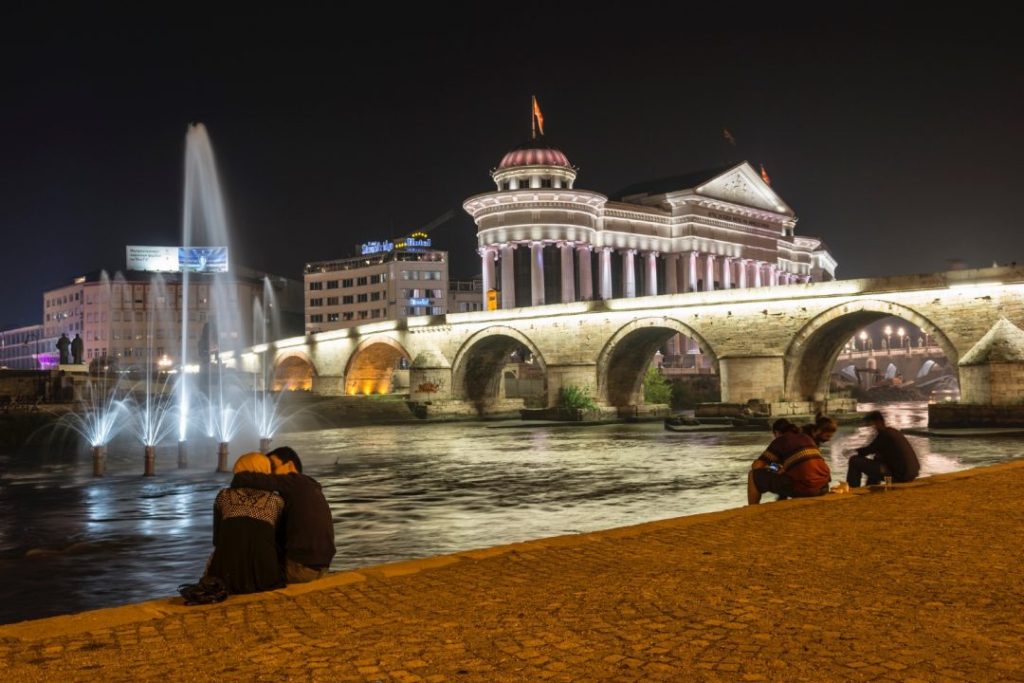
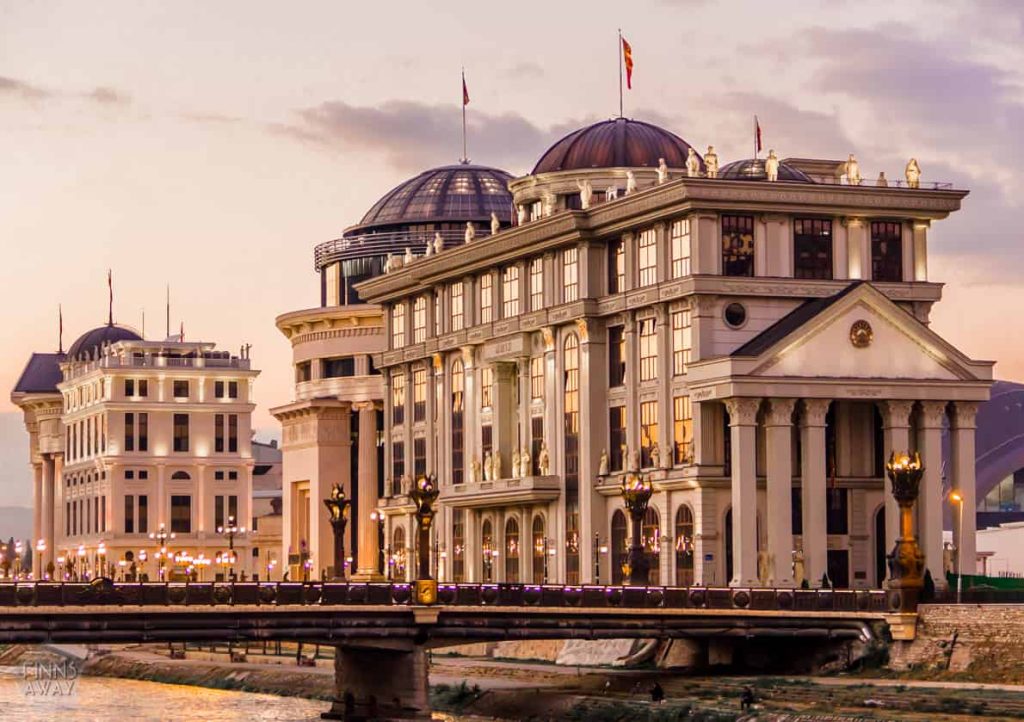
On the western side of the Old Town stands the Kale Fortress, built by the Byzantines and later fortified by the Ottomans, who turned it into an important strategic outpost. The medieval Stone Bridge, spanning the Vardar River, connects the Old Town with Zarečje, Skopje’s renovated center, boasting majestic classical-style buildings erected as part of the Skopje 2014 project. Macedonia Square, the city’s largest, is dominated by a gigantic equestrian monument to Alexander the Great, as tall as an eight-story building, along with 23 monuments to other historical figures. The square is especially impressive at night, when the buildings and musical fountains are illuminated.