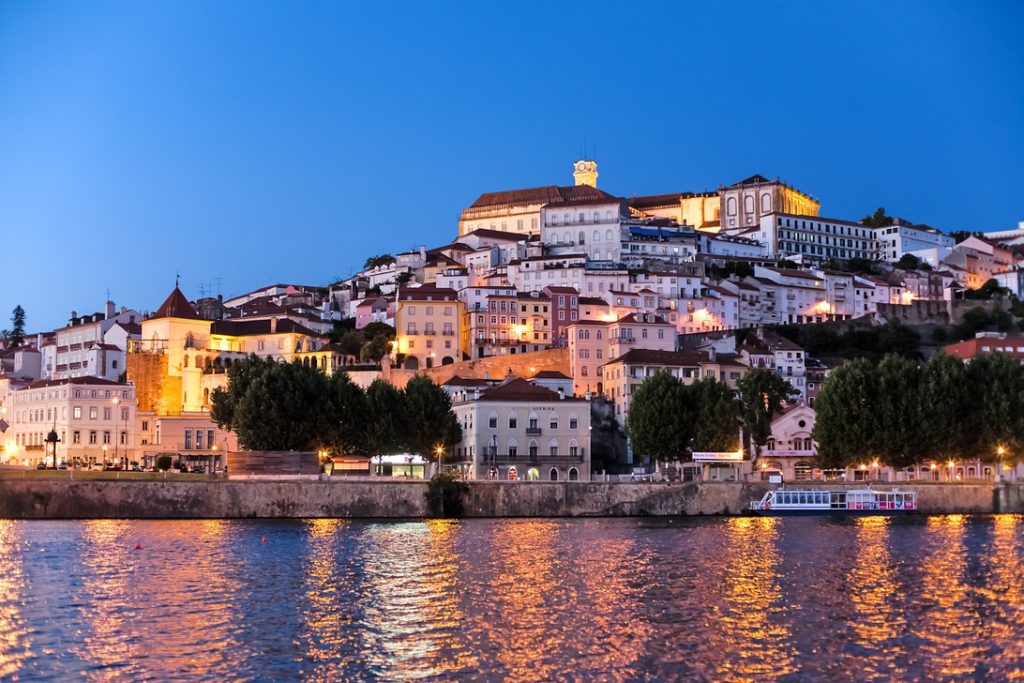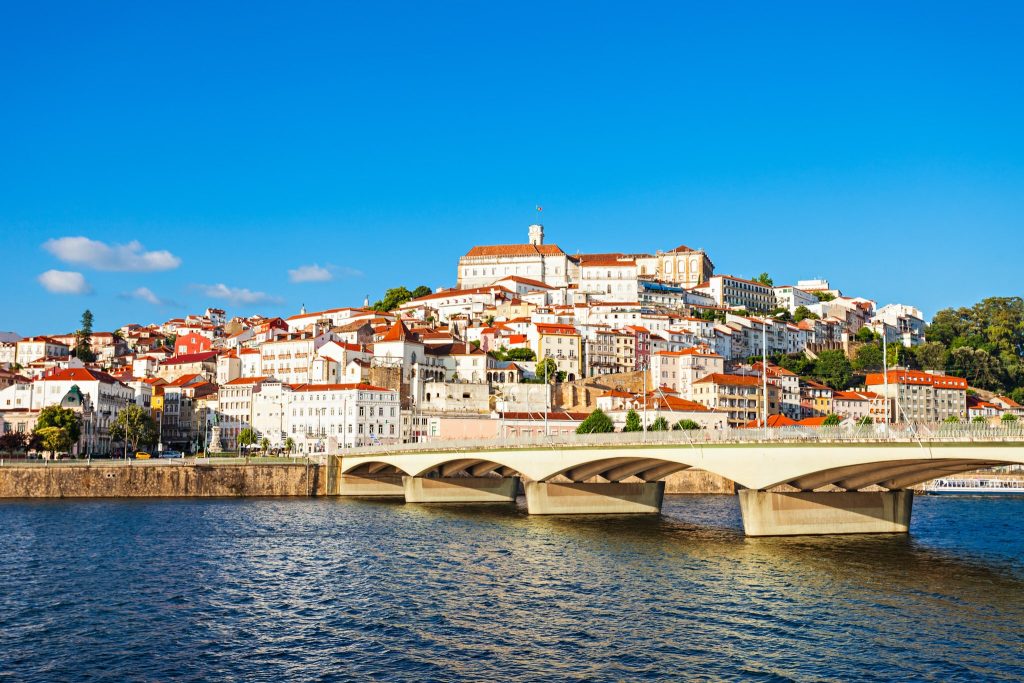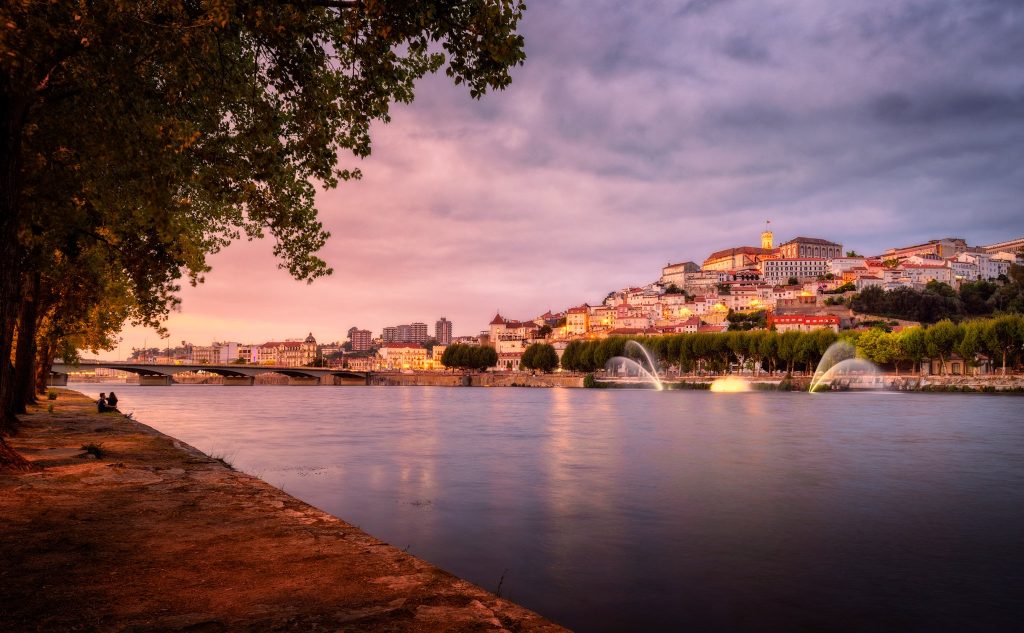
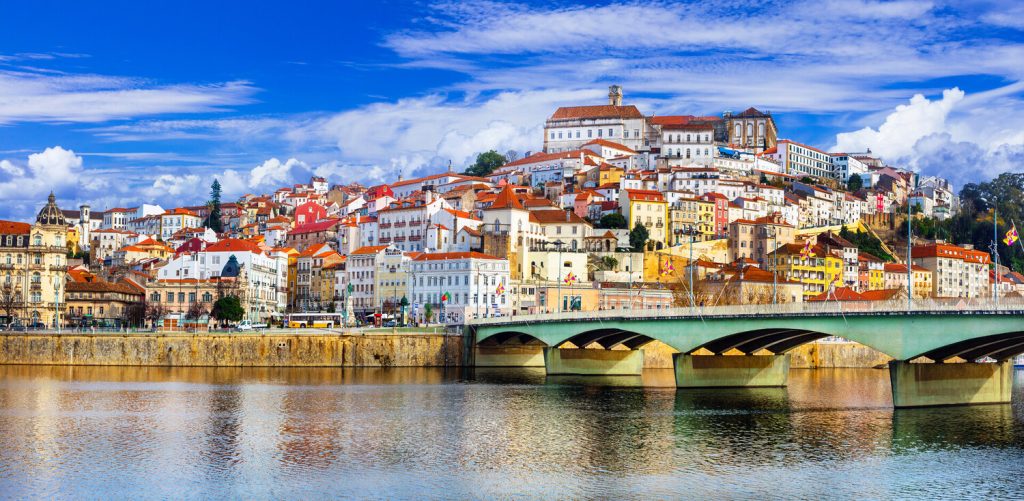
Coimbra, the former capital of Portugal in the 12th and 13th centuries, is famous for its oldest university in the country, a Baroque library, and numerous churches and monuments, including the former Archbishop’s Palace. In May, at the end of the academic year, the city comes alive with the Quema das Fitas festival, where graduates burn their robes, attend nightly concerts, and organize parades.
Coimbra Attractions and Entertainment
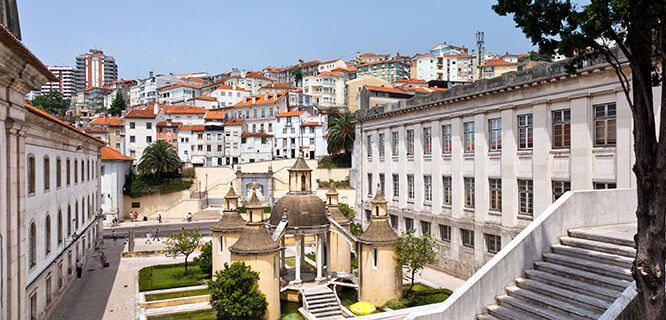
Like many cities with a rich history, Coimbra is divided into two large districts: the Old Town, or Upper Town, which is the oldest part, surrounded by medieval walls, and the Lower Town, which is larger and extends beyond the ancient walls.
The Upper Town attracts tourists with its historical landmarks, while the Lower Town attracts tourists with its shops, restaurants, and modern entertainment. You can enter the Upper Town from the Lower Town through the ancient Arco de Almedina or Torre de Anto gates. Once through, you’ll find yourself on narrow cobbled streets where ancient buildings stand alongside the University’s student dormitories.
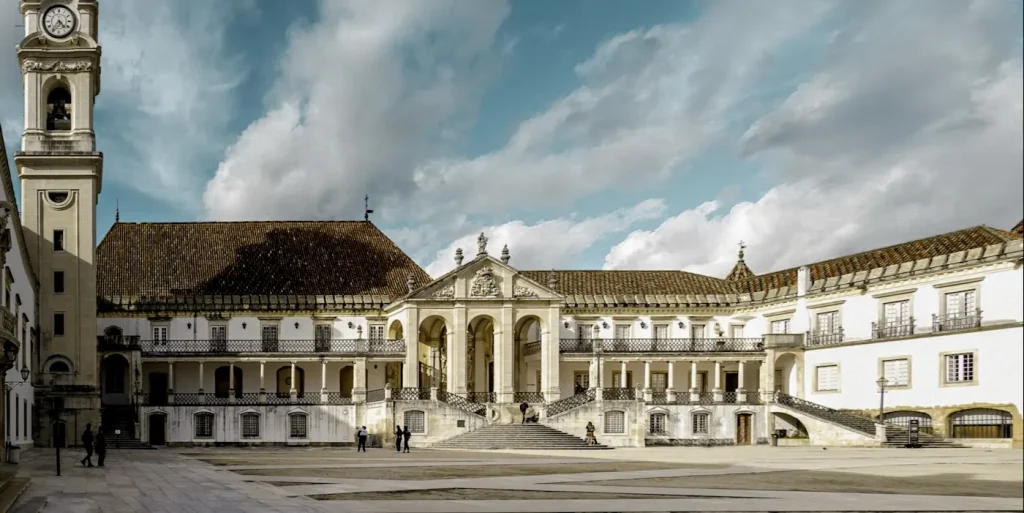
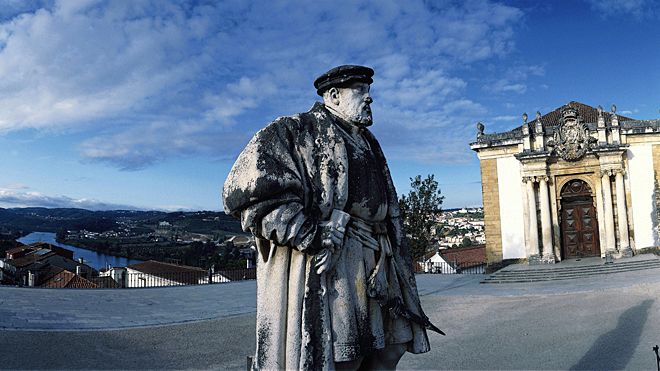
The University is Coimbra’s main landmark. It sits at the highest point of the Upper Town, towering over it. Students were once forbidden to leave the Upper Town. The University building is built in the Baroque style, and its chapel houses an ancient bell, known to students as “The Goat.” The bell’s ringing once signaled the start and end of classes, but today it simply serves as a reminder of the institution’s glorious past.
Next to the University is the Old Library, founded by King João V. The library’s portal is adorned with two columns, and the interior is richly decorated with ornaments and paintings in gold, blue, and red. The tables in the reading rooms are made of precious wood and lavishly inlaid. Near the University are two churches significant to Coimbra: the Sé Velha Cathedral and the Sé Nova Cathedral. Sé Velha was built in the 11th century to commemorate the Christian victory over the Moors and became the city’s religious symbol. Portuguese kings were crowned here, and the city’s first governor, Sisinando, is buried here. The cathedral, built in the Romanesque style, resembles a fortress more than a church. Its interior displays a clear Moorish influence, and its most striking feature is the altar with Romanesque capitals, titled “The Assumption of the Virgin Mary.”