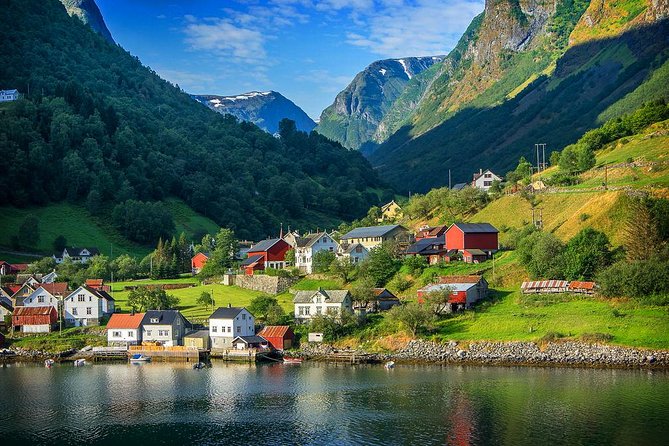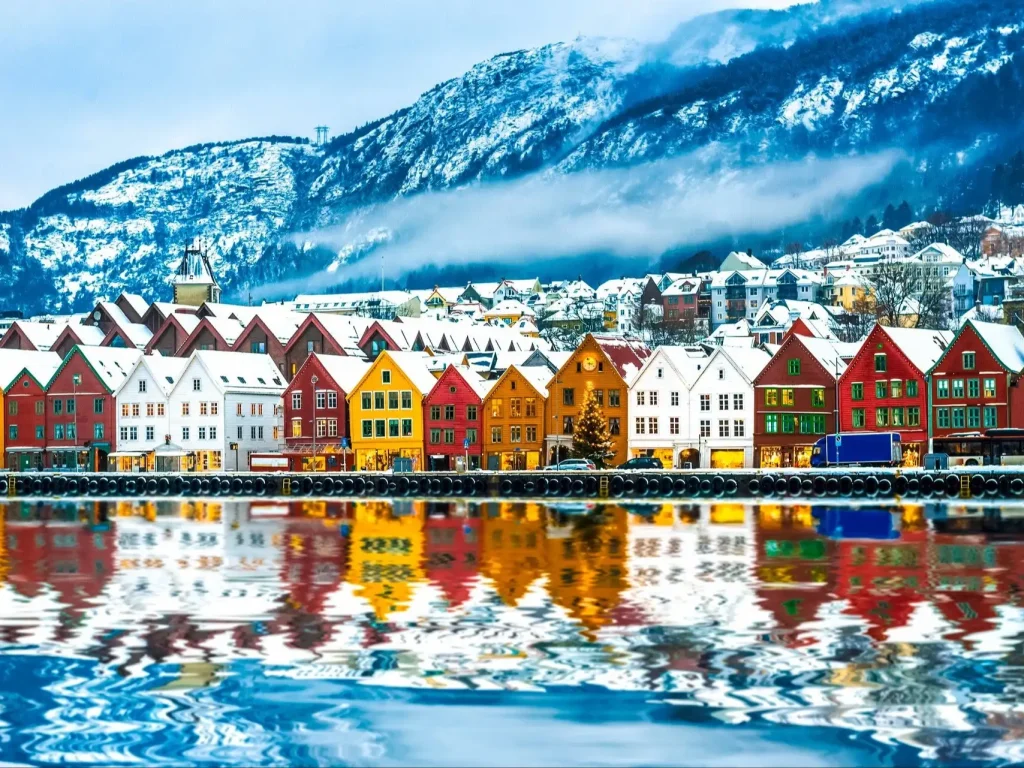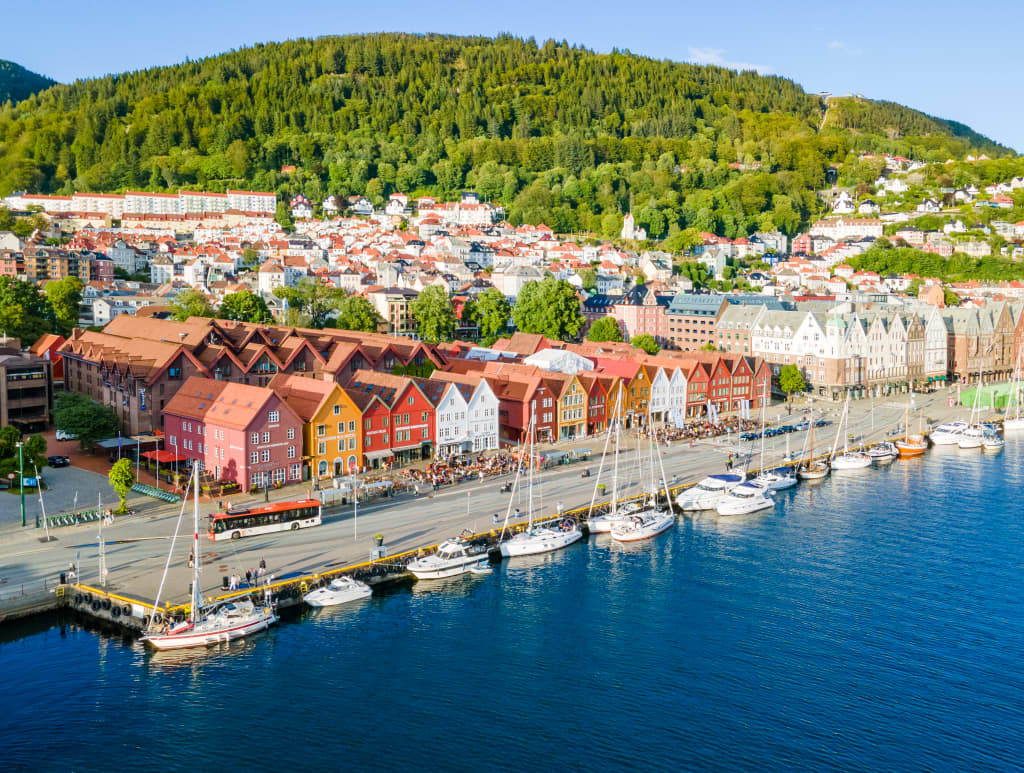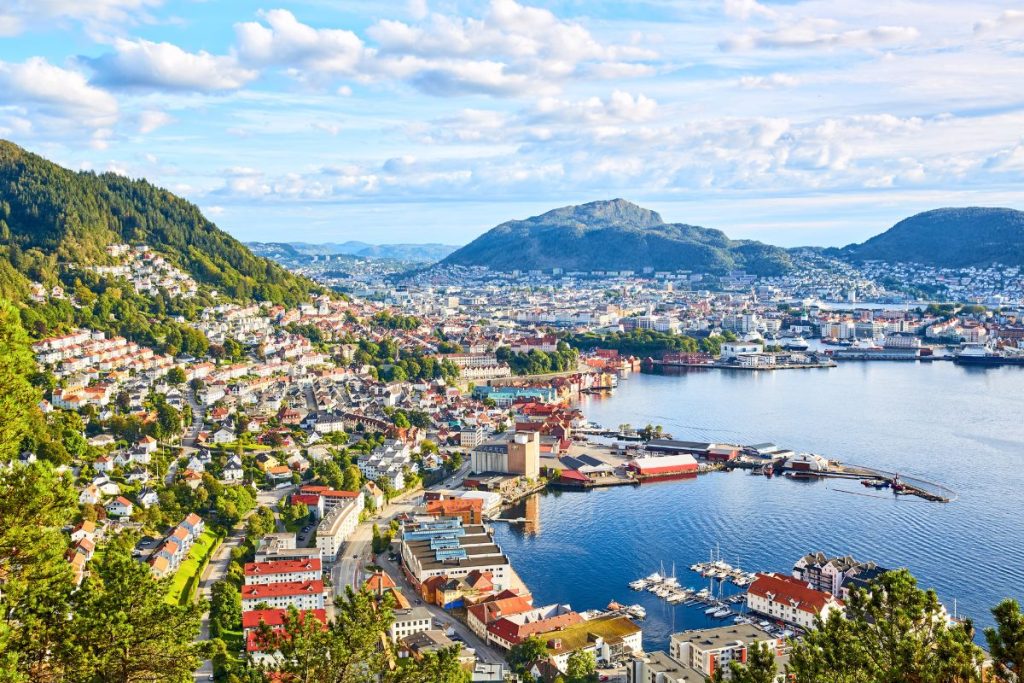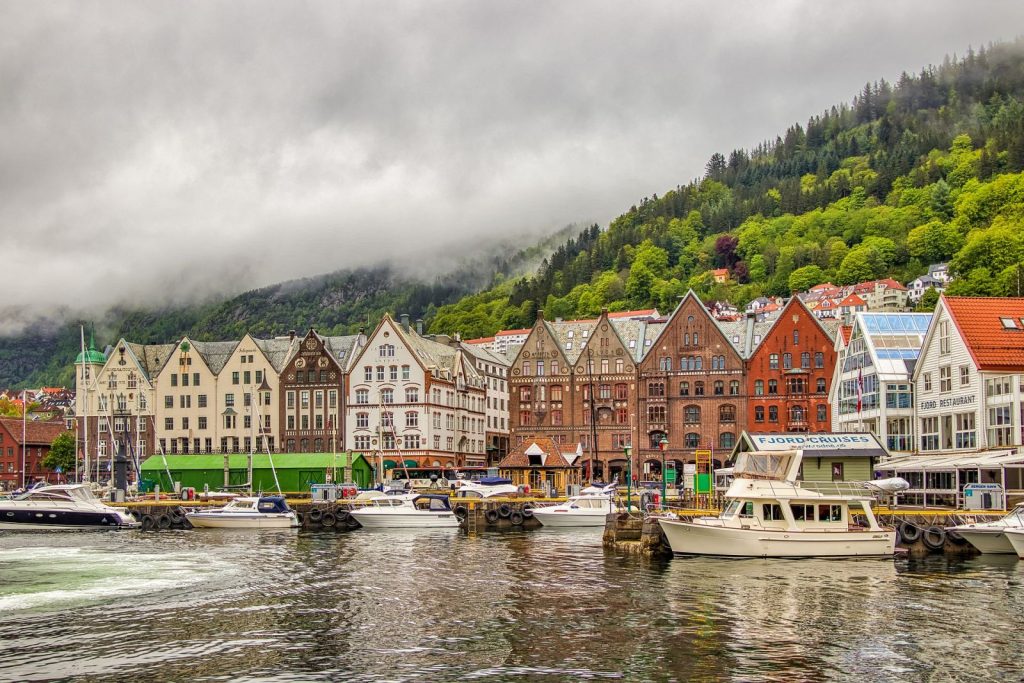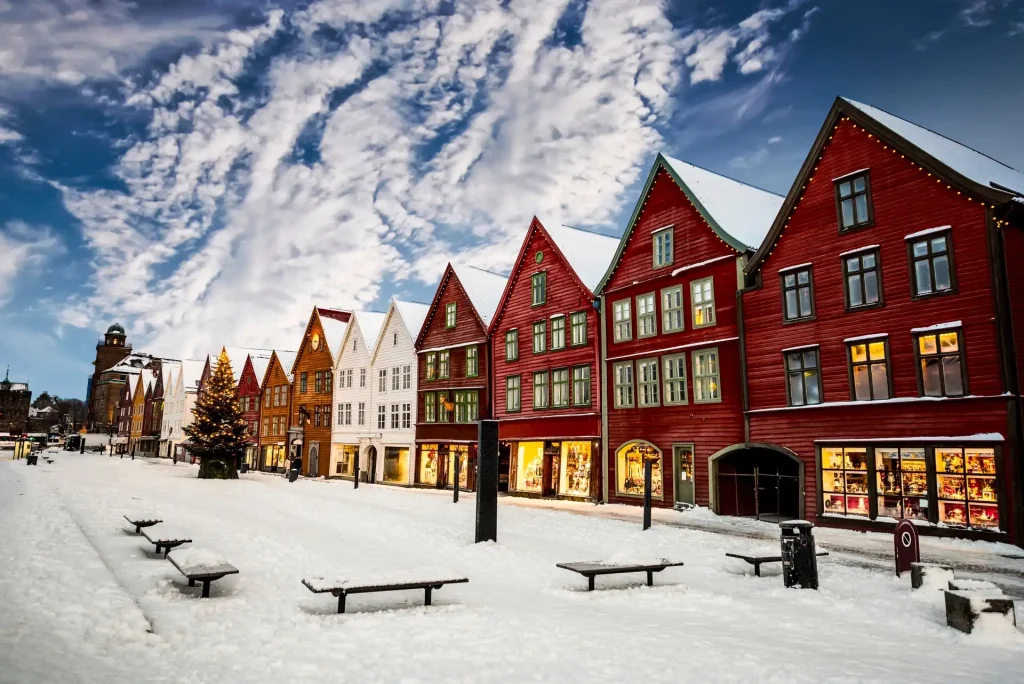
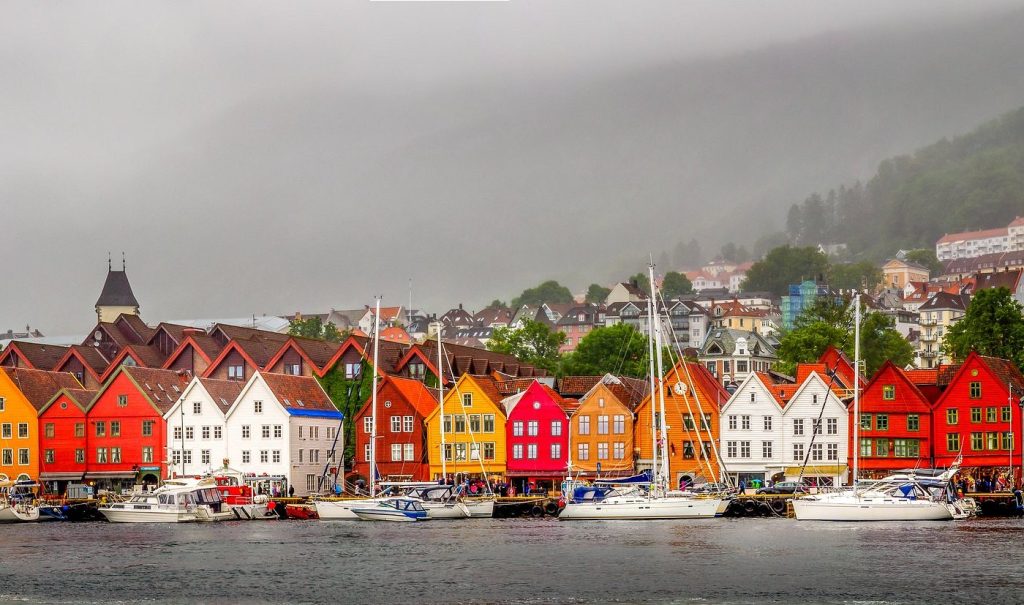
Bergen, Norway’s second-largest city and former capital, is today known as the largest wooden city in Europe, with its charming “gingerbread” appearance. Tourists are generally few and far between, as most come en route to the fjords. Bergen is an important port, offering easy access to these picturesque areas.
Bergen Attractions and Activities
Bryggen, a UNESCO World Heritage Site, is considered one of Norway’s most famous medieval settlements. For 400 years, the Bryggen quarter was controlled by Hanseatic merchants. It houses the Hanseatic League Museum, and the preserved halls of the Hanseatic assembly, Skjøtstuene, are also preserved.
Bergen’s galleries, overlooking Lake Lille Lungegardsvann, house superb collections of paintings. On the same street is the Bergen Art Museum, home to a unique collection of works by Edvard Munch. The area is also home to the Bergen Centre for Contemporary Art and the Western Norwegian Museum of Applied Arts.
Other notable attractions include the Museum Bryggen, St. Mary’s Church, the Theta Museum, dedicated to the resistance movement during the German occupation of Norway during World War II, the Royal Residence and Reception Hall (Håkonshallen), the Fløibanen Funicular, and the Fish Market.
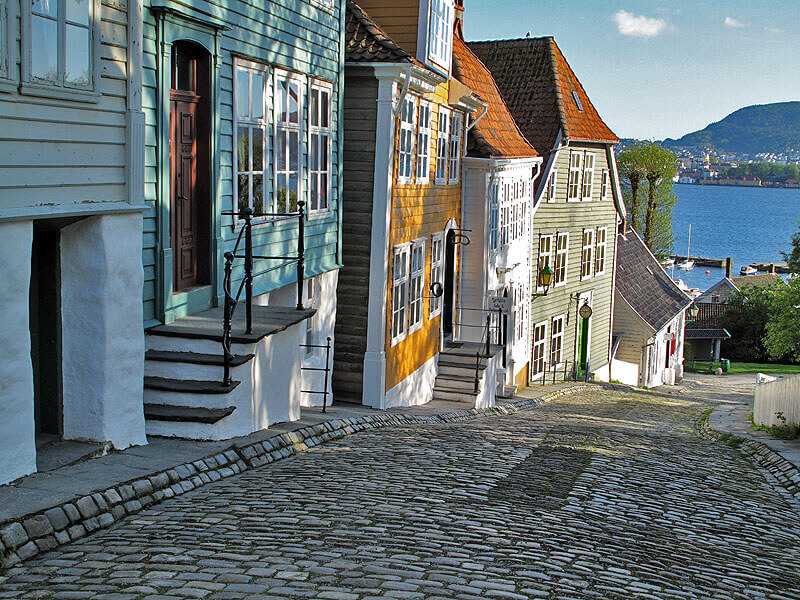
Not far from Troldhaugen is the Fantoft Stave Church. The Old Bergen Museum is an open-air museum displaying over 40 wooden houses illustrating Bergen’s 18th- and 19th-century architecture. Bergen also boasts two preserved 18th-century manors: Damsgård and Alvøen.
Visit Troldhaugen, the house and museum of the famous Norwegian composer Edvard Grieg. The cliff-hewn grave of Grieg and his wife Nina is also located there. The interior of the house dates back to 1907. In 1985, Trollsalen, a 200-seat concert hall for chamber music, opened.
The Fløibanen funicular takes tourists to a variety of marked routes through picturesque landscapes in seven minutes. Bergen is also an excellent destination for sailing.