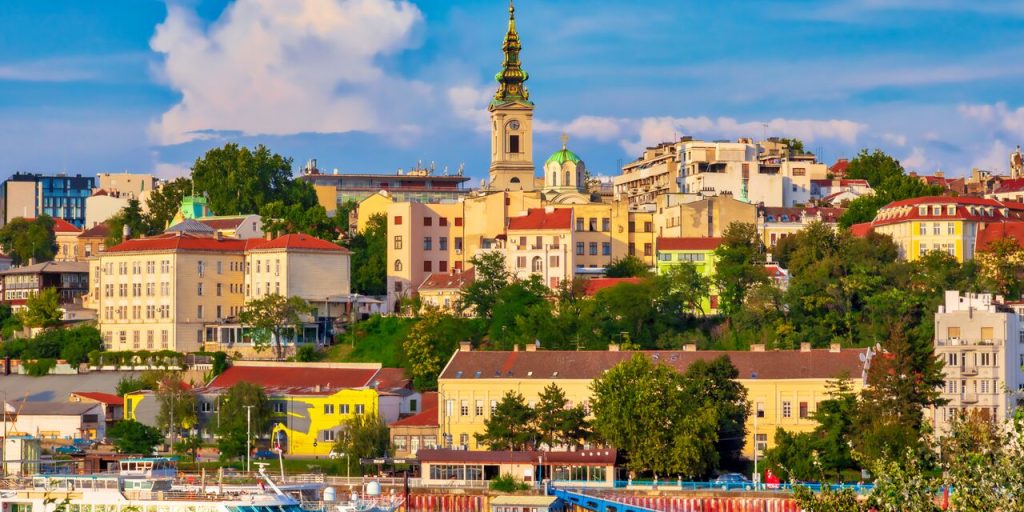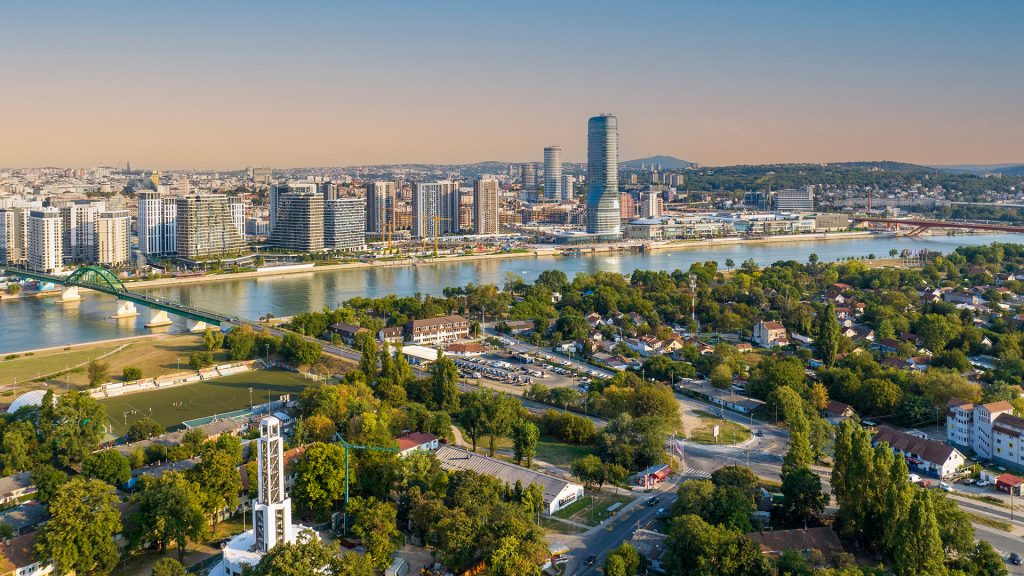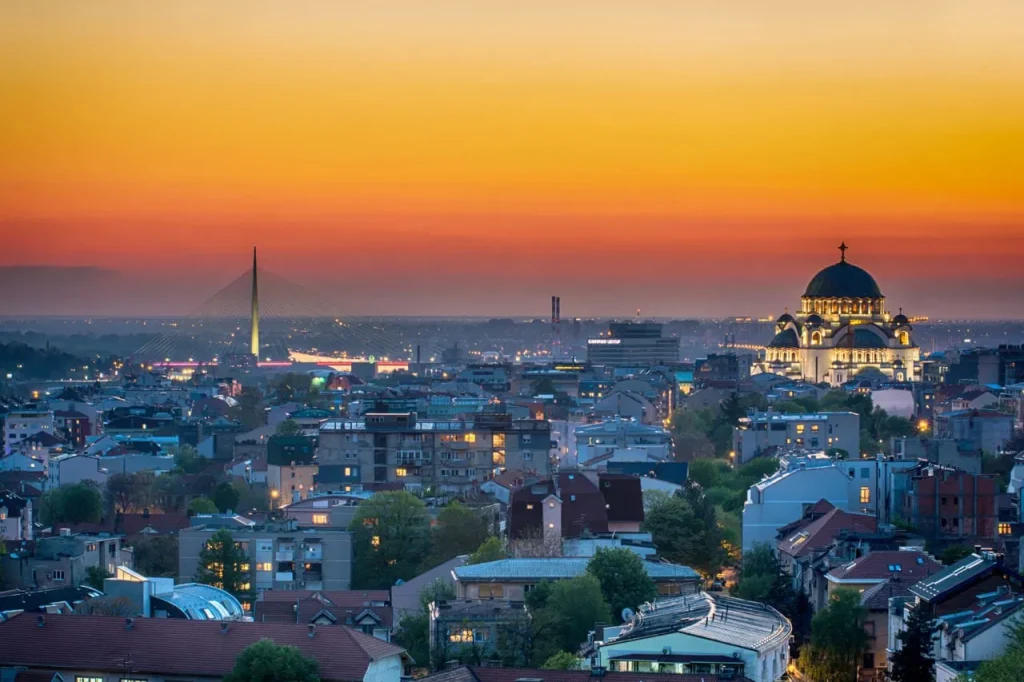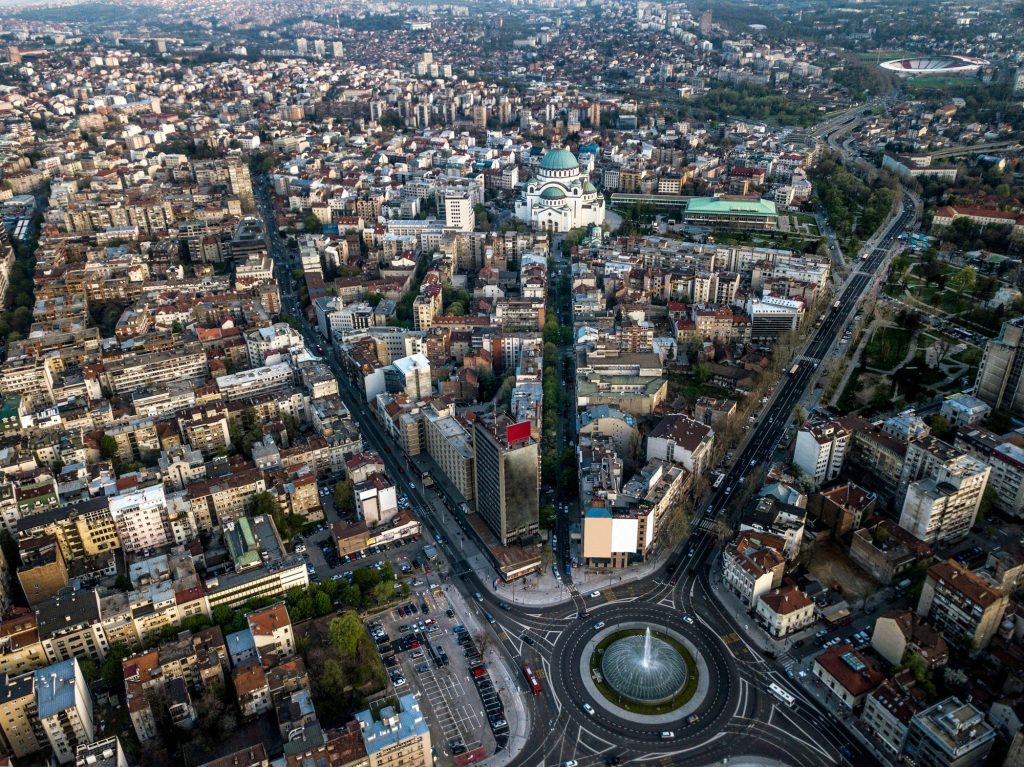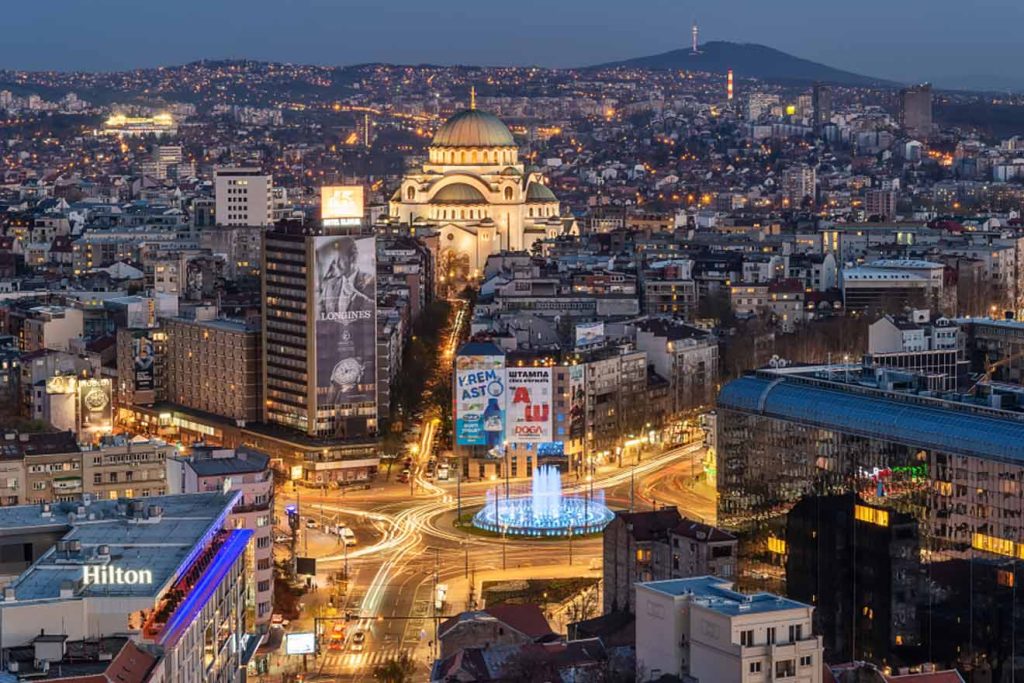
Atmospheric and welcoming Belgrade, the capital of Serbia, is one of the oldest cities in Europe and is considered the gateway to the Balkans. Situated at the confluence of two rivers, the Danube and the Sava, it was a vital hub on ancient trade routes. However, this advantageous location brought both prosperity and adversity: for centuries, the city was the target of incessant wars, and its history has hardly seen a century of peace and prosperity.
Entertainment and Attractions
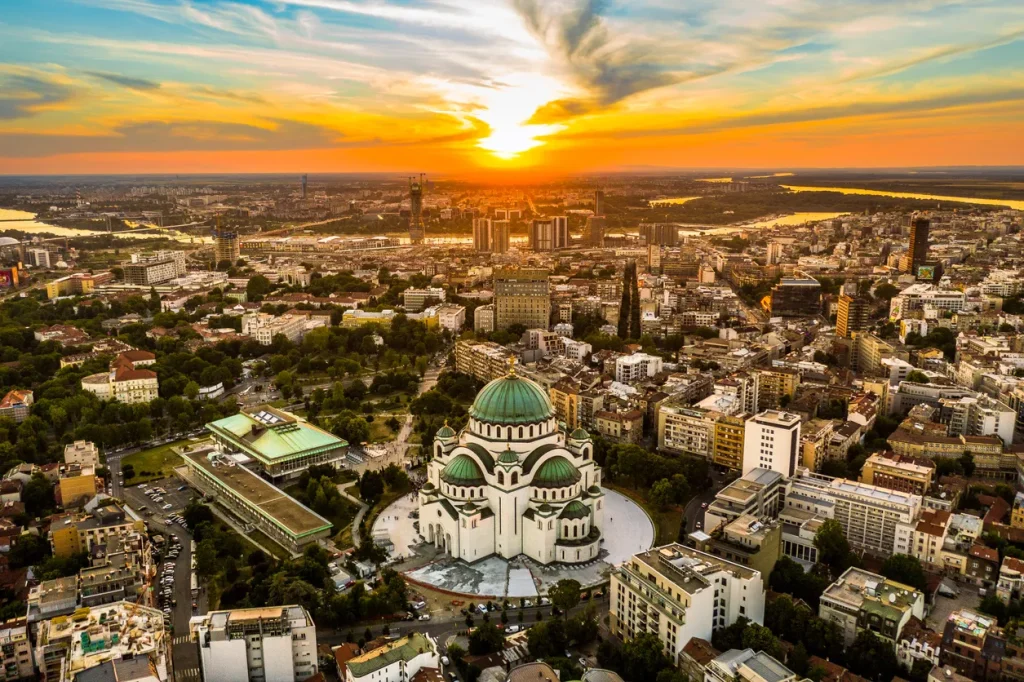
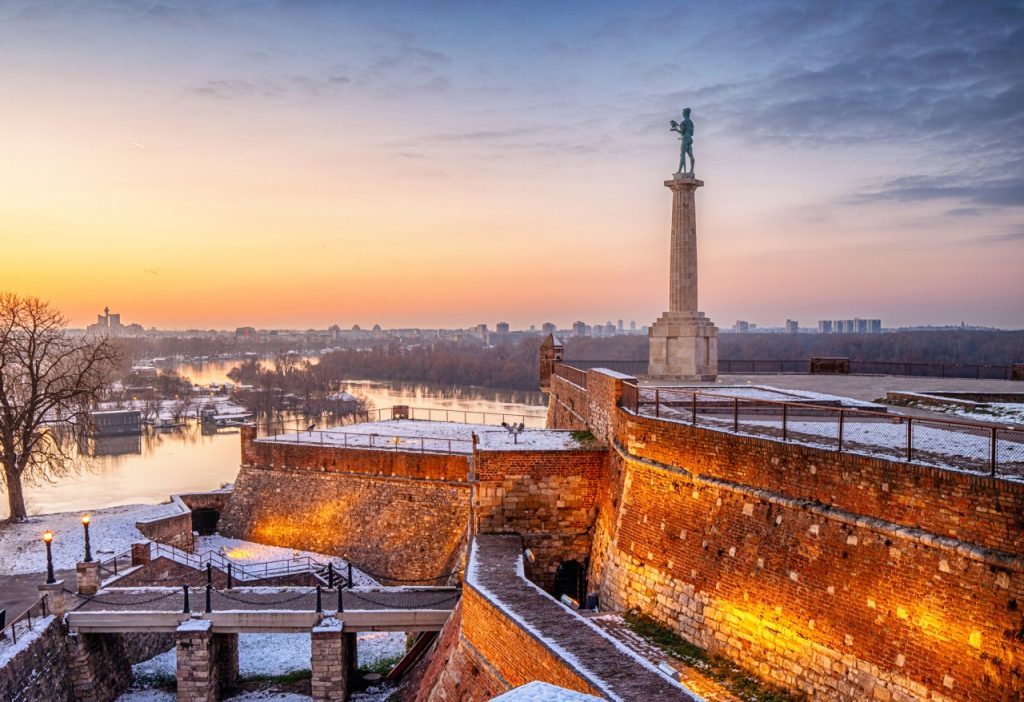
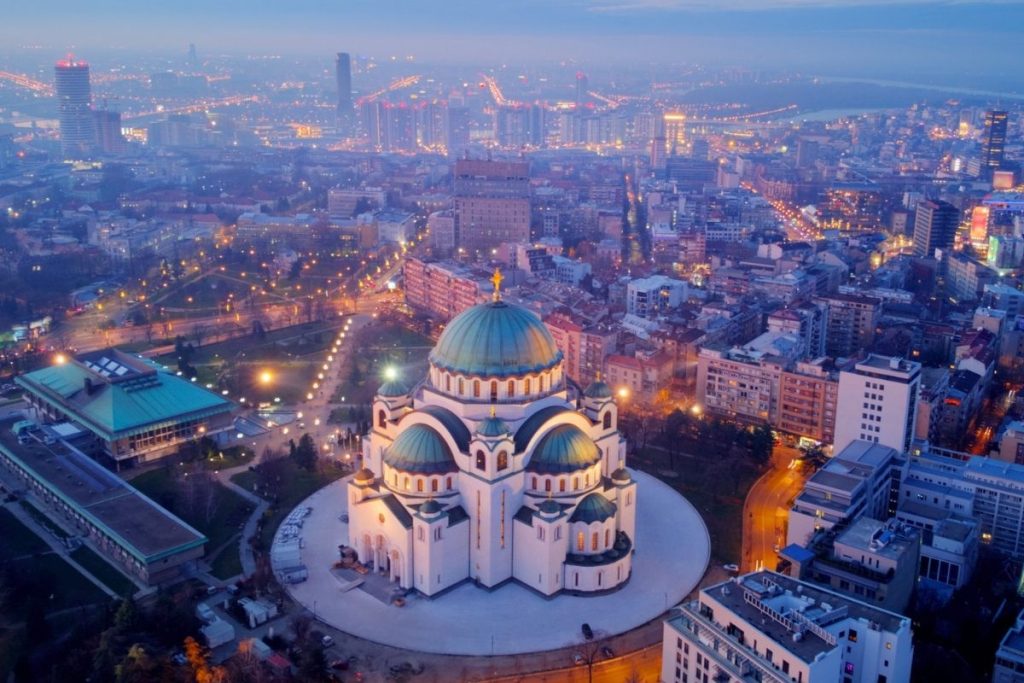
Belgrade, with its rich history, is a veritable treasure trove of architectural and cultural attractions. The city’s crowning jewel is the Belgrade Fortress, perched atop a 125-meter hill. Within its massive walls, traces of various eras can be found: Roman ruins, remnants of Byzantine structures, artillery fortifications, and ancient churches. Within the fortress lies Kalemegdan Park, a beautiful landmark. One of Belgrade’s main religious landmarks is the Cathedral of Saint Sava, the largest church in the Balkans. Architecturally, it resembles Byzantine masterpieces, but has distinctive Serbian features—four towers around a central dome. Construction of the cathedral began in 1894, but its completion dragged on for many decades.
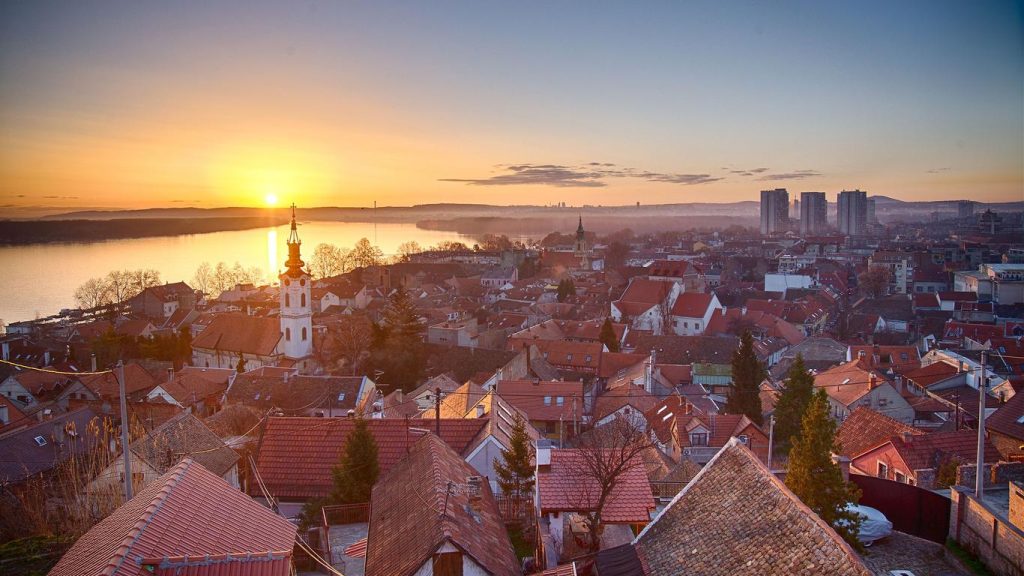
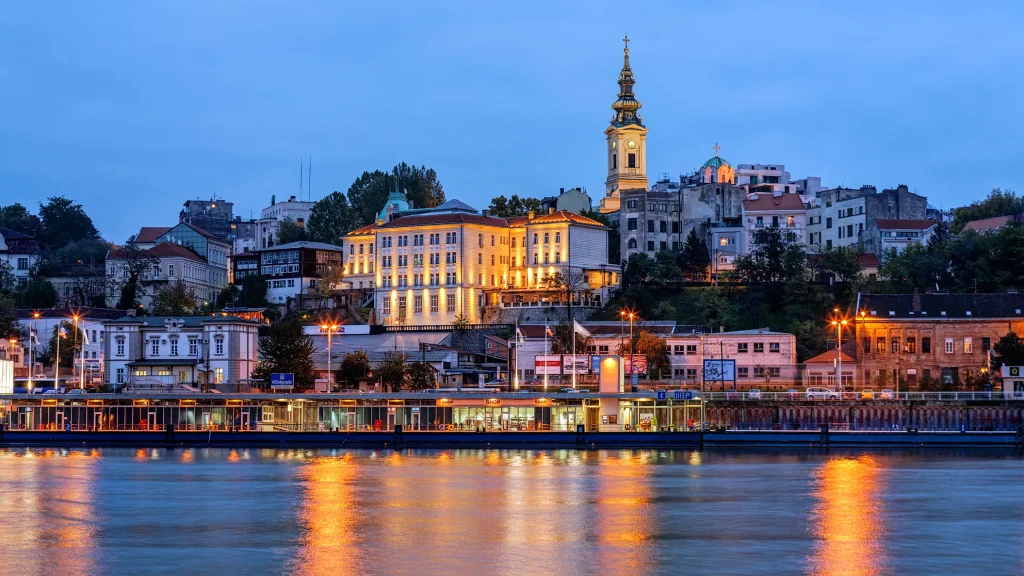
Belgrade’s only surviving mosque, Bajrakli, was built in the 16th century and represents a unique legacy of the Ottoman period. For lovers of medieval architecture, Gardoš Hill is a must-see. Its narrow streets, historic houses, and the Millennium Tower, with their magnificent views, evoke a bygone era. At the foot of the hill, on the waterfront, you’ll find the famous floating restaurants known as “splavs.”
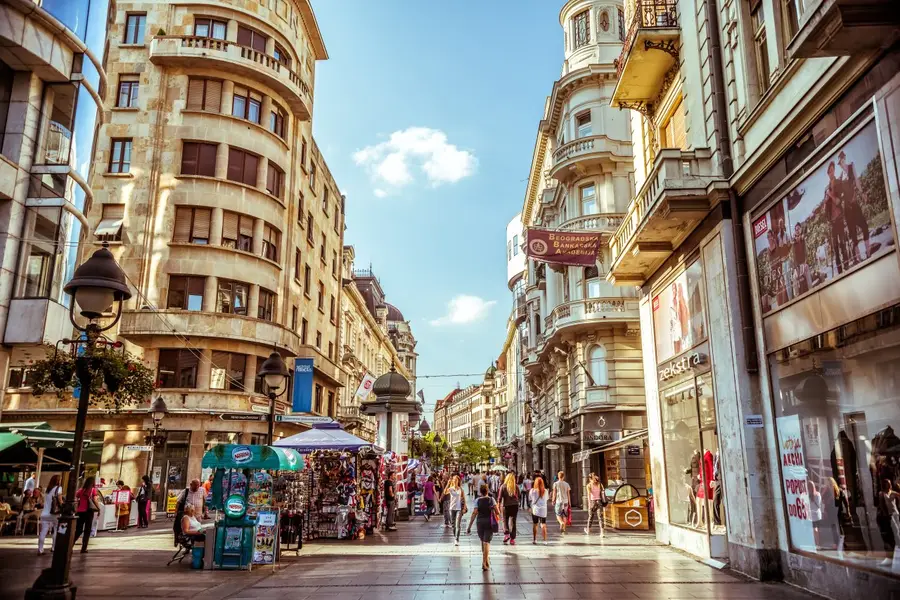
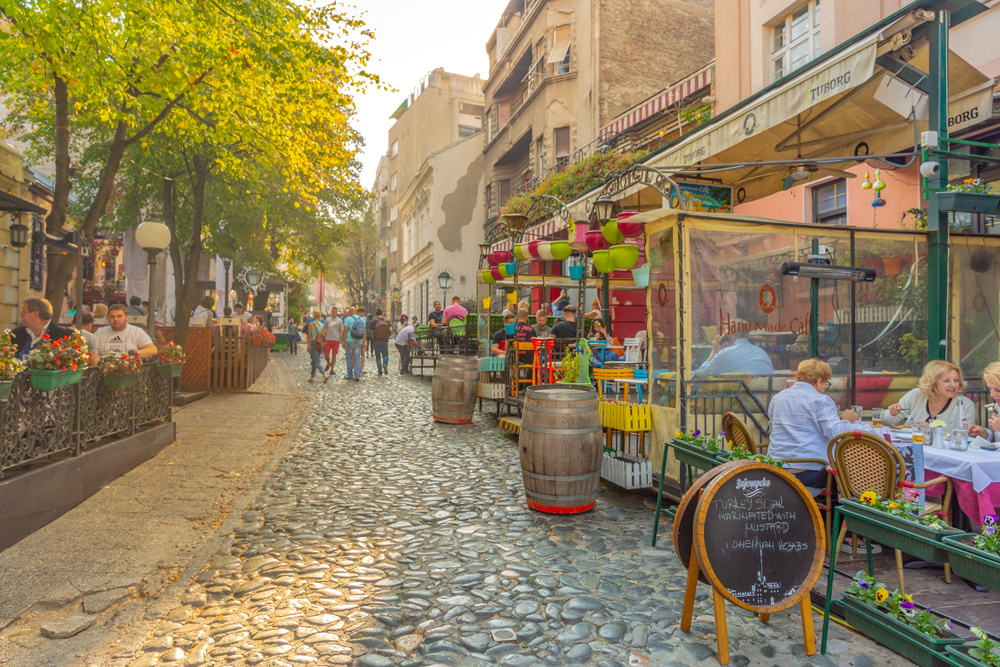
Skadarlija is a bohemian quarter of artists and musicians, where colorful mansions and taverns line the cobblestone streets. Other notable attractions include the Royal and White Palaces in the Dedinje area, the Old Palace, where the City Council meets, and the New Palace, which is the residence of the President of Serbia.