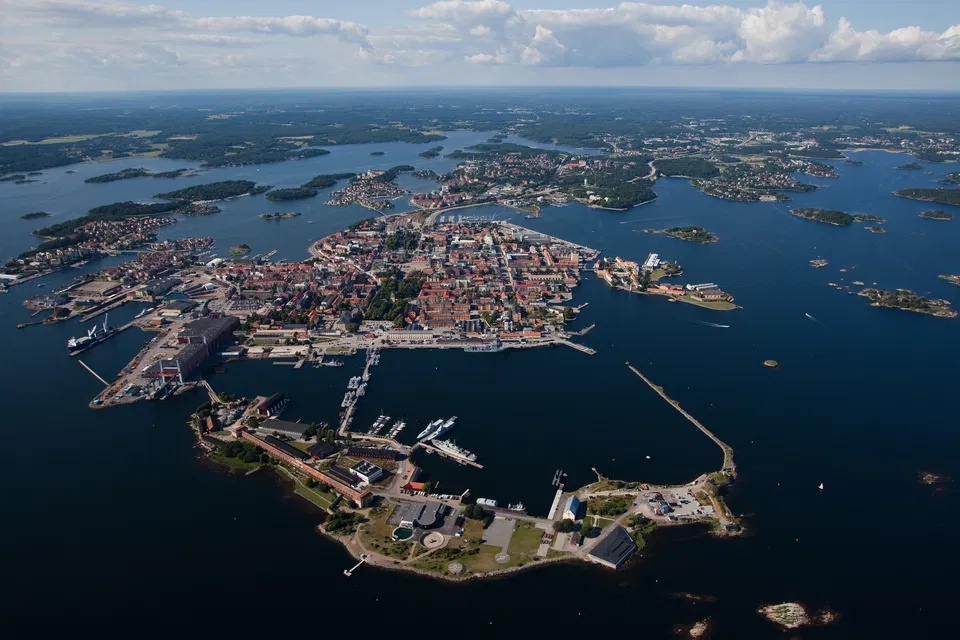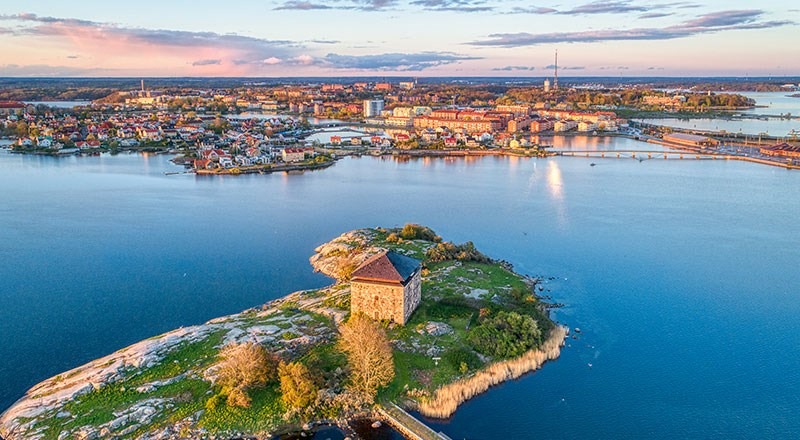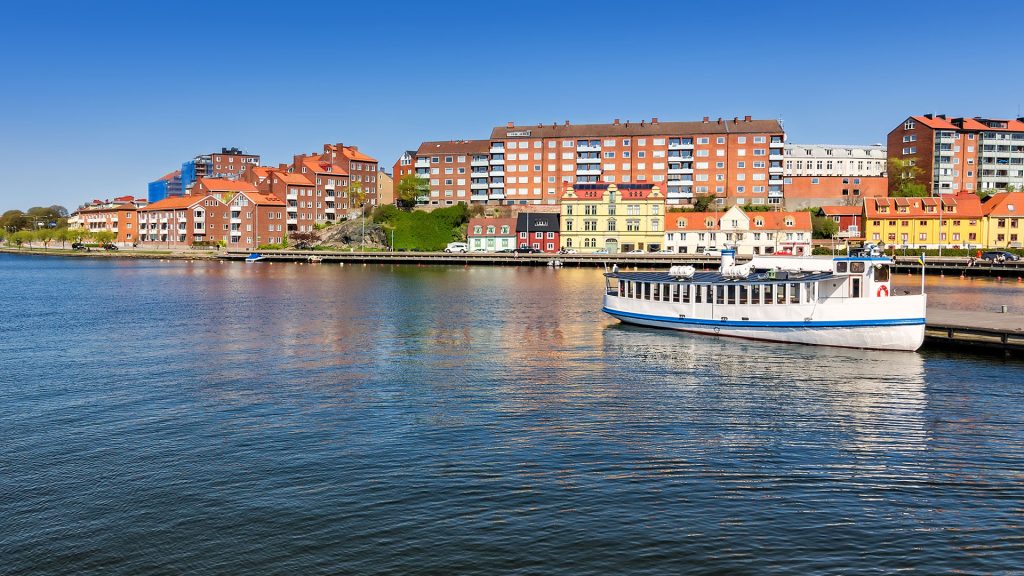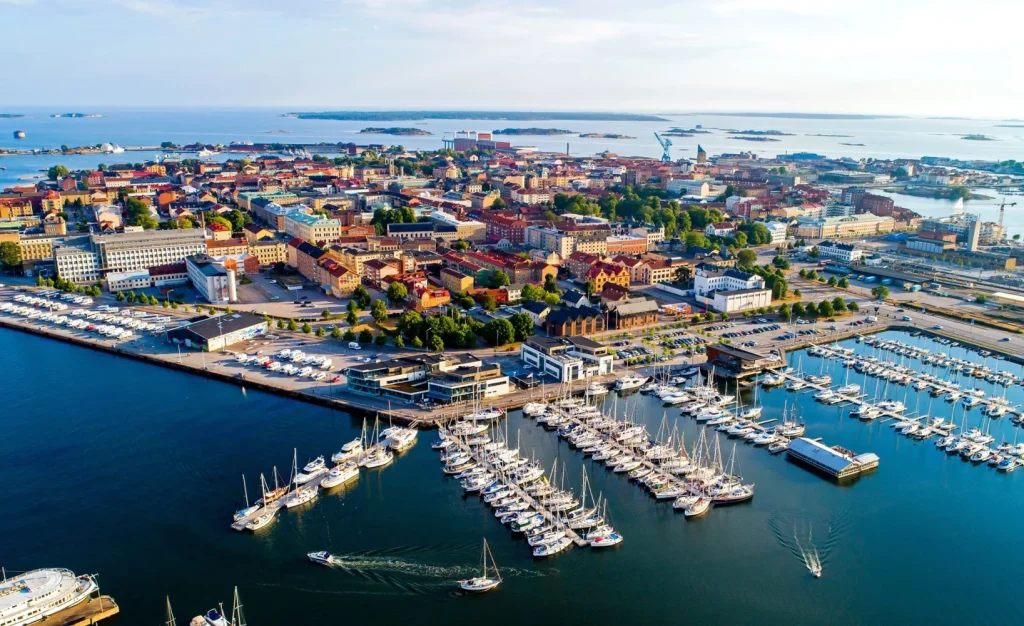
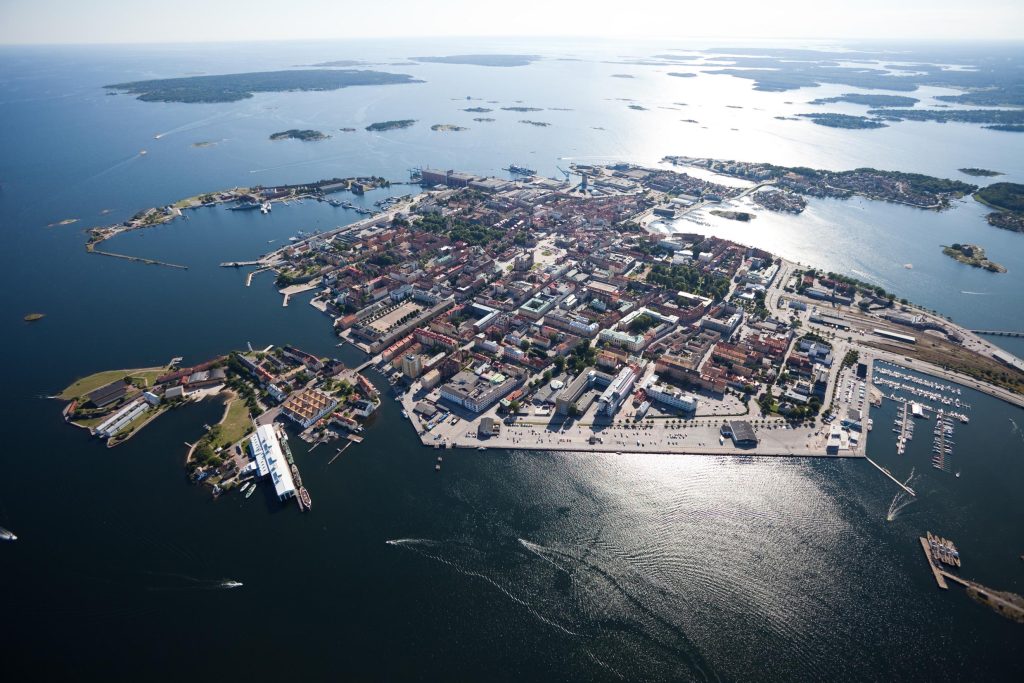
The history of Karlskrona began in 1680, when the Swedish King Charles XI decided to establish a new naval base in the south of the Scandinavian Peninsula. The monarch hired the best architects of the time, and they built a stern, impregnable port, embellishing it with exquisite buildings in the Italian Renaissance style. It is precisely this vibrant architecture and its status as the sunniest spot on the entire Swedish coast that attract tourists to this now deeply provincial town.
Attractions
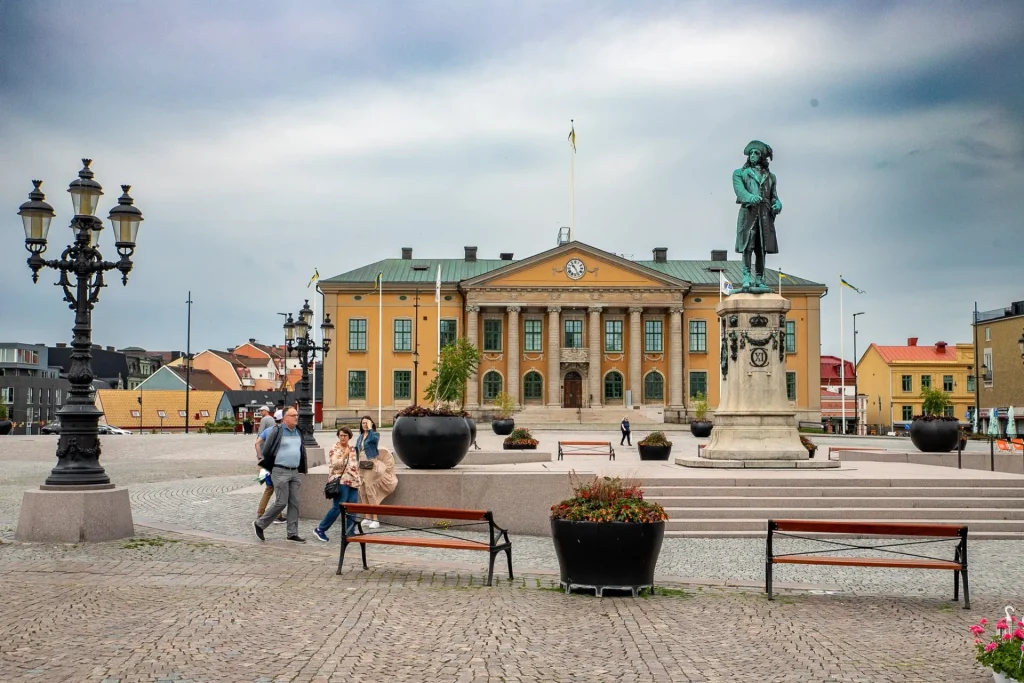
The historic center of the city is located on Trossø Island. At its highest point lies the vast Stortorget Square, home to the Town Hall, a concert hall, a monument to Charles XI, and a water tower. Two churches also line the square’s perimeter: St. Fredrik’s and the German Church, whose architecture is reminiscent of Roman Catholic churches.
Adjacent to Stortorget is the Admiralty Park. Amidst the greenery of trees, the tall yellow tower of the Admiralty Church rises—the oldest wooden church in Sweden, consecrated in 1685. Next to the church stands a wooden statue of Rosenboom.
In the northern part of Karlskrona lies the city’s main park, Höglands Park. It is notable not only for its numerous flowerbeds and ponds, but also for its sculptures: “The Blökinge Girl,” “The Frog,” and a statue of King Charles XIII in Roman costume. Höglands Park also features a large children’s playground.
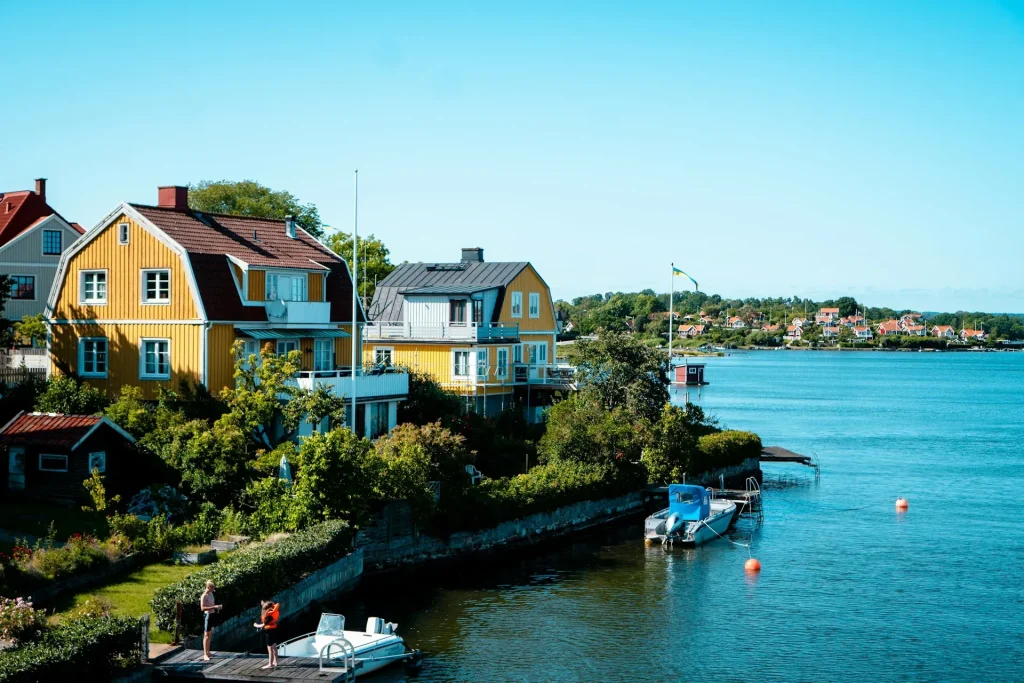
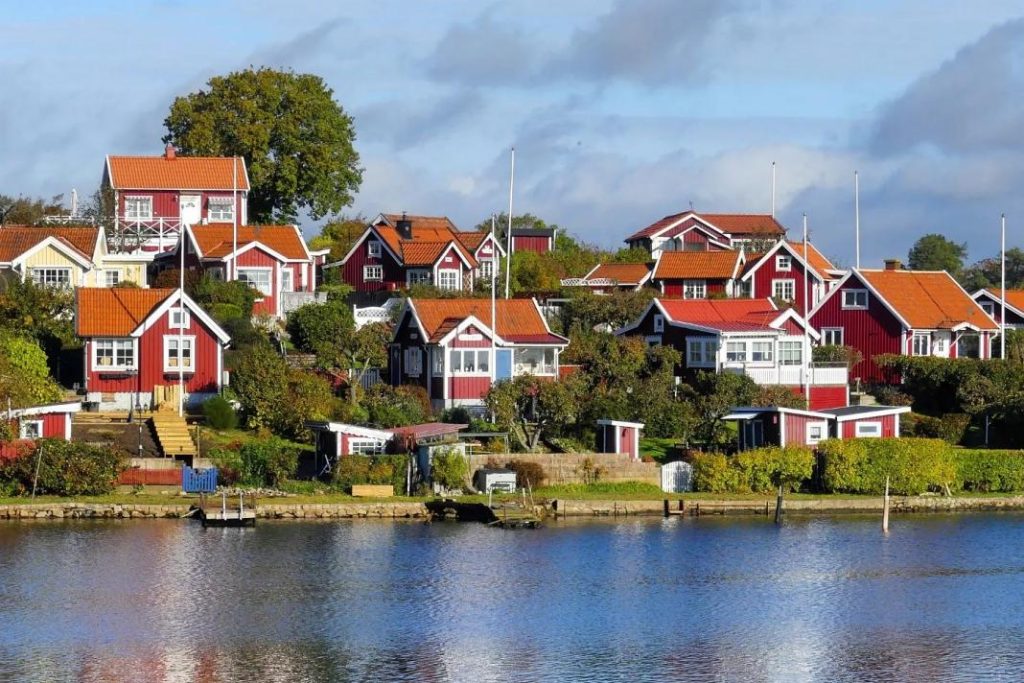
In the western part of Trossö, in the Björkholmen district, lies a cozy neighborhood of small, colorful wooden houses—the streets here are named after ships and admirals.
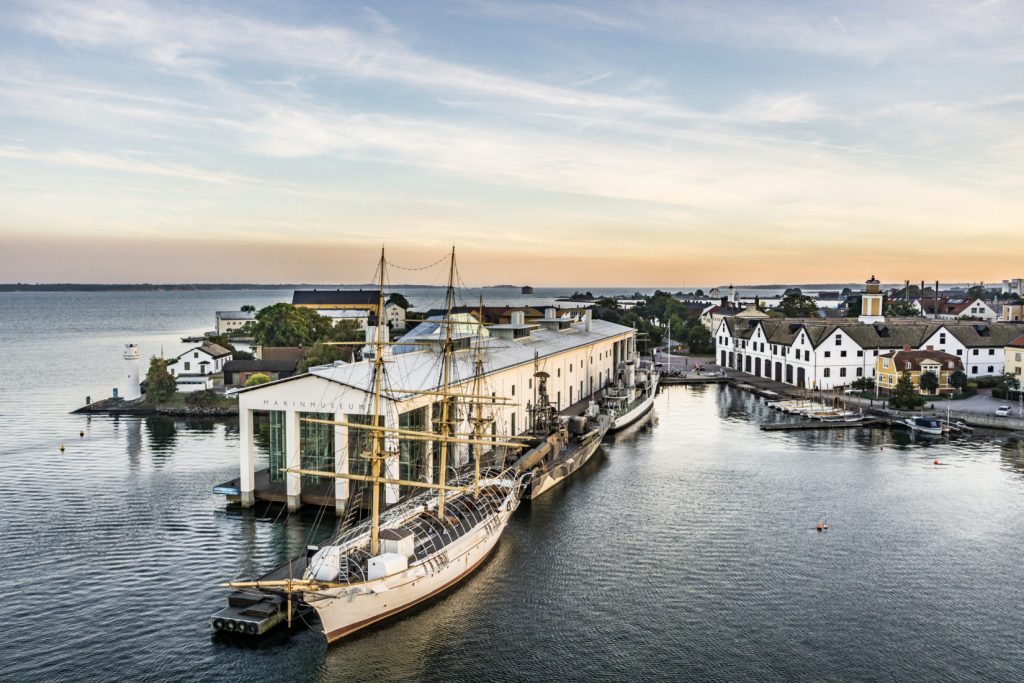
You can learn about the history of the city and its port at the Maritime Museum. In addition to classic maritime exhibits, real ships and even a submarine are on display.