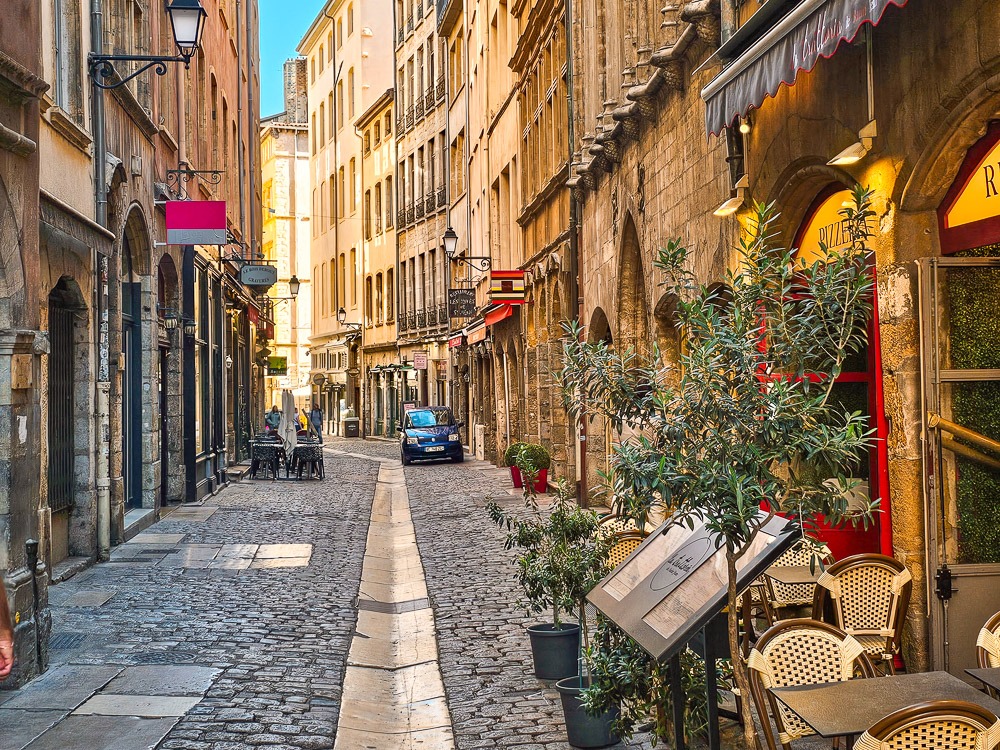
 Lyon is the capital of Freemasonry and esoteric teachings. As the economic, commercial, and industrial center of France, Lyon, with a population of 2 million, has flourished for over 500 years and rightfully ranks as the second largest French metropolitan area.
Lyon Attractions
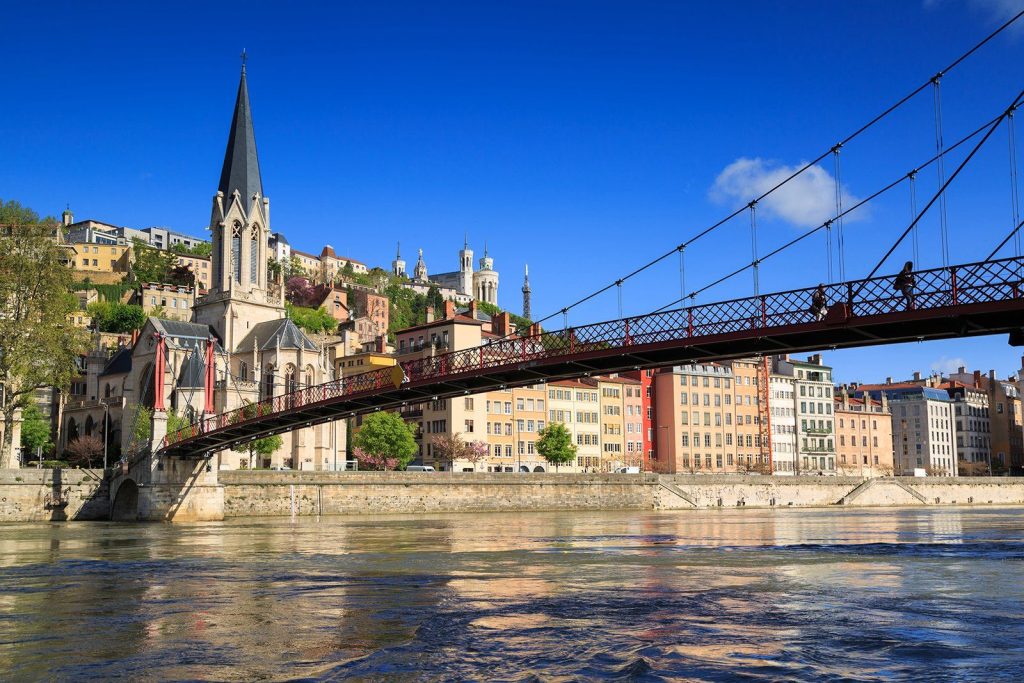
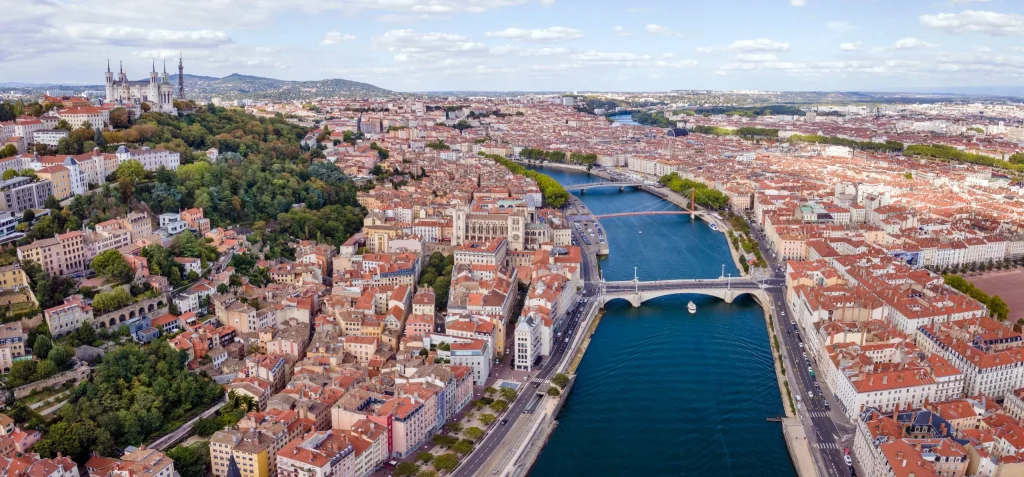
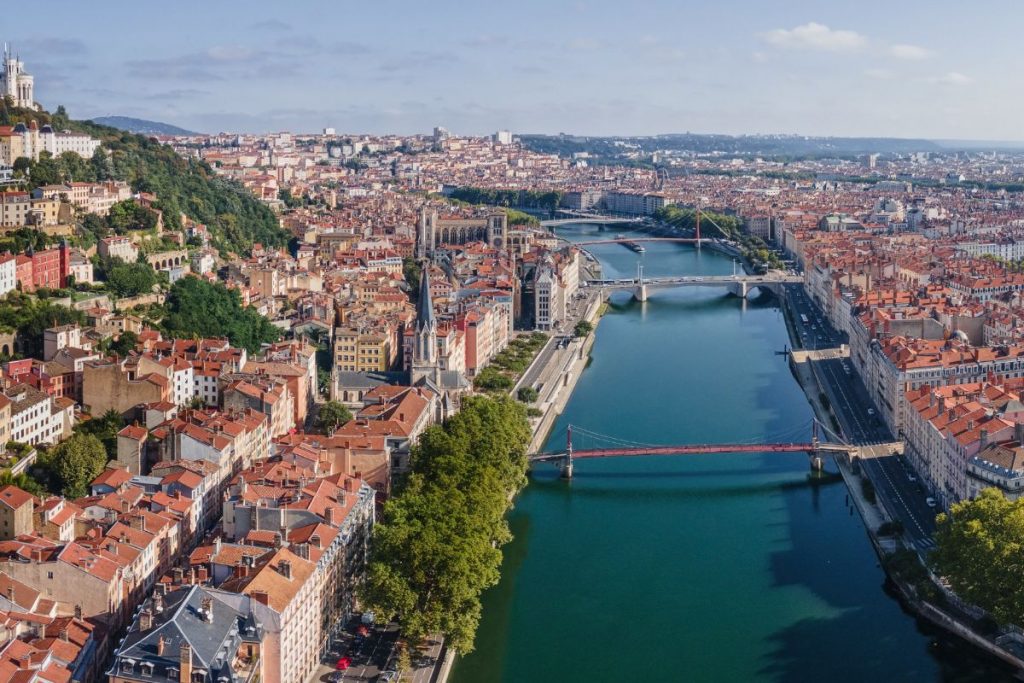
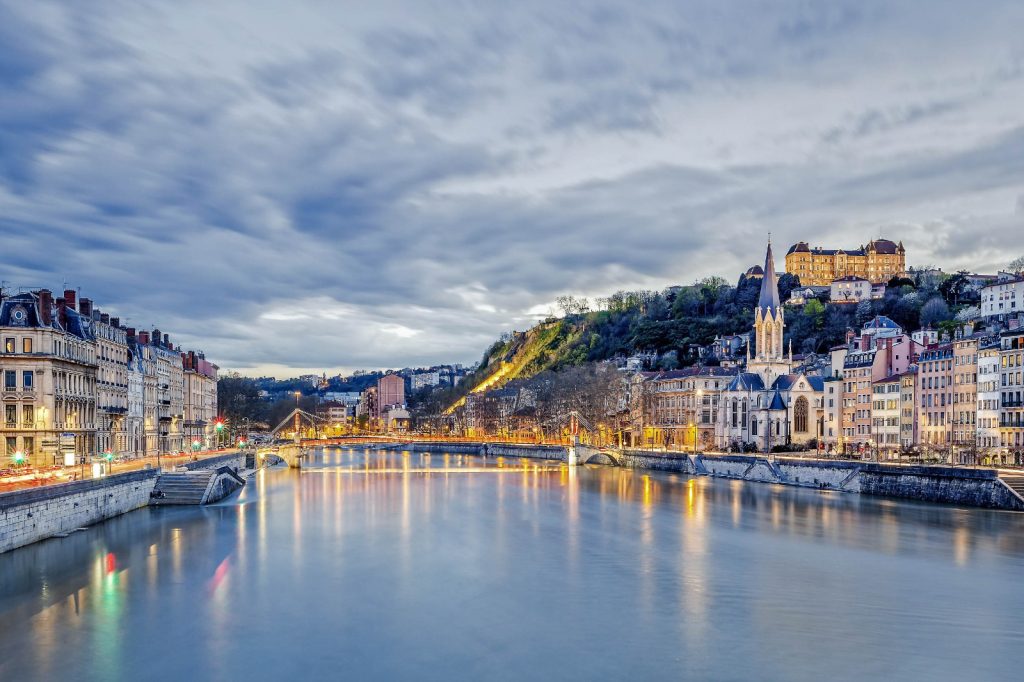
On Mount Fourvière, the Romans founded the camp of Lugdunum in 43 BC, leaving behind amphitheaters and aqueducts. Since the Middle Ages, this mountain has become known as the “mountain that prays,” thanks to the religious communities that settled here. Opposite lies Mount Croix-Rousse, nicknamed the “mountain that works,” because silkworm breeders once lived and worked here. Lyon’s two rivers, the Rhône and Saône, merge to form the Presqu’île peninsula, which remained the city’s center for 2,000 years, earning Lyon a UNESCO World Heritage Site status in 1998.
The city is famous for its squares, over 100 of which adorn Lyon. Among them, the Place Bellecour stands out as one of the most beautiful. It is lined with chestnut-tree avenues and gardens, and is home to a majestic statue of Louis XIV on horseback.
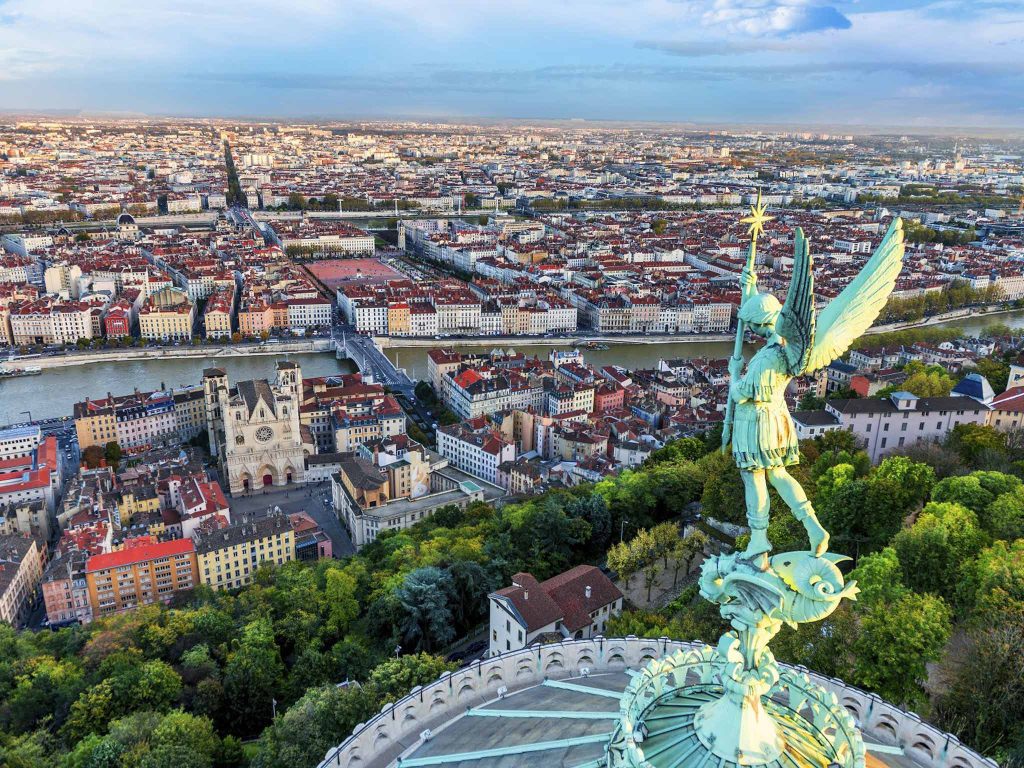
One of the city’s most significant landmarks is the Cathédrale Saint-Jean, built in the 13th century and located in Vieux Lyon. This main church in the city is also a UNESCO World Heritage Site. The cathedral is renowned not only for its religious significance but also for housing the country’s oldest astronomical clock, dating back to the 14th century. It acquired its current appearance after a renovation in 1655, and a minute dial was added in the 18th century. Another important religious landmark is the Basilica of Notre-Dame de Fourvière, located atop Fourvière Hill. Dedicated to the Virgin Mary, this basilica was built in the late 19th century with donations, combining neo-Byzantine and neo-Gothic styles. Next to it is a chapel tower, a remnant of a medieval church destroyed by the Huguenots. Atop this tower, a gilded statue of the Virgin Mary was installed in the 19th century.