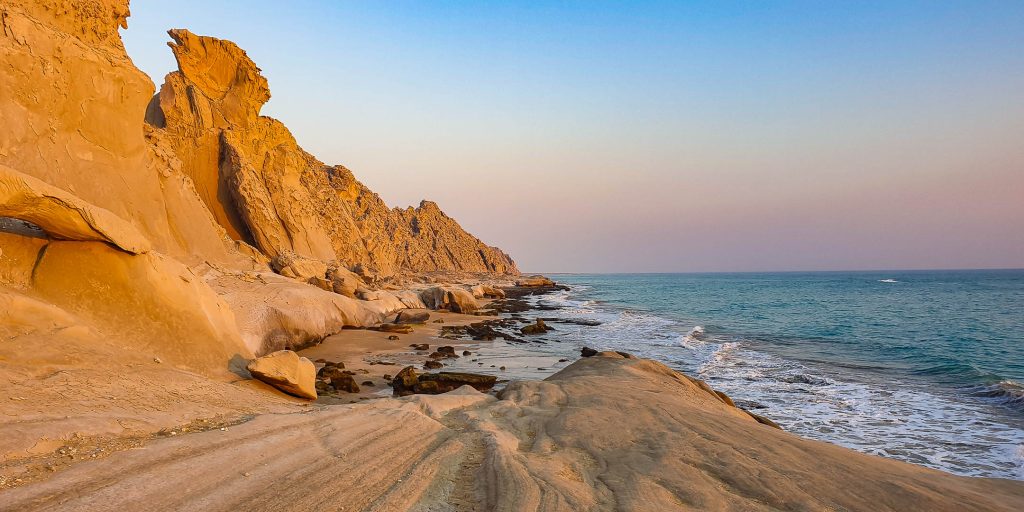
When choosing a resort or vacation destination, the main focus is often on the beach: sand, pebbles, coral, seaweed, the quality of entry into the water, and the frequency of jellyfish sightings. Seasoned travelers are interested in lagoons, tides, and the tides. And the most experienced might say, “What’s the sea like in the Emirates? It’s just a gulf…” and there’s some truth to that.
The Difference Between a Gulf and a Sea
In fact, many famous world resorts are located on the coasts of gulfs. For example, the prestigious Deauville in Normandy is located on the English Channel, and the popular Spanish resort of La Manga del Mar Menor, between Andalusia and Valencia, is separated from the Mediterranean by a long sandbar. This gulf, Mar Menor, which translates as “Little Sea,” is a fashionable holiday destination in Spain. The water in the gulf is usually protected from strong currents, which reduces wave activity and promotes faster warming. Gulfs can also be more saline or fresh depending on how much precipitation they receive.
Persian Gulf in the UAE
Most UAE resorts are located on the Persian Gulf coast, including Abu Dhabi, Dubai, Sharjah, Ajman, Umm Al Quwain, and Ras Al Khaimah. In Sharjah, on Saadiyat Island, you can enjoy views of the open sea with no other islands in sight. Sharjah’s beaches are ideal for families with children thanks to their gently sloping waters and white sand. The only emirate that can be considered a seaside resort is Fujairah, as its coastline is washed by the Arabian Sea.
About oil and oil spills
Some tourists report the appearance of “oil spills” on the water in their reviews. They might be surprised to think that oil is leaking directly from underwater. In fact, this is due to the passage of oil tankers through the Strait of Hormuz, which connects the two gulfs and is one of the world’s main oil arteries. More than 15 million barrels of oil pass through this strait every day. Despite expensive cleanup systems on tankers, oil spills occasionally occur. However, authorities closely monitor the situation and quickly clean up the mess, imposing fines on companies responsible for the pollution.
Read too: Why is the Gulf of Oman better than the Persian Gulf?