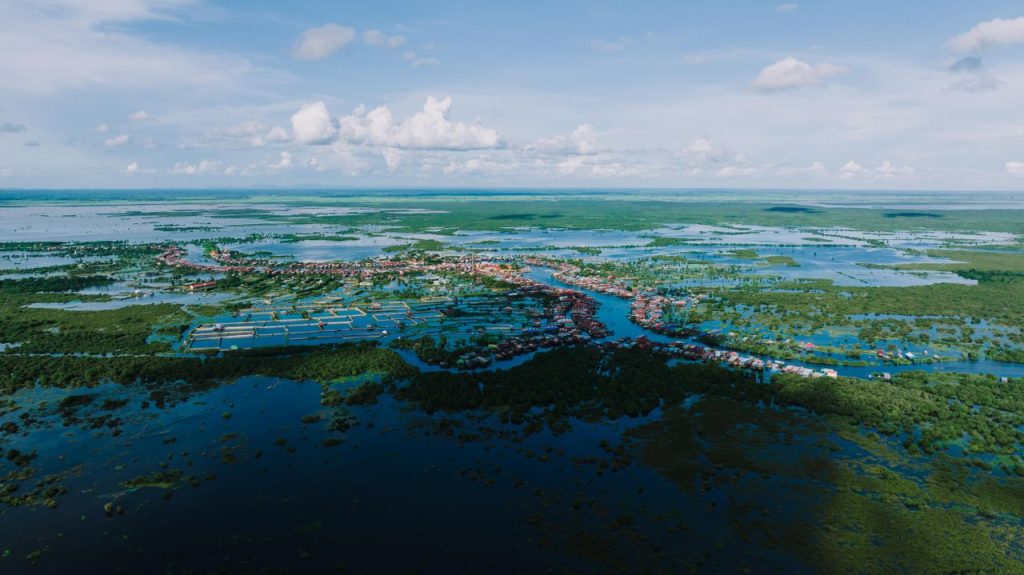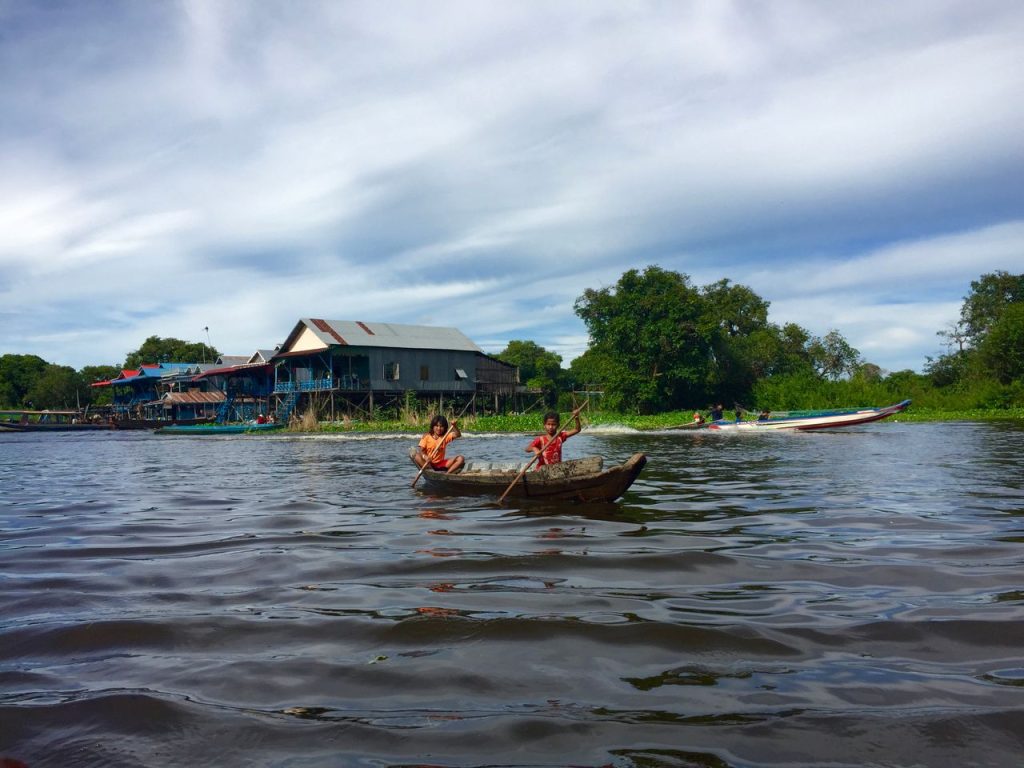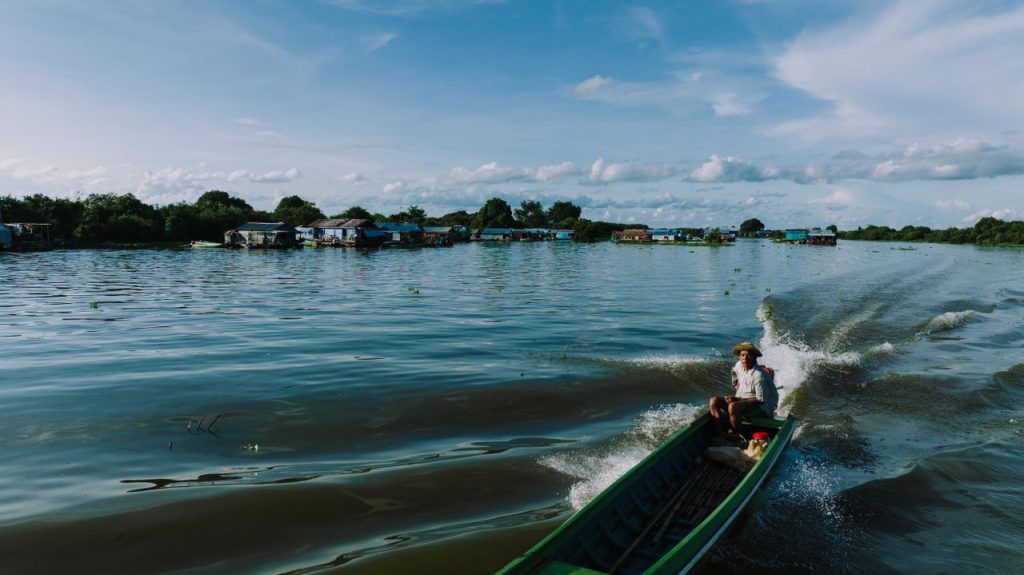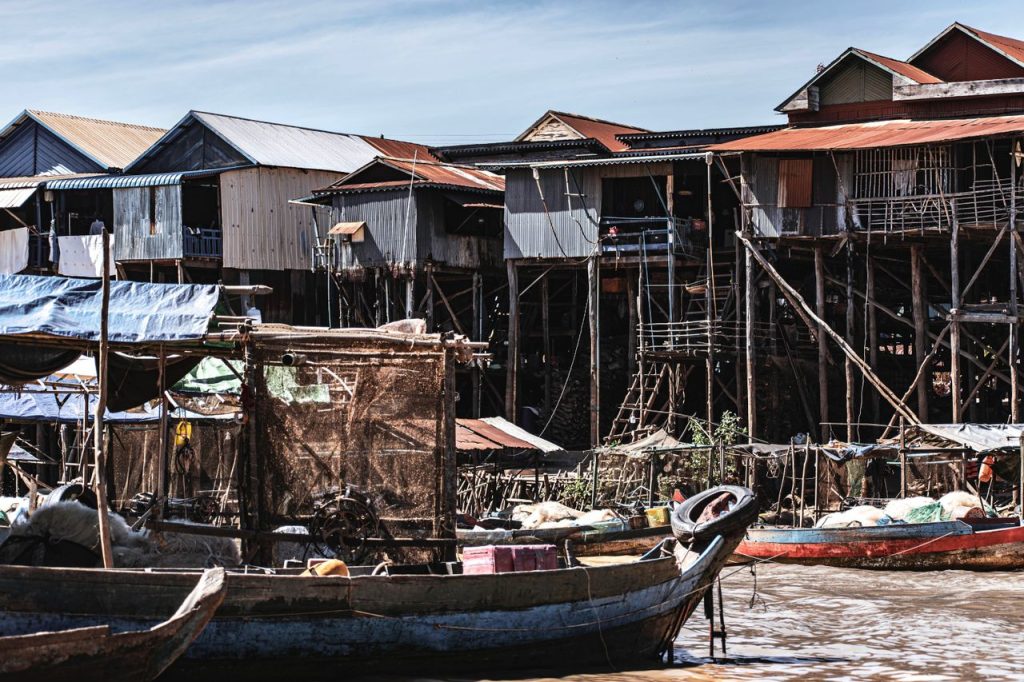
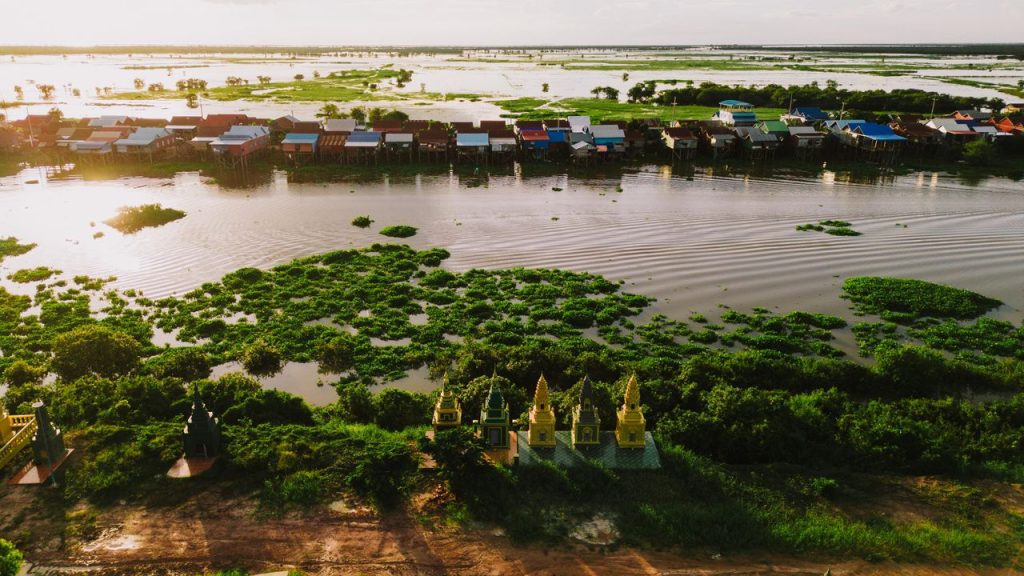
With its massive shifting waters, flooded emerald forests, and entire communities balancing on towering bamboo stilts, Tonle Sap is one of the most ecologically miraculous and culturally fascinating destinations in Southeast Asia. Known as the beating heart of Cambodia, this massive lake is a place where human life adapts completely to the rhythms of nature.
Tonle Sap is a geographical wonder. It is home to the world’s only “river with a return ticket”—a waterway that reverses its flow twice a year, expanding the lake to over five times its dry-season size. From the daily choreography of floating schools, markets, and churches to the rich biodiversity of its bird sanctuaries, Tonle Sap offers an unforgettable glimpse into a completely aquatic way of life.
In this complete travel guide, you’ll discover everything you need to know before visiting Tonle Sap.
Where Is Tonle Sap?
Tonle Sap is a combined lake and river system located in the central lowlands of Cambodia.
The lake serves as:
The largest freshwater lake in Southeast Asia
A designated UNESCO Biosphere Reserve known for its extreme biodiversity
The primary inland fishery and agricultural lifeline of the nation
Situated just about 9 miles (15 km) south of the bustling tourist hub of Siem Reap, Tonle Sap is the perfect natural counterweight to the ancient stone temples of Angkor Wat.
Why Visit Tonle Sap?
1. A Masterclass in Human Adaptation
Witnessing entire villages built completely on water—featuring floating pig farms, vegetable gardens, clinics, and schools—is a profound testament to human ingenuity.
2. A Miraculous Ecological Phenomenon
During the monsoon, the massive Mekong River forces the Tonle Sap River to flow backward, transforming the lake into a giant inland sea that floods the surrounding forests.
3. World-Class Bird Watching
The lake’s protected wetlands harbor some of the rarest, most spectacular waterbird colonies in Asia, including giant ibises, storks, and pelicans.
4. Breathtaking Water Sunsets
Watching the sun sink directly into the glassy, endless horizon of the lake from the deck of a traditional wooden boat is a quintessential Cambodian experience.
Best Things to Do and See at Tonle Sap
Explore the Stilted Wonder of Kompong Phluk
Kompong Phluk is a traditional stilted commune surrounded by a dense, beautiful mangrove forest.
Highlights include:
Walking or boating beneath houses built on towering bamboo and wooden stilts standing up to 30 feet (10 meters) high.
Seeing how the village shifts dynamically between the dry season (when the stilts look like stilts on dry land) and the wet season (when the water rises to the doorsteps).
Taking a peaceful ride in a small wooden paddle boat through the eerie, green canopy of the Flooded Forest.
Discover the Authentic Community of Kompong Khleang
For travelers seeking a less-commercialized, deeply authentic look at lake life, Kompong Khleang is the largest and most spectacular community on Tonle Sap.
Visitors can explore:
A massive settlement home to over 10,000 residents, split between towering stilted houses and completely floating structures.
The local floating markets, where traders shout across boats loaded with fresh watermelons, household goods, and ice.
A genuinely warm local atmosphere where children wave from floating schoolboats and fishermen repair nets right on the water.
Visit the Prek Toal Bird Sanctuary
Prek Toal is the premier eco-tourism destination on the lake and the most important breeding ground in Southeast Asia for globally threatened large waterbirds.
Visitors can admire:
Thousands of massive birds, including the Spot-billed Pelican, Greater Adjutant, and Milky Stork, nesting in the flooded treetops.
Climbing up specialized bamboo viewing platforms hidden in the canopy for unmatched wildlife photography.
Guided tours led by local rangers who formerly worked as poachers but are now dedicated to protecting the sanctuary.
Stroll Around the Floating Village of Chong Kneas
Located closest to Siem Reap, Chong Kneas is a completely mobile floating village that shifts its position across the lake depending on the water levels.
Highlights include:
Watching floating supermarkets, mechanics, and even a floating crocodile farm drift past.
Visiting the local floating Catholic church and Buddhist pagoda.
Tip: Chong Kneas is highly commercialized; ensure you book through a reputable eco-tour agency to ensure your funds directly support the local community.
Food You Must Try: The Bounty of the Lake
Tonle Sap provides over 75% of Cambodia’s freshwater fish catch, meaning the local culinary scene is incredibly fresh, creative, and heavily centered around fish.
Popular dishes include:
Fish Amok
Cambodia’s signature national dish: tender fillets of fresh lake fish coated in a fragrant coconut curry paste (kroeung) made with lemongrass, turmeric, and kaffir lime, steamed to a delicate, mousse-like texture inside a banana leaf cup.
Prahok
The undisputed backbone of Khmer cuisine. This crushed, salted, and heavily fermented fish paste is made from the lake’s seasonal bounty. While the aroma is intense, it adds a deep, savory umami depth to local soups and stir-fries.
Grilled Lake Fish with Tamarind Sauce
Whole fresh fish skewered on bamboo sticks, charcoal-grilled right on the decks of floating houses, and served with a tangy, sweet-and-sour local tamarind dipping sauce.
Nom Banh Chok (Khmer Noodles)
A beloved breakfast dish consisting of thin rice noodles topped with a rich, green fish gravy made from fresh lake fish, lemongrass, and traditional herbs, piled high with crisp wild vegetables.
Best Time to Visit Tonle Sap
The Wet / High Water Season (September to November)
Benefits include:
The lake is at its most visually spectacular, fully flooded, and looking like a vast inland sea.
Boats can easily navigate deep into the flooded forests and stilted village channels.
The landscapes are intensely green, lush, and photogenic.
The Dry / Low Water Season (December to April)
Visitors enjoy:
The absolute best time for bird watching at Prek Toal, as receding waters concentrate the birds into specific feeding zones.
A dramatic perspective on the stilted villages, revealing the incredible, towering infrastructure beneath the houses.
How to Get to Tonle Sap
Most visitors explore Tonle Sap as a day trip departing from the nearby city of Siem Reap.
By Tuk-Tuk or Car: You can easily hire a local tuk-tuk or private car for a scenic 30-to-45-minute drive from downtown Siem Reap through rural rice paddies to the boat docks of Kompong Phluk or Chong Kneas.
By Organized Boat Cruise: Many travelers choose to book fully guided half-day excursions that include transport from their hotel, a traditional wooden long-tail boat cruise through the villages, and a stop for sunset drinks on a floating platform.
Travel Tips for Tonle Sap
Choose your village wisely: If you want absolute authenticity and dramatic scale, make the longer journey to Kompong Khleang. If you want to experience the flooded forest up close, choose Kompong Phluk.
Bring sunscreen and a hat: The open water reflects the tropical Cambodian sun intensely. There is minimal shade once your boat leaves the covered stilted channels for the open lake.
Support the local economy directly: Buy snacks from the floating grocery boats, tip your local paddle-boat rowers (who are often local women earning an independent income), and hire local village guides.
Dress respectfully: Keep in mind that these are real, working communities, not theme parks. Dress modestly by covering your shoulders and knees when passing through local villages or stepping onto floating pagodas.
Pack a dry bag: Heavy splashes from passing long-tail boats or sudden tropical downpours can easily wet your camera gear and electronics.
Is Tonle Sap Worth Visiting?
Absolutely. Tonle Sap is an unmissable destination that offers a profound, fluid alternative to the stone temples of Angkor. It provides a raw, eye-opening look at an ancient lifestyle dictated entirely by the rise and fall of the water.
Whether you’re paddling silently through the emerald canopy of a flooded mangrove forest, watching a floating school bus transport laughing children across a lake, or tracking a rare giant pelican across a pristine sky, Tonle Sap delivers an atmospheric, deeply authentic, and culturally unforgettable Cambodian adventure.
Final Thoughts
From the dizzying, sky-scraping stilts of Kompong Khleang to the lush, bird-rich wetlands of Prek Toal and the soothing taste of a perfectly steamed Fish Amok, Tonle Sap is a living monument to ecological harmony.
Its unique geography, resilient floating culture, and stunning water horizons make it an essential, incredibly rewarding addition to any travel itinerary in Southeast Asia.
Read too: The World’s Best Forbidden Pleasures