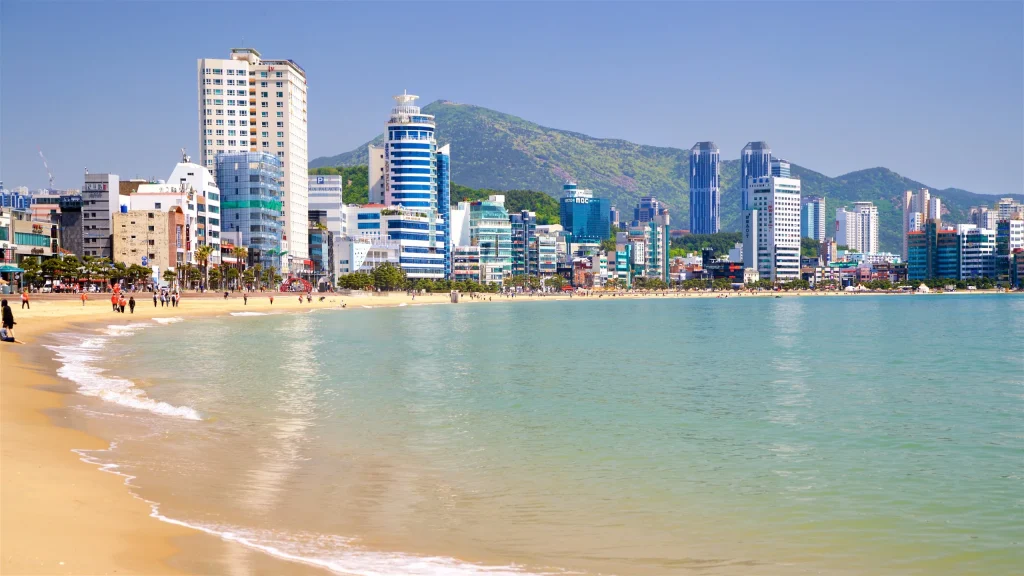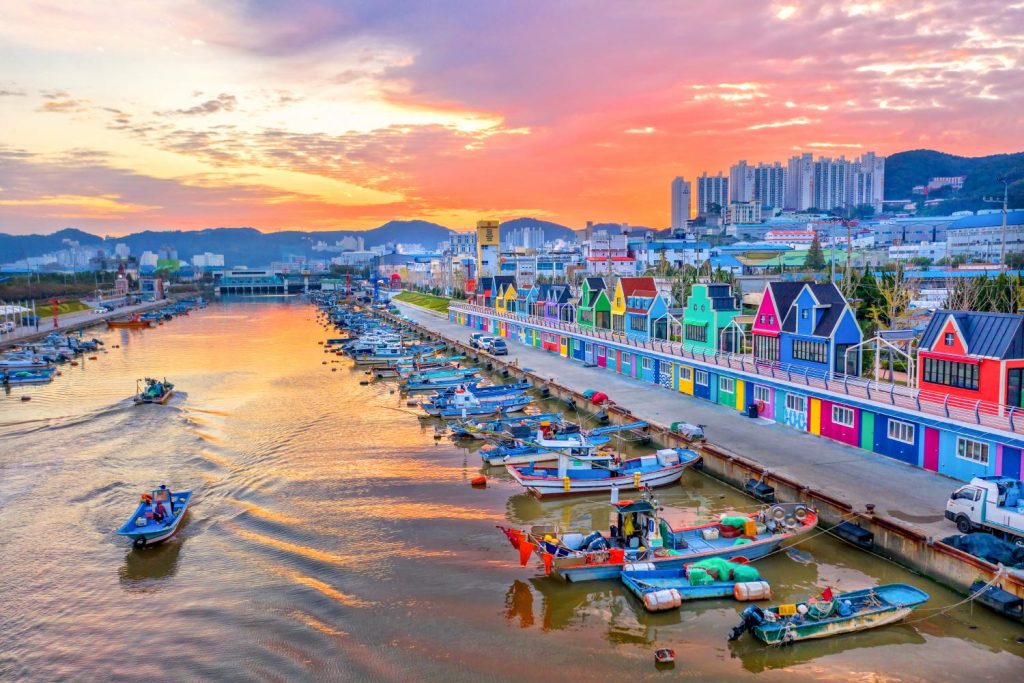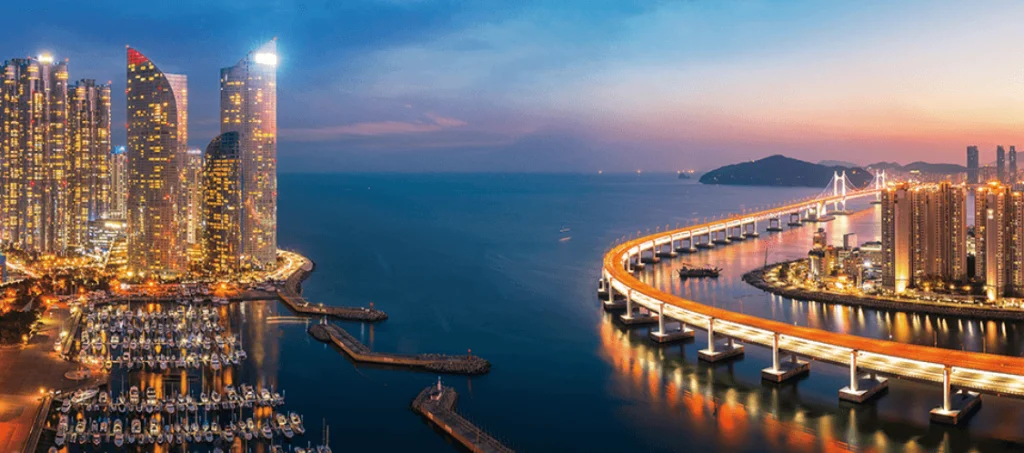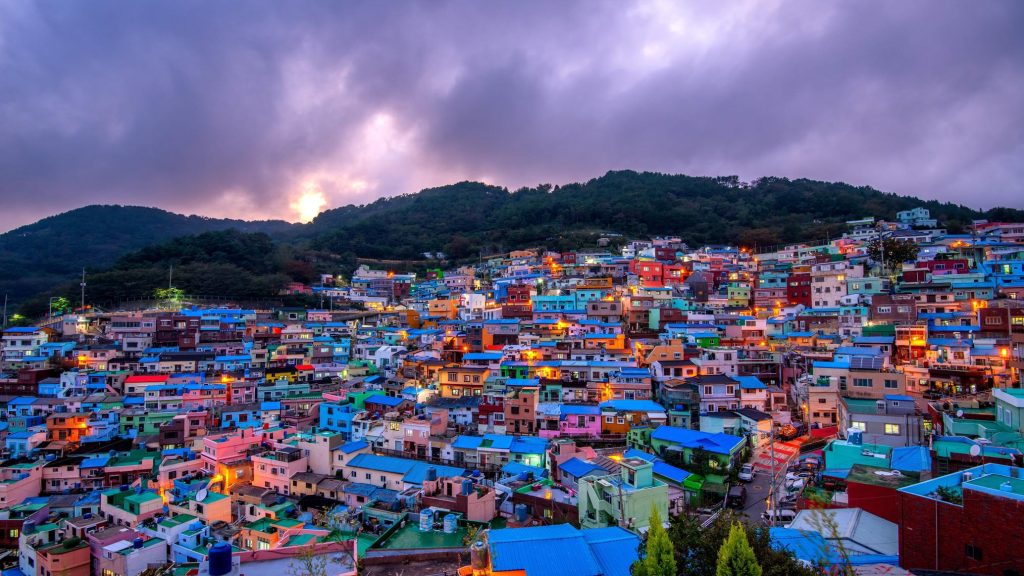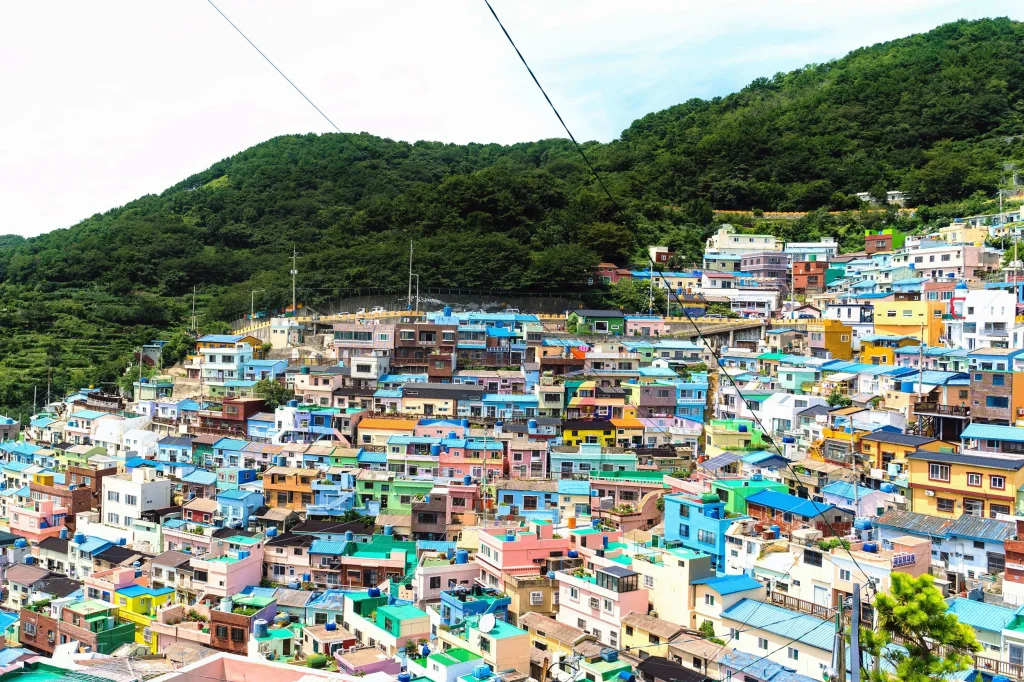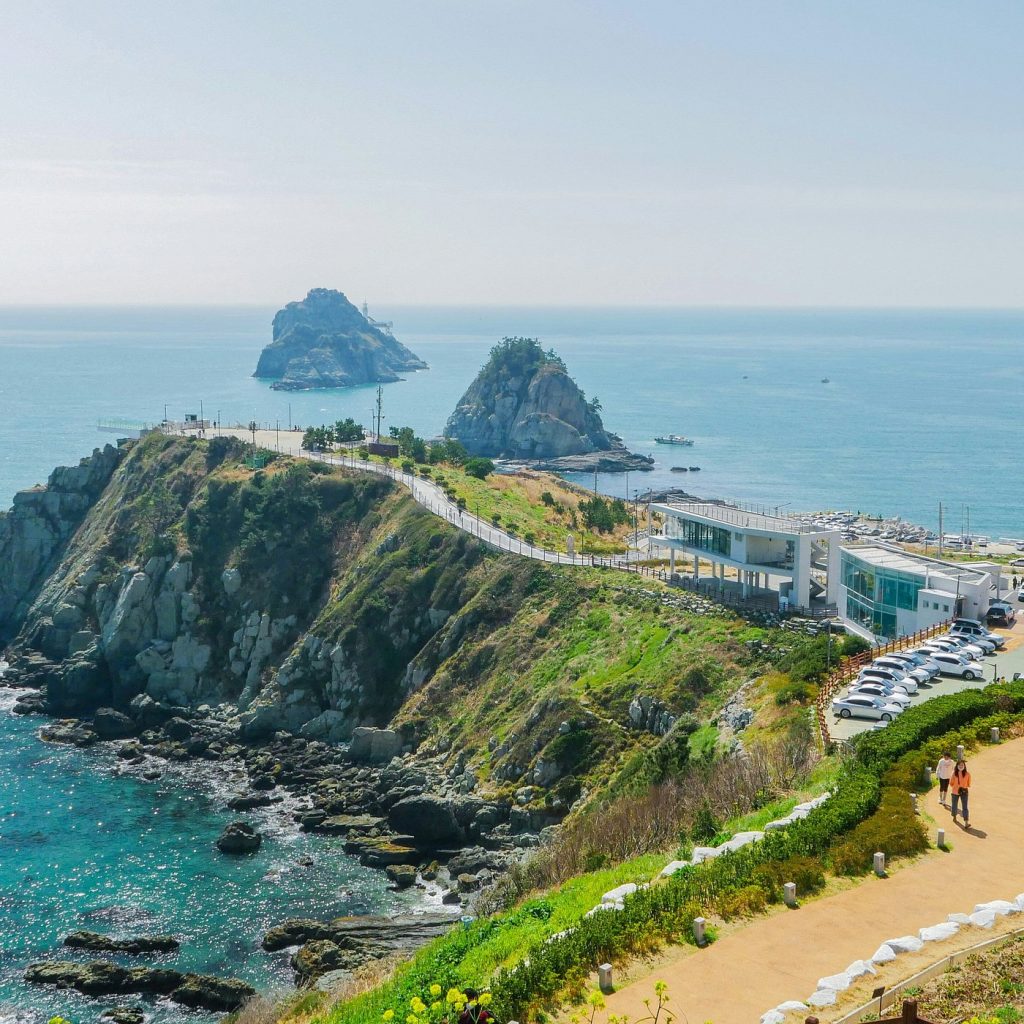
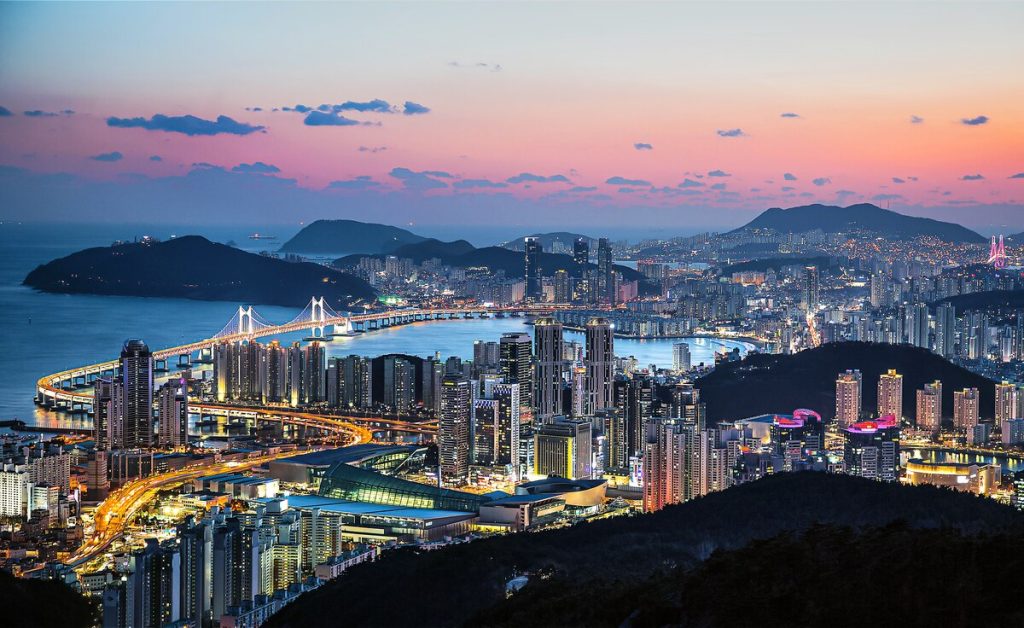
South Korea’s second-largest metropolis, Busan, with a population of over 3.5 million, is renowned for its picturesque beaches, hot springs, national parks, and bustling port city atmosphere. Cultures intersect here, as ships from all over the world dock at the port. However, despite its international connections, Busan remains distinctive and not as cosmopolitan as it initially appears.
Main Attractions and Entertainment in Busan
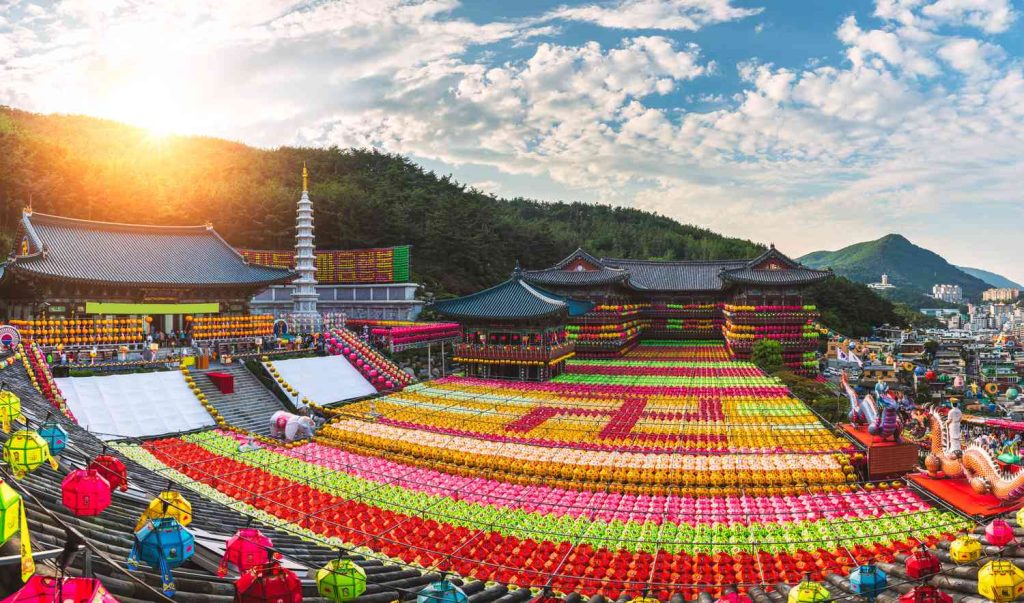
One of Busan’s most iconic sites is the Beomeosa Temple complex, which translates as “Temple of the Paradise Fish.” Built in the 7th century, it has been repeatedly destroyed, but each time it has been restored, preserving its ancient spirit and unique atmosphere. Particularly noteworthy are the three-tiered stone pagoda, the main temple with its ceremonial hall, the Dongjeon, and the One-Pillar Gate, symbolizing the only path to enlightenment. The complex also features the East and West Wonyoam Pagodas, a stone lamp, and stunning hermitages topped with Buddha statues.
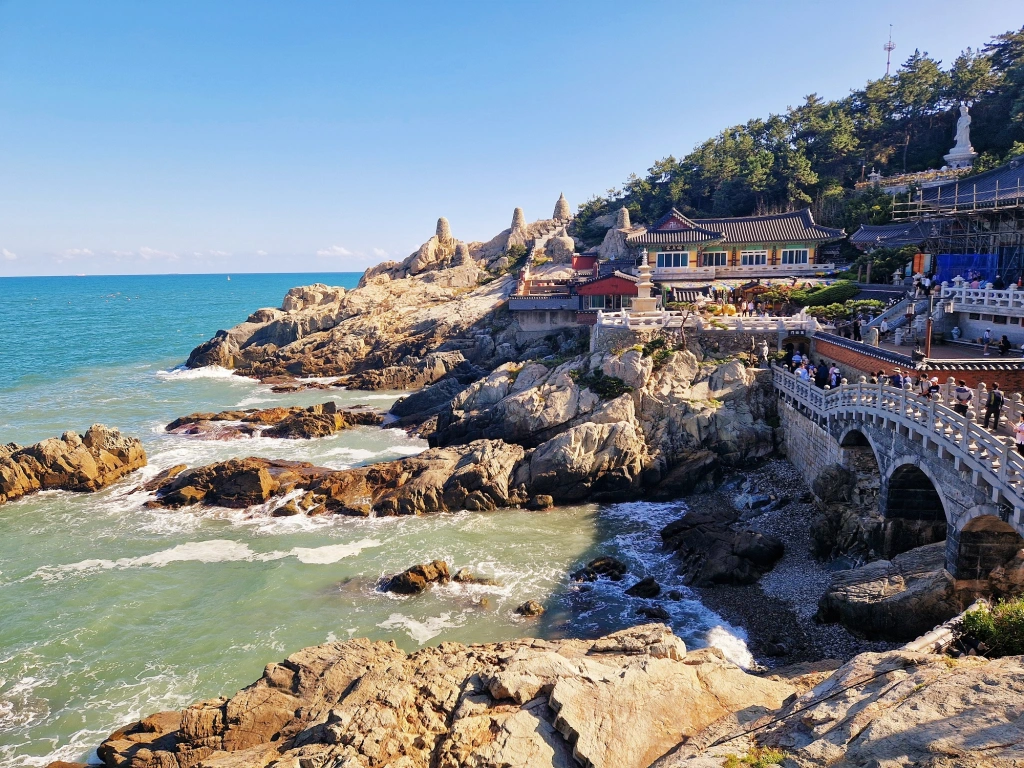
Equally impressive is the Dragon Temple, located on the shore. Its architectural complex features the unique Pagoda of Those Who Pray for Road Safety, as well as a hot spring said to have healing properties. Another interesting religious structure is the Seokbulsa Temple, carved directly into the cliff face. It is decorated with massive bas-reliefs of Buddhas, also carved in stone.
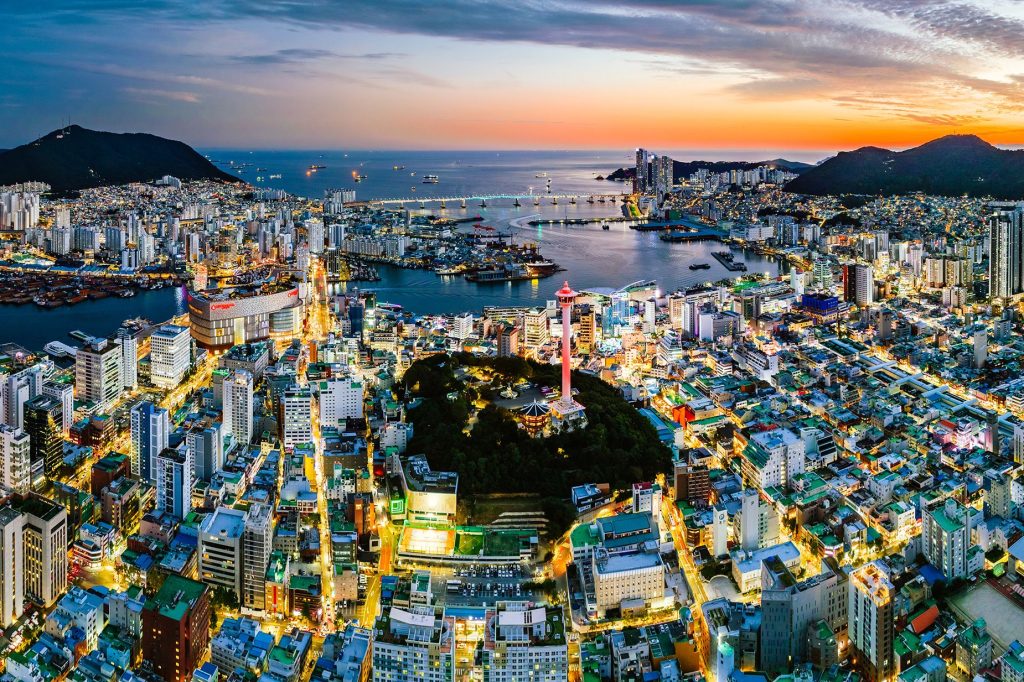
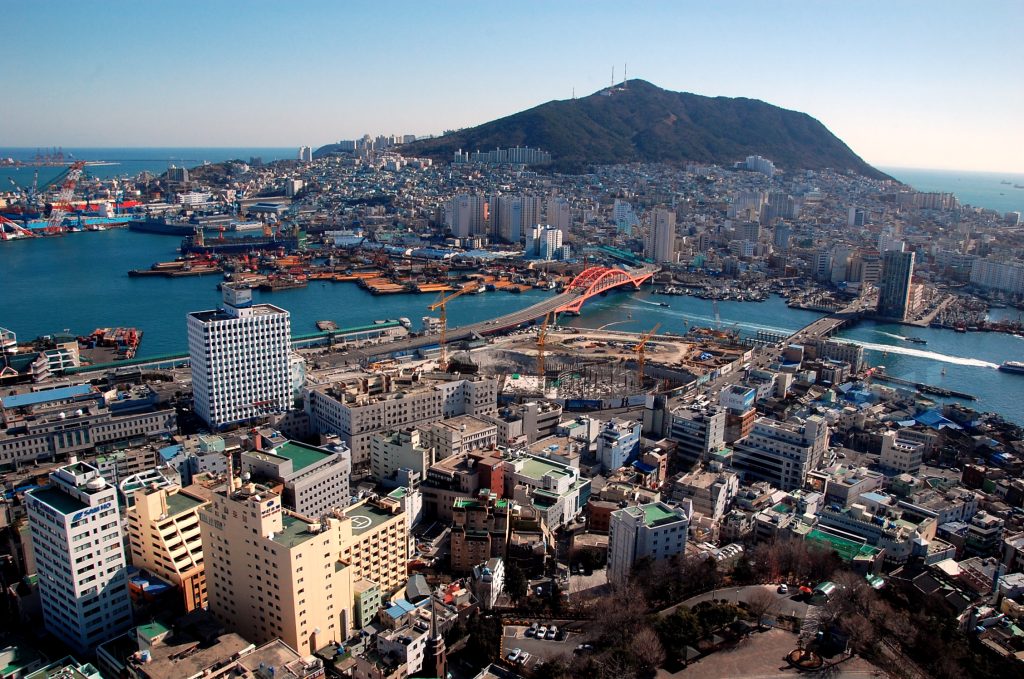
Those who enjoy the outdoors can head to Yongdusan Park. It is home to cozy cafes, restaurants, and the 118-meter Busan Tower, which offers panoramic views of the city. Not far from the park is the historic Forty Steps district, where you can see restored streets that retain the ambiance of the 1960s, with traditional Korean architecture, cobbled paths, and vintage lanterns.
Nature enthusiasts should visit the Nakdong Bird Sanctuary, where over 150 species of birds nest from October to May. Also of interest is the Busan Aquarium, which offers a closer look at the underwater world of the South Sea.