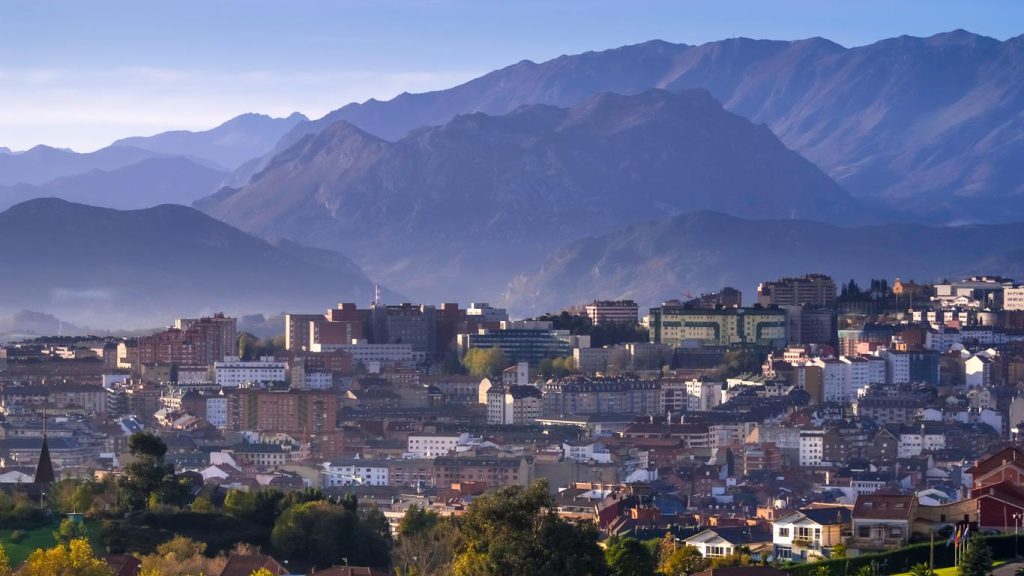
 Oviedo was founded by the monks Máximo and Fromestamo in 761 on the hill of Ovetum. This site became the capital of the first Christian kingdom on the Iberian Peninsula.
The city has preserved its monastic and royal heritage and remains the starting point for the Camino de Santiago Primitivo – the first pilgrimage route from Oviedo to Compostela through the picturesque landscapes of Asturias and Galicia.
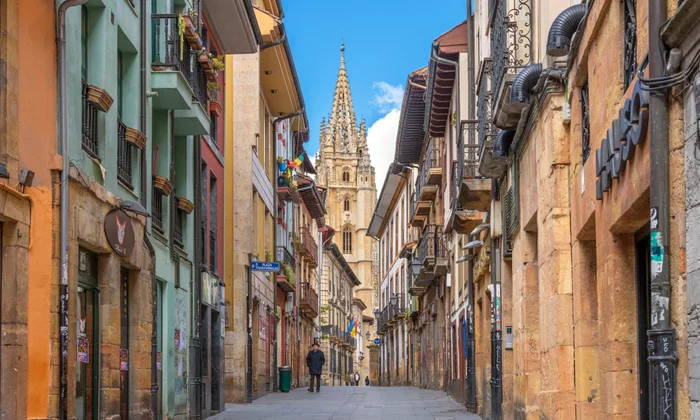
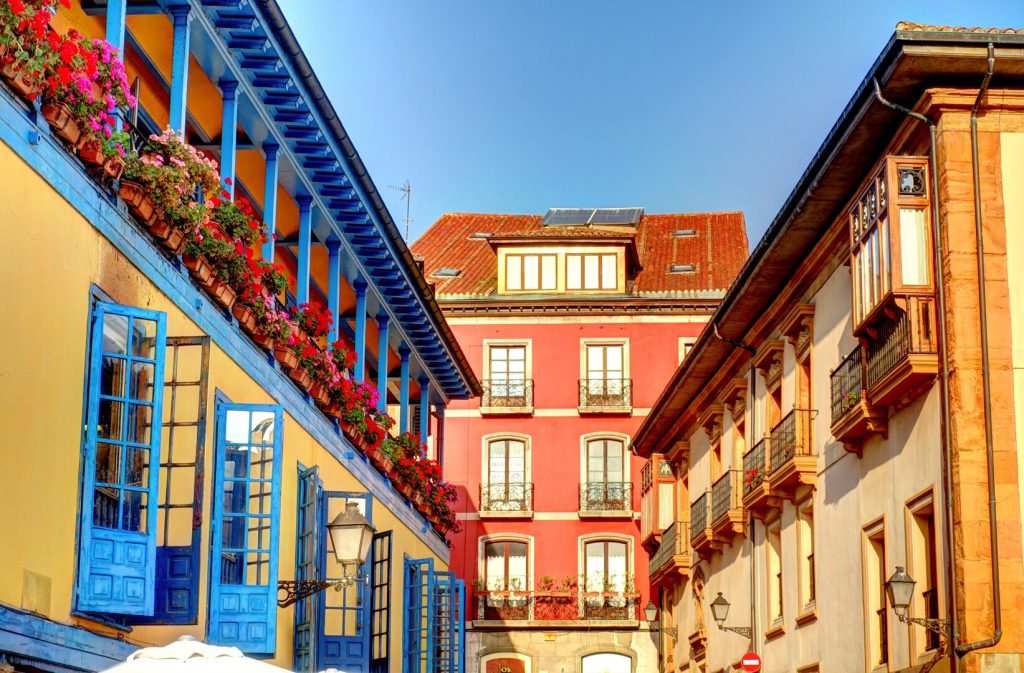
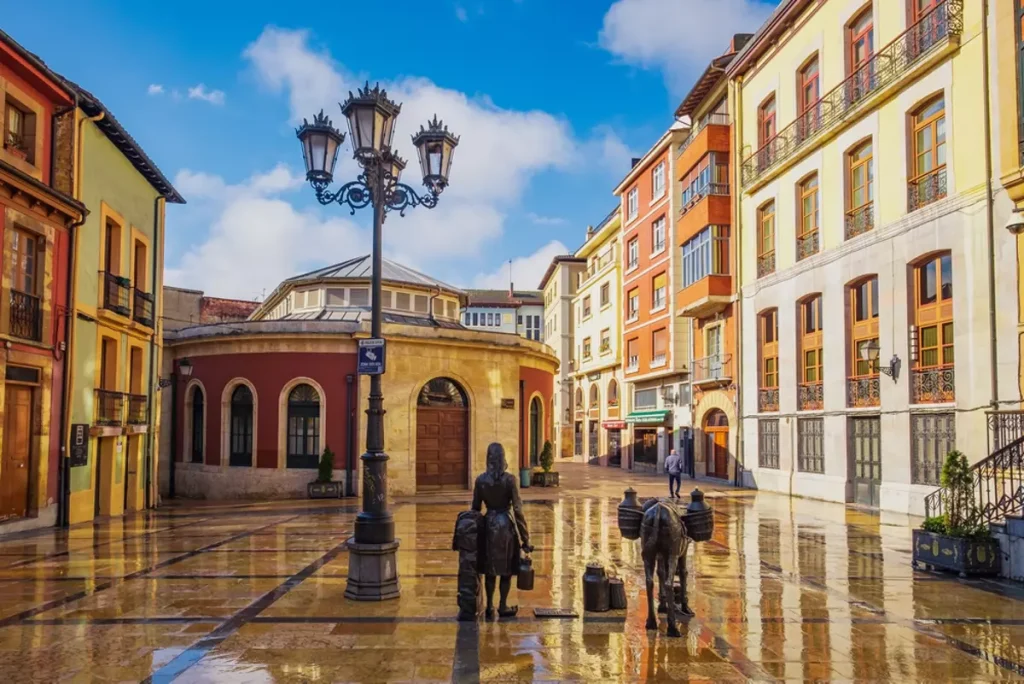
Every corner of ancient Oviedo holds unexpected treasures. The pedestrianized historic center is adorned with countless historical monuments, and charming squares filled with “chigres” (traditional bars) make a simple stroll through Oviedo a true pleasure. The city is filled with sculptures, literally at every turn, the most famous of which depicts Woody Allen, in love with the city.
What to see in Oviedo?
Camara Santa
Camara Santa, or the Holy Chamber, was built in the 9th century by order of Alfonso II of Castile to house a priceless Christian relic brought to Asturias from Toledo. It was a cloth wrapped around the head of Jesus Christ after his death. The sacred cloth, stained with the Savior’s blood, is kept in an elaborate oak reliquary chest covered in embossed silver.
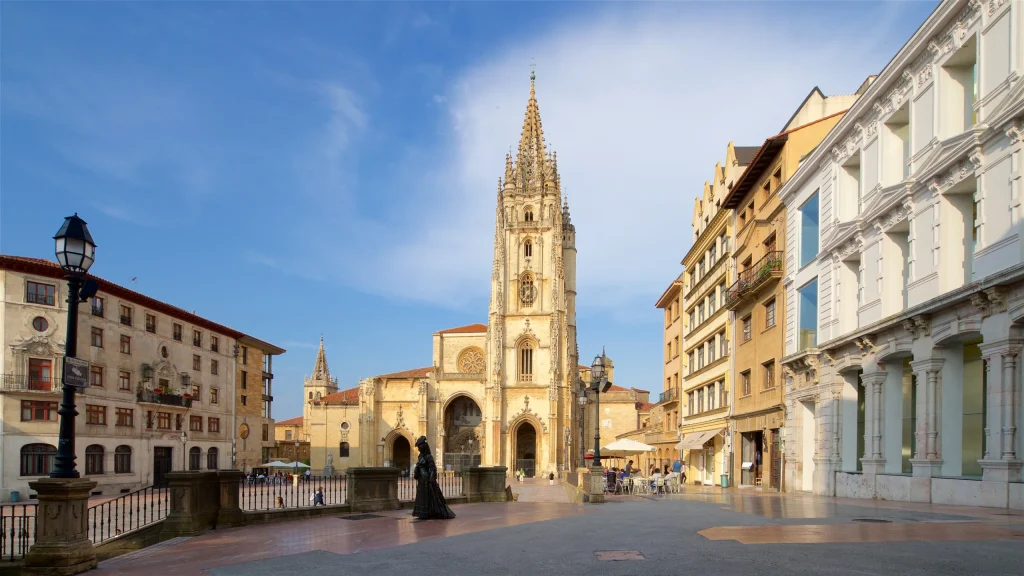
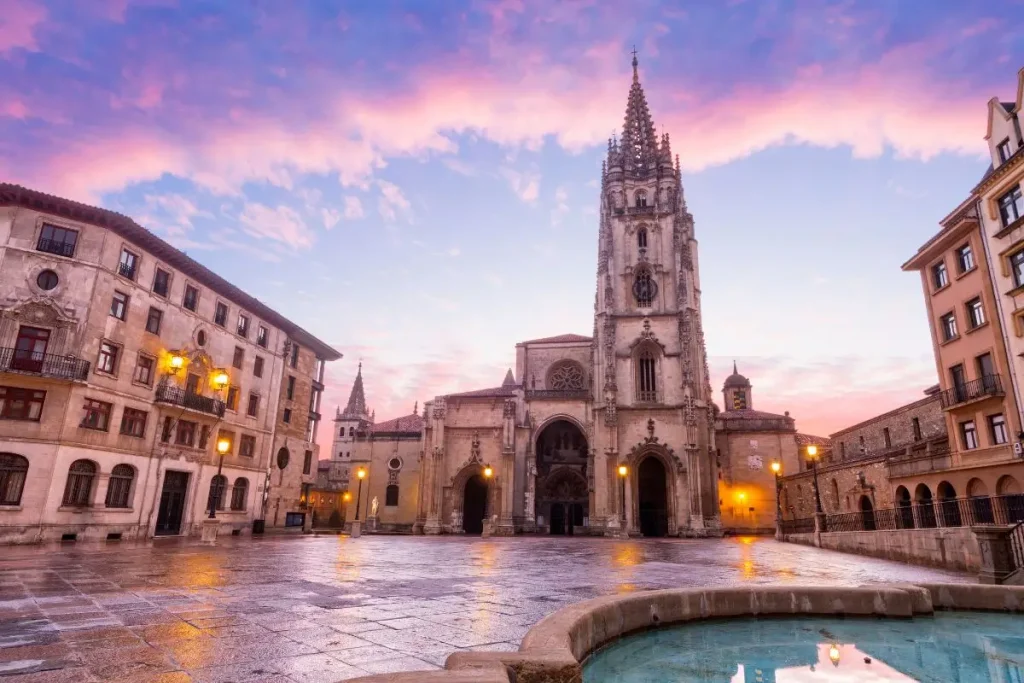
Oviedo Cathedral
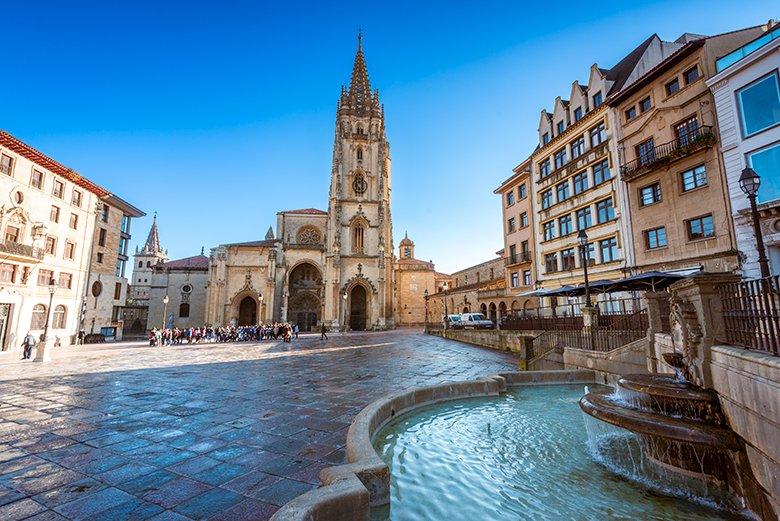
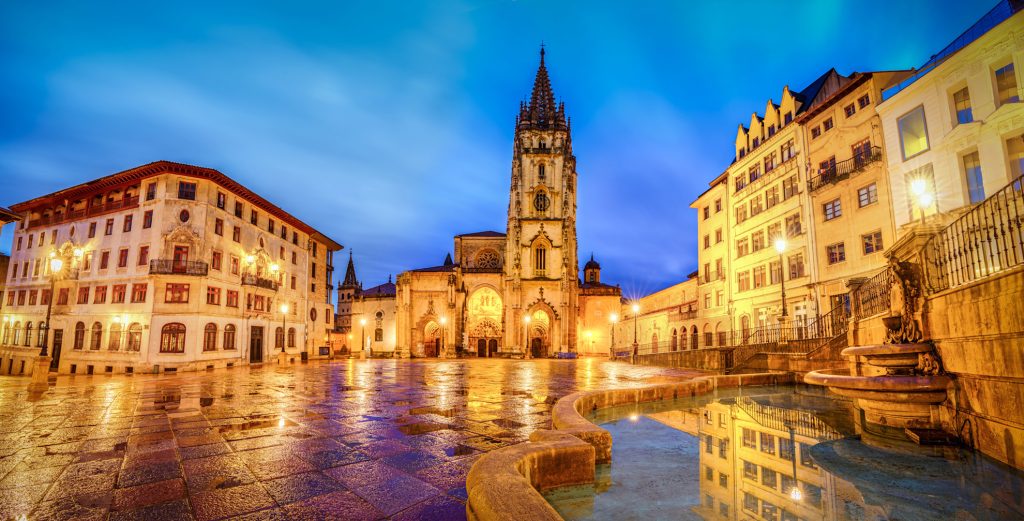
Oviedo Cathedral was built over three centuries and represents several architectural styles.
Archaeological Museum
The Archaeological Museum contains materials illustrating the history of Asturias from prehistory to the late Middle Ages.
Foncalada
Foncalada is a building with a drinking water source, built by order of Alfonso III the Great in the 9th century.
San Julián de los Prados
The Church of San Julián de los Prados was built in the 9th century. Its interior is decorated with frescoes representing a significant example of pre-Romanesque painting, and its architectural decoration bears clear Roman influences.
Santa María del Naranco
Santa María del Naranco was built by order of King Ramiro I as a country palace in 848; it was later converted into a church. It is located at the foot of Mount Naranco, 4 kilometers from Oviedo.
Plaza del Fontán
Several centuries ago, the site of Plaza del Fontán was occupied by a lake fed by natural springs, where wealthy families of medieval Oviedo often vacationed. It was decided to drain the lake and turn it into a square to build houses.