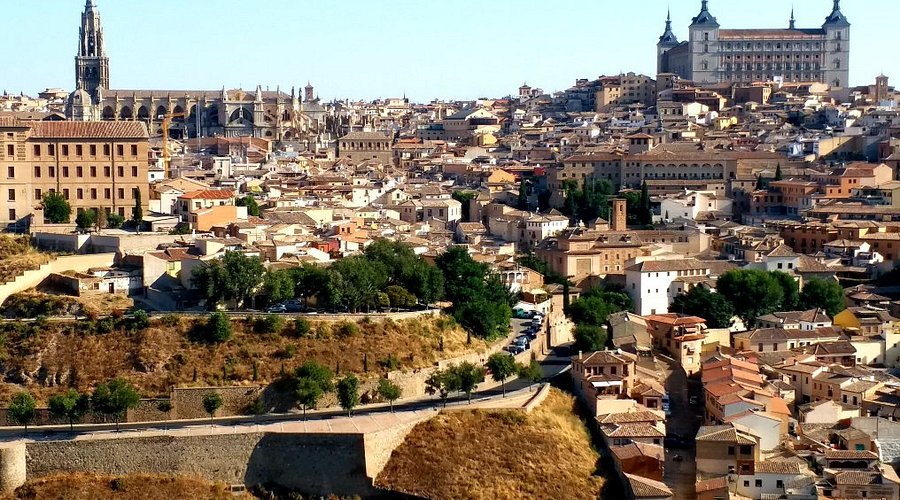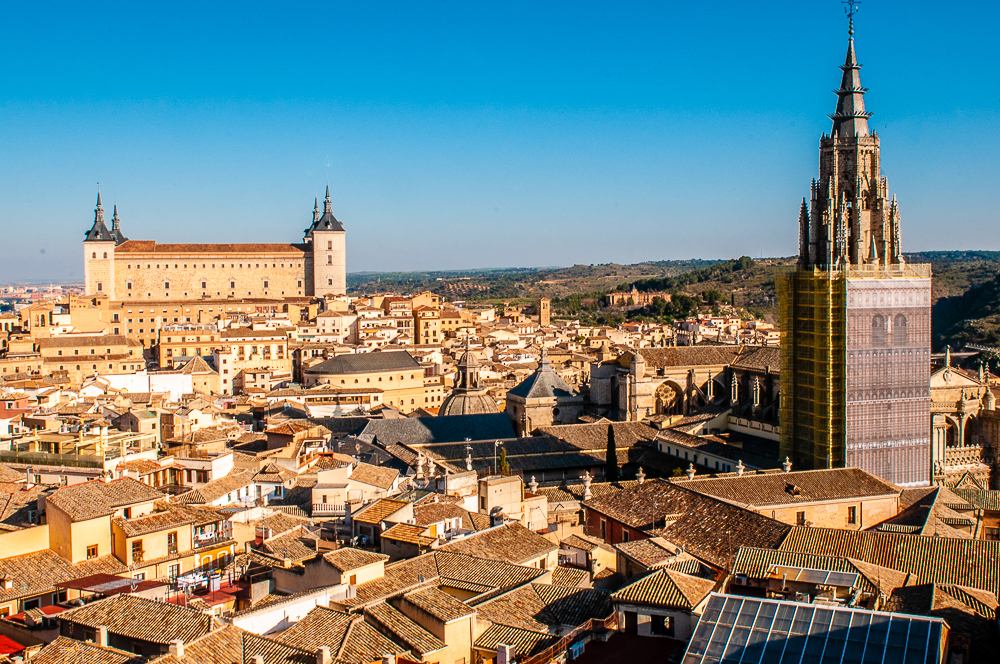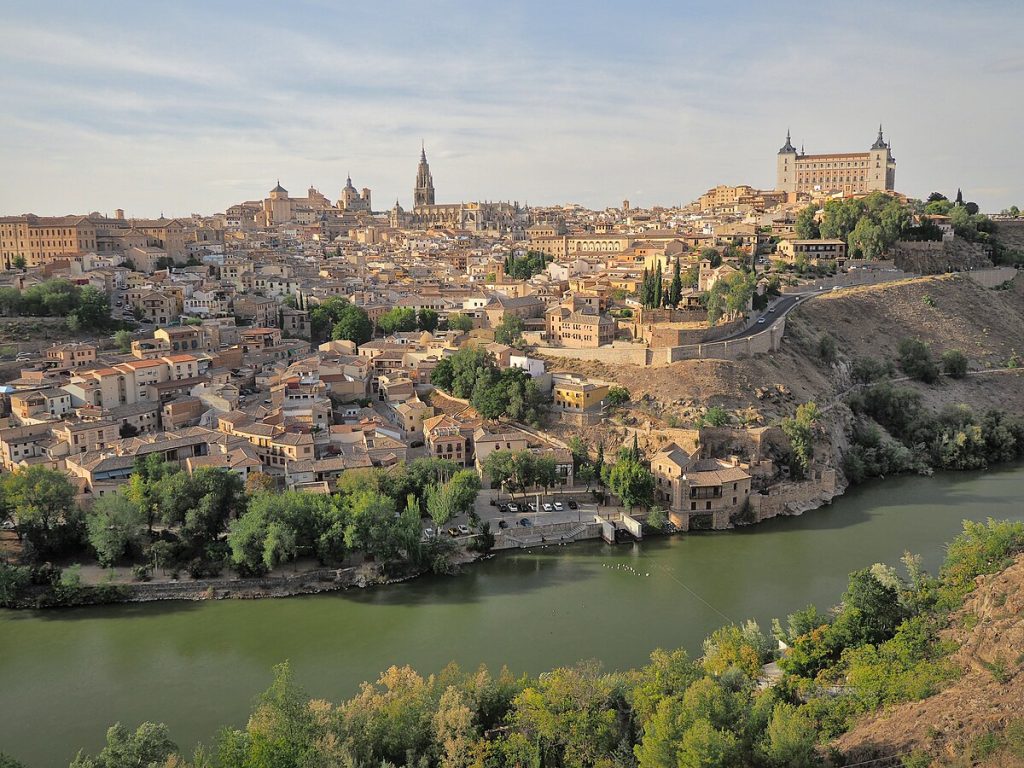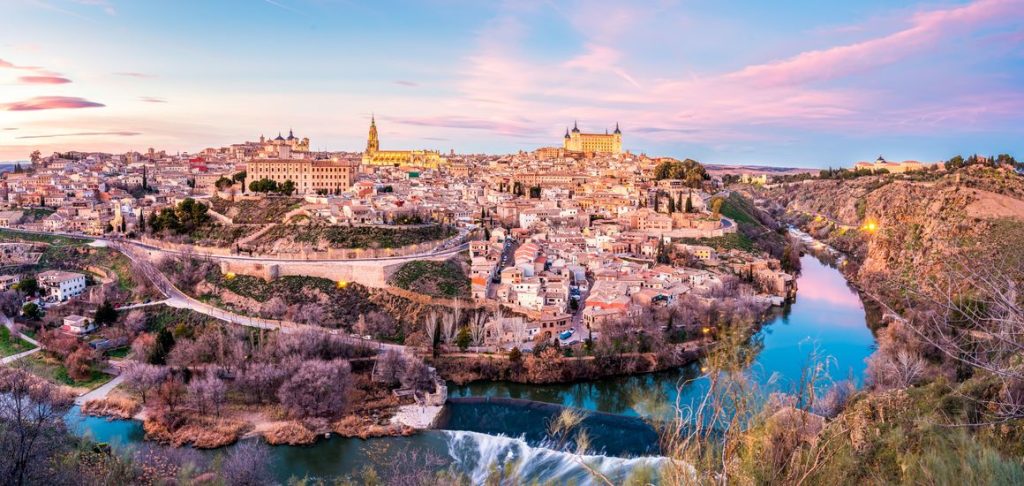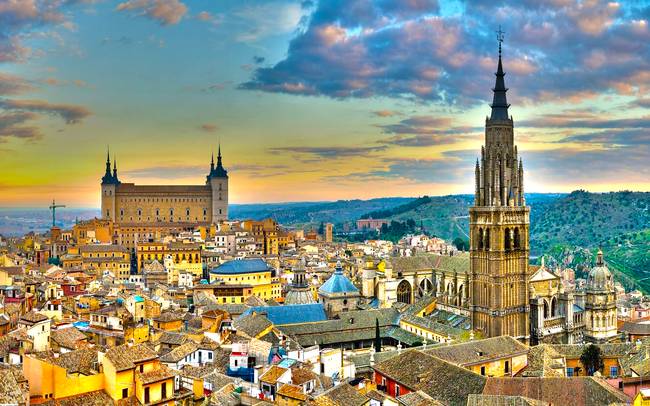
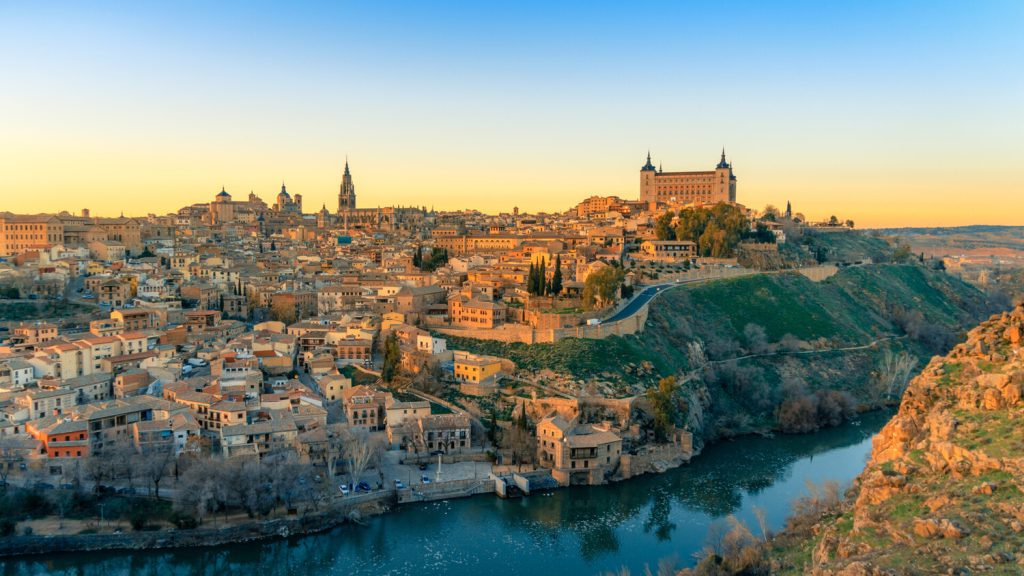
 Toledo has had a profound influence not only on Spanish but also on European culture. In 1986, the city was listed as a UNESCO World Heritage Site.
The exact date of Toledo’s founding is unknown, but a city named Toletum was already known in the second century AD, when it was conquered by the Roman general Marco Fluvius. Toledo was the “royal city” of the Visigoths, the capital of a barbarian state until 711, when it was conquered by the Arabs. Toledo became Christian in 1085, when it was conquered by the Castilian king Alfonso VI.
Bisagra Gate and Other Routes to Toledo
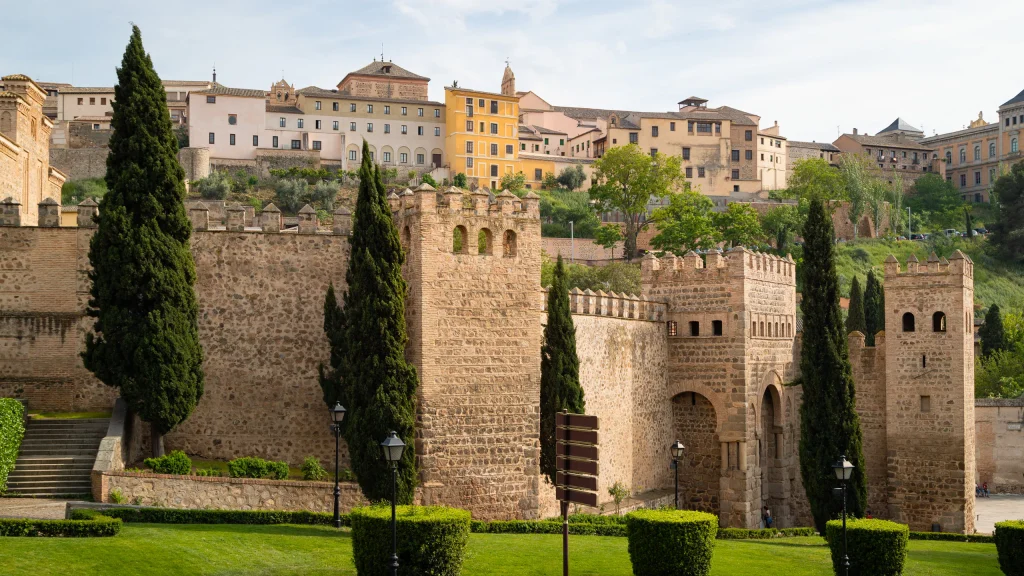
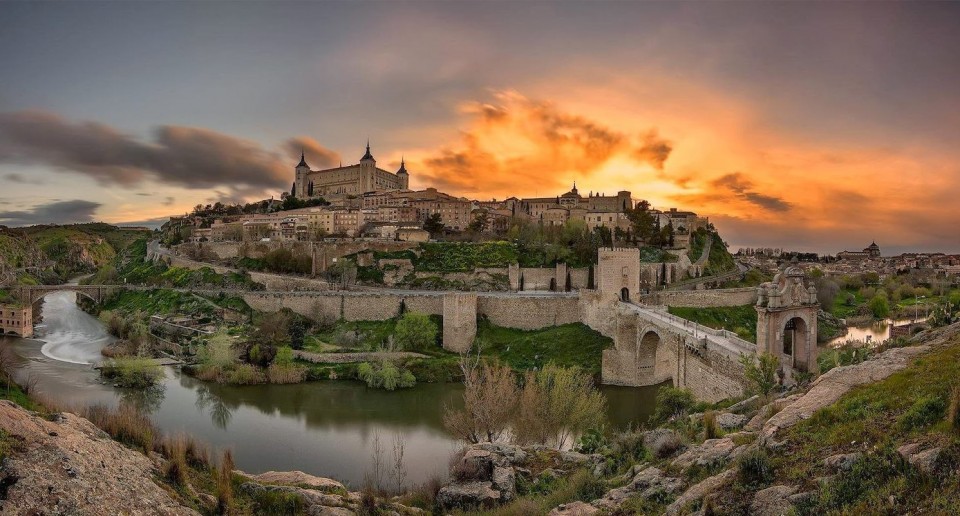
Bisagra Gate is located on the northern plain, which the Arabs called bab sagra. The gate, which dates back to the Arab era, is now known as the Alfonso VI Gate.
The new Bisagra Gate is located 80 meters below the old gate. Built by order of Charles V, the Bisagra Gate is the main, but not the only, entrance to the city. Near the San Martin Bridge is another gate to Toledo, leading to the Jewish Quarter, the historic part of the city.
Another road leads into Toledo, along a steep slope. This is an inconvenient but important route into the city, as Extremadura, a strategically important region of Spain, lies on that side. On this side is the Gate of the Sun, built by order of Bishop Ternorio at the end of the 14th century.
Bridges of Toledo
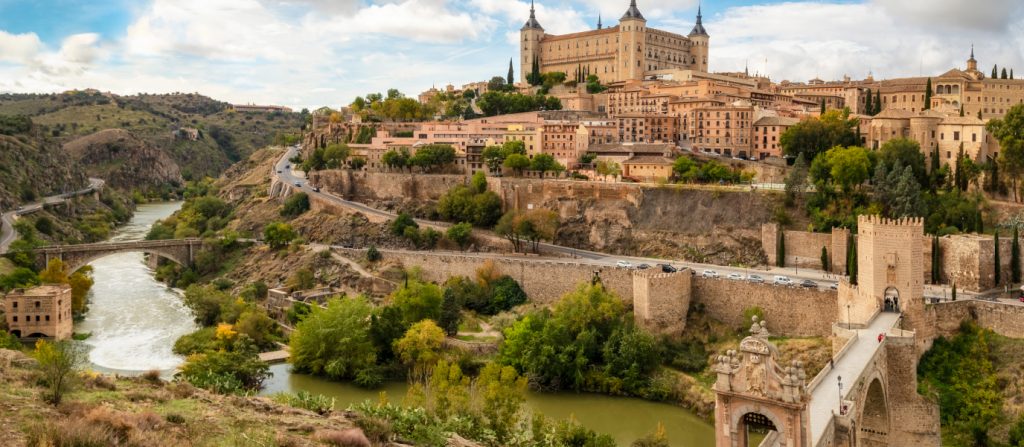
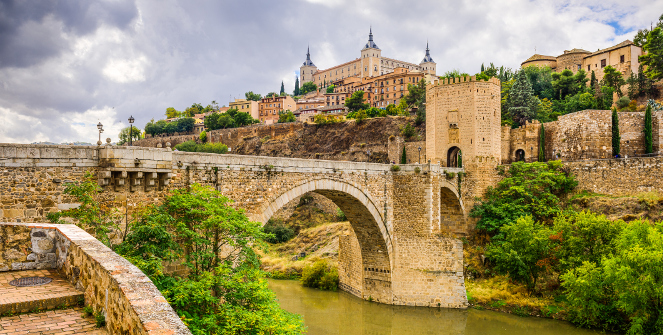
The Alcántara Bridge, which leads to the Gate of the Sun, is much older than the gate itself. It was built by the Romans to connect the city with Mérida and Zaragoza.
The San Martin Bridge leads to the Gate of the Hawthorn. It was built during the Arab era. Tourists are drawn to the massive tower, part of the fortress wall, from which the bridge begins. This tower, called the “Bath of the Concubine,” is one of the bridge’s pillars.
The Alcazar of Toledo
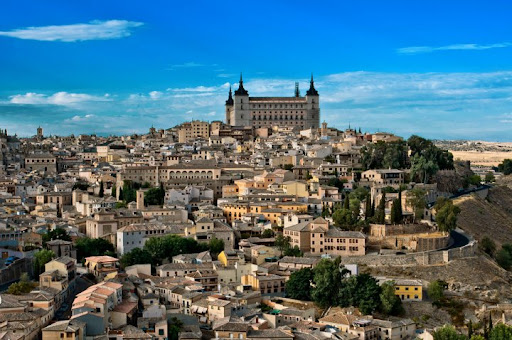
The Alcazar of Toledo is a quadrangular structure, austere yet graceful, like a crown on the ancient city. The Alcazar is both a fortress and a palace. The Alcazar of Toledo is one of the most famous in Spain, having previously served as the residence of the Visigoth, Arab, and Spanish rulers of Toledo.
It was with the Alcazar that Toledo’s development began, and from there the walls enclosing the city began to be built.