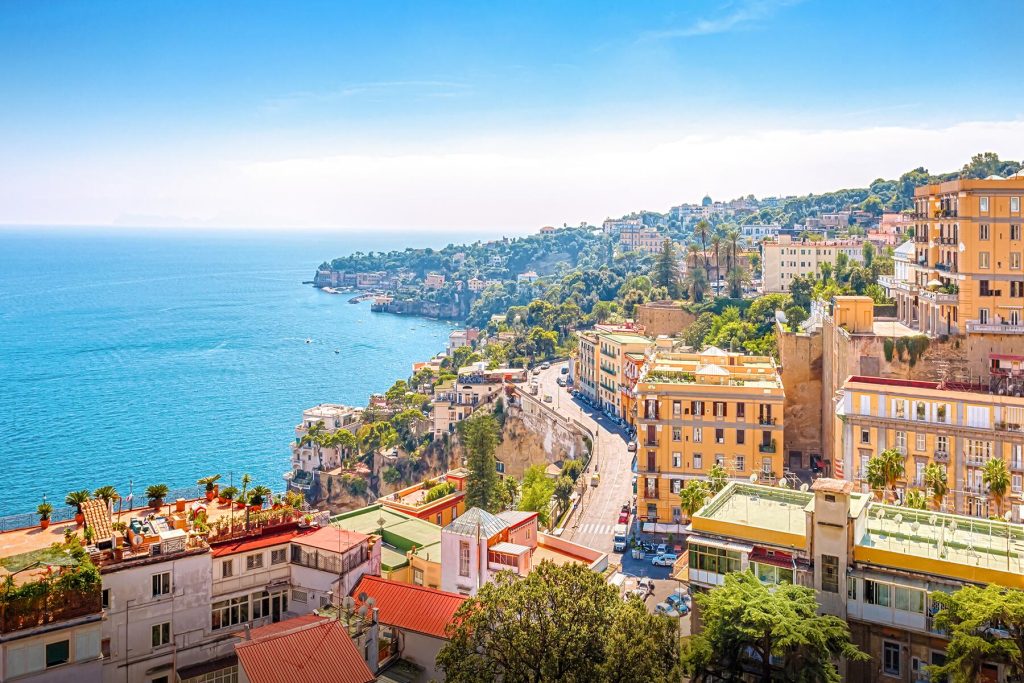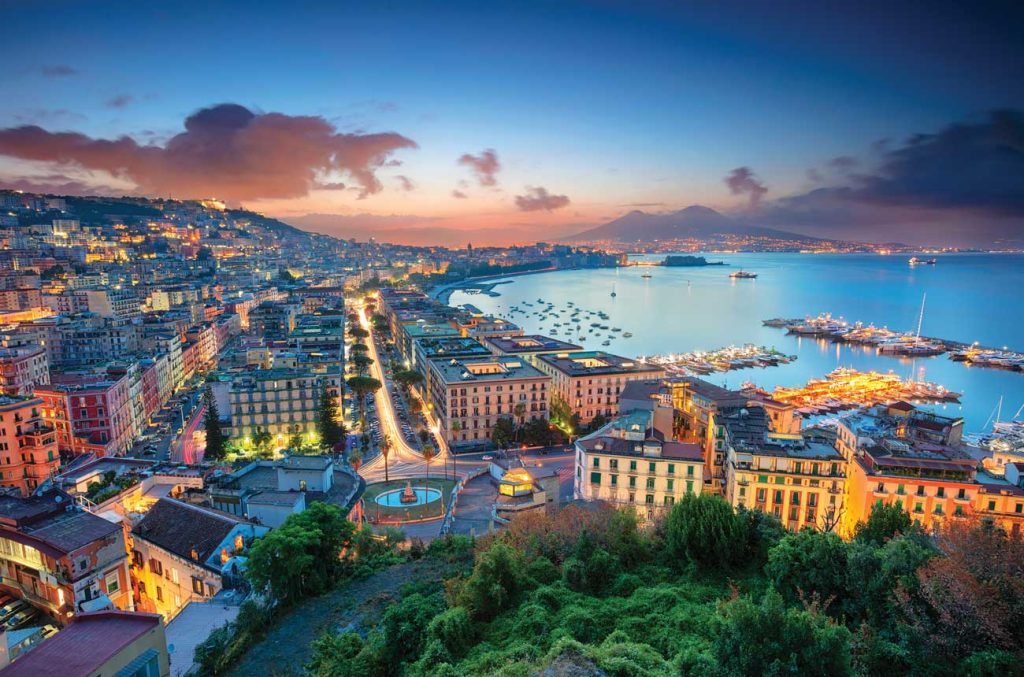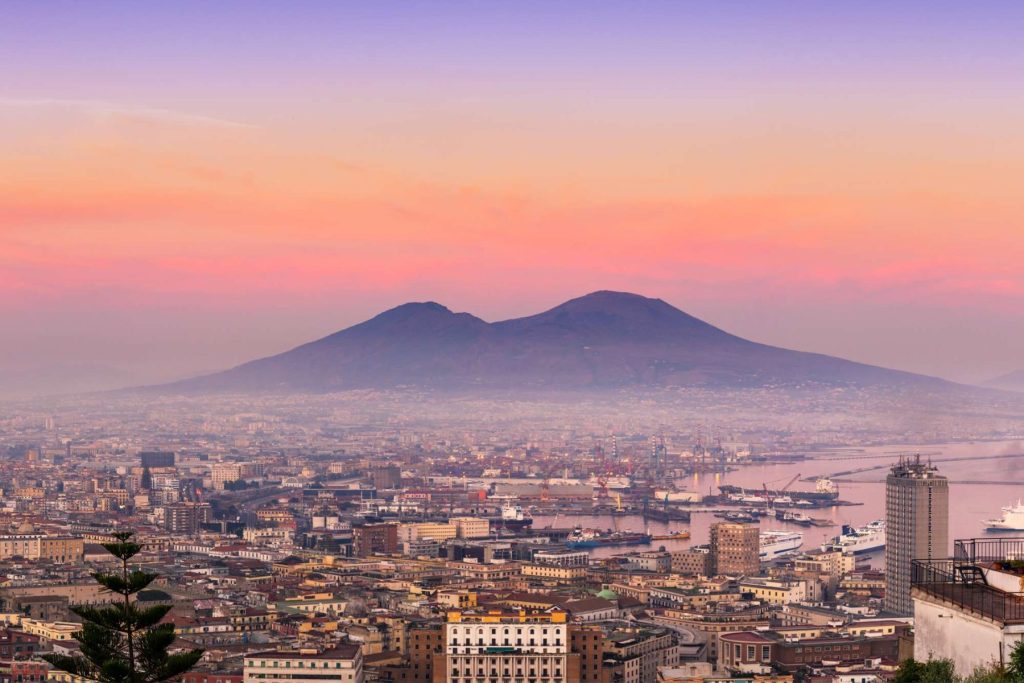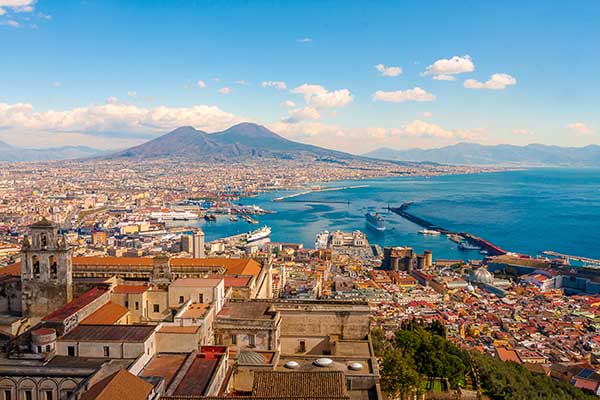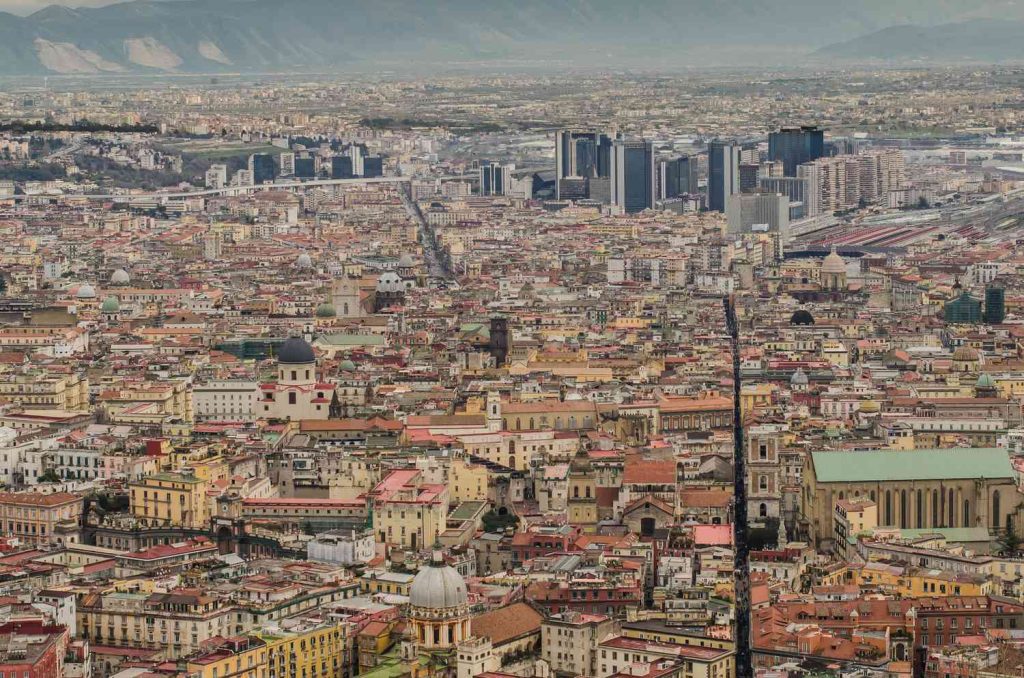
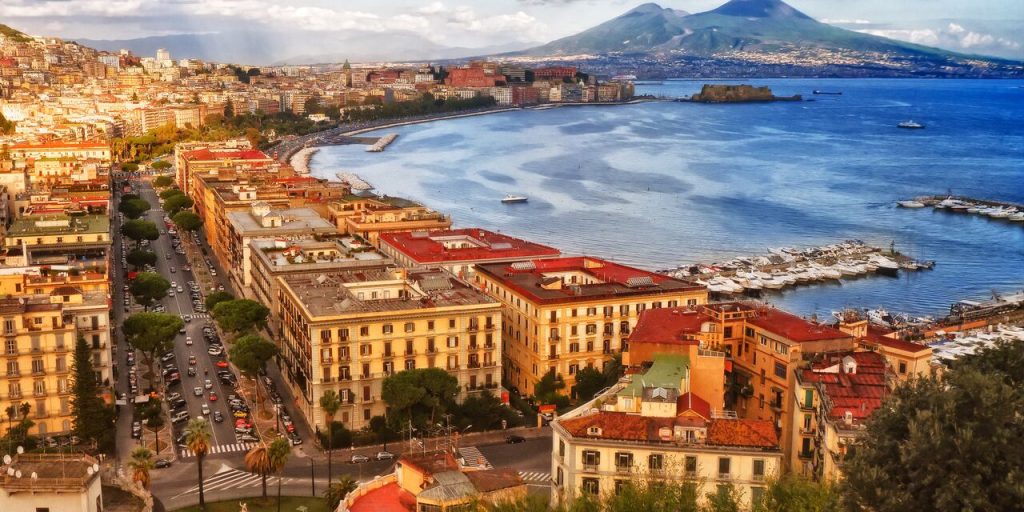
 Naples is located on the northern shore of the Gulf of Naples, at the foot of Mount Vesuvius. It is the third largest city in Italy. It is a major seaport with shipyards and a center of the oil, steel, and porcelain industries.
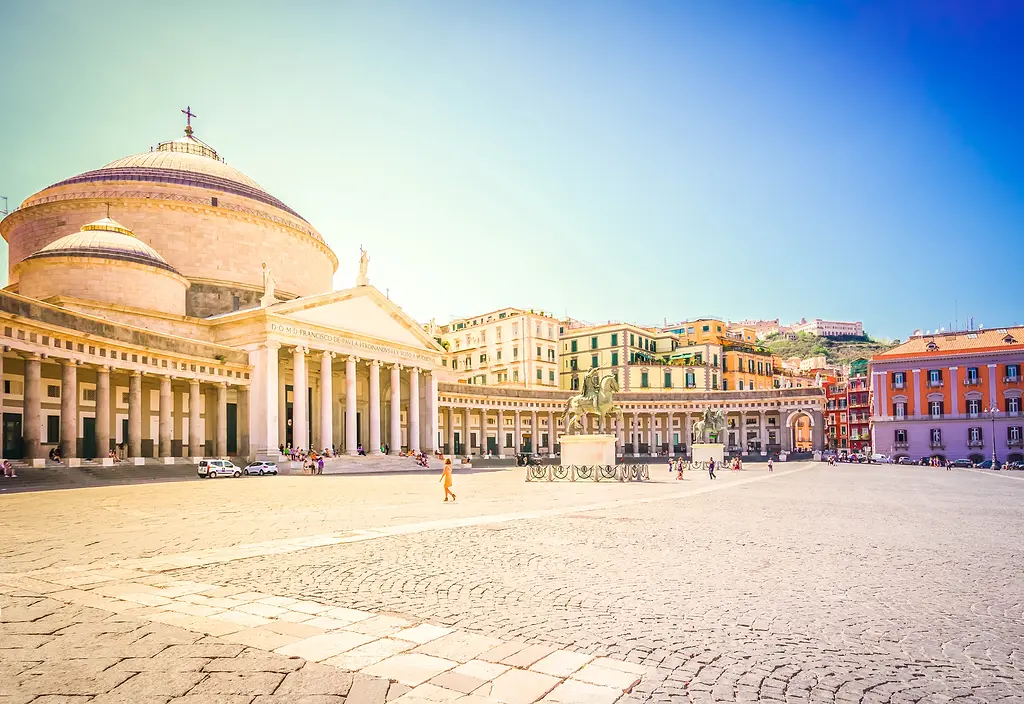
Naples is the most controversial city in Italy; you either love it or hate it. Tourists are attracted by the sunny climate, the many historic buildings, and the welcoming people. Naples is a truly unique, vibrant, and lively city. Italians from the north of the country come here to experience the spirit of Italy’s past.
Now Naples is known for its crime-free lifestyle and cultural upsurge. Popular tourist routes with many attractions are interspersed with narrow streets where everyday life takes place. You always need to be on guard against robbery, but unfortunately, it often happens.
Due to its strategic location, Naples has been the target of numerous attacks. Originally a Greek settlement, the Romans captured it in 327 BC. Since then, the city has been a favorite residence of emperors and artists, including Virgil and Nero. In the 7th century, Naples was part of the Byzantine Duchy, later part of Norman Sicily. The city reached its peak in the Middle Ages under Charles of Anjou, when in 1266 it became the capital of the Kingdom of Naples. The Spanish Habsburgs were followed by the Bourbons, Bonapartes, and Savoys, when Campania became part of a unified Italy in 1860.
The city is divided into several districts: the old center, with its narrow streets, borders the new administrative district to the west, and the business district to the east. Other districts of Naples are located on the hills of San Martino and Capodimonte. Residential areas are nestled along the hills of Vomero and Posillipo. To the east of Naples, around the gulf, lie Pompeii and Herculaneum—the best-preserved cities of classical antiquity—and their main attraction, Mount Vesuvius. Vesuvius’s volcanic dust buried these cities and preserved them virtually unchanged since its major eruption in 79.