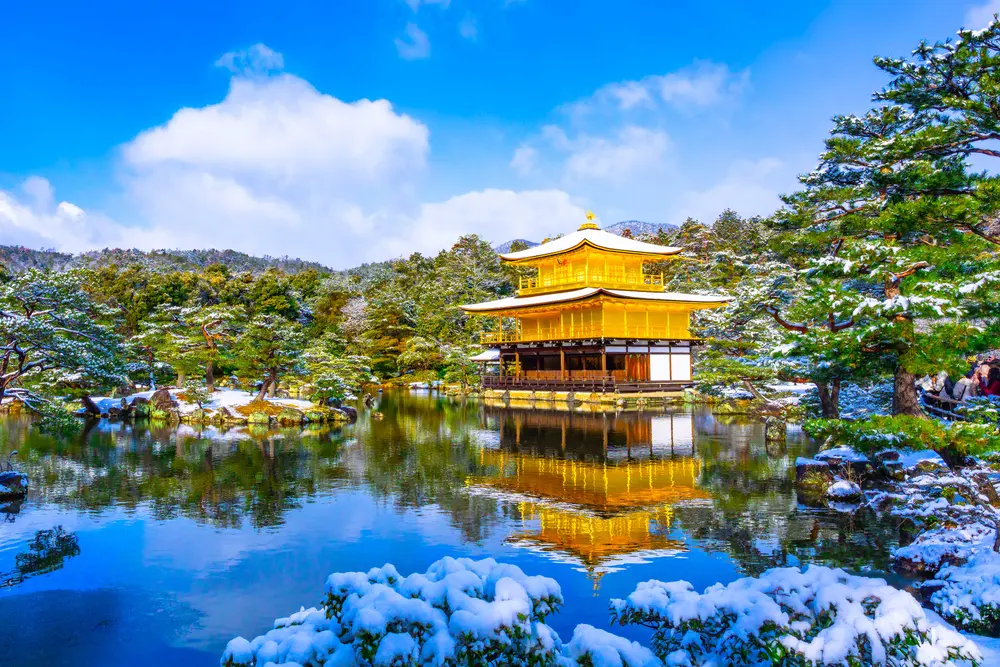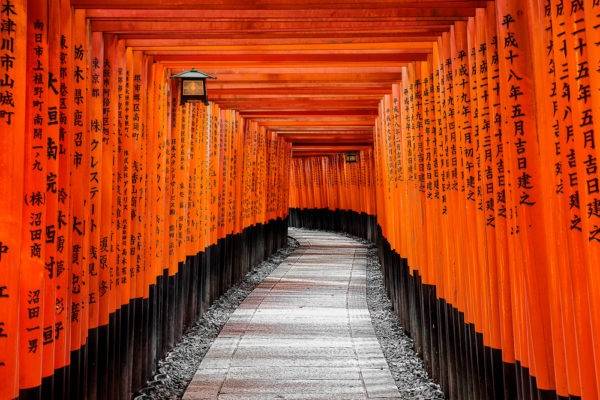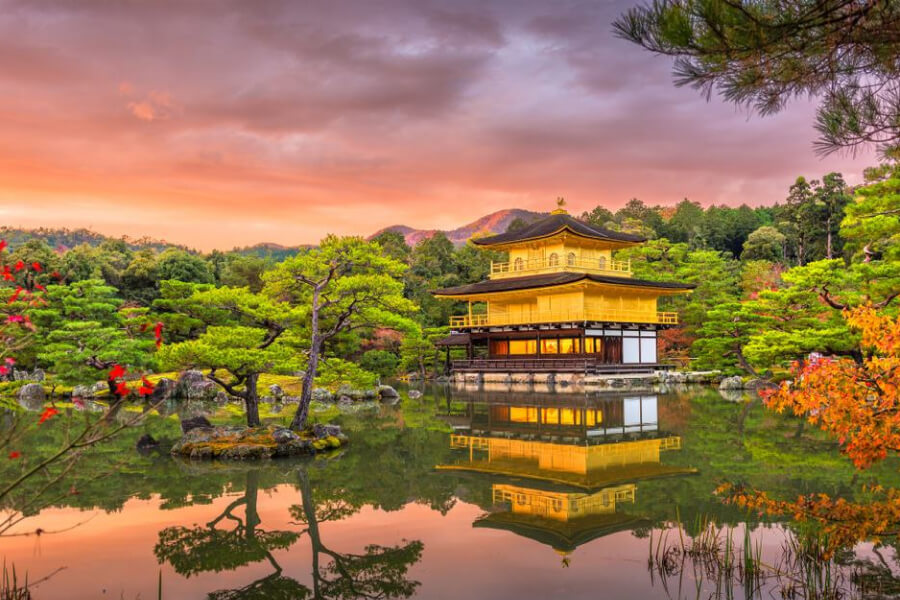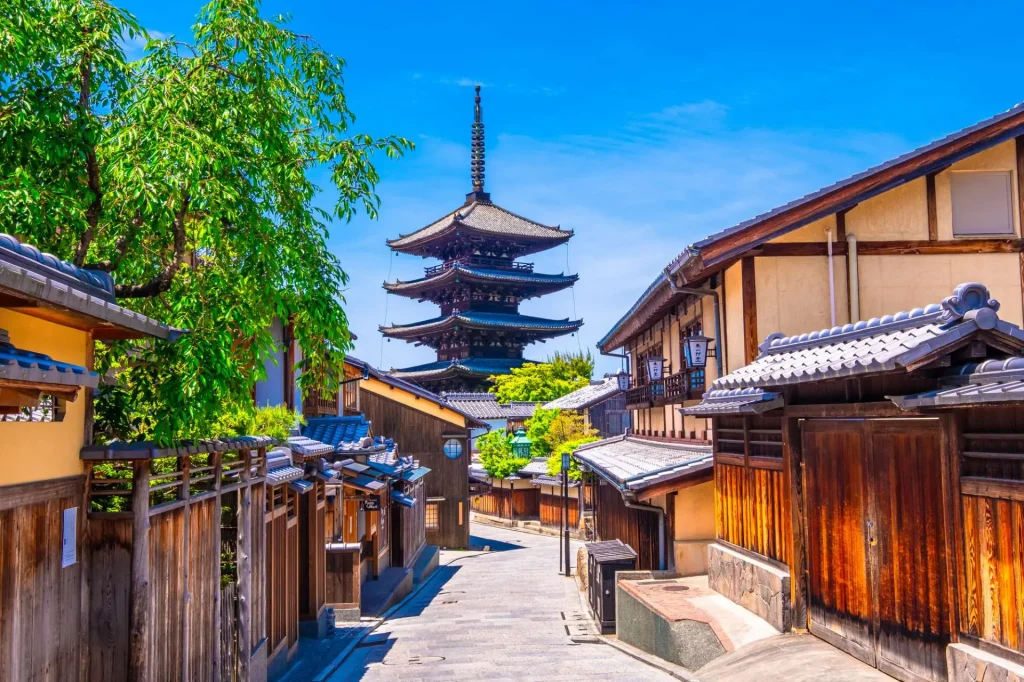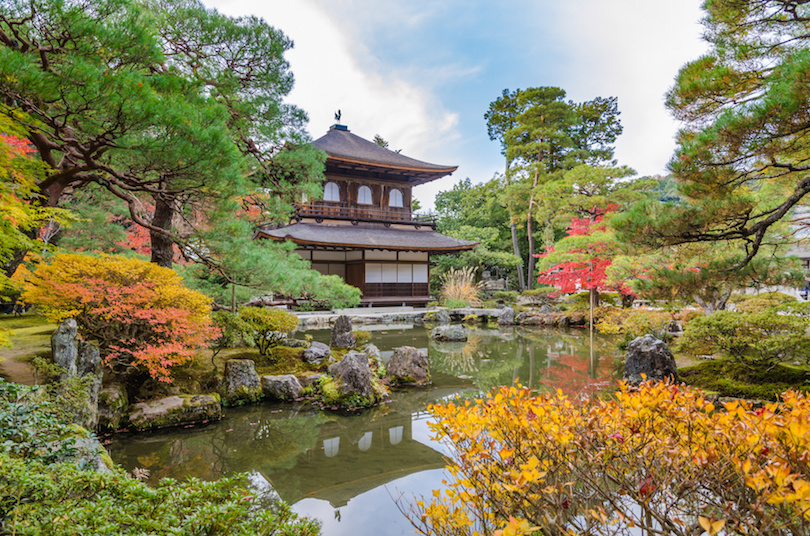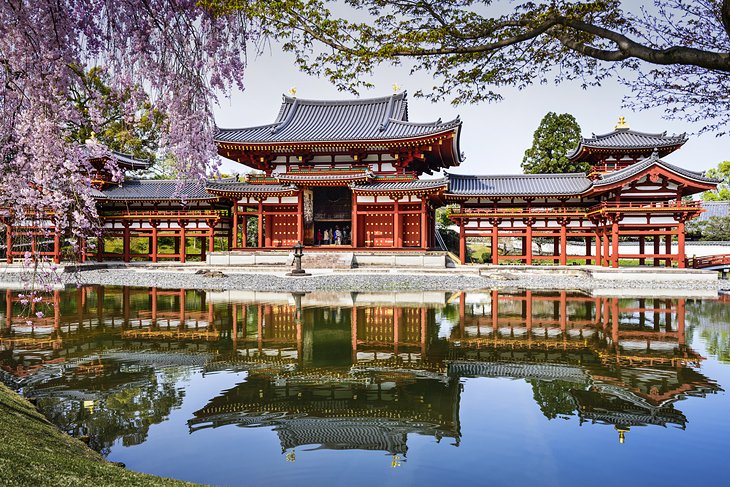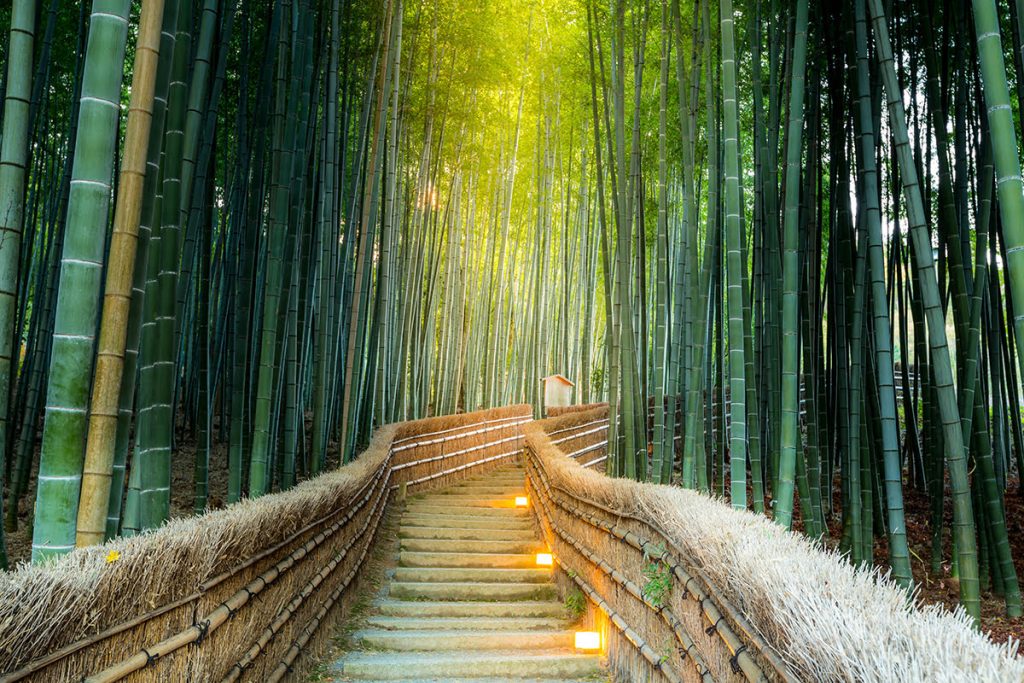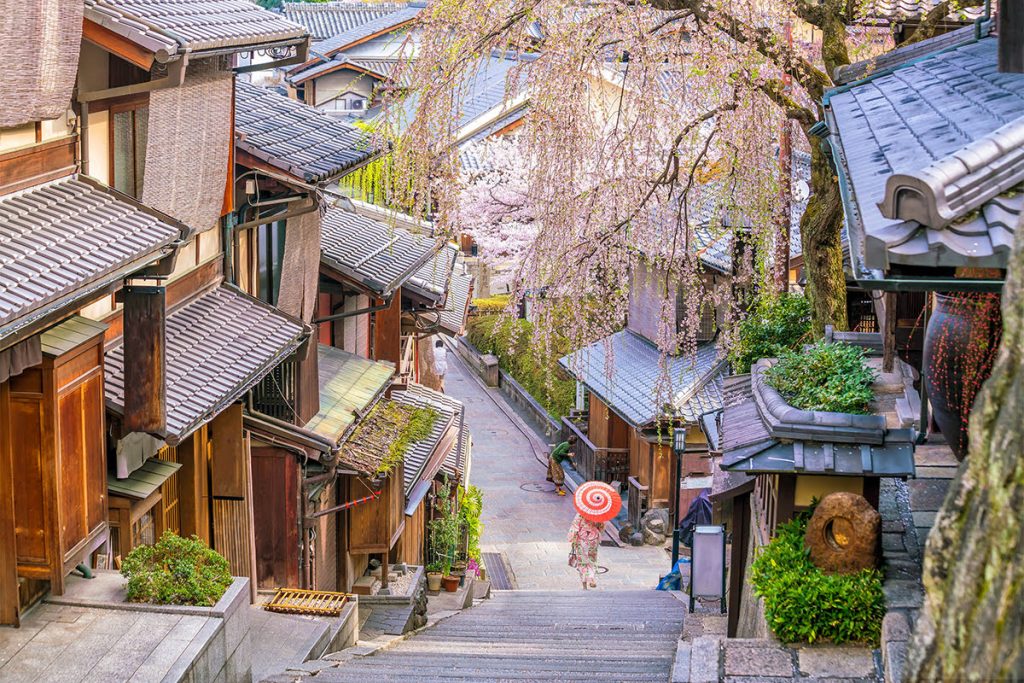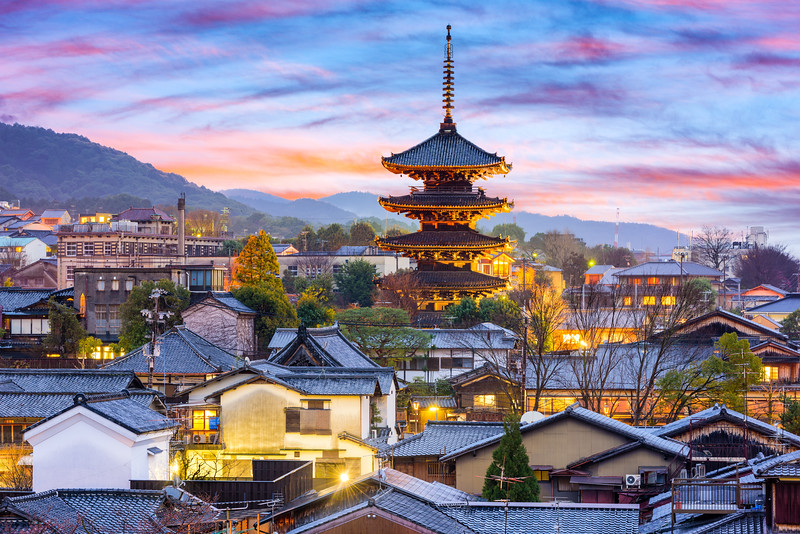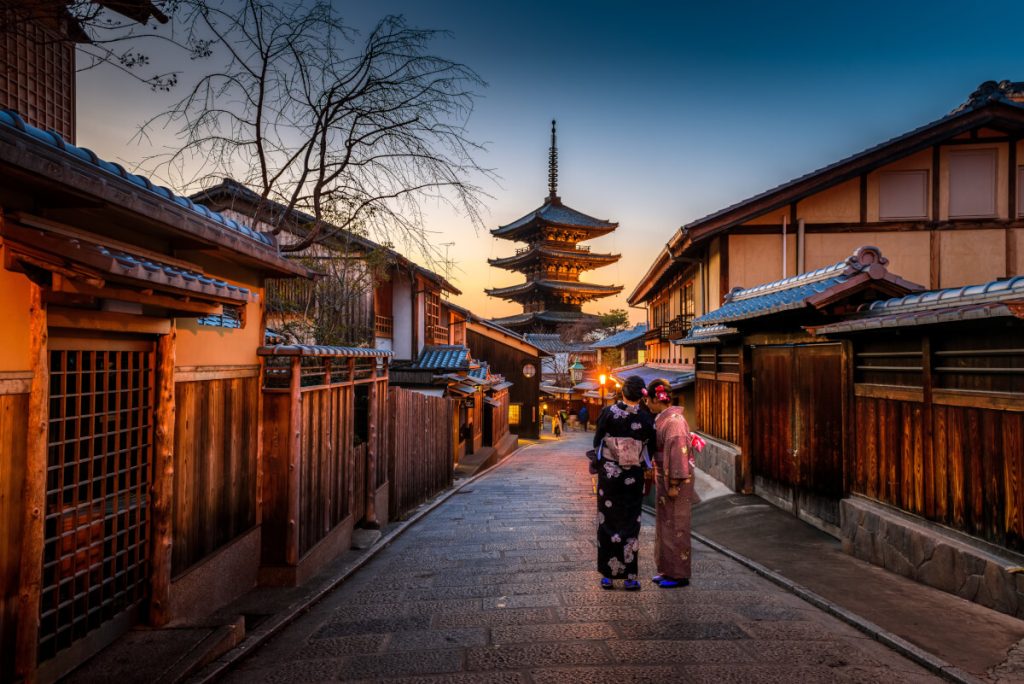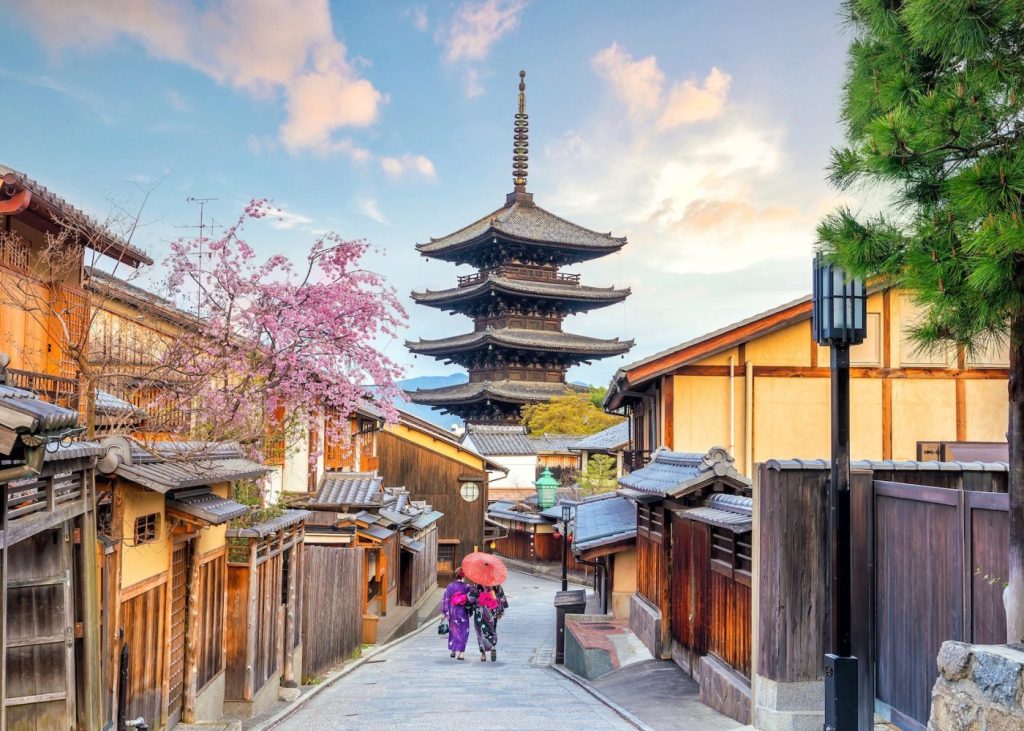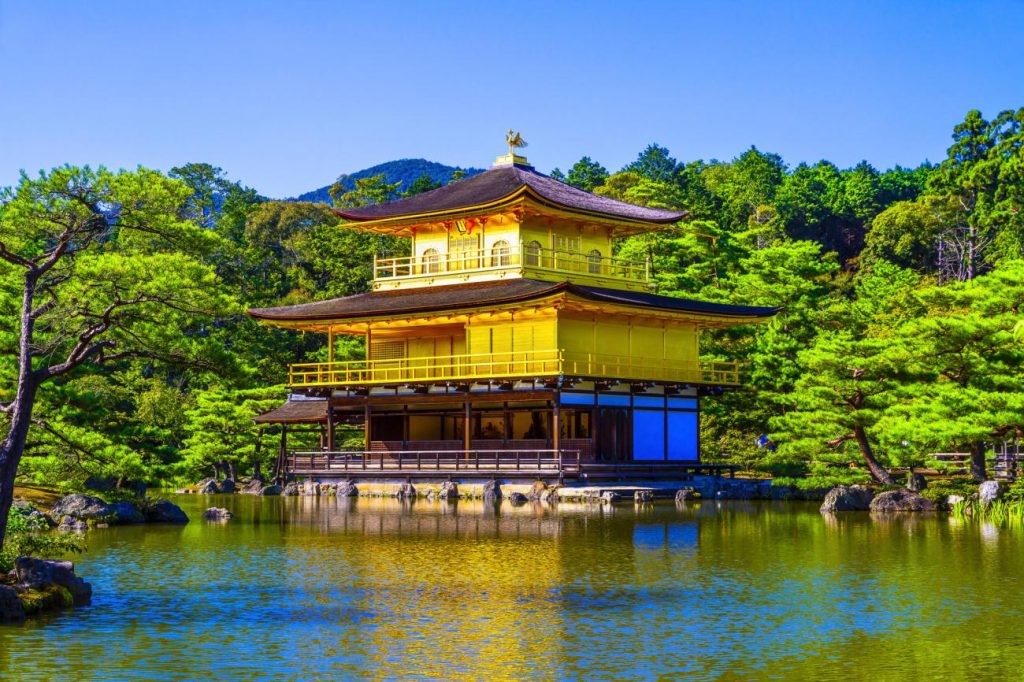
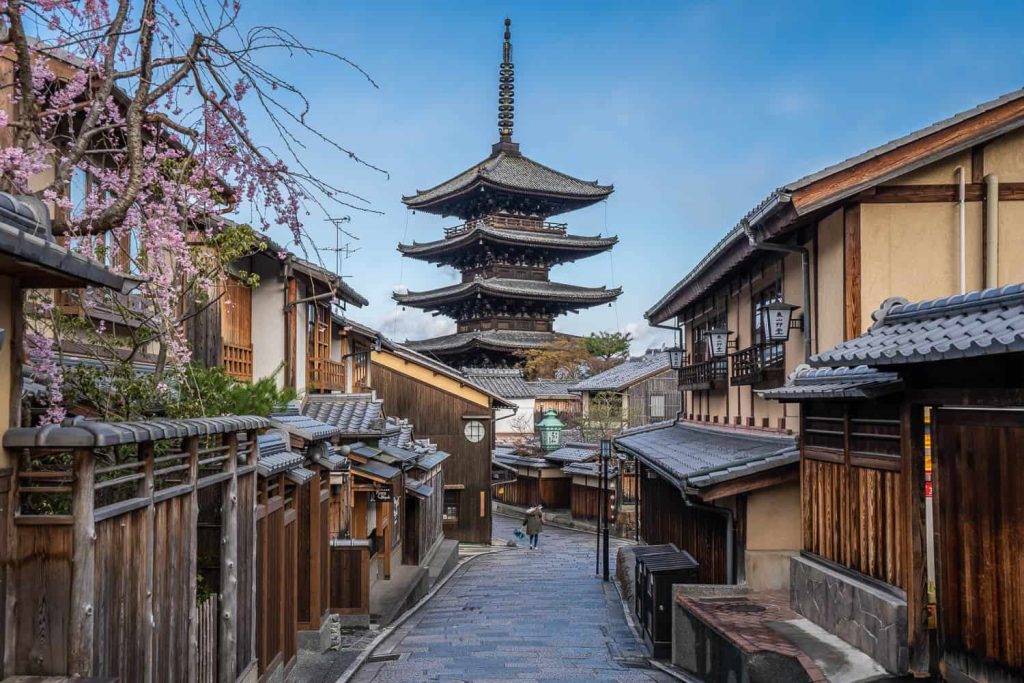
 For over a thousand years, Kyoto was the capital of Japan. During this time, it became a repository of the finest achievements of Japanese culture, art, and religion. Temples with curved roofs are reflected in the still surface of ponds, pine trees grow gracefully, and there are enough sights to fill several Eastern countries. Furthermore, Kyoto is an urban, vibrant, and youthful city with a wealth of entertainment options.
Kyoto Attractions and Attractions
The city’s main attraction is the Gosho Imperial Palace, founded in 794, with the Sannaiden Palace, the Shishinden Ceremonial Hall, the Seiryoden Imperial Residence, and the adjoining courtyard. Also of interest to tourists is Nijo Castle (1603), with its Ninomaru Palace, famous for its unique “singing floor” system, which was once a unique security system, as well as the classic Japanese gardens of Ninomaru and Seiryu-en.
Other popular attractions include the magnificent moss garden at Saiho-ji Temple, the famous rock gardens of Ryoan-ji and Sambo-in, the temples of To-ji (7th-17th centuries), the Katsura Palace complex (17th century), Heian-jingu (1895), Sanjusan-gedo (1164), Nishi-Higashi, Nishi-Hongan-ji (1272), and Tenryu-ji (16th century), as well as numerous imperial tombs, gardens, and parks.
Kyoto Gardens
Located near the Kamo River, the Kyoto Botanical Garden is renowned for its vast greenhouse, home to 4,500 plant species. The botanical garden consists of several zones, including a camellia garden, a cherry orchard, a bamboo garden, a bonsai exhibit, a European-style garden, a Japanese iris garden, a lotus pond, a hydrangea garden, a peony garden, a sunken garden, and more. The greenhouse, opened in 1992, features aquatic and pitcher plants, a pineapple hall, a succulent forest, a jungle zone, desert plants, savannah plants, an orchid section, a potted houseplant section, and a tropical garden.
Kyoto Parks
Kyoto is the most popular cherry blossom viewing destination in Japan. The most popular spots are Maruyama Park, whose crown jewel is the illuminated weeping cherry tree, and the Imperial Palace Garden. Temples of Kyoto
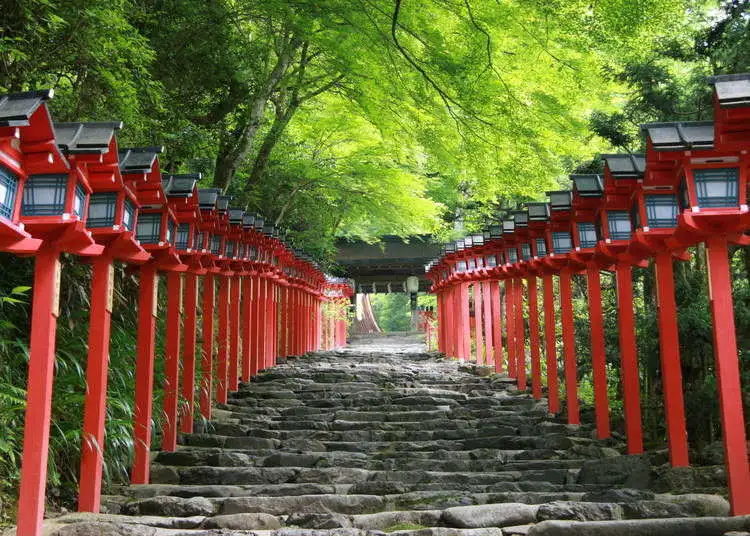
Unlike other cities in the country, Kyoto was virtually undamaged during World War II. The city now boasts approximately 2,000 religious sites: 1,600 Buddhist temples and 400 Shinto shrines.
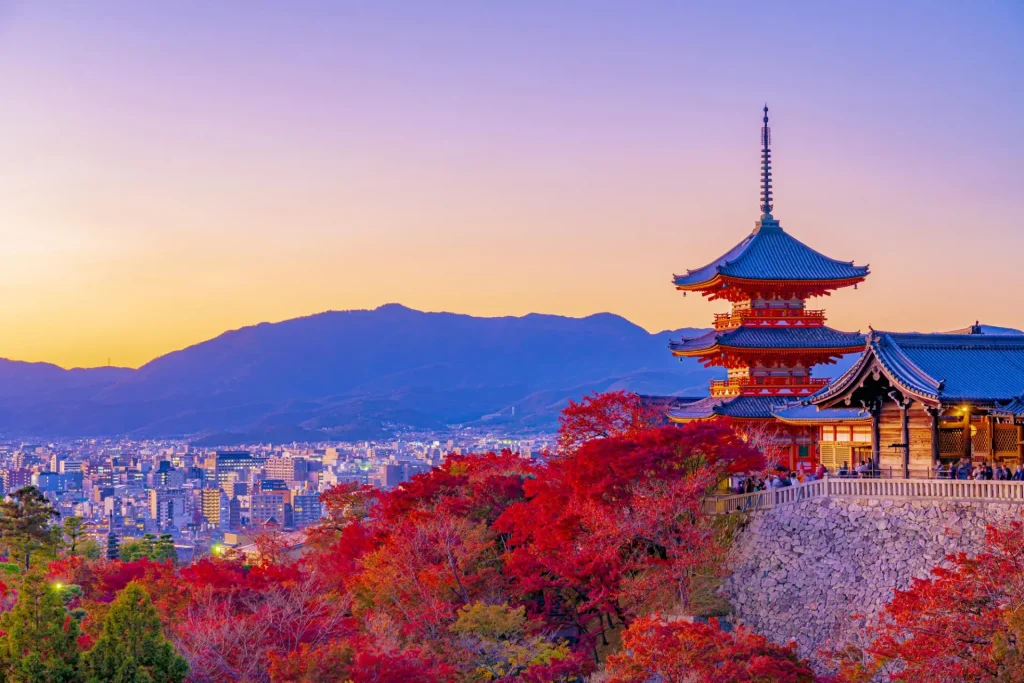
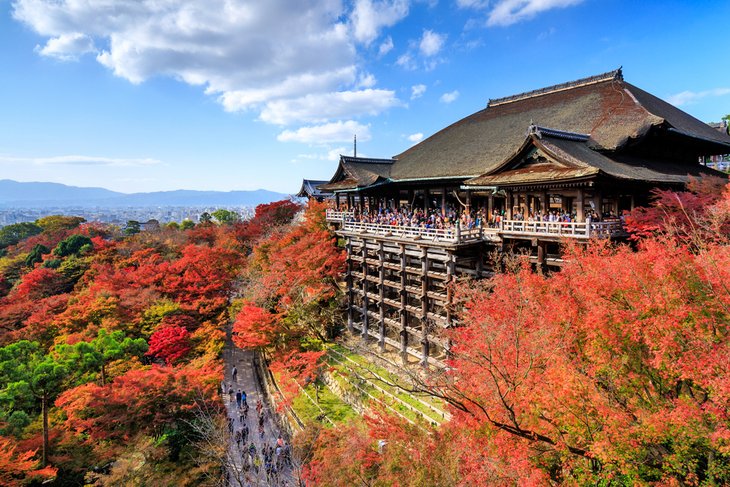
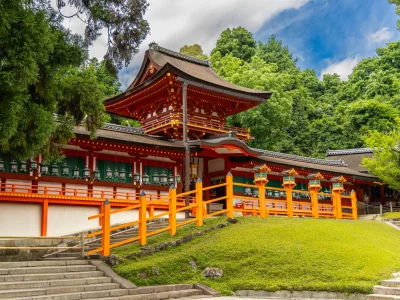
Kyoto’s most famous temples include the magnificent wooden Kiyomizu-dera Temple, perched on a hillside; Ryoan-ji, famous for its rock garden; Kinkaku-ji (Golden Pavilion, or Golden Temple); Ginkaku-ji (Silver Pavilion); and the Heian-jingu Shinto shrine, built in 1895 to commemorate the 1,100th anniversary of the founding of Heian-kyo (modern-day Kyoto).