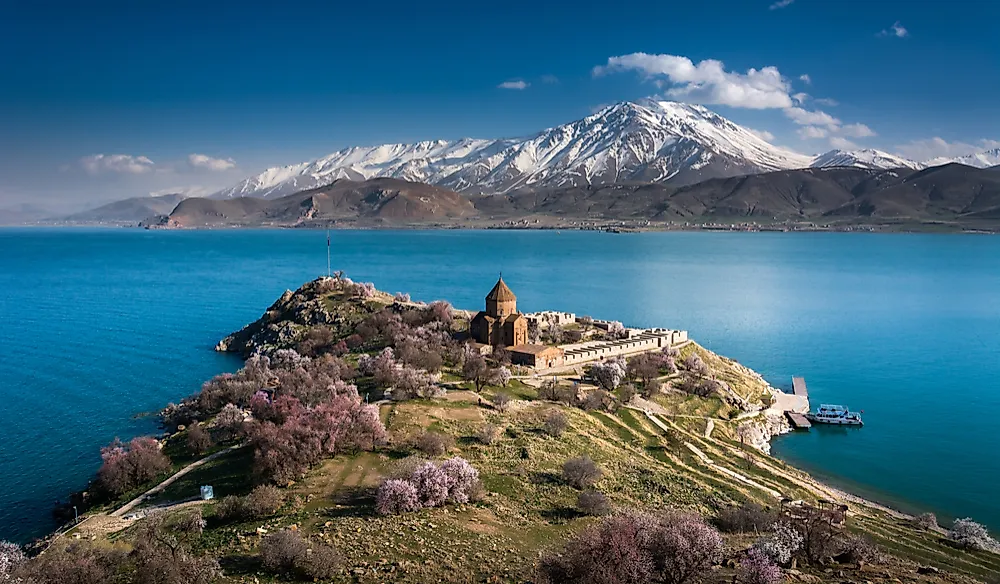
 Lake Van was formed approximately 200,000 years ago. When, following the eruption of Mount Nemrut, a lava flow created a huge dam and blocked local rivers.
The lake, surrounded by high mountains, is located in the turbulent Kurdistan region. Thanks to this seclusion, valuable artifacts with centuries-old histories and a unique way of life have been preserved in the area around this majestic lake.
What to see
The city of the same name is located on the eastern shore of Lake Van. The city itself has few attractions. However, the shores, especially the southern one, are abundant.
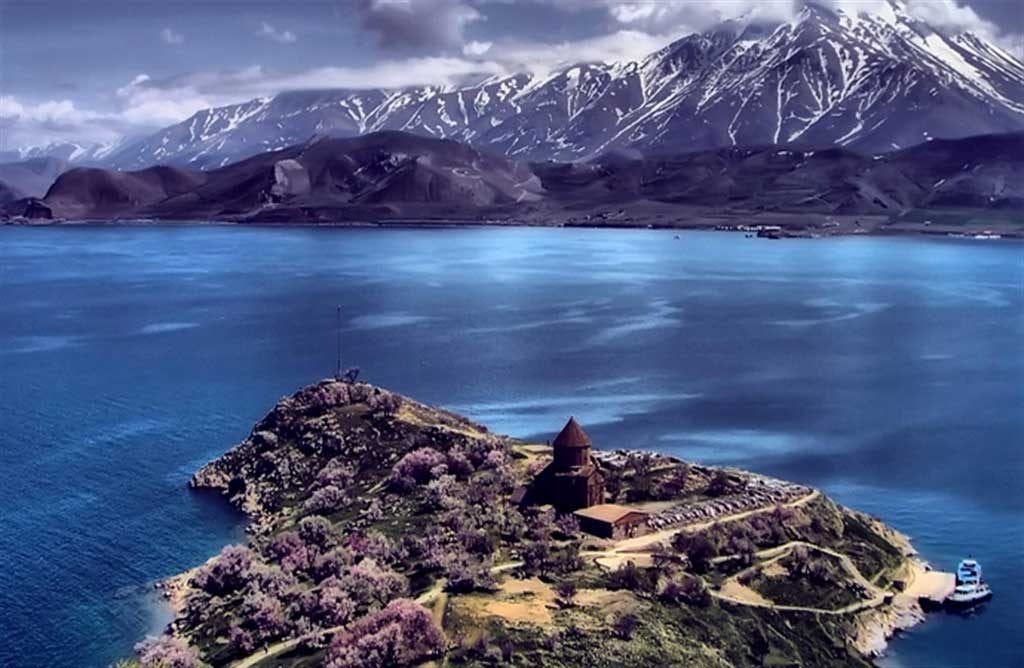
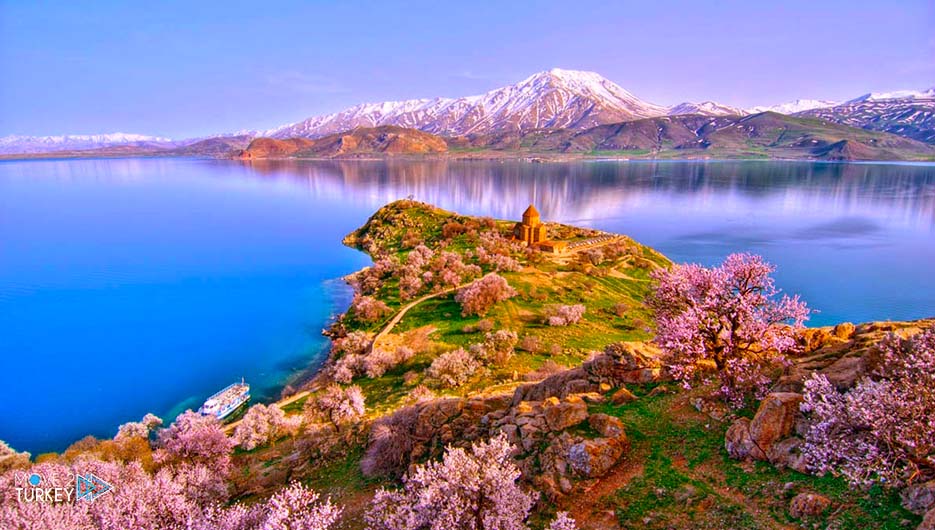
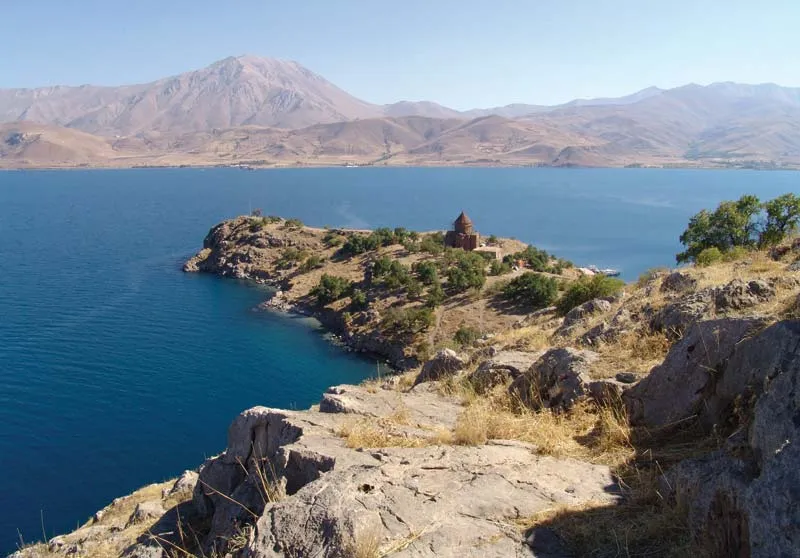
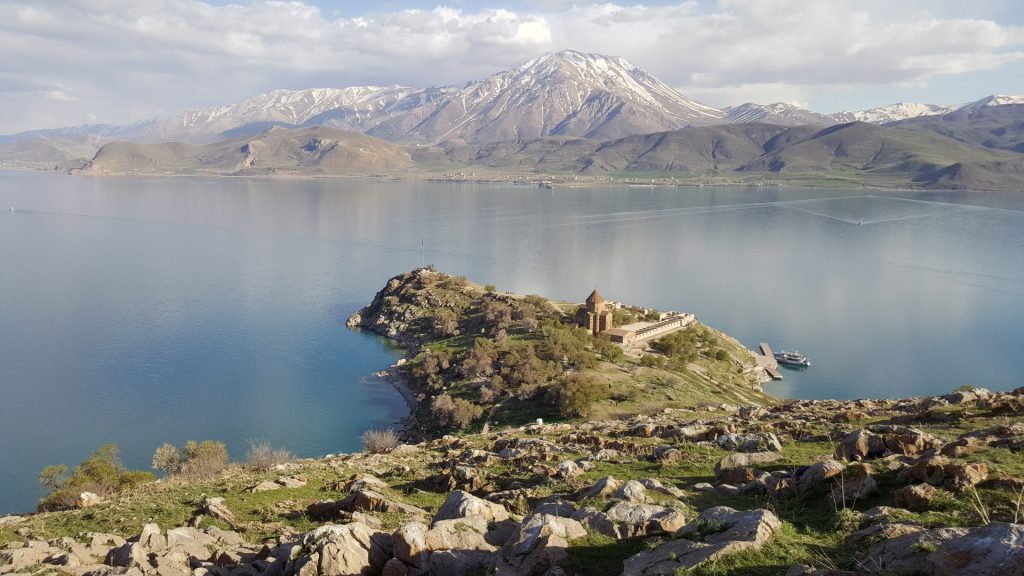
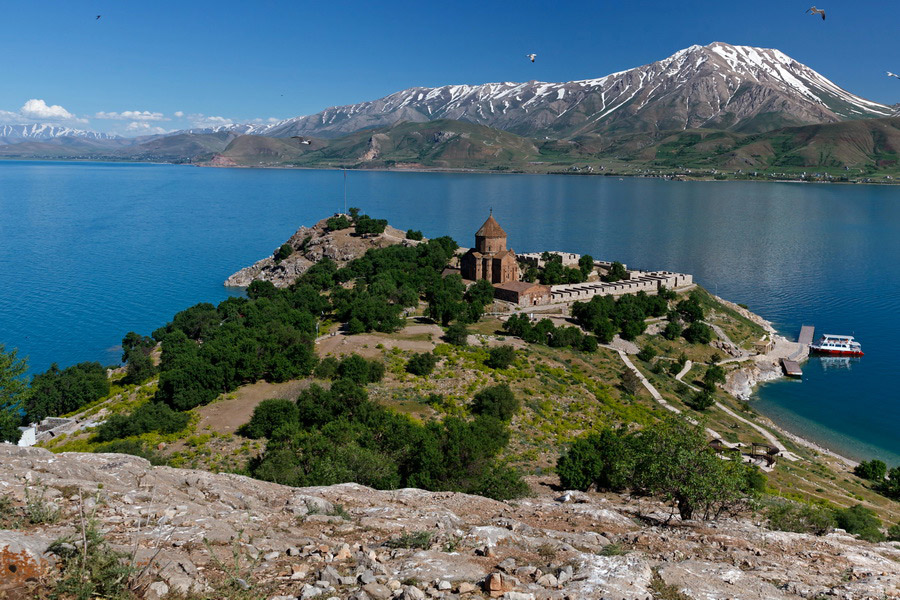
Along the way, you often come across the ruins of ancient Armenian churches and fortifications. However, the main attraction for tourists is Akhtamar Island. This was the residence of the Armenian kings of the Artsrunids in the 10th and 11th centuries. Only the ruins of the ancient port and the Church of the Holy Cross remain of the complex. The church is a fine example of ancient Armenian architecture, renowned for its original and highly varied bas-relief paintings.
Lake Van is not only a salt lake but also a soda lake—the largest endorheic lake in the world. Due to its high alkaline content, it can be used to wash clothes without any detergent, which is what local residents rely on. However, not every living creature can survive in such water. Therefore, Lake Van is home to only one endemic fish species—the main delicacy of local restaurants: darek, or van-shakhkuli (Van fish).