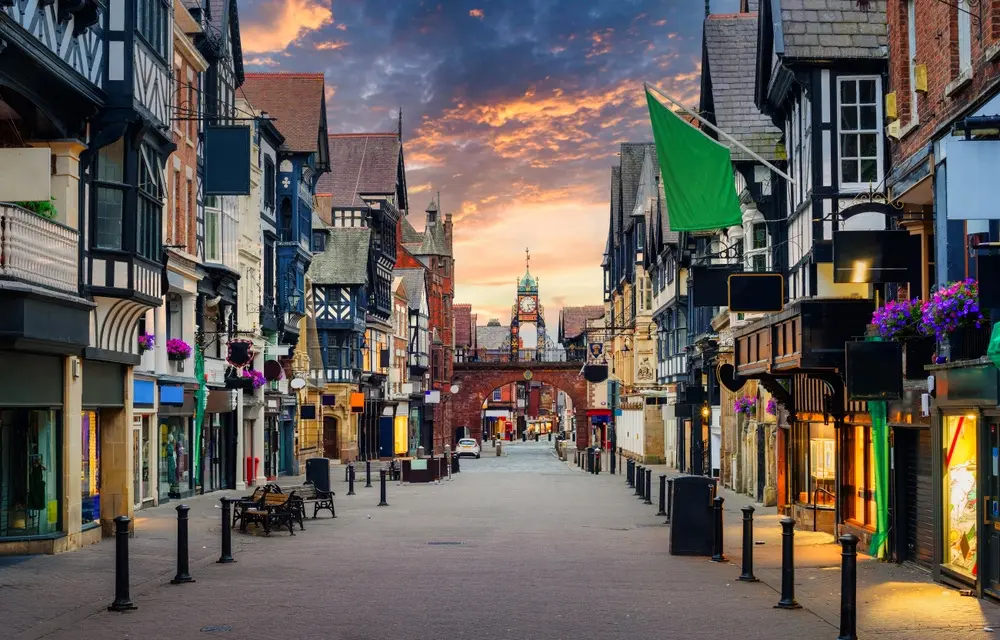
 Chester is one of the most popular cities in England among tourists. Although small, it boasts numerous interesting sights that tell the story of the city’s 2,000-year history—from Roman times to the present day.
Chester Attractions
The best way to explore Chester is with a walk along the old city wall, built in the 14th century. It offers beautiful views of the city and the River Dee. The entire walk takes about an hour.
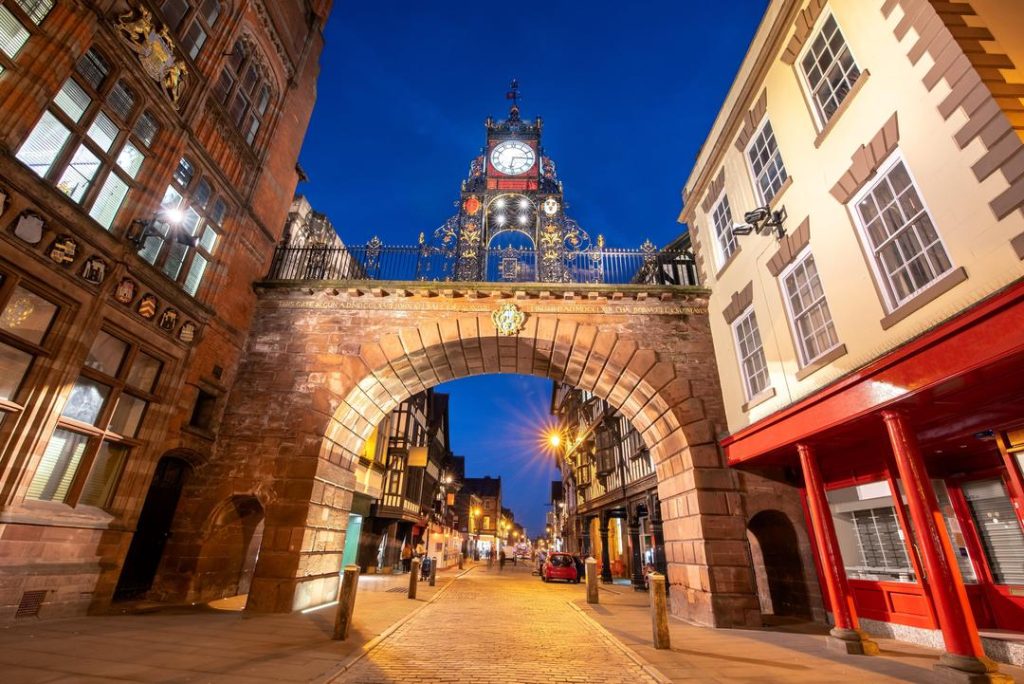
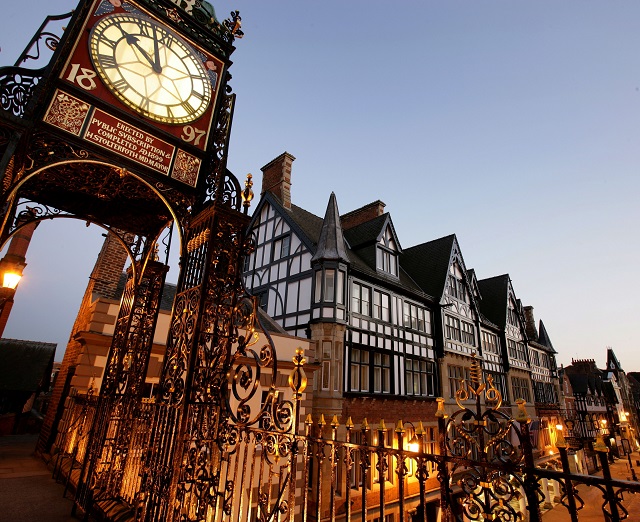
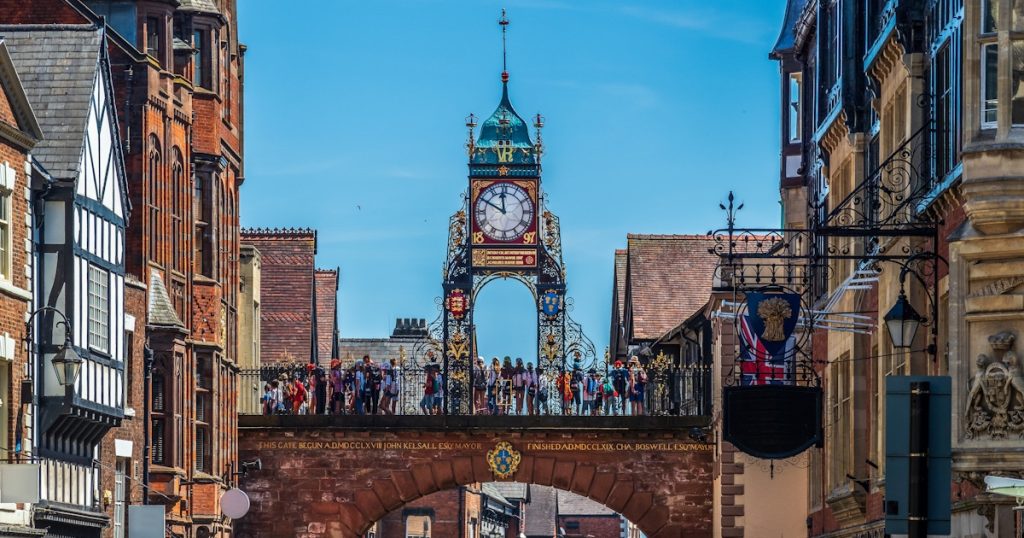
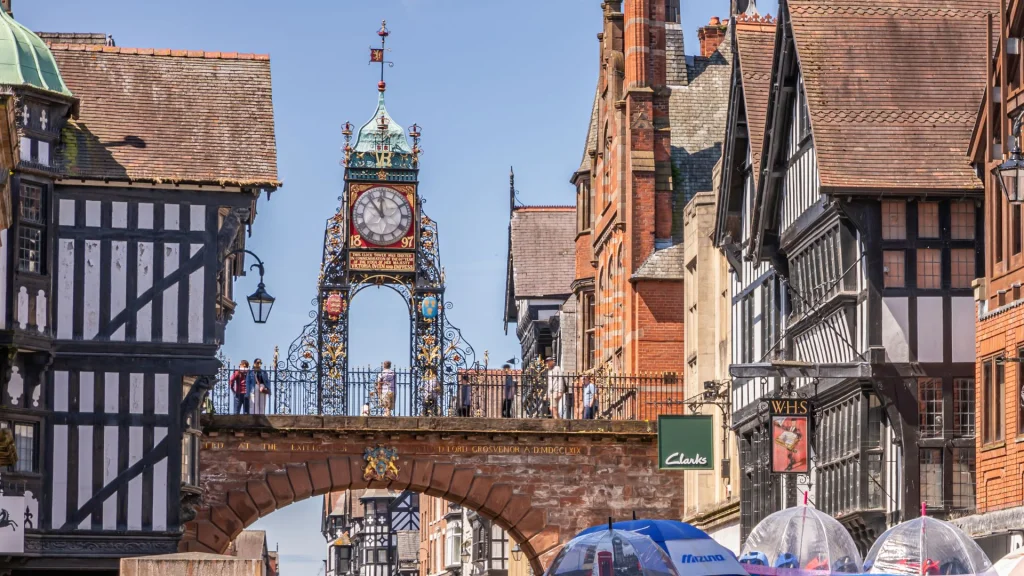
Typically, the walk begins at the East Gate, which is topped by the clock, the most photographed in England after Big Ben. Further along the wall, near the New Gate, run up the Corner Steps, built in 1785. Legend has it that if you run from the bottom to the top and back again while holding your breath, your wish will come true!
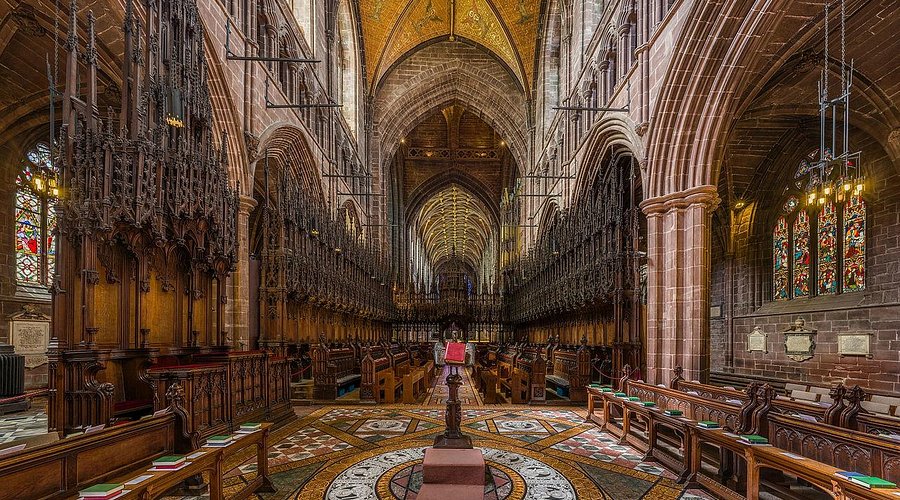
The city’s main attraction is Chester Cathedral. It is one of the most impressive monuments of the English Middle Ages. The church was first built in 907, but has been rebuilt and reconstructed several times over the years, resulting in its architecture being a blend of styles from various eras. The formerly red, now pale pink, walls of the church preserve a stunning interior: stained glass windows, gray-green mosaics, a 14th-century oak choir stall, and a majestic organ.
Inside the church is a unique icon of the Madonna and Child, painted not on canvas, but on spider webs. Tyrolean farmers developed this art form by collecting spider webs from garden trees. They cleaned them, stretched them on cardboard, and soaked them in milk for strength.
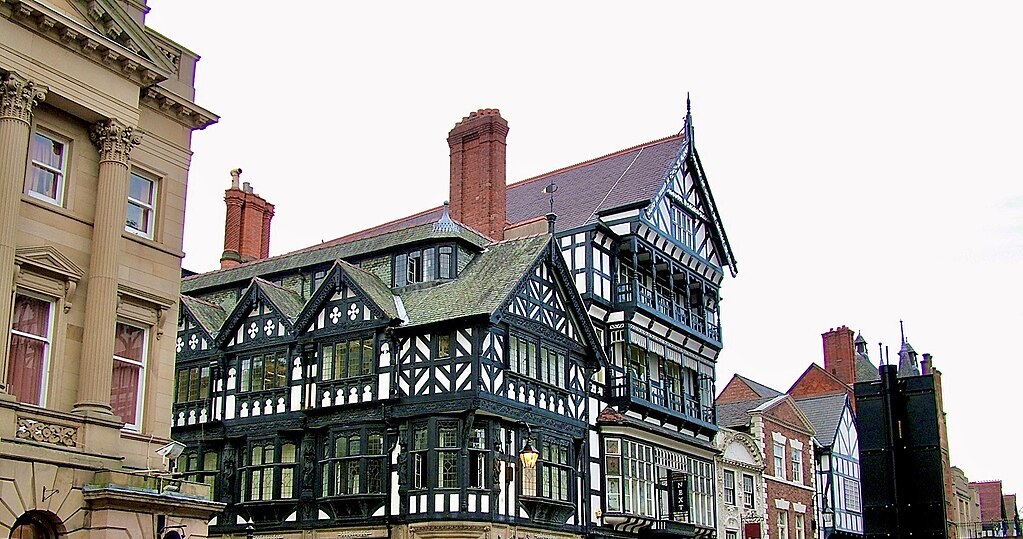
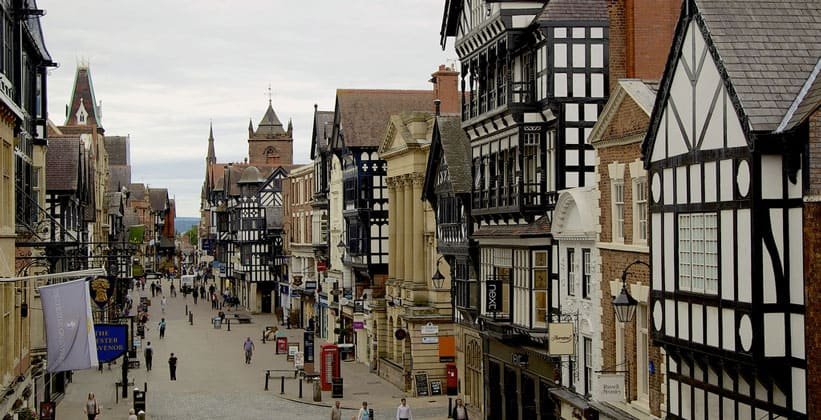
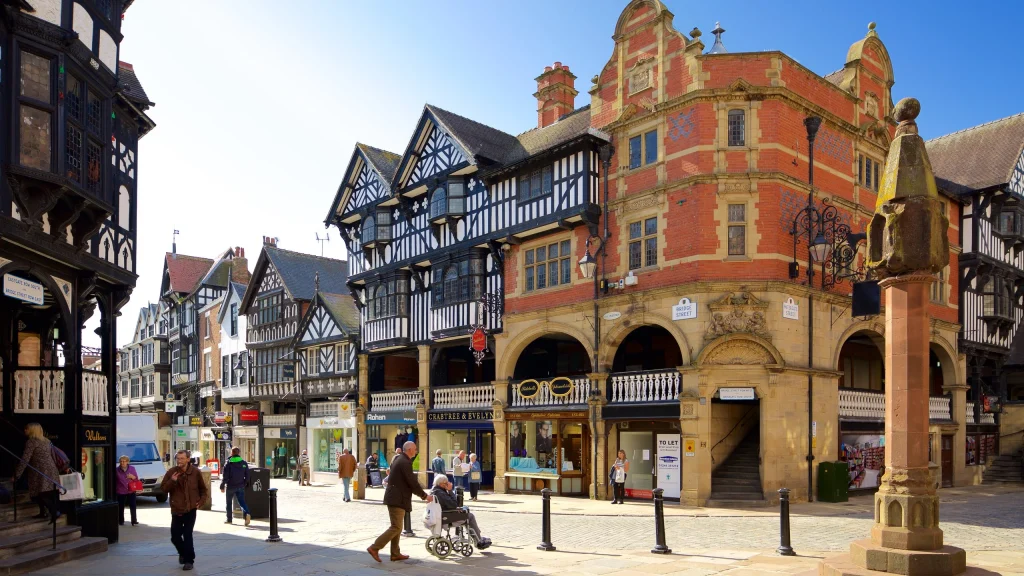
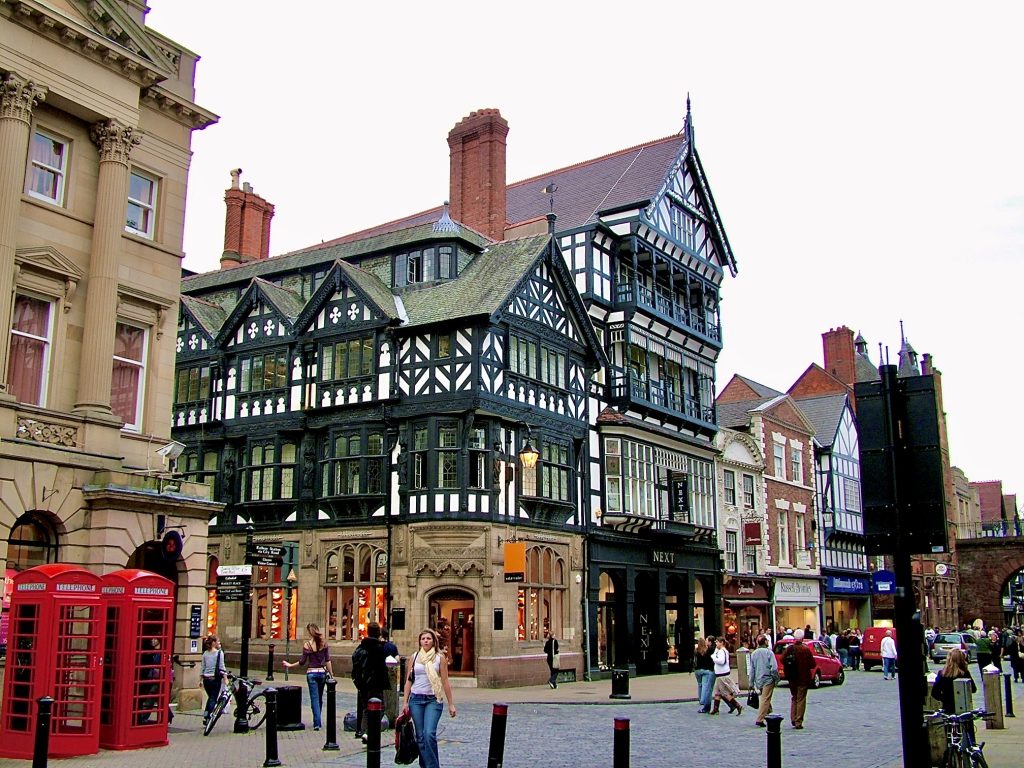
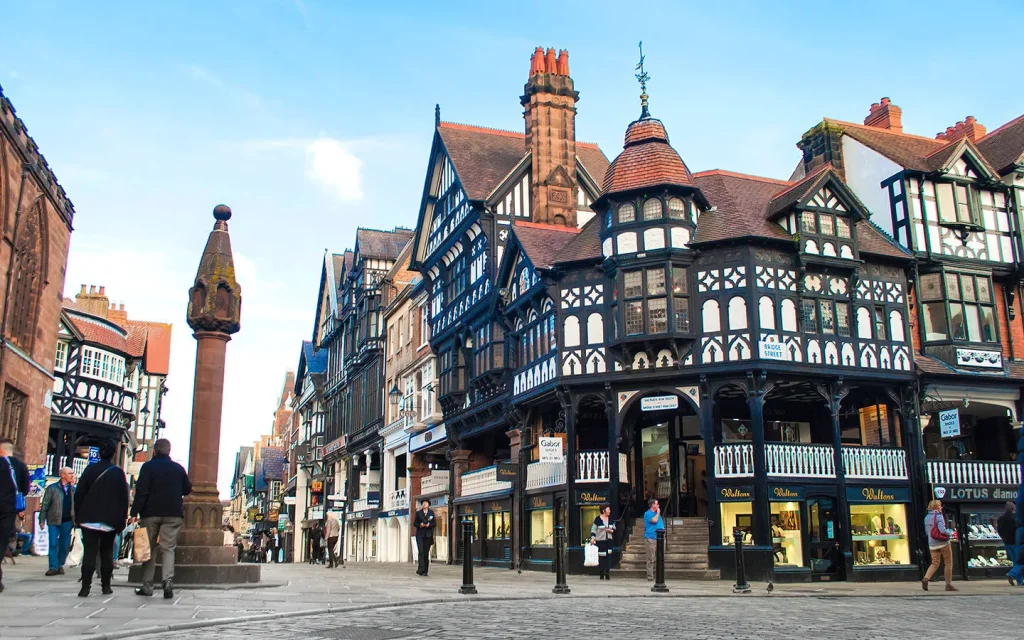
Chester Castle was built in 1245 by order of Henry IV. Since it was primarily built as a defensive structure, the building has a correspondingly austere appearance. Chester’s signature feature is its medieval half-timbered buildings—houses with projecting attics, connected by galleries, and long rows known as Chester Rows. These rows typically house shops and souvenir stalls on the ground floor, with private apartments on the second floor.