1. Why Visit the Moai Statues
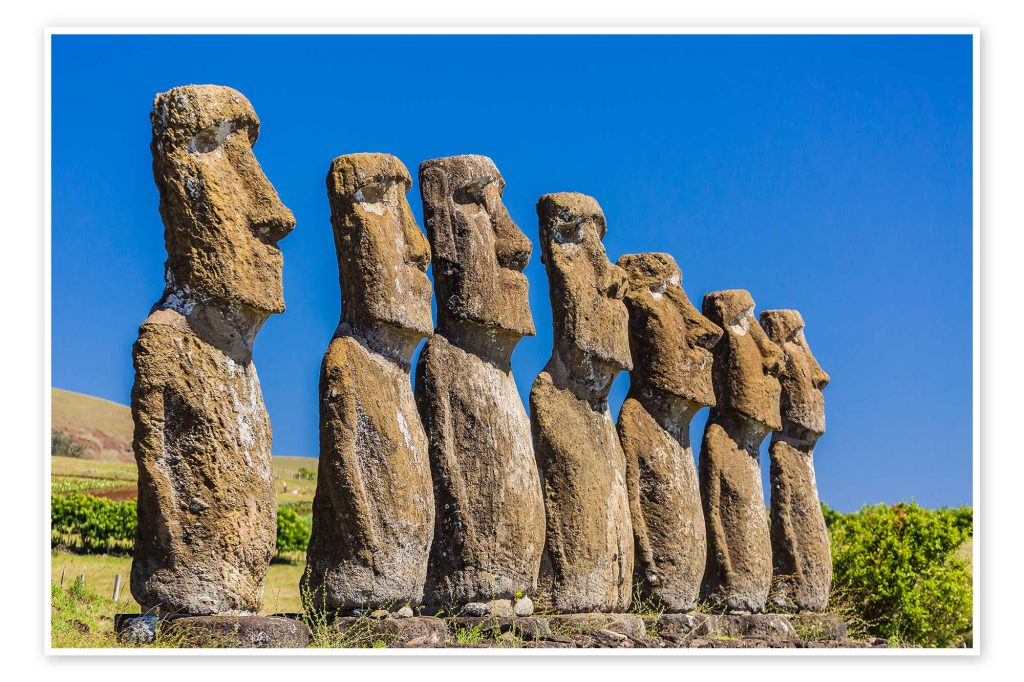
The Moai are the iconic stone statues of Easter Island (Rapa Nui) — one of the most remote and enigmatic places on Earth. Carved by the ancient Rapa Nui civilization between 1250–1500 AD, these giant figures represent ancestors and spiritual guardians.
Visiting Easter Island offers a mystical and unforgettable experience: dramatic volcanoes, endless ocean views, ancient ceremonial platforms, and hundreds of Moai standing in silence.
This destination suits:
History & archaeology lovers
Adventure travelers
Photographers
Cultural explorers
Couples and small-group travelers
Standing before a Moai is a once-in-a-lifetime moment that blends mystery, history, and nature.
2. Best Time to Visit Easter Island
Easter Island can be visited year-round, but the weather and crowds vary.
| Season | Months | Weather | Notes |
|---|---|---|---|
| High Season | Dec–Feb | Warm, sunny | Best weather, higher prices |
| Shoulder Season | Mar–May & Sep–Nov | Mild, fewer tourists | Great time for exploring |
| Low Season | Jun–Aug | Cooler, more rain | Cheapest deals, fewer crowds |
Tip: For photography and hiking, March–May is ideal — clear skies and comfortable temperatures.
3. How to Get to Easter Island
The Moai are located on Easter Island (Rapa Nui), a Chilean territory in the South Pacific.
Flights:
Only direct flights are from Santiago, Chile (SCL) to Mataveri Airport (IPC).
Flight time: ~5 hours.
Transport on the Island:
Car or scooter rental: Most popular, easy to explore sites
Guided tours: Provide historical context
Bikes: Great for nearby sites
Public transport is limited, so renting a vehicle or joining a tour is recommended.
4. Best Areas to Stay
Most accommodation is in Hanga Roa, the island’s only town.
| Area | Best For | What to Expect |
|---|---|---|
| Hanga Roa Center | First-time visitors | Restaurants, shops, tours |
| City outskirts | Peace & nature | Eco-lodges, ocean views |
| Coastal areas | Luxury stays | Boutique hotels & resorts |
Recommendation:
Stay in Hanga Roa — convenient for food, tours, and walking to a few Moai sites.
5. Best Moai Sites to Visit
1) Ahu Tongariki
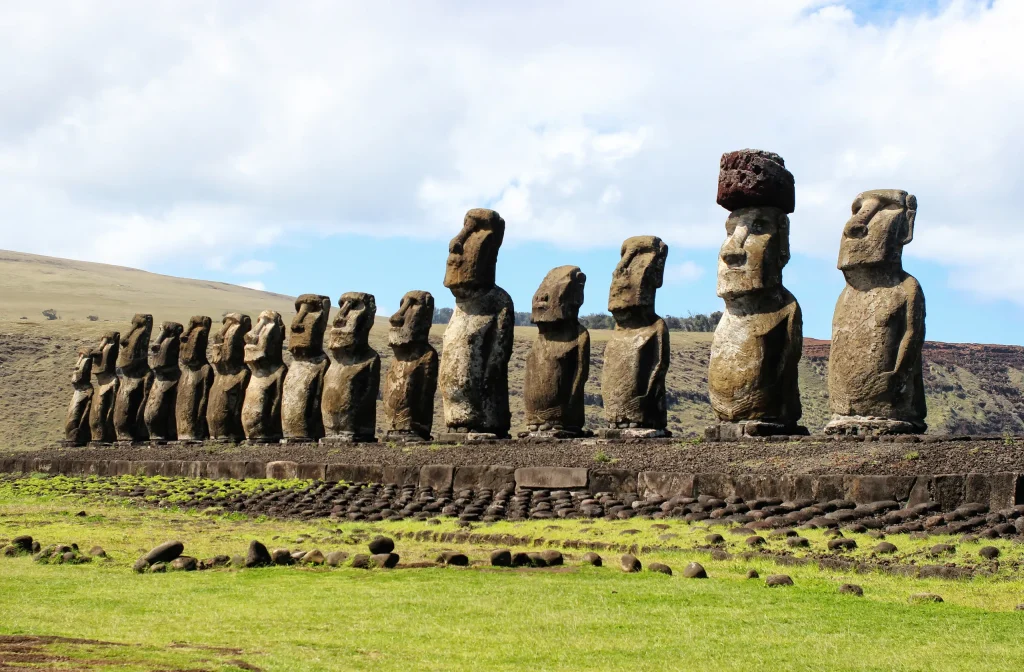
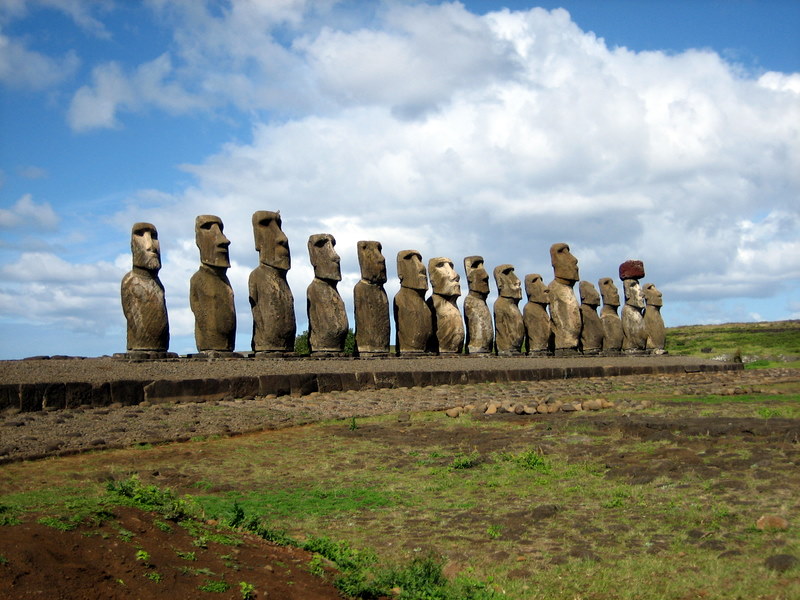
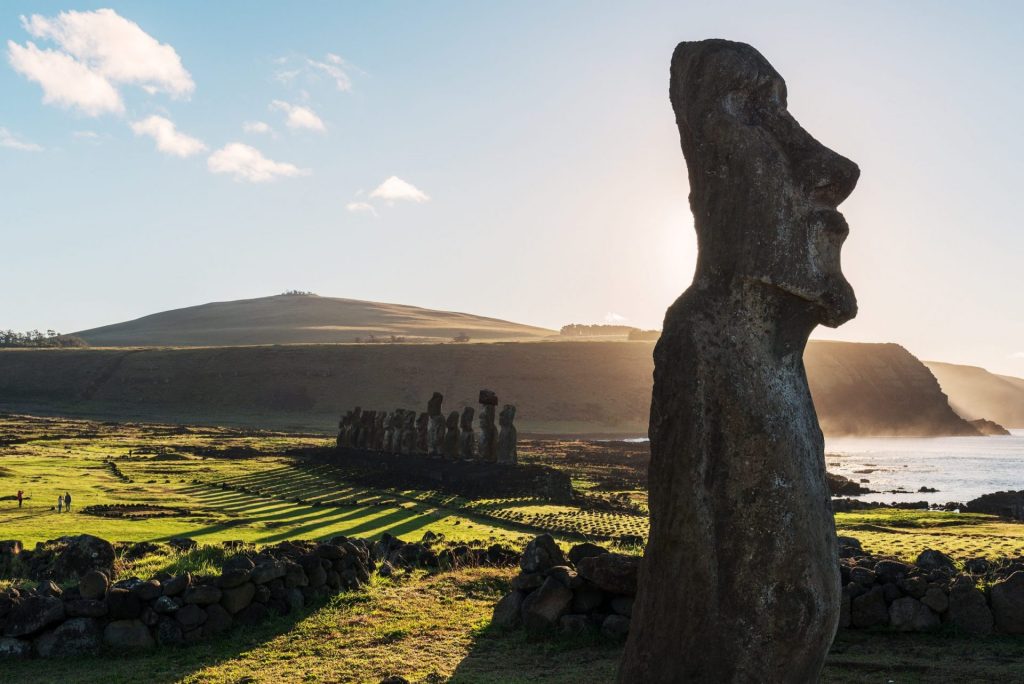
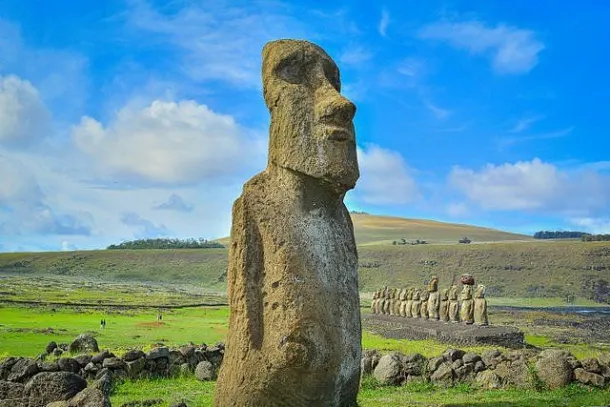
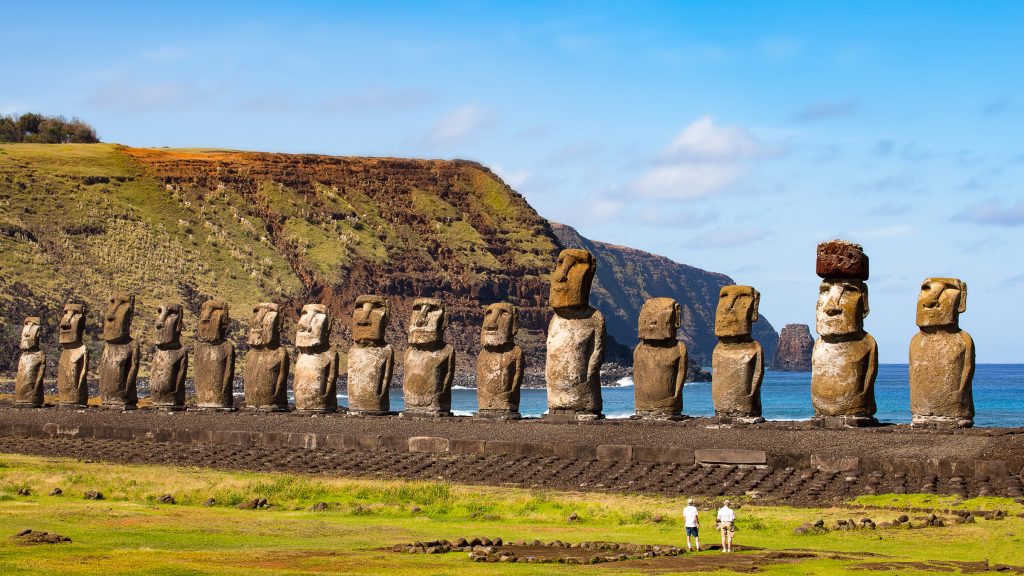
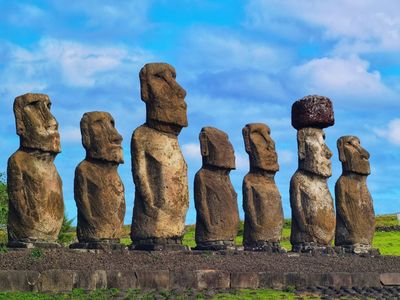
The most famous site: 15 massive Moai standing in a row, facing inland. A spectacular sunrise spot.
2) Rano Raraku (The Quarry)
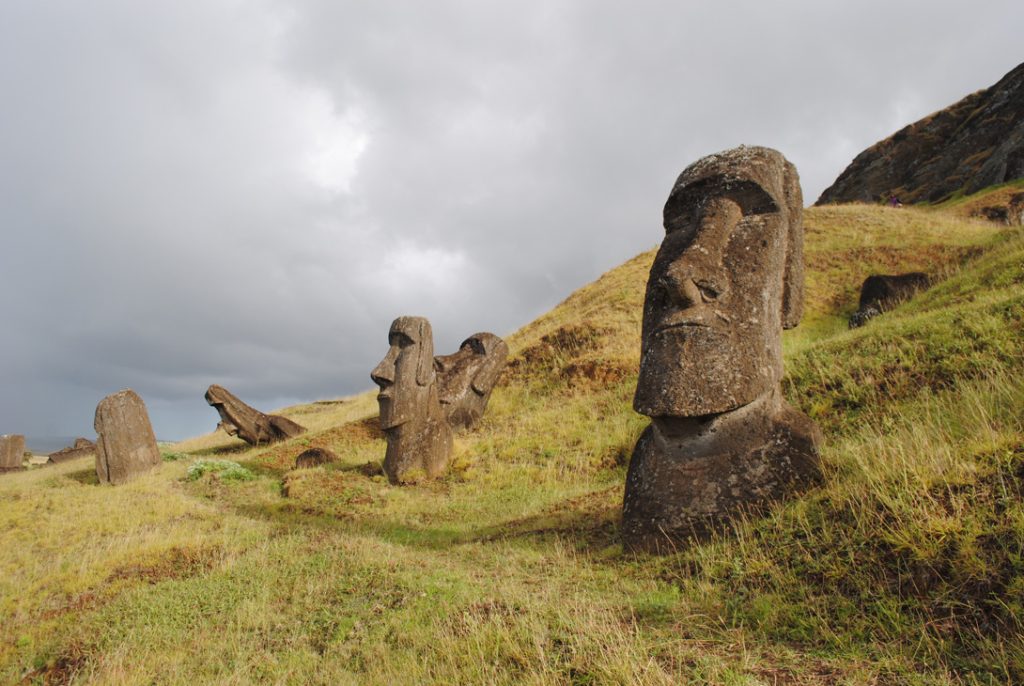
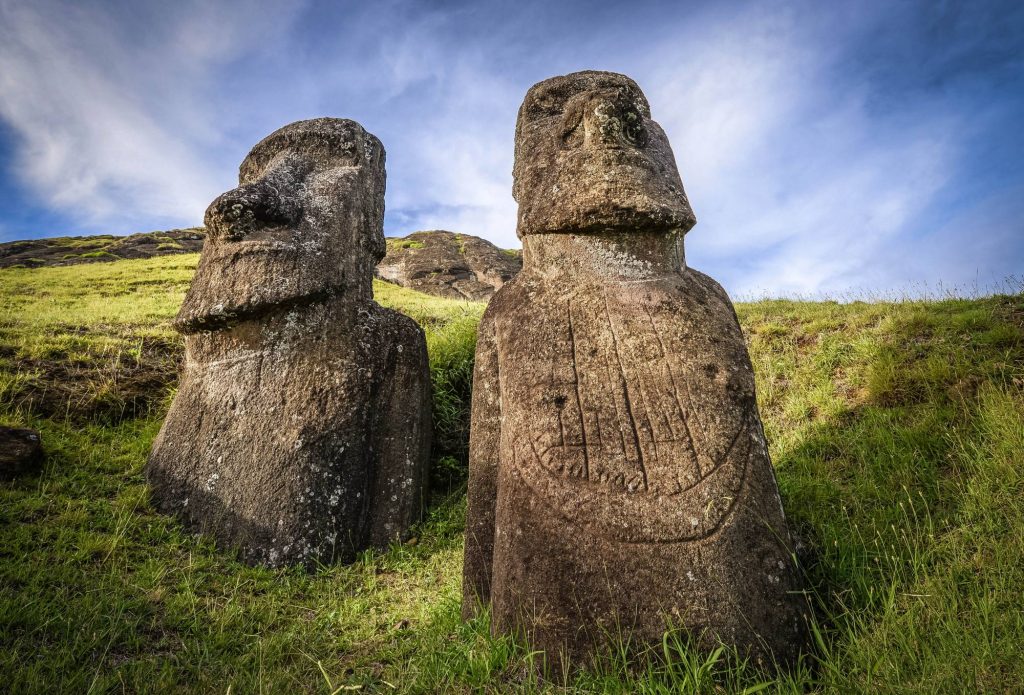
The volcanic quarry where most Moai were carved. You’ll see half-buried and unfinished statues, telling the story of how they were made.
3) Ahu Akivi
Seven Moai facing the ocean — rare and symbolically important. Perfect for sunset.
4) Anakena Beach
A tropical beach with turquoise water and Moai standing near palm trees. Beautiful and unique.
5) Tahai Ceremonial Complex
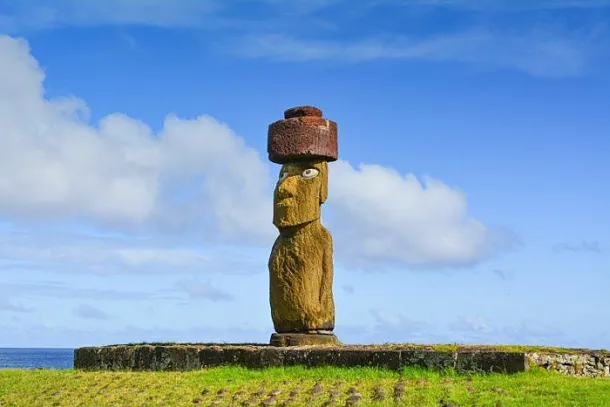
Close to Hanga Roa. Great for sunset photos and silhouettes.
6. Rapa Nui National Park Tickets & Prices
To visit Moai archaeological sites, you need a Rapa Nui National Park ticket, valid for 10 days.
| Ticket | Price | Validity | Notes |
|---|---|---|---|
| Park Entry Pass | ~$80 USD (adults) | 10 days | Required for all main sites |
You can buy the ticket at the airport or online.
7. Where to Eat: Local Food Guide
Easter Island cuisine blends Polynesian and Chilean flavors.
Must-Try Dishes:
Fresh tuna (grilled or ceviche)
Empanadas with seafood
Po’e (traditional banana & pumpkin cake)
Rapa Nui seafood stew
Recommended Spots:
Te Moana (ocean view dining)
Haka Honu (seafood)
Tataku Vave (sunset restaurant)
8. Suggested 3-Day Moai Itinerary
Day 1:
Tahai → Hanga Roa exploration → Sunset at Ahu Akivi
Day 2:
Rano Raraku Quarry → Ahu Tongariki → Anakena Beach
Day 3:
Orongo Village → Rano Kau Crater → Cultural show in the evening
9. Prices & Budget
| Traveler Type | Budget/Day | Notes |
|---|---|---|
| Backpacker | $60–90 | Hostel + simple meals |
| Mid-range | $120–200 | Guesthouse + tours |
| Luxury | $300+ | Boutique hotels |
Typical Costs:
Restaurant meal: $15–30 USD
Car rental: $60–80 USD/day
Guided tour: $50–100 USD
Fuel is expensive due to island location
10. Safety Tips
The island is very safe — petty theft is minimal.
Do not touch or climb Moai — heavy fines apply.
Bring sunscreen — UV is strong year-round.
Weather changes fast: carry a light rain jacket.
11. FAQ
What are the Moai?
Stone statues carved by the Rapa Nui people, representing ancestors.
How many Moai exist?
Around 887 statues across the island.
Why do Moai face inland?
They watch over the villages, symbolizing protection.
How long should I stay?
3–4 days is ideal to see all major sites.
Are Moai still being discovered?
New findings and buried Moai continue to be documented.