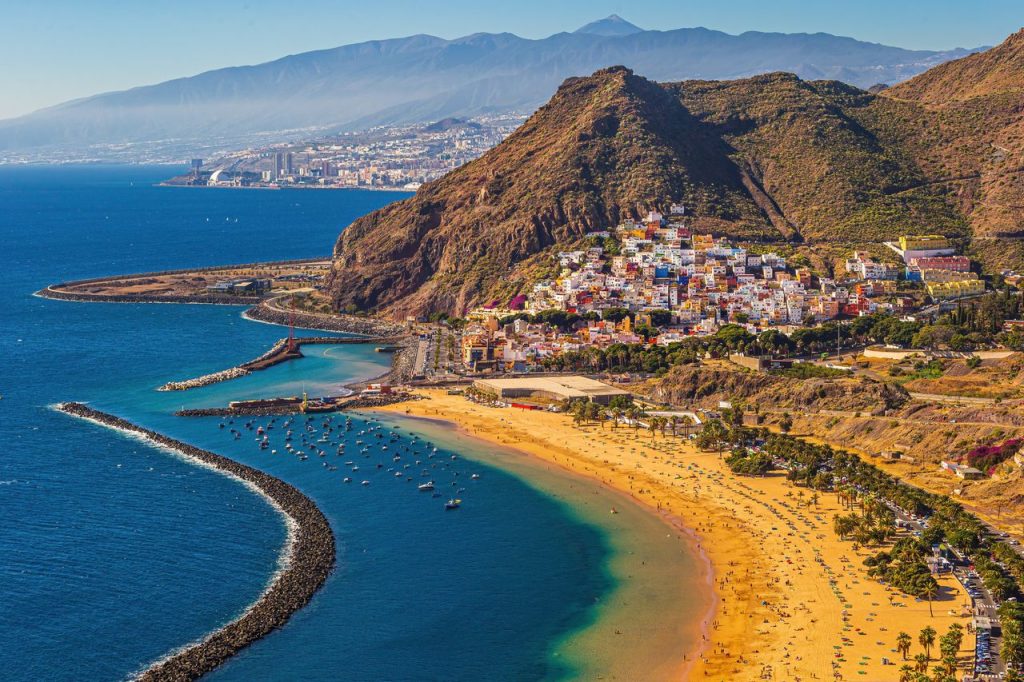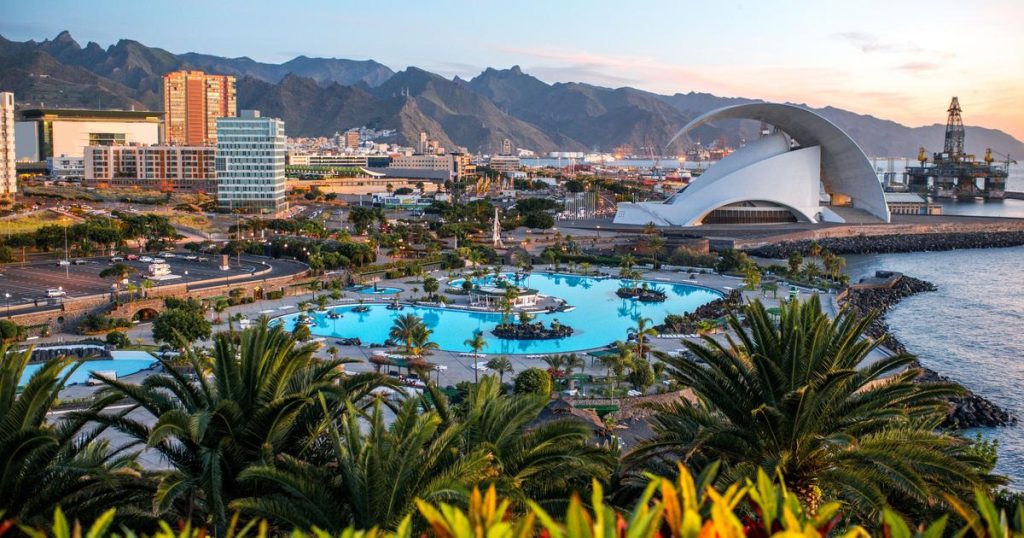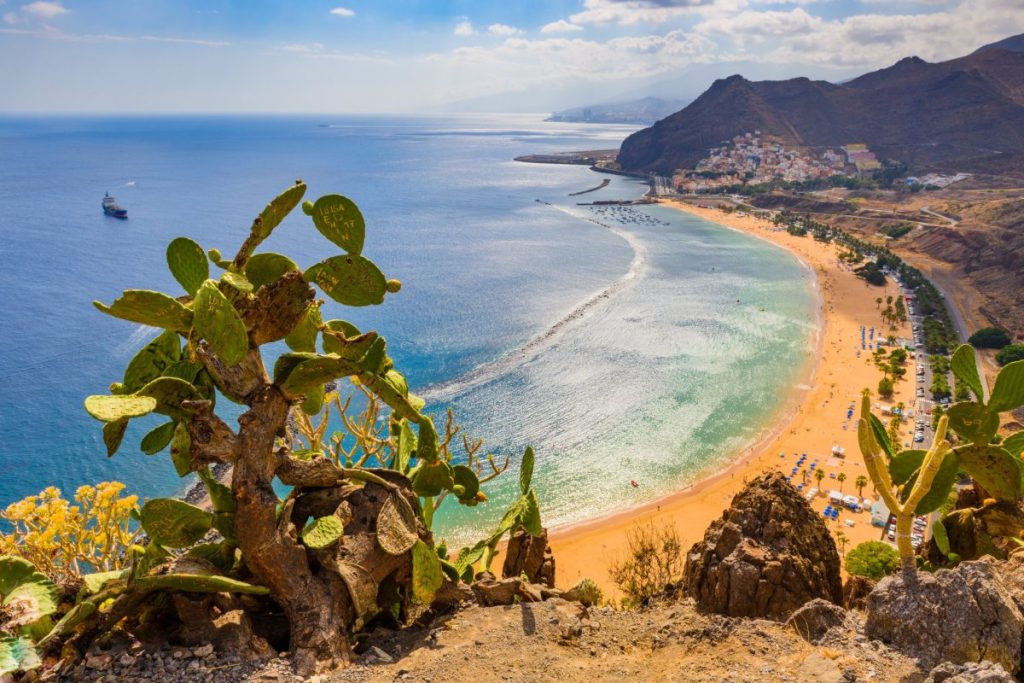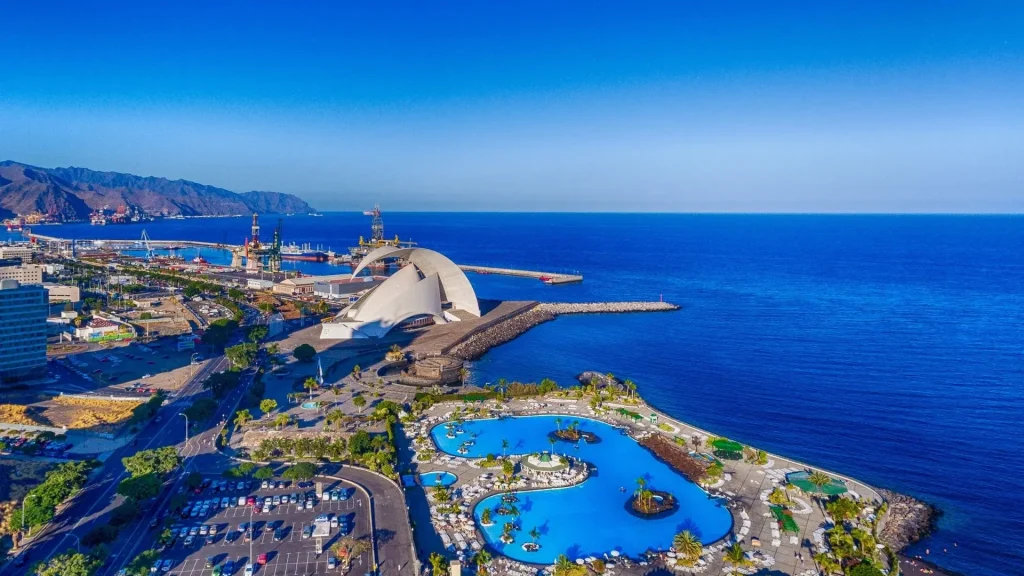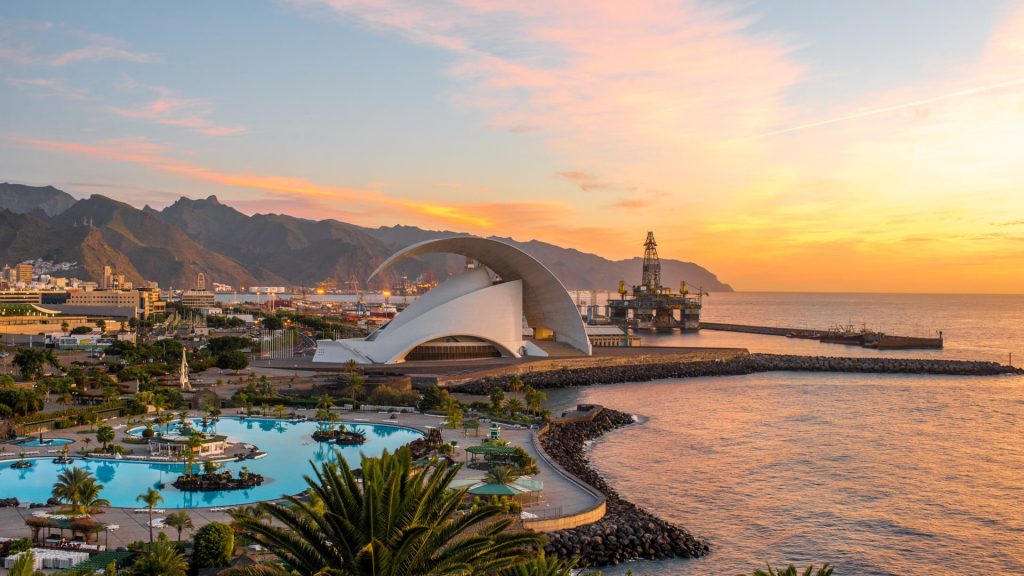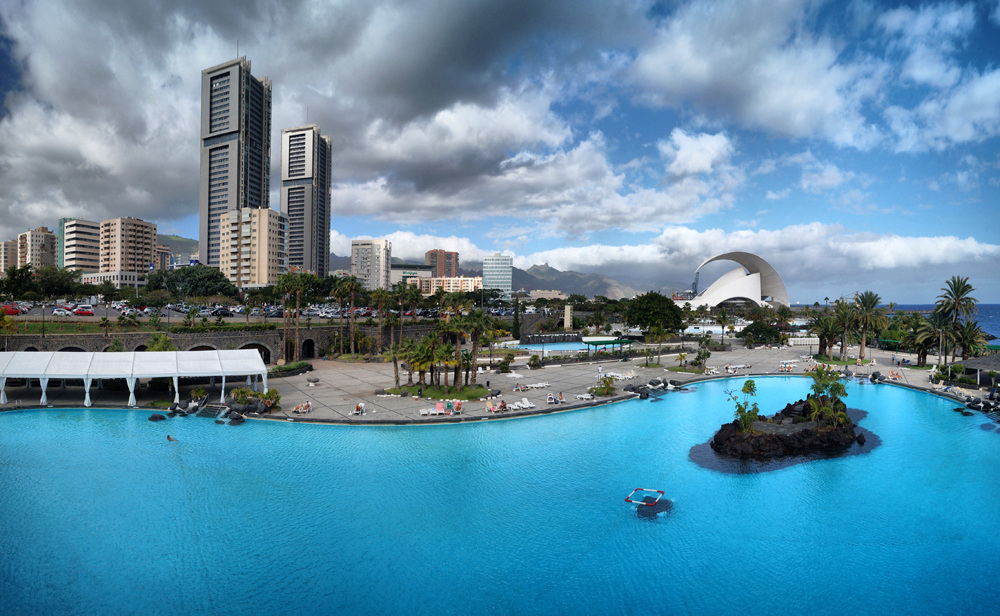
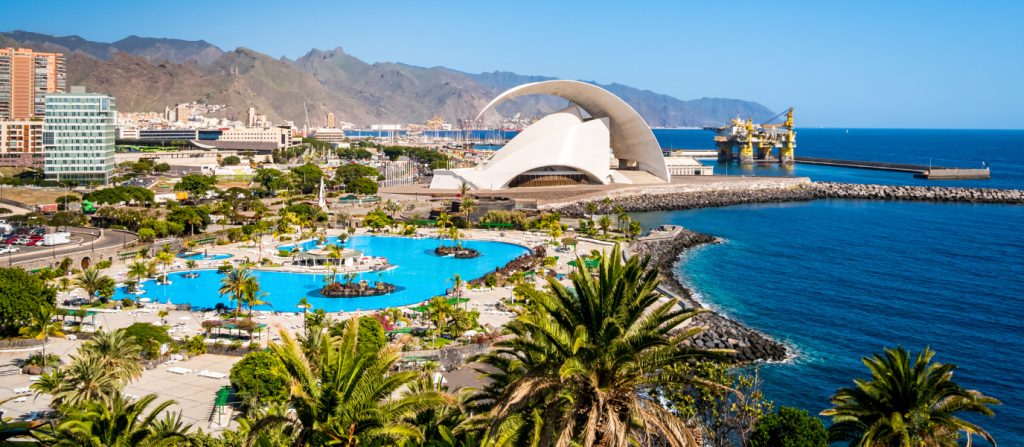
Santa Cruz de Tenerife is the capital of the island of Tenerife and the province of the same name in Spain. It is also one of the two capitals of the Canary Islands and home to the regional parliament. Surrounded by the steep cliffs of Anaga, it occupies the gentle slopes of one of the mountains, descending to the harbor of the same name in the northeastern part of the island.
Santa Cruz de Tenerife Attractions
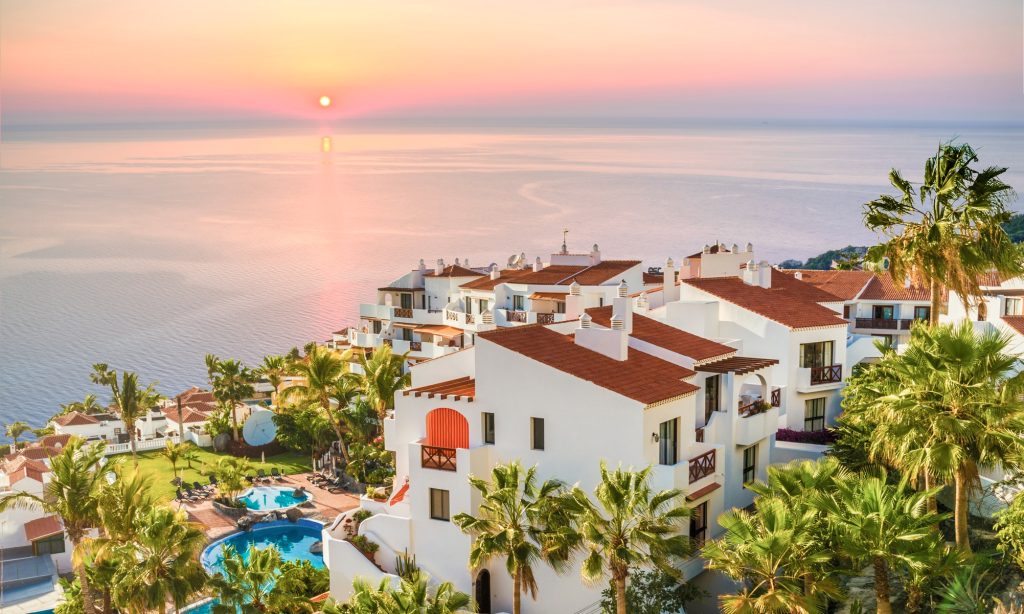
The architectural style characteristic of the Canary Islands features house facades painted in a distinctive color palette and adorned with wooden balconies. This so-called Canarian style can be seen in Santa Cruz de Tenerife, adding a distinctive character to the city. Here, greenery and historical landmarks blend beautifully, and the old town, surrounded by gardens, is easy and pleasant to explore on foot. Any tourist route through Santa Cruz de Tenerife begins with Plaza de España, a traditional square in the heart of the city. At its heart is a monument dedicated to the victims of the Spanish Civil War (1936-39).
Near the city center, Plaza La Candelaria boasts such remarkable sites as the Tenerife Cabildo Insular government building, the Museum of Archaeology and Anthropology, and the Palacio de la Carta, a fine example of 17th-century Spanish architecture.
Equally interesting are two Baroque churches in the city center: San Francisco (17th-18th centuries) and Iglesia La Concepcion (16th-18th centuries). The latter houses the Holy Cross of the conquistadors, which gave the city its name.
The Museum of Natural History houses unique documents chronicling the Canary Islands’ rise to becoming a modern tourist destination. The museum presents a rich history, beginning with the islands’ formation as a result of a volcanic eruption on the ocean floor and continuing with the history of the islands’ indigenous people, the Guanaches. The museum also traces the region’s glorious military history, as evidenced by the spoils captured from Admiral Nelson after his failed attack on the city.