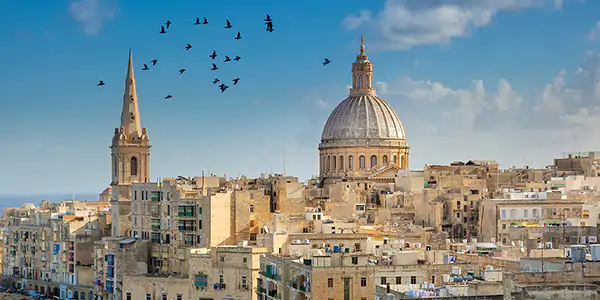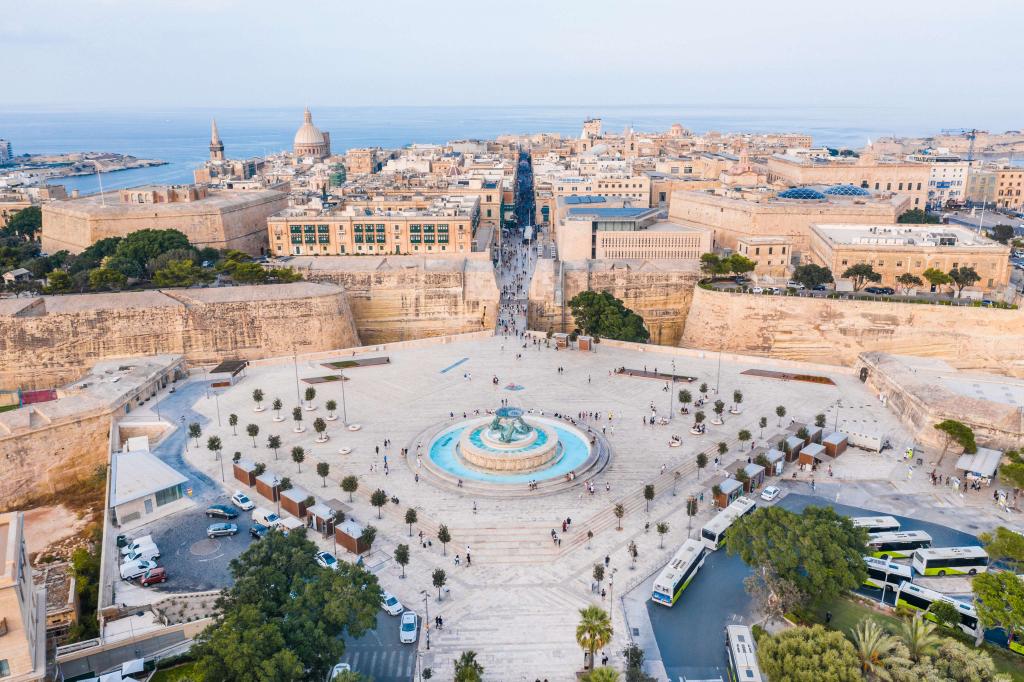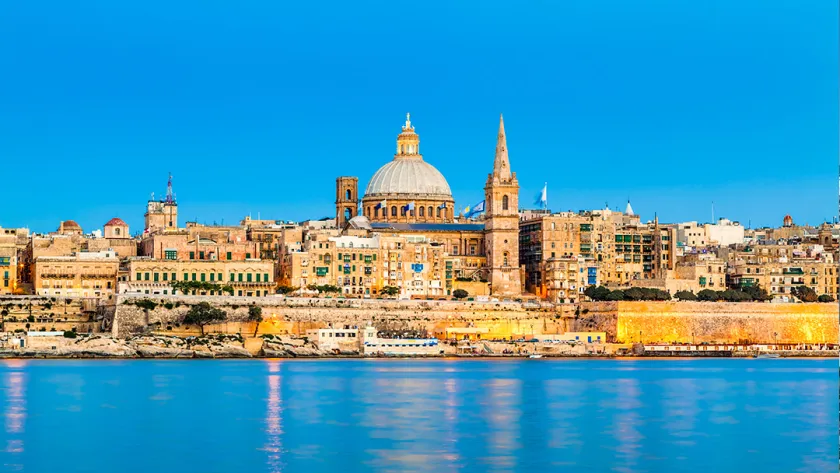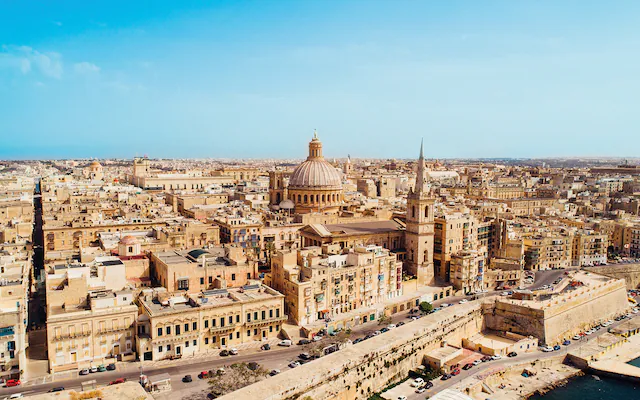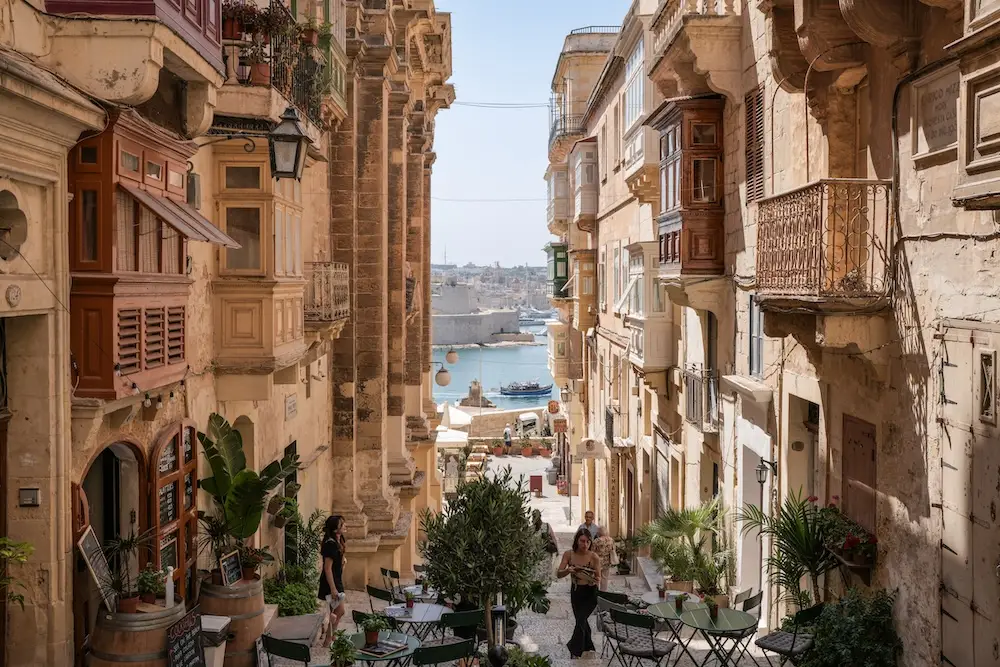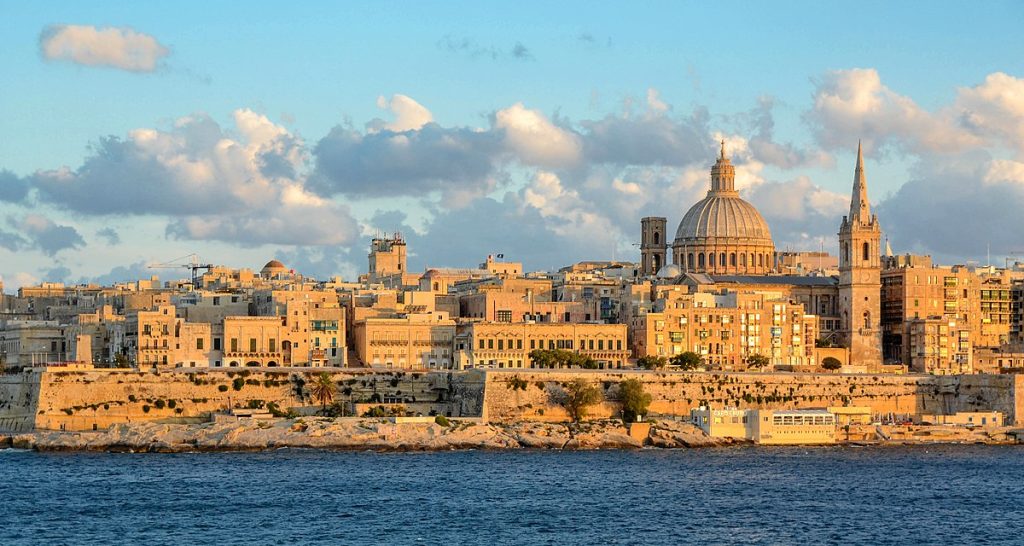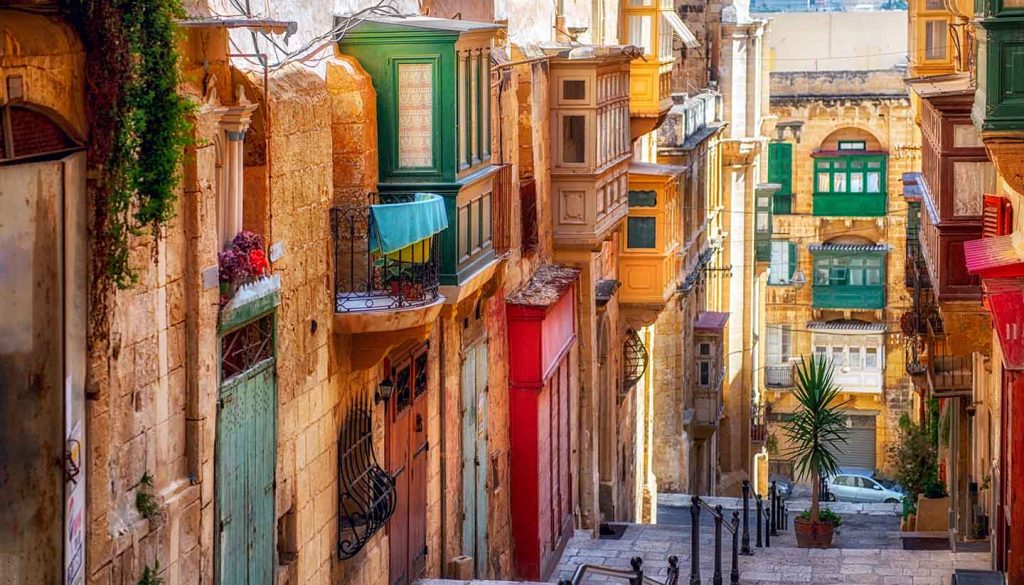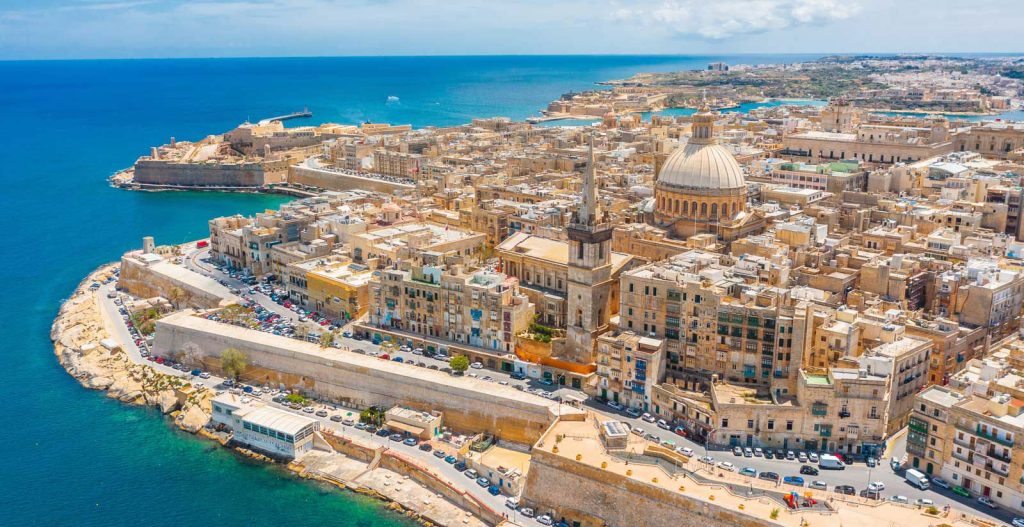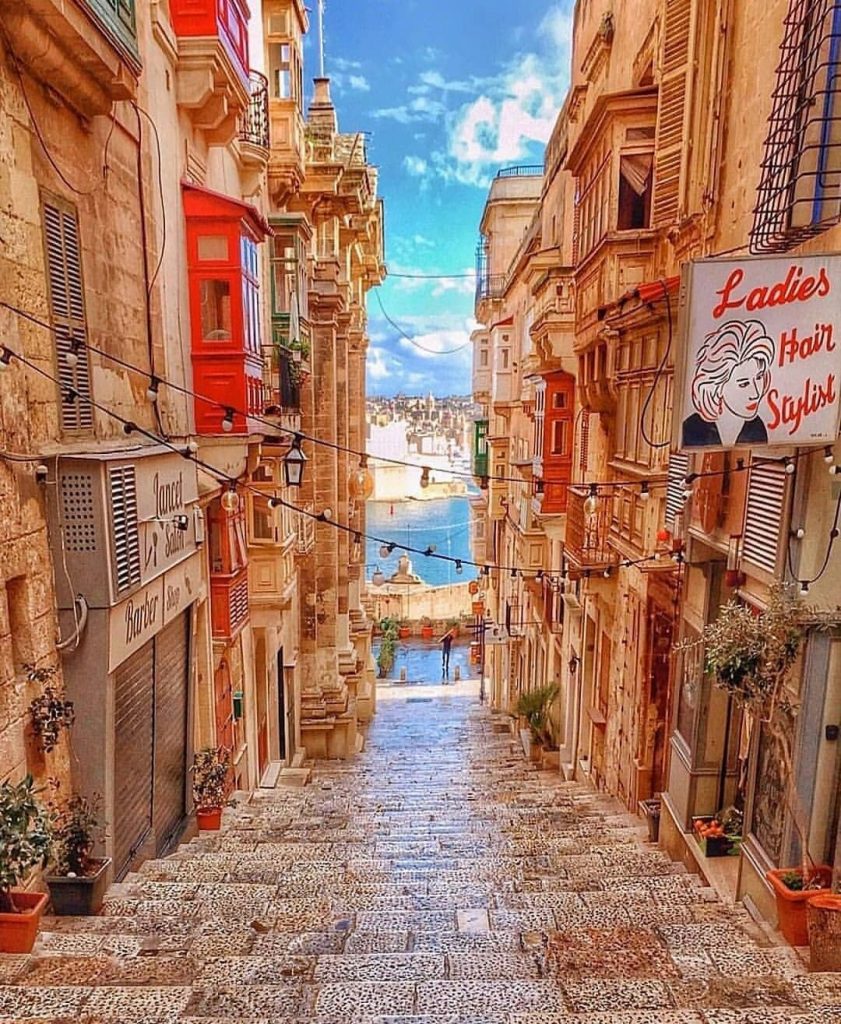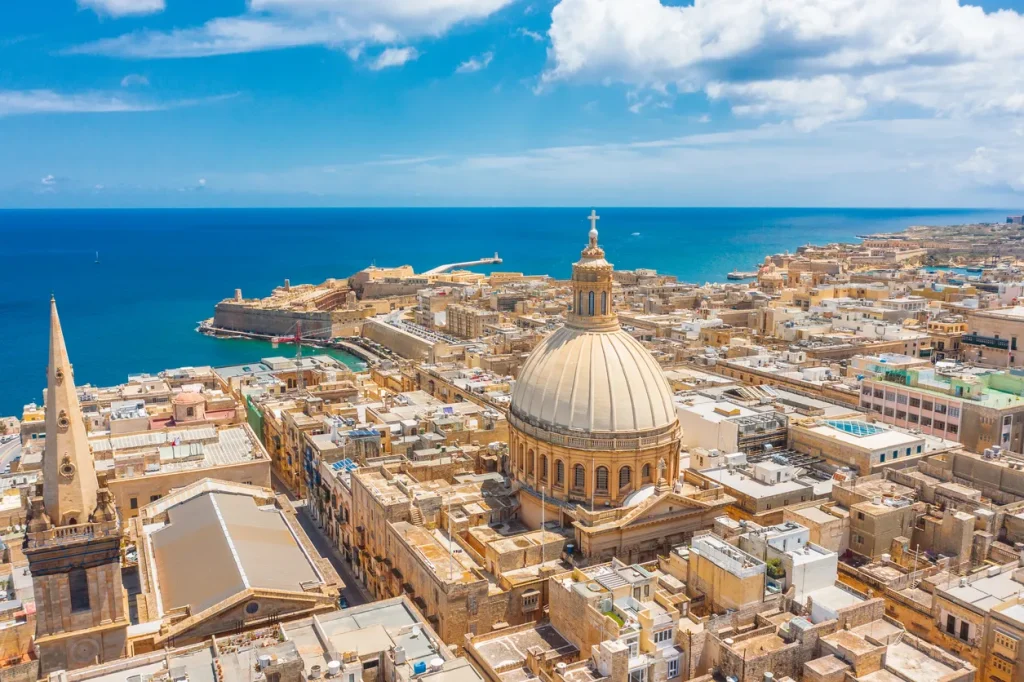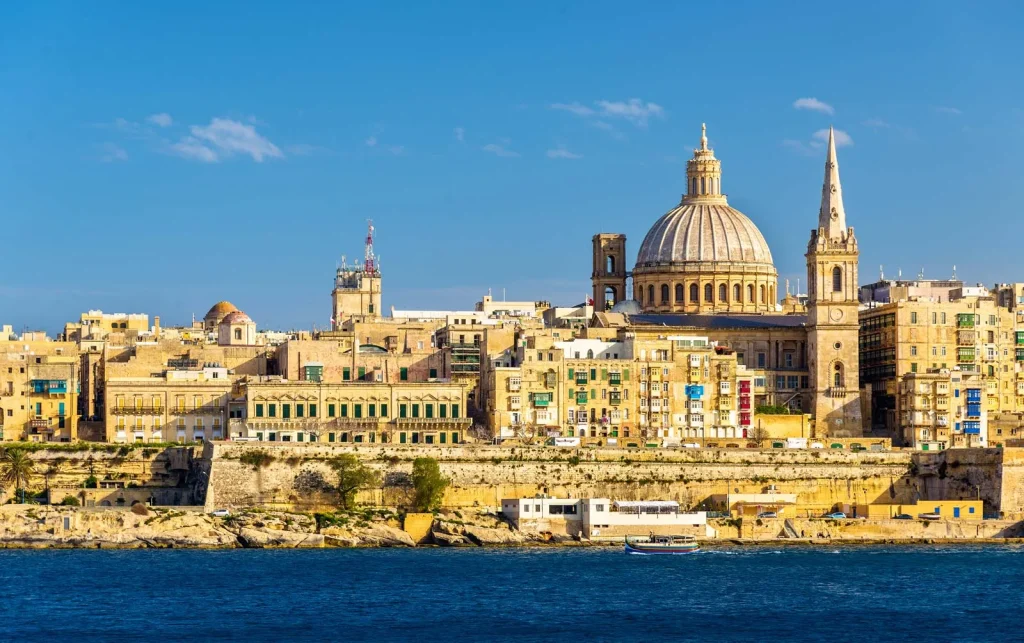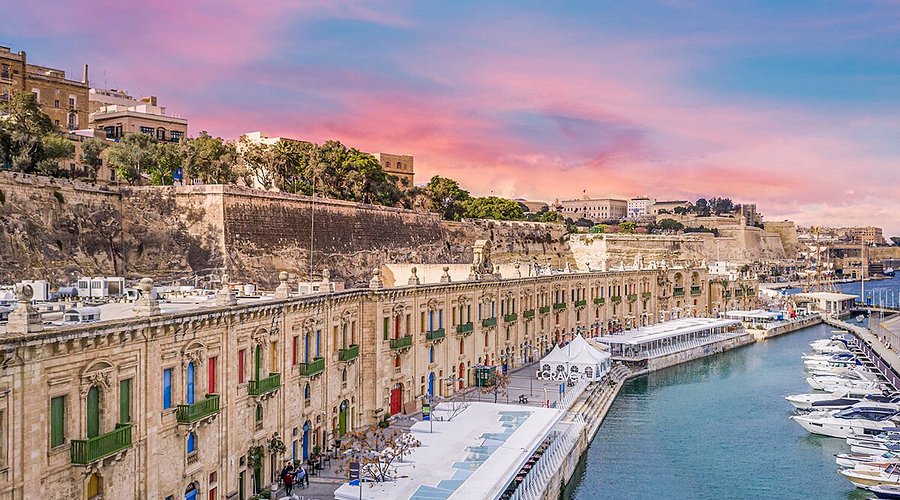
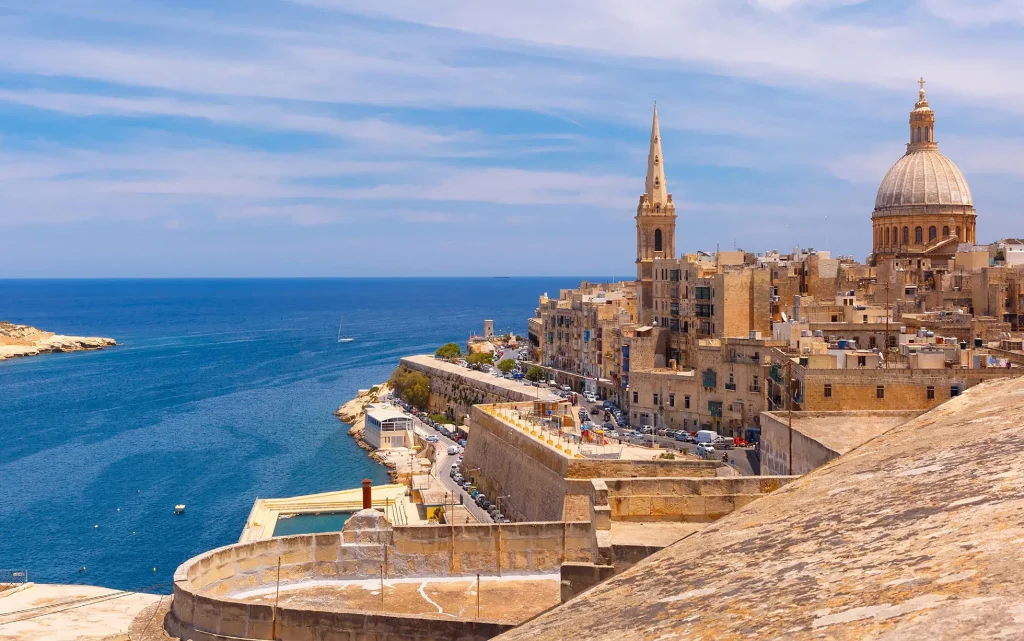
Valletta is one of the smallest capital cities in Europe. Malta’s capital city impresses with its ancient port, one of the largest in the Mediterranean, and its medieval architecture, as the city is almost entirely devoid of modern buildings.
Valletta Attractions and Entertainment
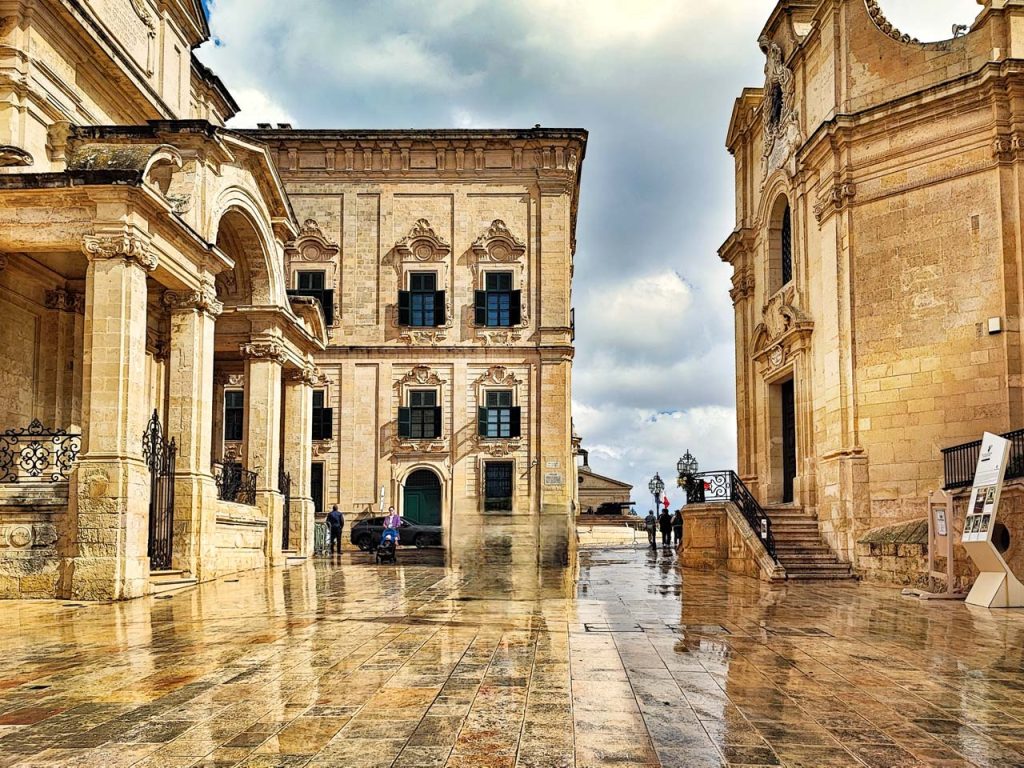
Republic Street stretches through the city like a meridian, and is home to the largest concentration of interesting places to visit. This street invites visitors to leisurely strolls, pleasant encounters, and exciting pastimes. One of the notable landmarks on Republic Street is the Cabinet Building of Malta, also known as the Auberge de Castille. During the Middle Ages, it was the residence of the Knights of Spain.
The adjacent Palace Square is graced by the majestic Grand Master’s Palace, which serves as the office of the President of Malta. Even though high-ranking officials are busy within its walls every day, some of the palace’s rooms can be toured. There, you can admire unique knightly equipment crafted as far back as the 14th century.
Very close by is Liberty Square, worth a visit to admire the magnificent Palazzo Ferreria, built in the finest Italian architectural traditions. Alternatively, you can attend a performance at the Royal Opera and enjoy world-class art.
Continuing along Republic Street towards the sea, you’ll discover the Auberge de Provence, a majestic building that once served as the home of French knights and later became the home of the British Union Club. Today, it is an important site, housing the National Archaeological Museum. It is also home to the National Museum of Fine Arts, which houses an impressive collection of works by both European and Maltese artists. Michelangelo’s famous painting, “The Beheading of St. John the Baptist,” deserves special attention.
Valletta boasts numerous magnificent cathedrals, among which St. John’s Co-Cathedral stands out as the most famous. Looking at its exterior, it’s difficult to immediately recognize it as a temple, as it resembles a defensive fortification.
The interior is striking in its luxury and elegance: the walls are adorned with frescoes, and the floor is lined with marble tombstones, beneath which lie the ashes of the knights.