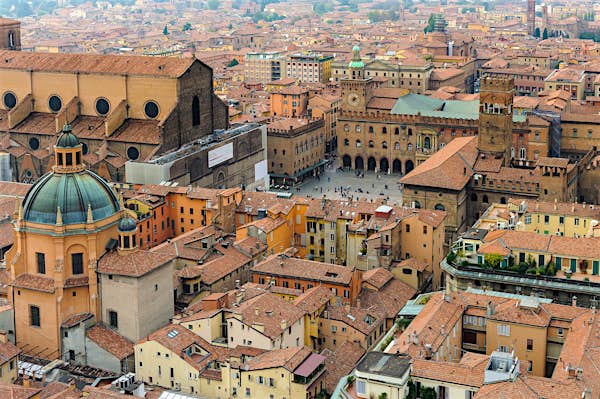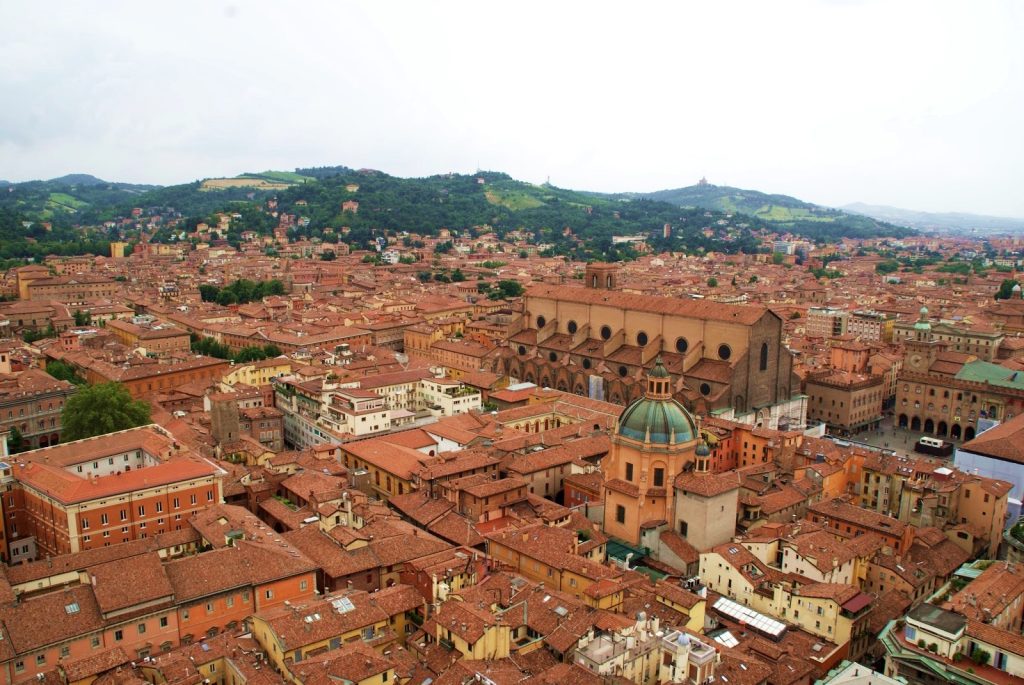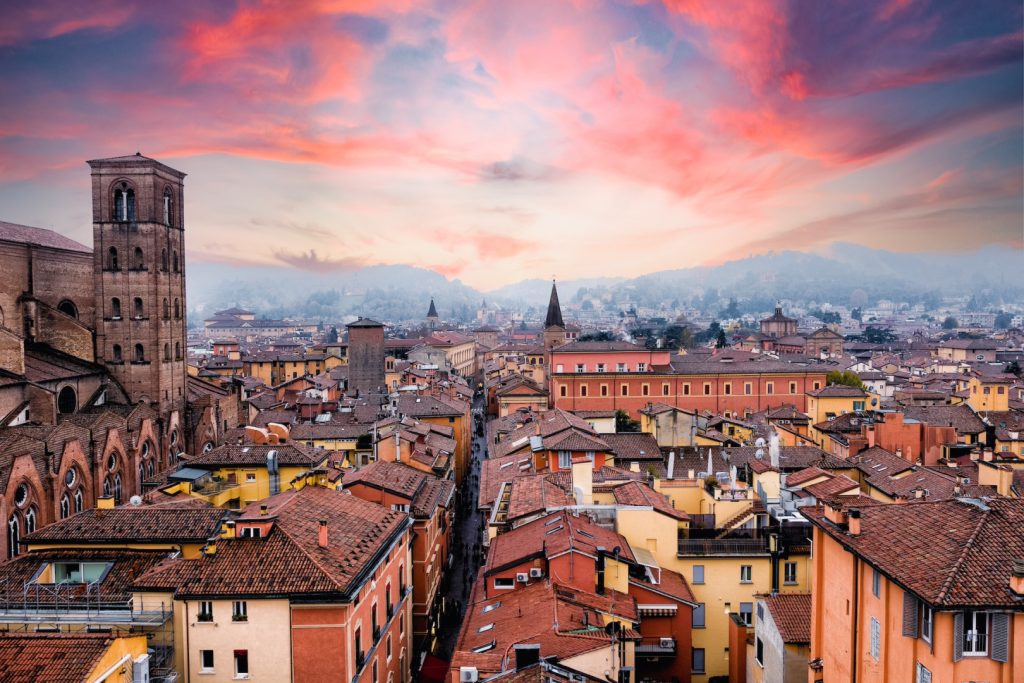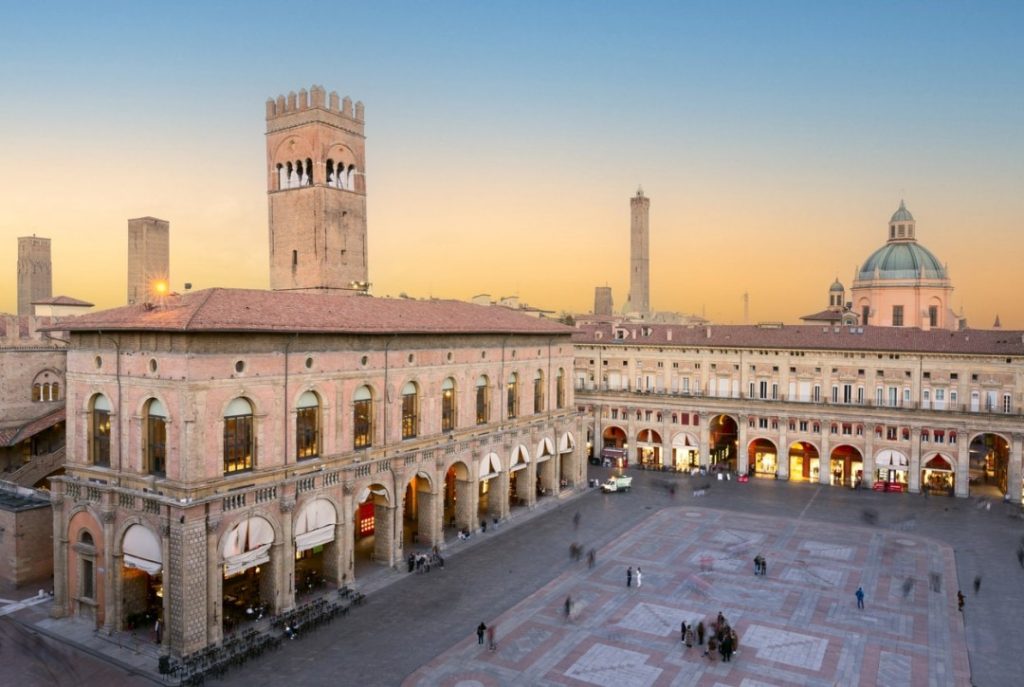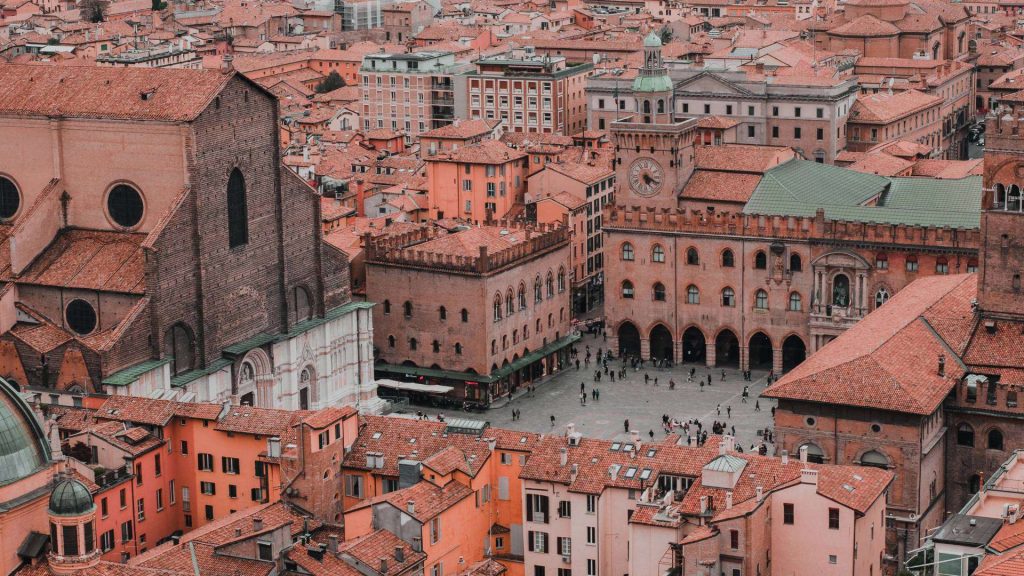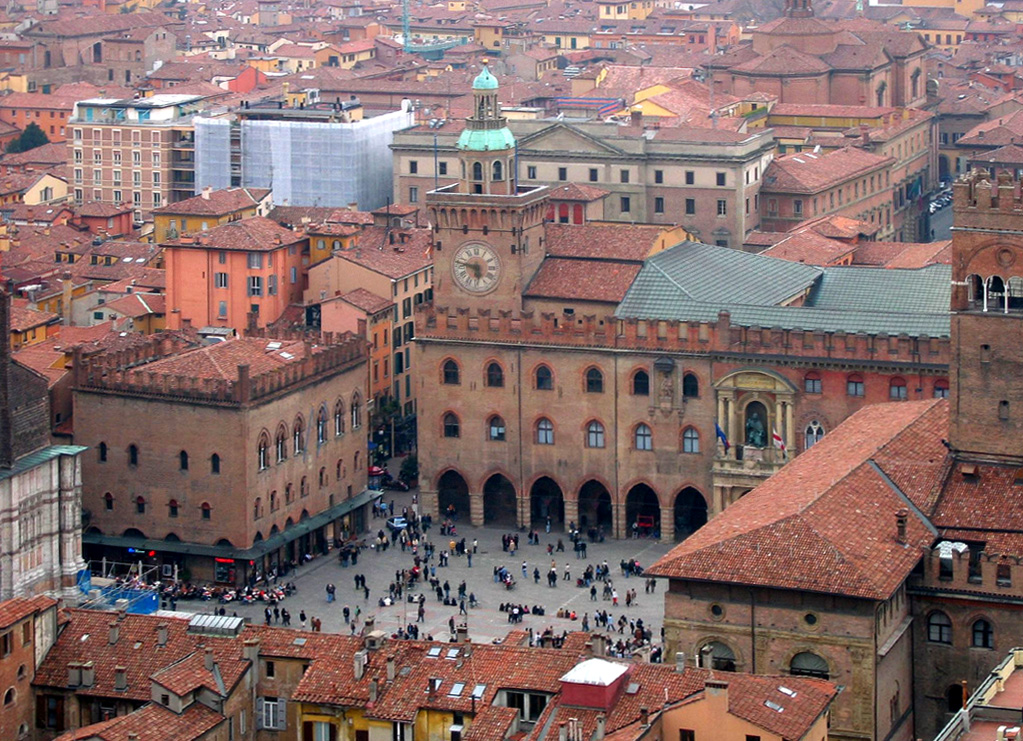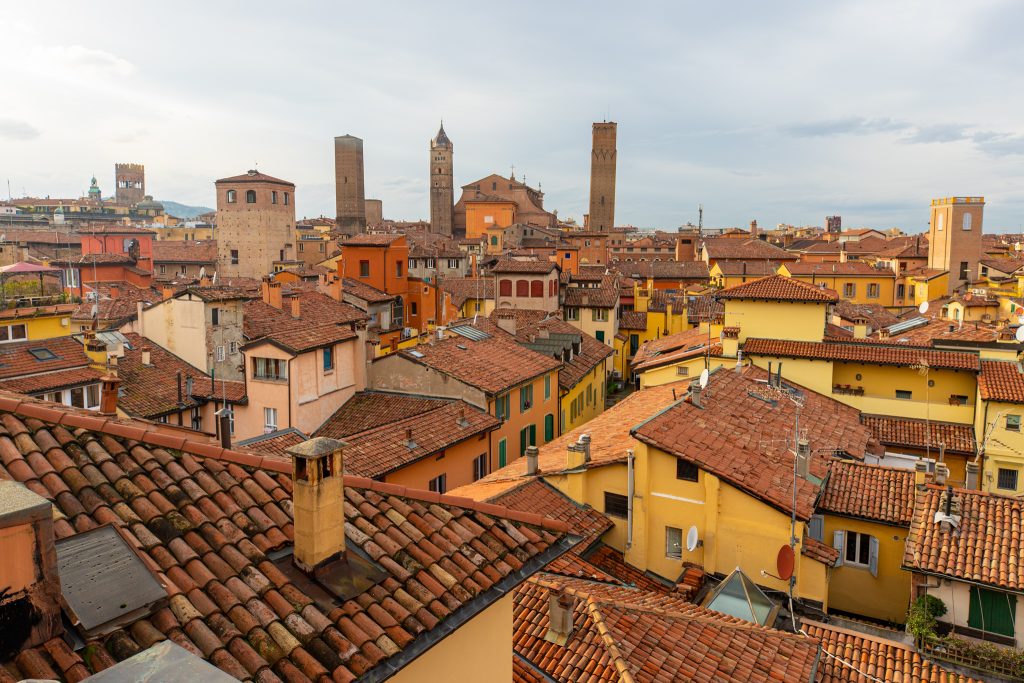
Bologna is the capital of the Emilia-Romagna region, with a population of approximately 375,000. It is a university city, where students add a vibrant and vibrant atmosphere, enlivening its cultural and social life. Bologna is also famous for its towers and long arcades. The city’s historic center is well preserved and considered one of the largest in Italy—the result of a robust preservation and restoration program initiated in the 1960s.
Bologna has always been an important cultural and artistic center, and its reputation is based on its rich heritage of architectural monuments and works of art, such as medieval towers, historic houses, and churches.
Entertainment and Attractions
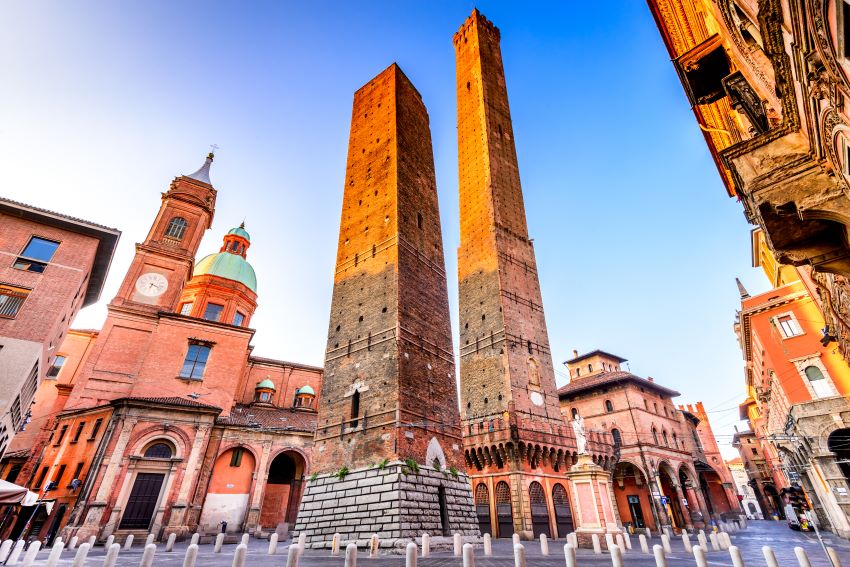
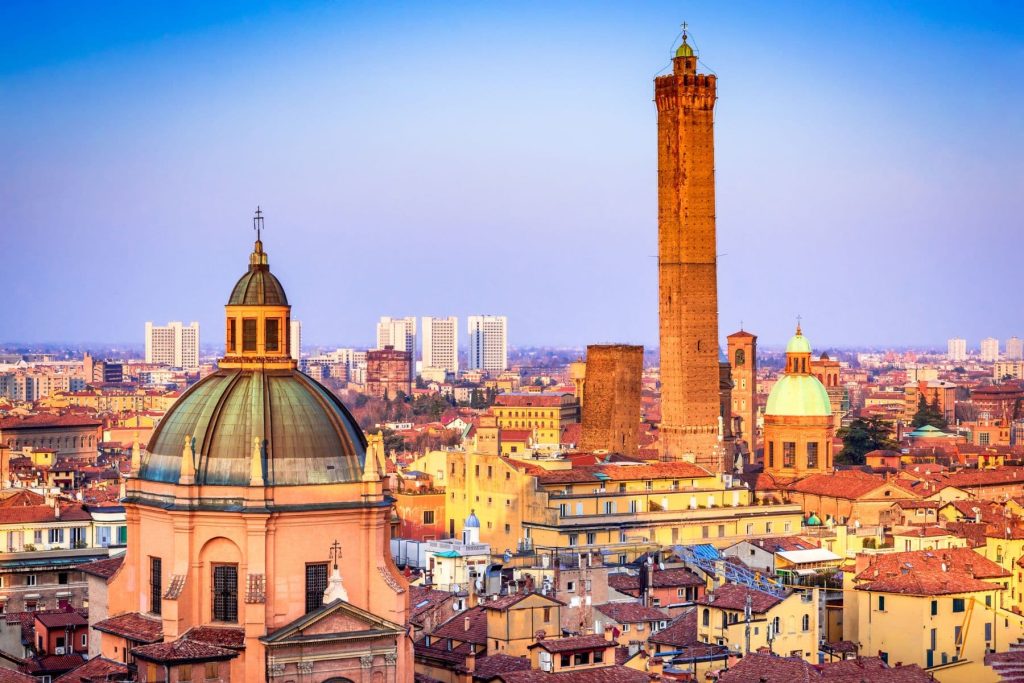
Bologna, like many other beautiful places, is known by many nicknames. It is called “the red city” because of the color of its walls, “the fat city” for its excellent cuisine, and “the city of a hundred towers” because of its majestic towers. In the Middle Ages, there were about a hundred such towers here, but today no more than ten remain. The tallest of them, built by two of the city’s wealthiest families, the Asinelli and Garisenda, rise in Piazza Porta Ravegnana, leaning slightly toward each other. The Garisenda Tower, due to its tilt, had to be reduced to its current height of 48 meters in the 15th century. The Asinelli Tower, at 97 meters, can be reached by climbing 498 steps, offering a magnificent view of the historic city center.
One of the most distinctive features of Bologna’s skyline are its arcades, which stretch along its buildings for a record 38 kilometers. The oldest arcade-portico, dating from the 13th century, can be found near Palazzo Grassi on Via Marsala. The longest extends 3,796 kilometers to the Sanctuary of the Madonna di San Luca, located on a hill. Bologna’s golden age began in 1188, when the first university in Europe was founded here. In its main building, Palazzo Poggi, visitors can admire frescoes, sculptures, a library, and even a wooden anatomical theater. Renowned figures such as Dante, Petrarch, Boccaccio, and Copernicus studied at the university, and among its professors was the future Saint Anthony of Padua.
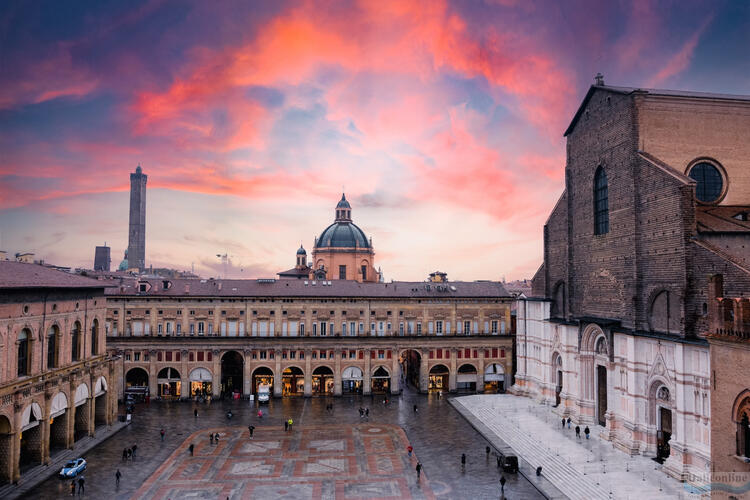
Like many other Italian cities, Bologna has its own patron saint, Saint Petronius. In Piazza Maggiore, you can see the Basilica of San Petronius, whose construction began 600 years ago. Its size was intended to surpass St. Peter’s Basilica in Rome, but these plans were left unfinished due to papal intervention.