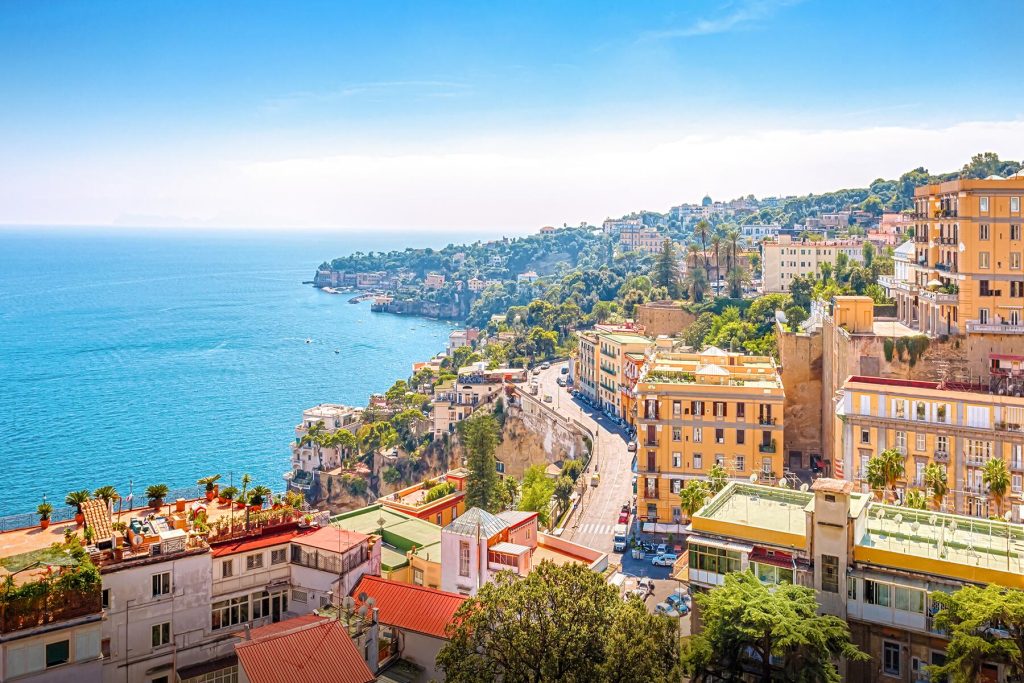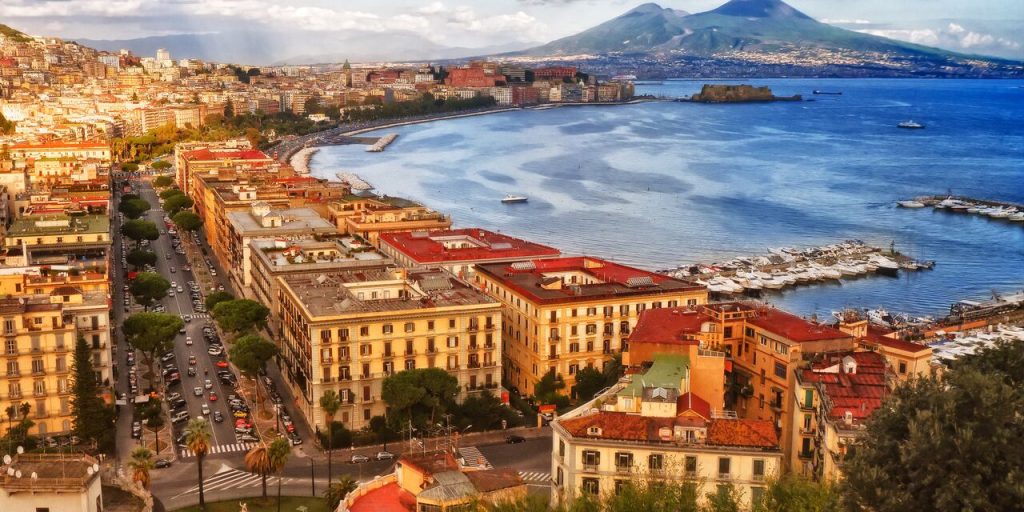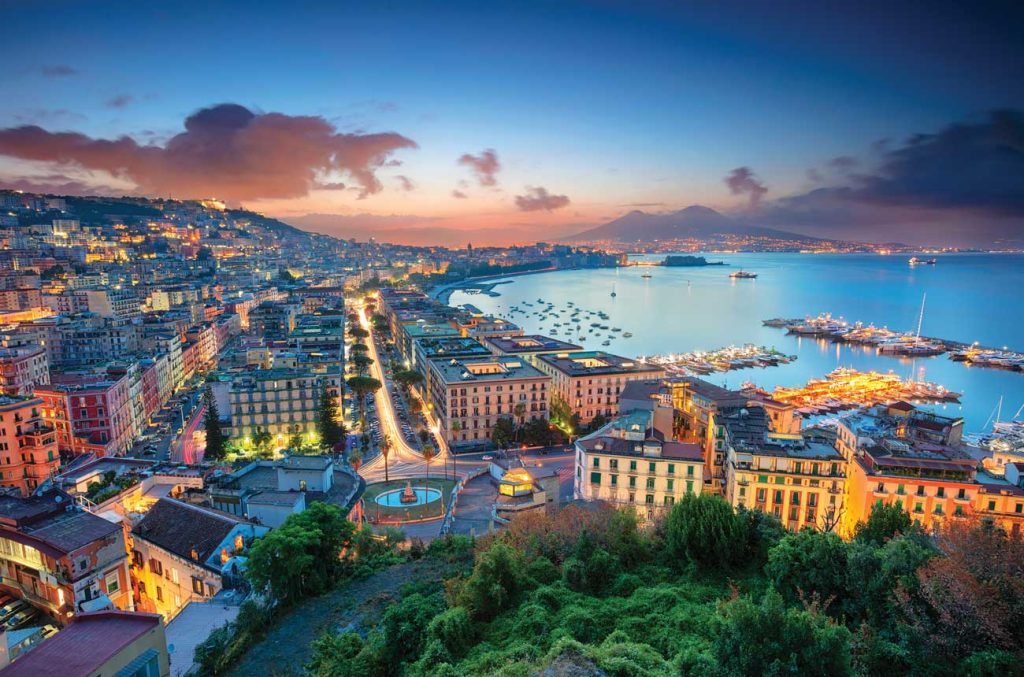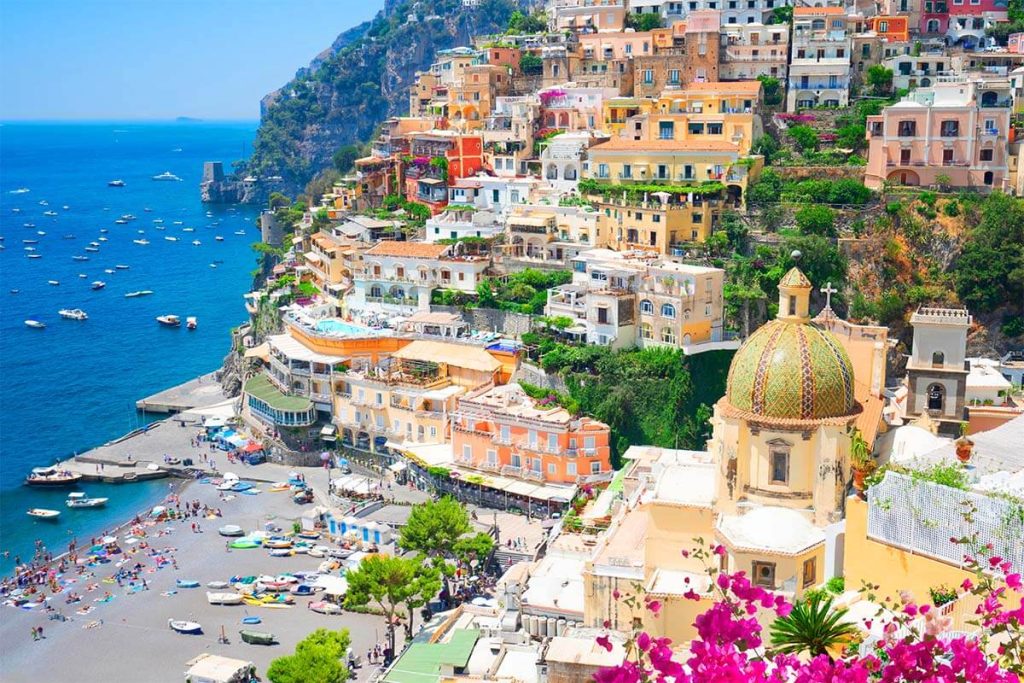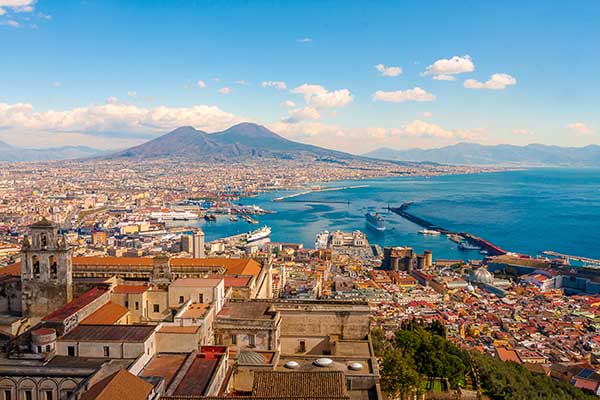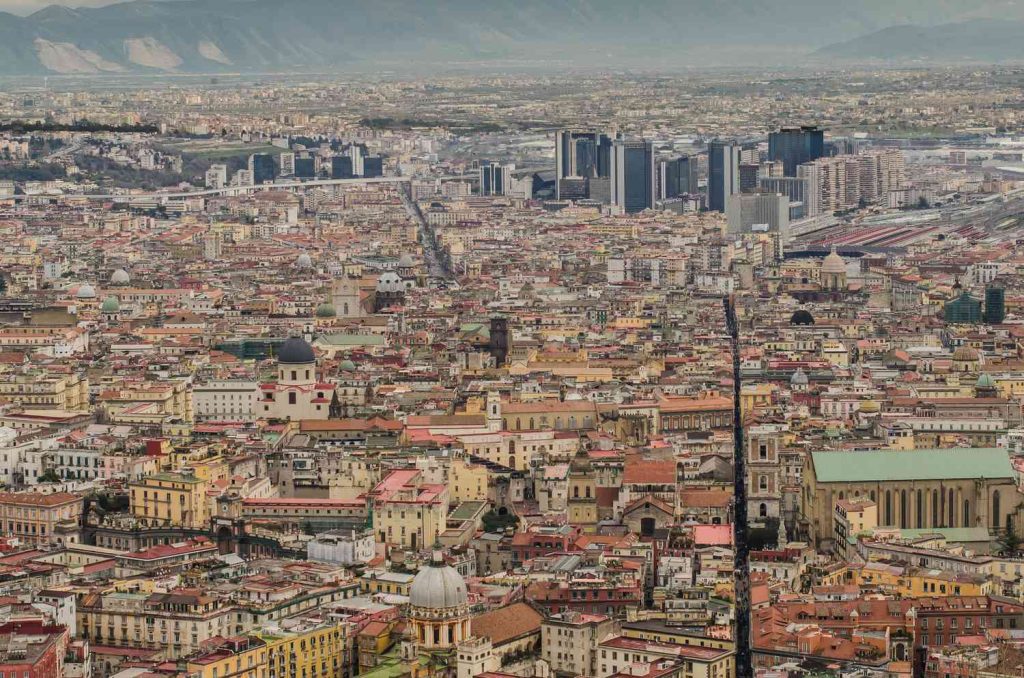
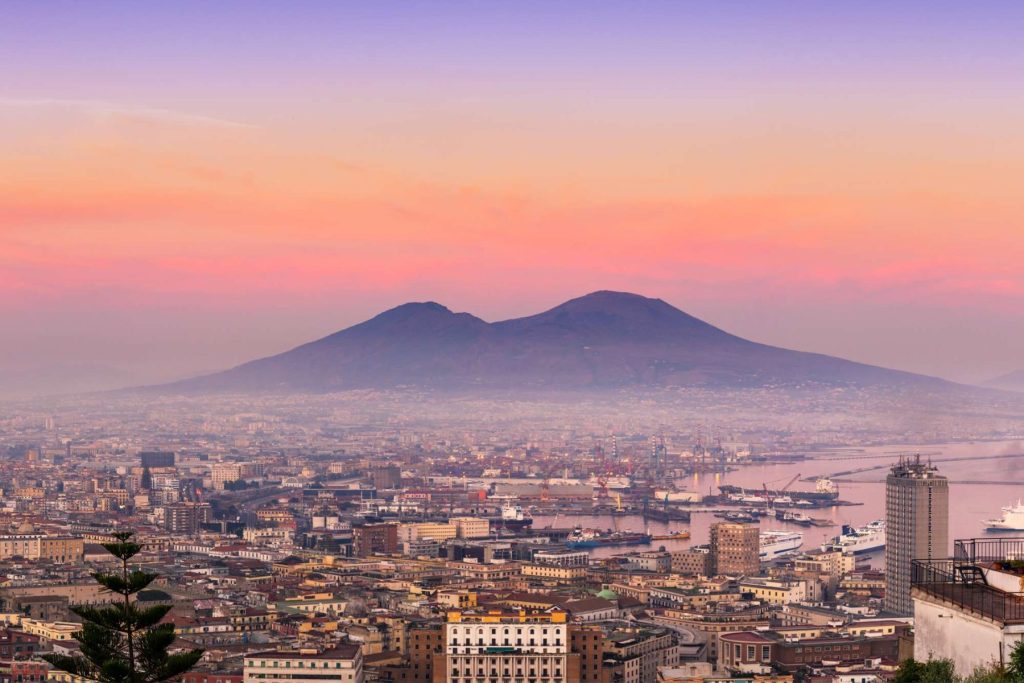
Naples has a reputation as the dirtiest and most crime-ridden city in Italy. In reality, it is one of the country’s most magnificent cities, replete with Baroque churches, sumptuous palaces, and unique museums. Naples is a unique blend of contradictions and paradoxes: here you can find architectural masterpieces, bustling markets, narrow streets, pickpockets, opera, religious festivals, the loud noise of motorcycles, and luxury shops.
Entertainment and Attractions
To the west of the port lies Castel dell’Ovo, an ancient castle that served as a state prison for centuries and has witnessed the incarceration of many famous prisoners. It’s a great place to start exploring the city’s attractions.
Closer to the port rises the Castel Nuovo, the medieval residence of the Neapolitan kings. In the 18th century, the royal court moved to a more convenient location—the Royal Palace, which occupies an entire city block. The building’s façade features statues of Naples’ rulers, including Marshal Murat of France, who ruled the Kingdom of Naples for seven years.
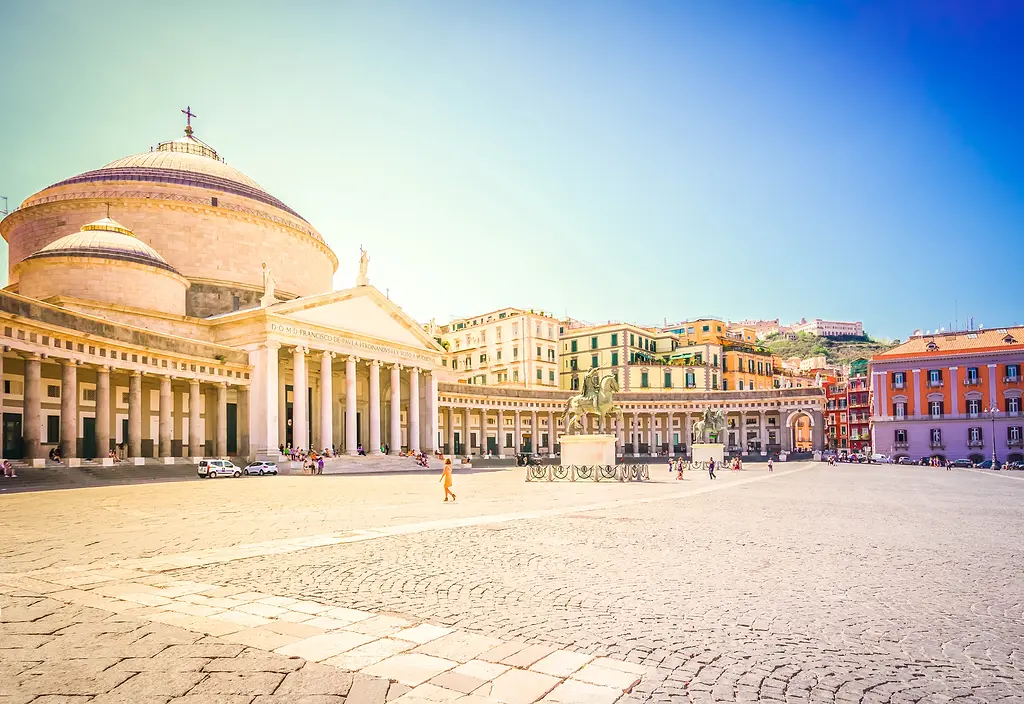
Piazza del Plebiscito in front of the Royal Palace is one of the most picturesque in the city. This project was designed by Murat, who decided to create a forum bearing his own name. On the other side of the square is the Basilica of San Francisco di Paola, which King Ferdinand I built as a token of gratitude to God for deliverance from Murat’s tyranny.
To the south of the palace is the Teatro San Carlo, built by the benefactor King Charles III, who aspired to create the largest theater in the world. Nearby is the Caffè Gambrinus, with its elegant interior, where you can enjoy a cup of coffee. This spot has long been popular with celebrities; even the royal family has stopped by for coffee.
The bustling Via Toledo begins at the Royal Palace, leading to the city’s historic center with its narrow streets. To the left is the colorful Spanish Quarter, known as the Camorra’s “nest.” If you don’t want to run into the local mafiosi, it’s best to turn right off Via Toledo into Piazza Gesù Nuovo, home to the church of the same name and the Basilica of Santa Chiara, once the burial place of the Neapolitan kings.