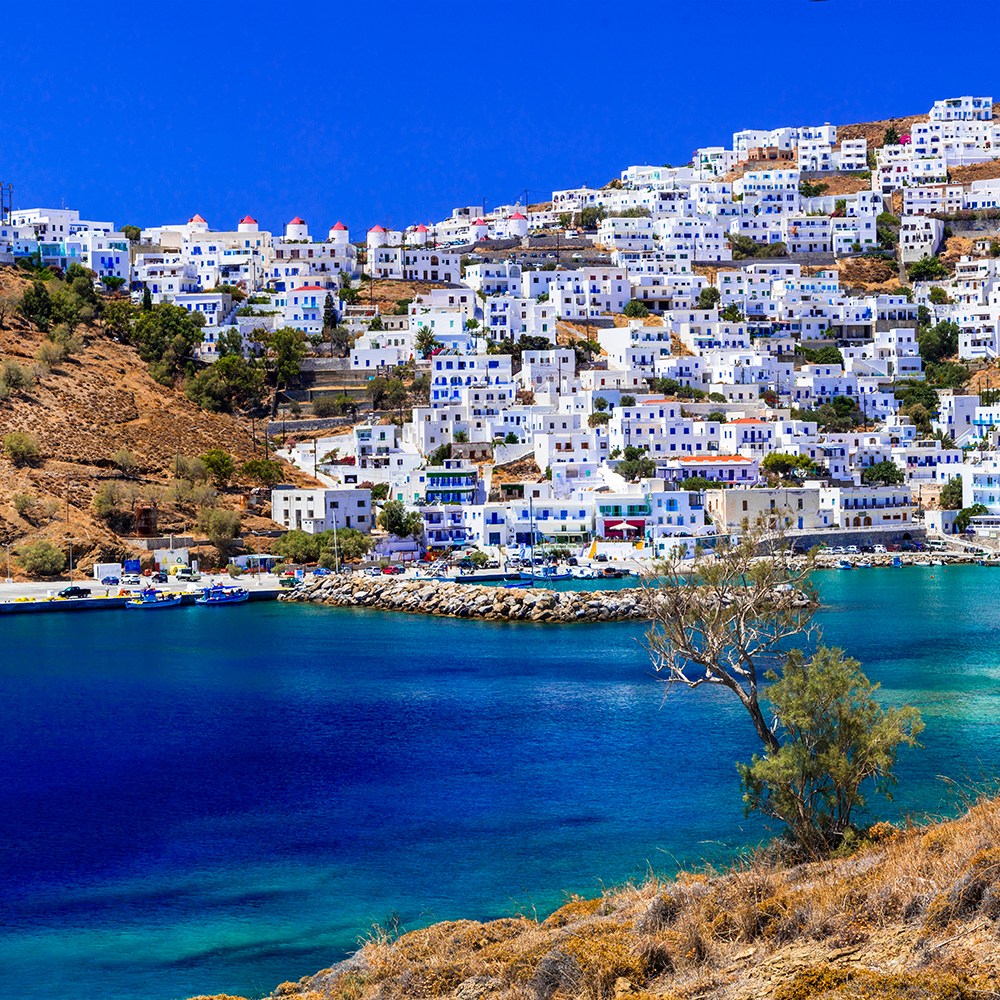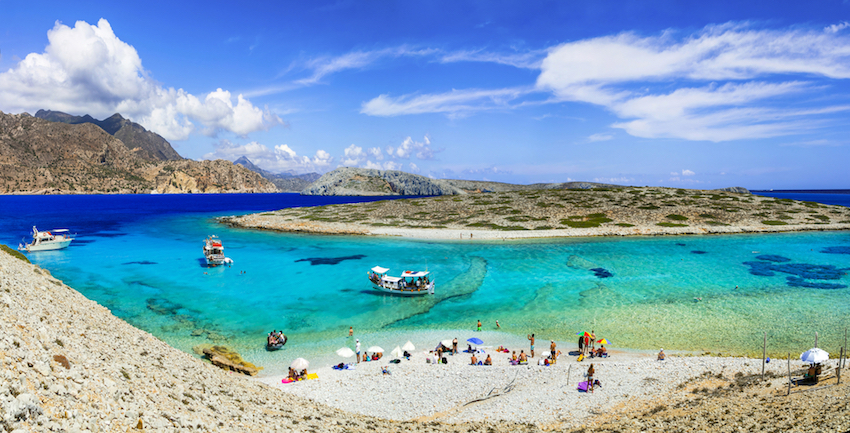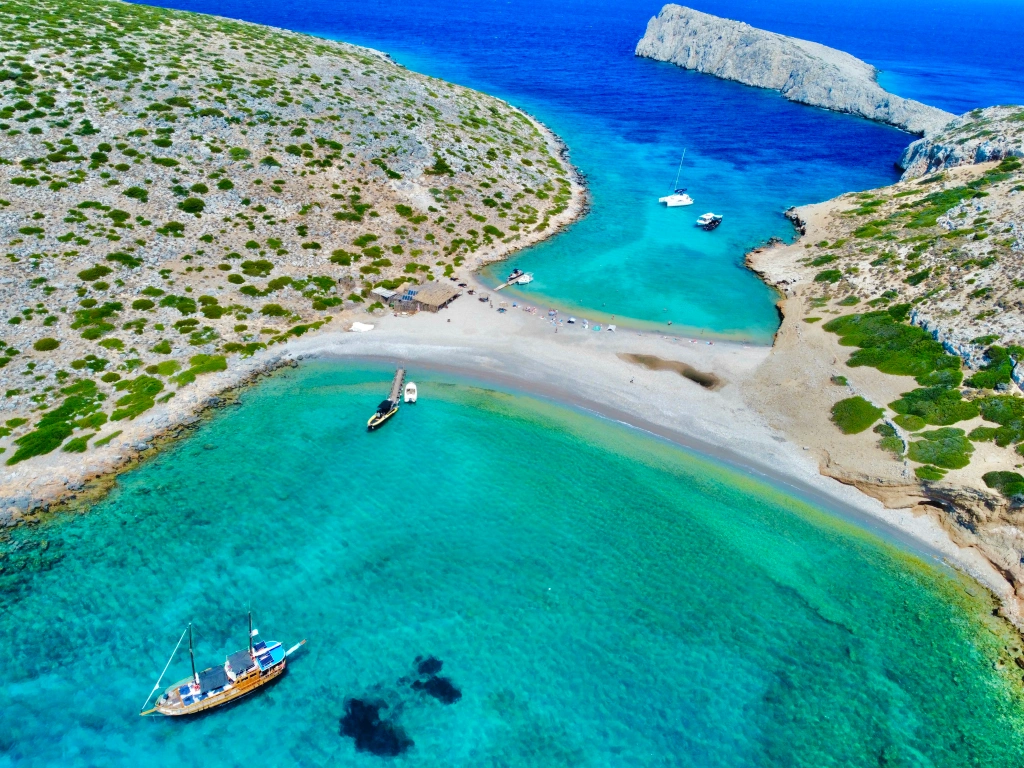
 Viewed from above, Astypalaia resembles a butterfly. One wing is covered with forest, the other is treeless and deserted. There are no snakes here, a rare occurrence in the Aegean islands. The island’s vegetation consists primarily of shrubs, junipers, and grasses, where flocks of sheep and goats graze. Citrus fruits are abundant in the valleys.
Activities and Attractions in Astypalaia
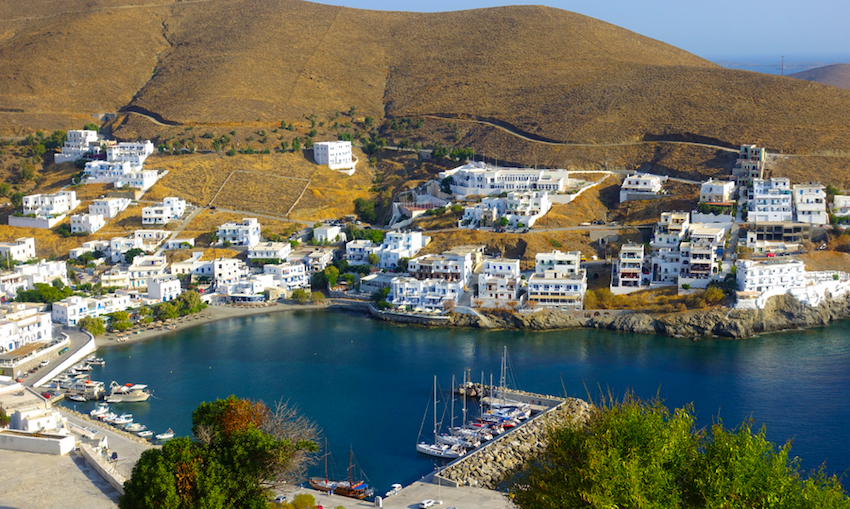
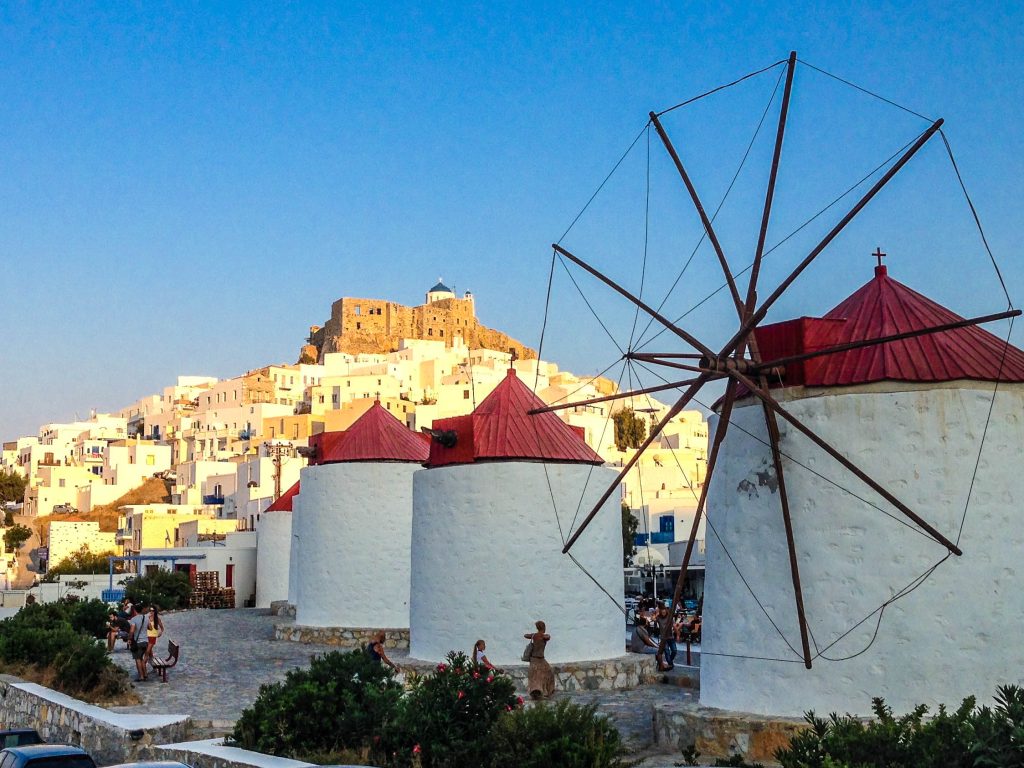
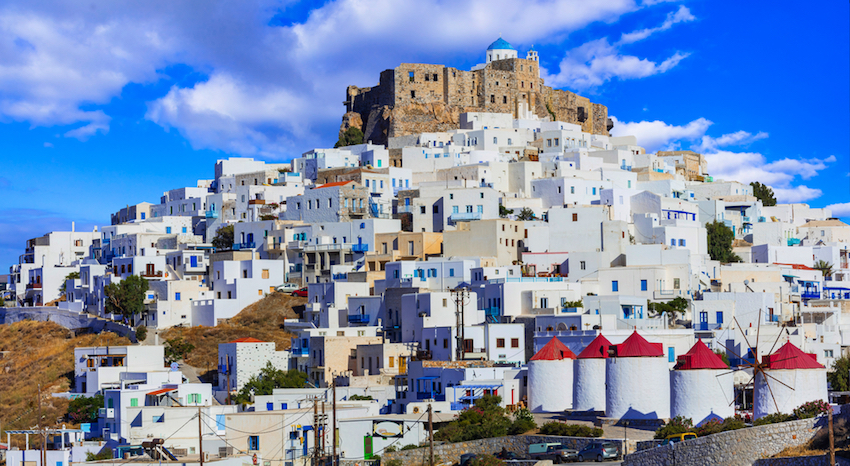
The island’s harbor, Pera Yialos, was the first city in the region founded by Italians. Its main attractions are the Archaeological Museum, which offers a wealth of sightseeing, and a row of eight picturesque windmills.
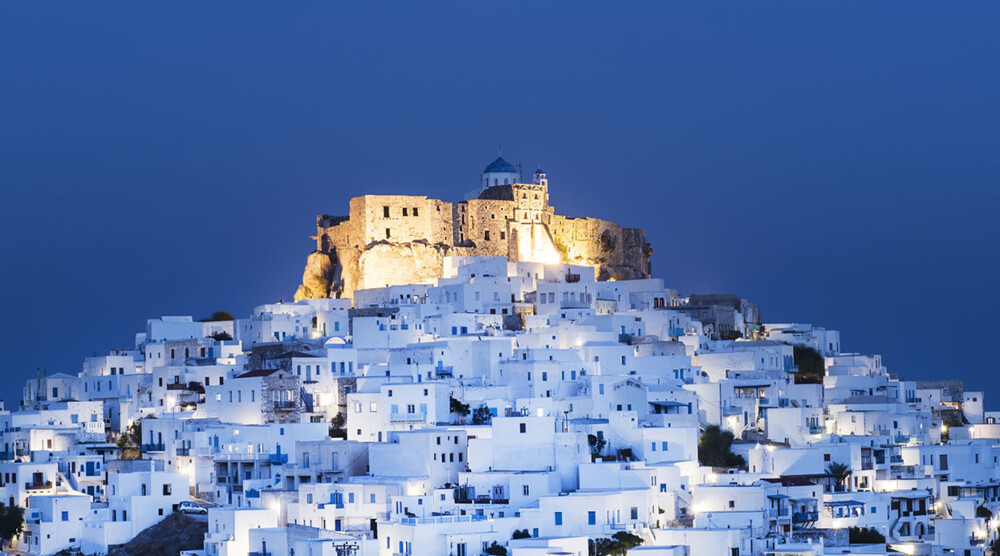
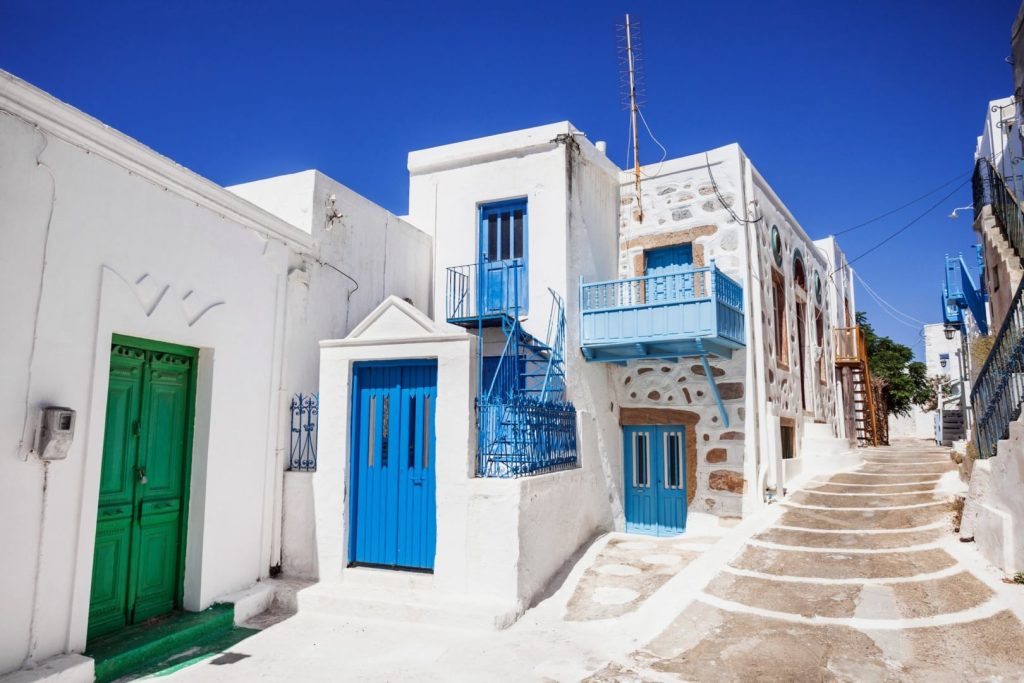
Chora is the island’s capital, built in the tradition of Greek island architecture, but with original wooden finishes such as staircases and balconies. At the top of the hill stands Kastro Castle, considered one of the most beautiful in the Aegean Sea. In 1956, it was damaged by an earthquake, but the castle retained its appearance, as did the churches of Evangelistria and Agios Georgios, which are currently undergoing restoration.
From the town of Analipsis, it is easy to reach the preserved thermal baths of Talaras, as well as the basilicas of Agia Varvara and Kareklis. Here you can also see the island’s last windmill overlooking Agia Foka Bay.
The church of Panagia Portaitis is considered the most beautiful church in all the Dodecanese islands.
The east of the island is designated a National Park. Although uninhabited, it boasts several stalactite grottoes and picturesque sea caves.
Beaches
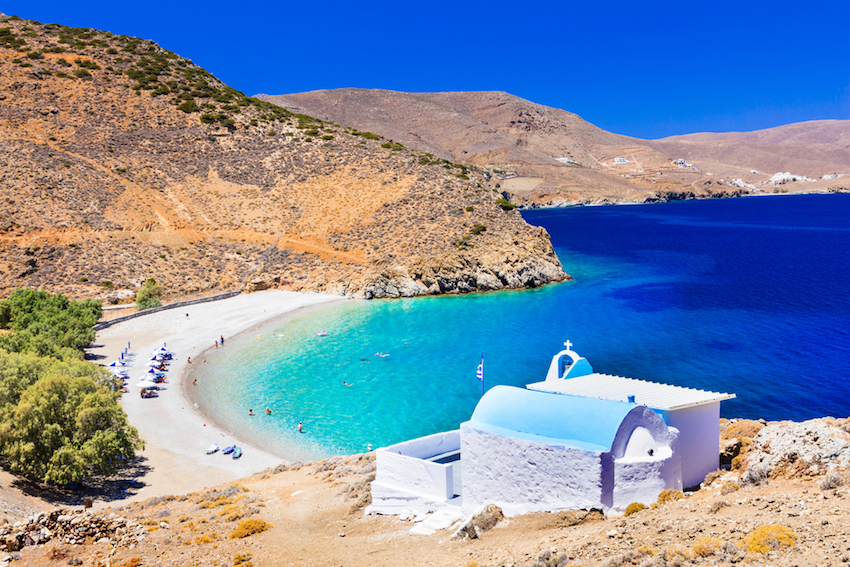
Livadi, the island’s most famous beach, is located a 20-minute walk or five minutes by bus from Chora. It has numerous cafes, restaurants, and hotels. If you prefer a quieter place, you can head southwest and swim in three small bays – Tzanaki, Agios Konstandinos and Chilos.