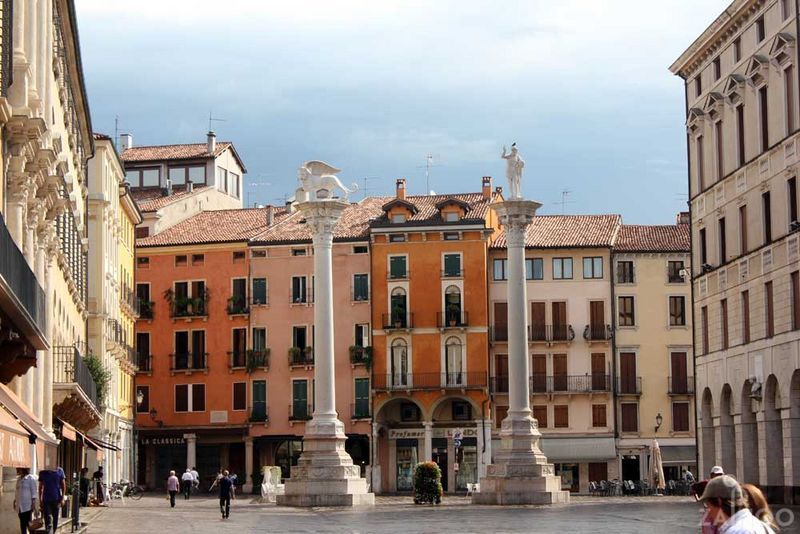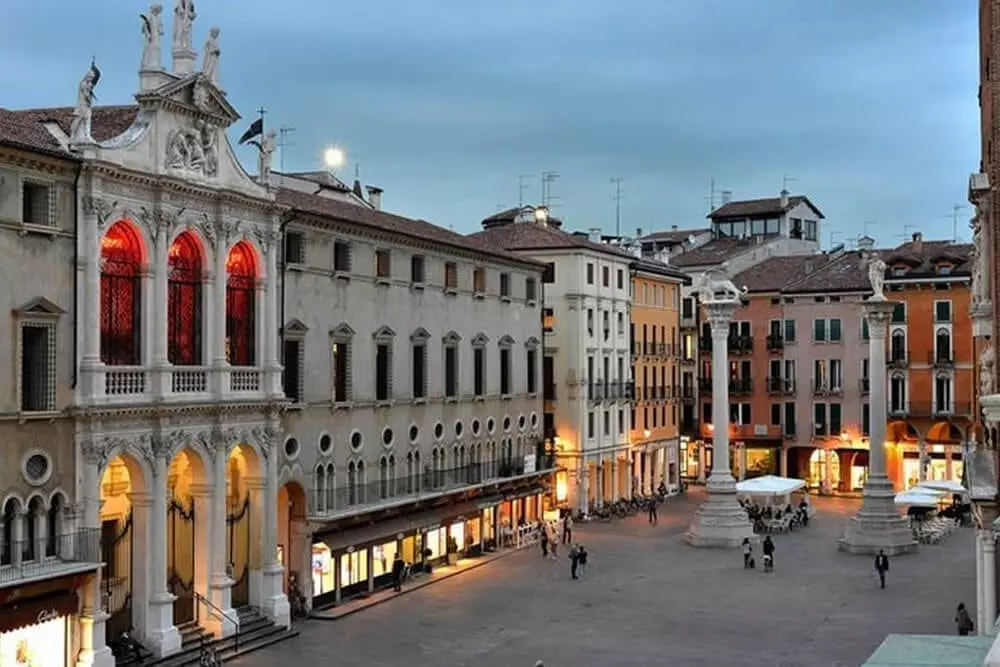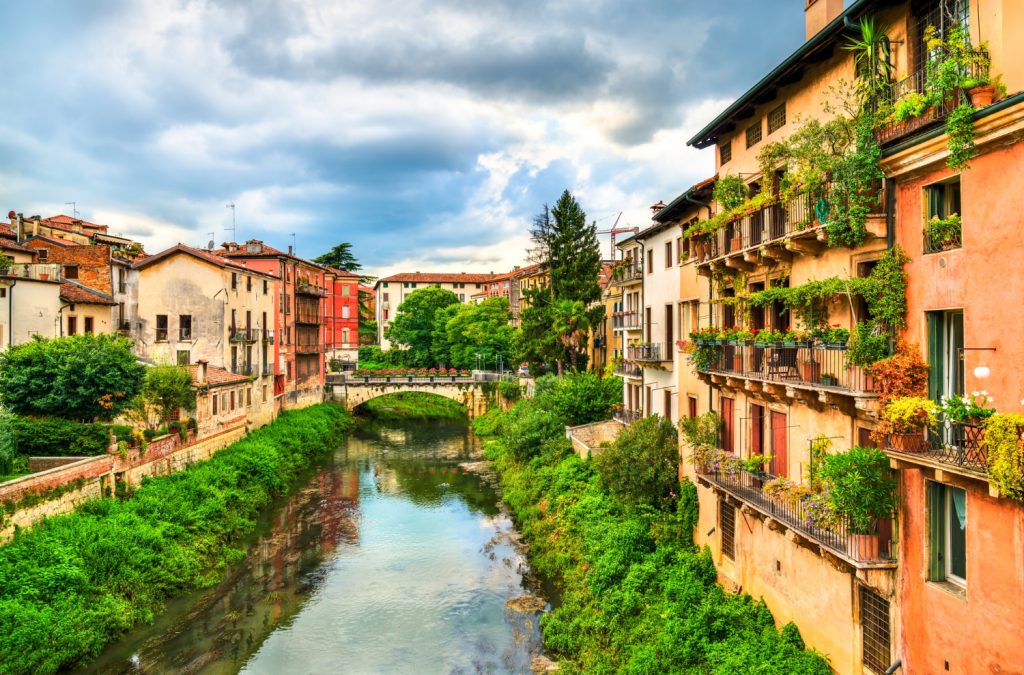
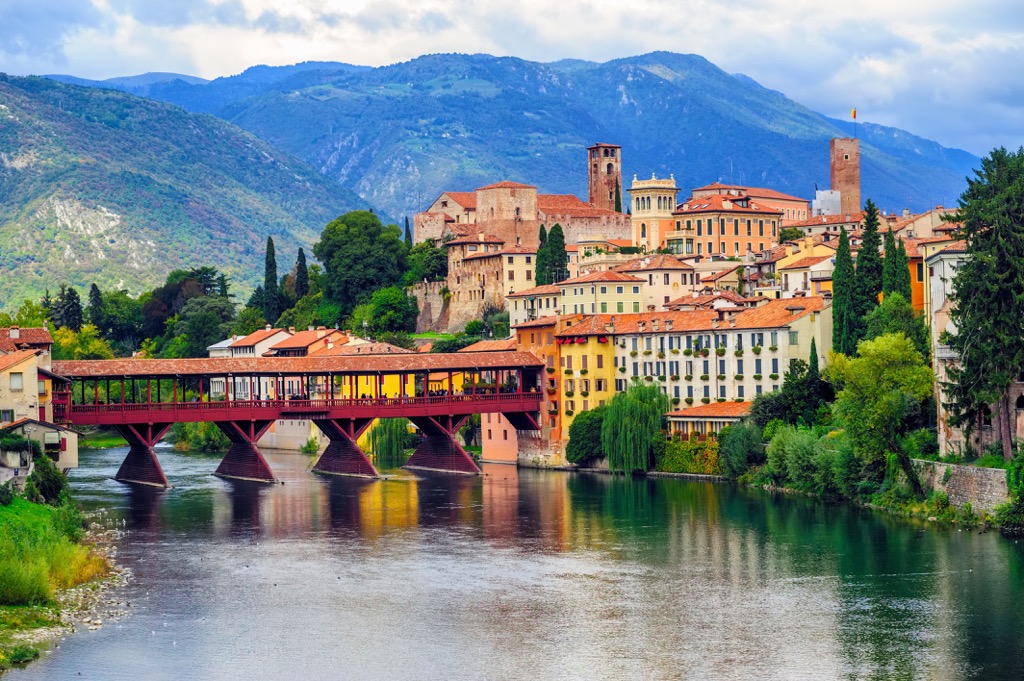
The great Italian Renaissance architect Andrea Palladio left his indelible mark on this beautiful town, not limiting his work to the mansions of Vicenza but continuing his majestic work throughout the villages and towns of the Veneto region. UNESCO subsequently placed the entire city under its protection, ensuring that not a single treasure is lost.
Attractions in Vicenza
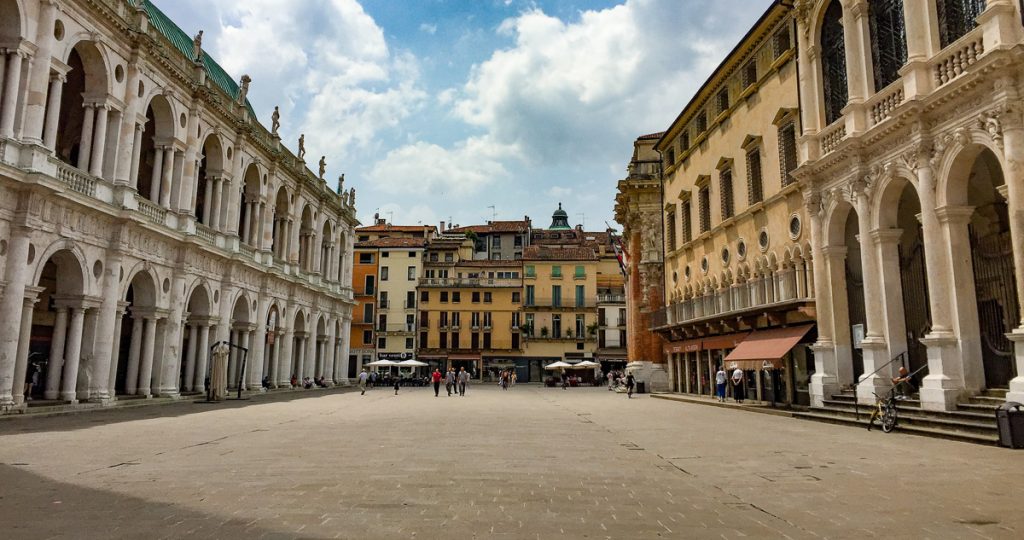
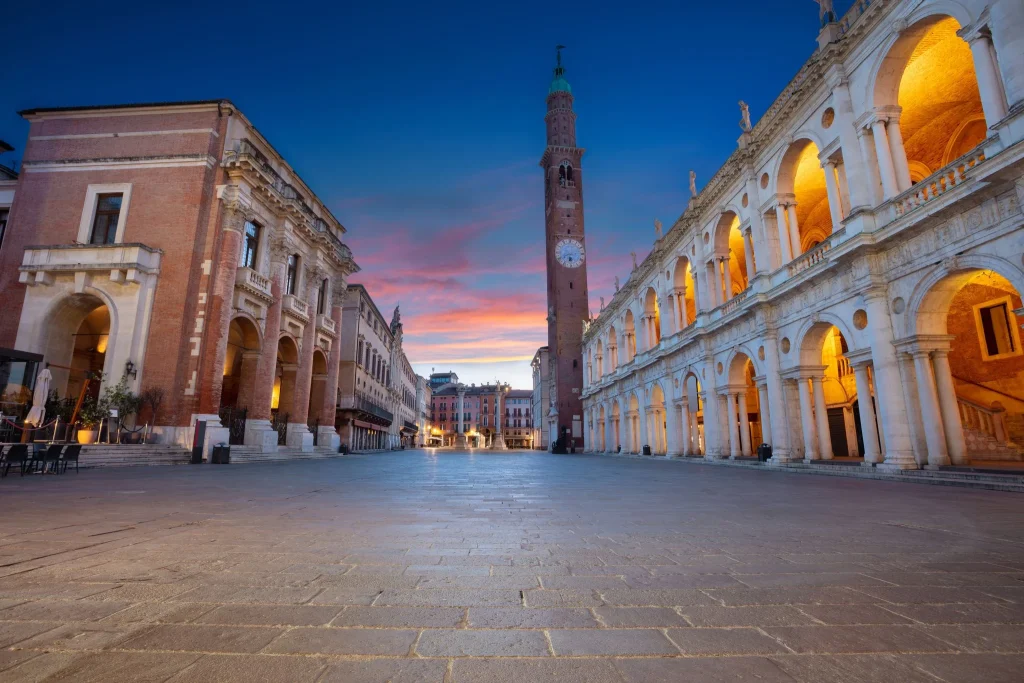
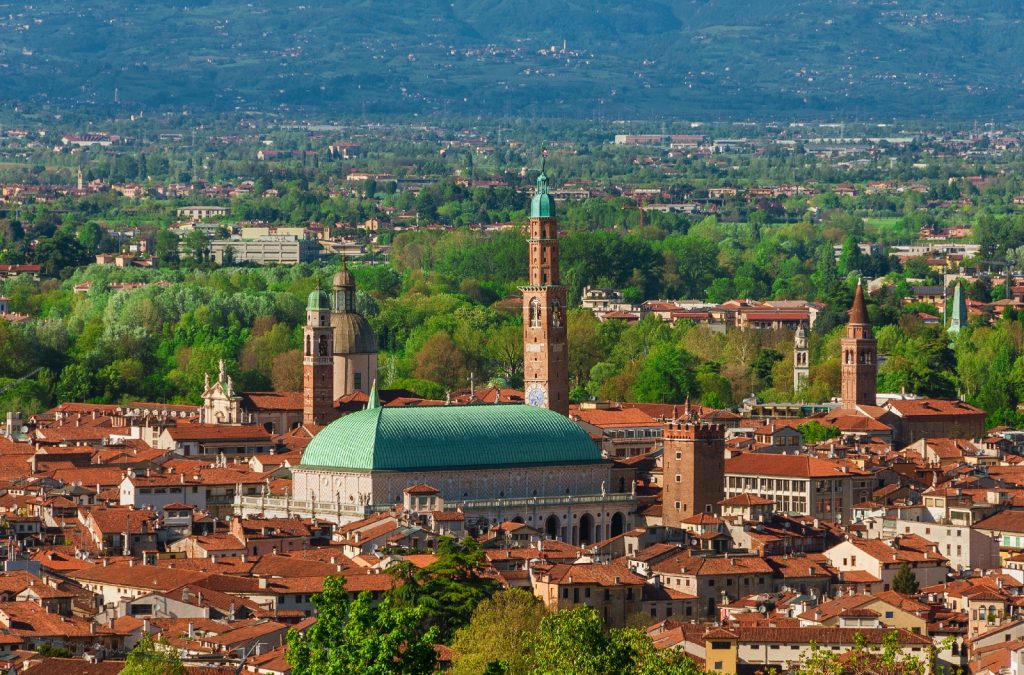
Upon arriving in Vicenza, tourists first head to the Basilica Palladiana, which rises in Piazza dei Signori and was founded in 1549. From there, they wander around the city, admiring its sights. Some head to the Palazzo Chiericati, now an art gallery. Others prefer to visit the Olympic Theatre, also designed by Andrea Palladio in 1580. Less well-known but no less beautiful sites include the Gothic Casa Pigafetta, which has retained its original appearance since the 15th century and houses the diaries of its owner, a member of Magellan’s expedition to the Maluku Islands. Traces of Palladio’s work can also be seen in the Villa Rotonda, located outside the city and designed in the shape of a cross within a circle.
The “House of the Dwarves,” known as Villa Valmarana, is located on the slopes of Monte Berico and serves as a residence. The house owes its name to the numerous stone sculptures of dwarfs that adorn its park and walls. The main building and guesthouse were decorated with frescoes by Tiepolo and his son Giandomenico in 1757. Other attractions in Vicenza include the Palazzo Leoni Montanari, now a museum displaying masterpieces of Venetian painting, as well as La Loggia del Capitanio, Palladio’s palace opposite the Basilica Palladiana, and the Basilica Felice e Fortunato.
The Santa Corona Museum of Nature and Archaeology, located immediately next to the Dominican Monastery, features an exhibition covering nature and archaeology from the Paleolithic era onward. Also worth visiting is the Museum of the Resistance, located on the hill in Villa Guisiole.