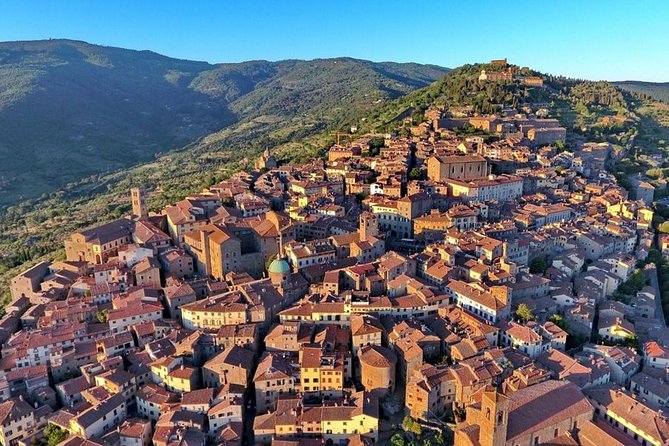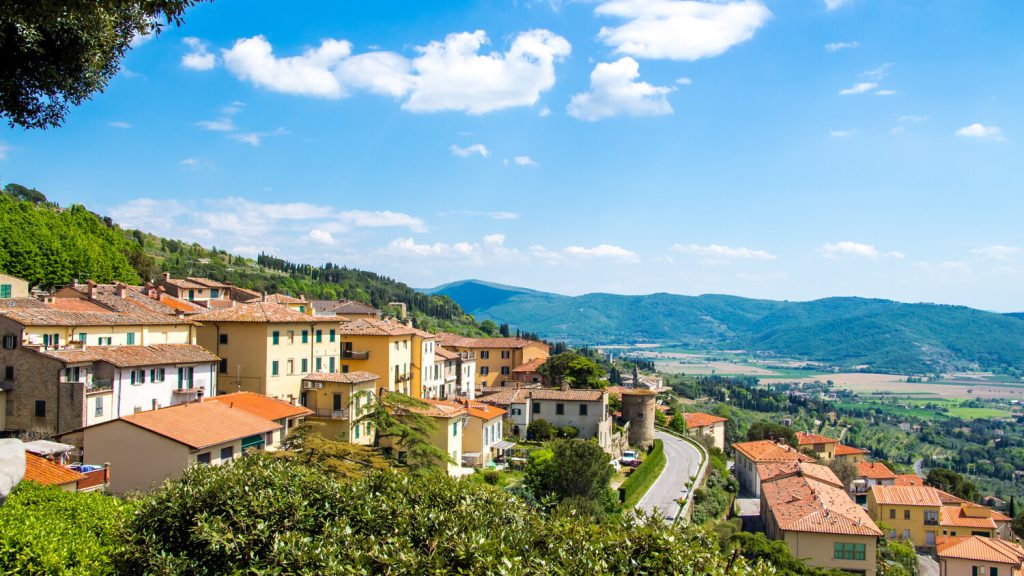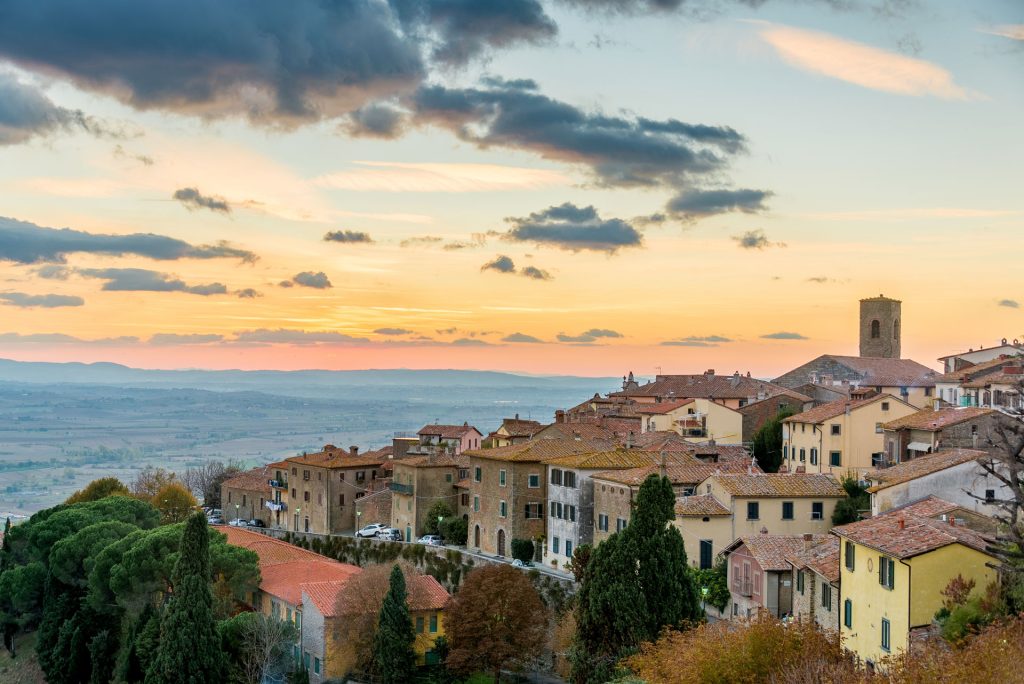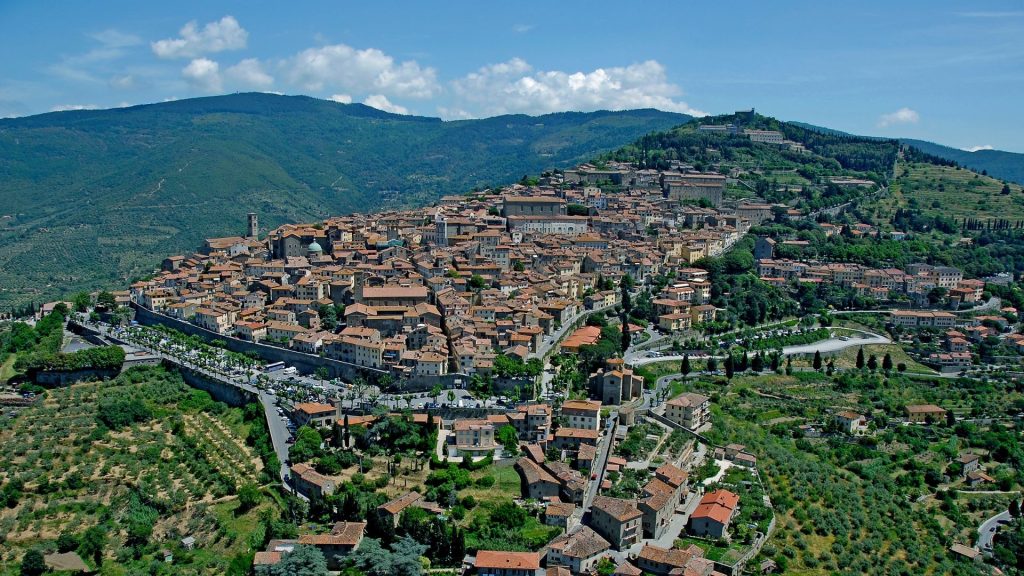
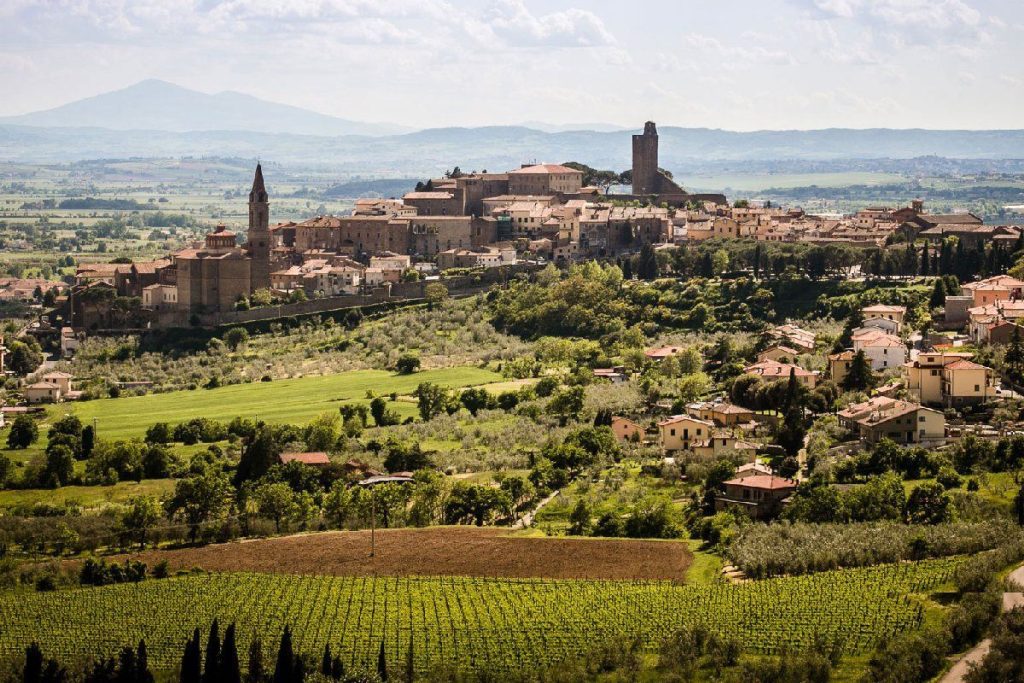
The city of Cortona stands out for its magnificent location, with its ancient quarters spread along the steep slopes of a 600-meter hill. Its history begins with an Etruscan settlement, traces of which can be found in the Diocesan Museum. Later, the city was ruled by the Romans and Goths, but its true heyday came in the 15th century, when Cortona became the property of the Medici family.
Cortona Attractions
As befits a historic Italian city of the medieval era, Cortona begins with its main landmark – the Duomo, or Cathedral of the Assumption of the Virgin Mary. This Romanesque church was built in the 11th century on the ruins of an ancient Roman temple, and its interiors were decorated with frescoes in the 16th and 17th centuries. Particularly noteworthy are the frescoes “Adoration of the Magi” by Pietro da Cortona and “Descent of the Holy Spirit” by Tommaso Bernabei. Today, numerous Christian relics and rare Renaissance works, including fragments of an altarpiece by Pietro Lorenzetti, are housed in the Diocesan Museum.
The Diocesan Museum is located opposite the Cathedral Square and is renowned for its outstanding collection of Renaissance religious paintings. Its collection includes such early works as Pietro Lorenzetti’s “Madonna Enthroned” and fragments of the Cross, and Niccolò di Segna’s “Madonna and Child.” Among its most famous masterpieces are Fra Angelico’s “Annunciation” and “Madonna and Child with Angels,” as well as Luca Signorelli’s “Lamentation” and “The Sermon of the Savior.”
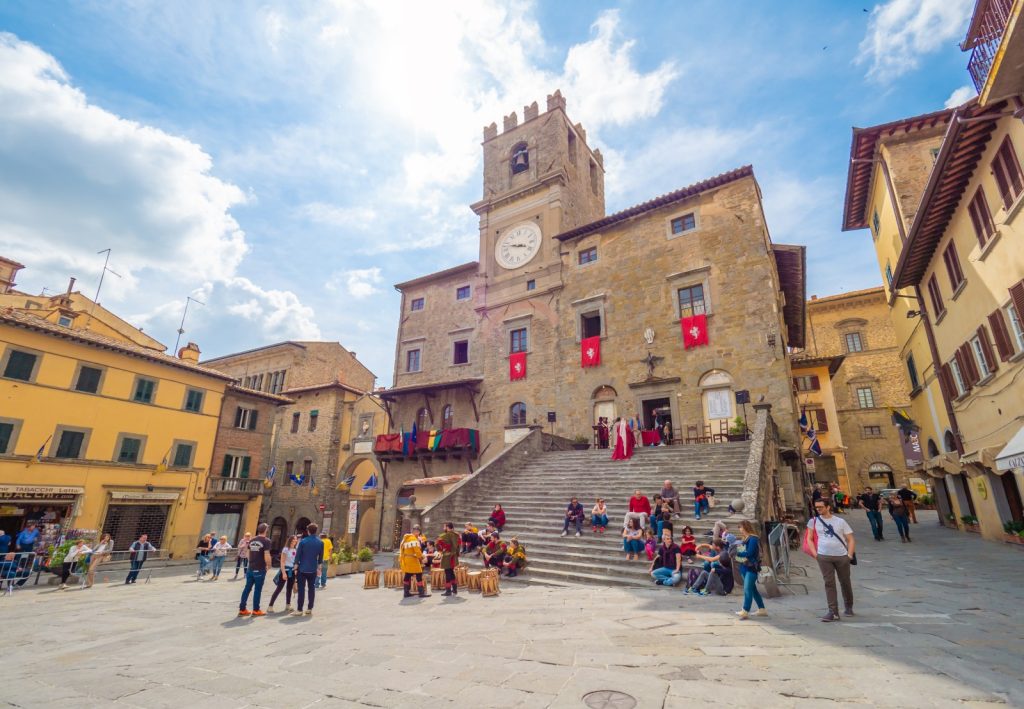
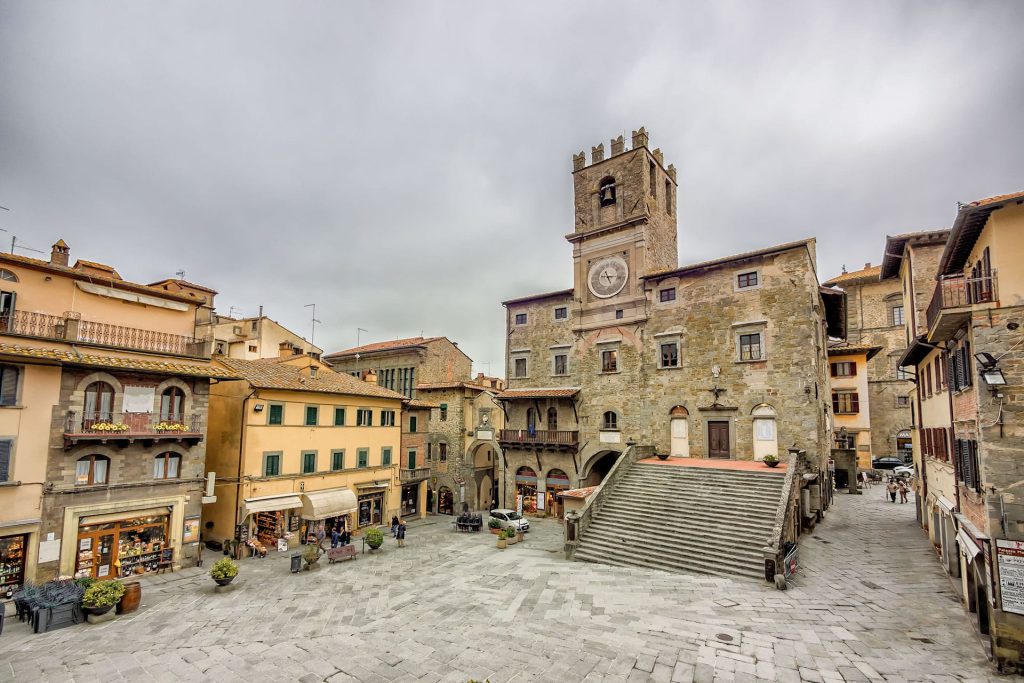
The Museum of the Etruscan Academy and the City of Cortona is one of the finest historical museums in Tuscany, having recently undergone a comprehensive renovation. Housed in Palazzo Casali, it offers a vast collection of artifacts spanning the region’s history from the 7th century BC to the modern era. Particularly valuable are artifacts from Etruscan necropolises, including handwritten tablets from the 3rd and 2nd centuries BC, a lamp, and gold brooches. Also worth noting are gilded globes and Renaissance works of art.
For stunning views of the Chiana Valley and Lake Trasimeno, climb the walls of the Medici fortress of Girifalco. The walk takes about 15 minutes up a steep hillside, passing the Basilica of Santa Margherita, where Cortona’s patron saint is buried.