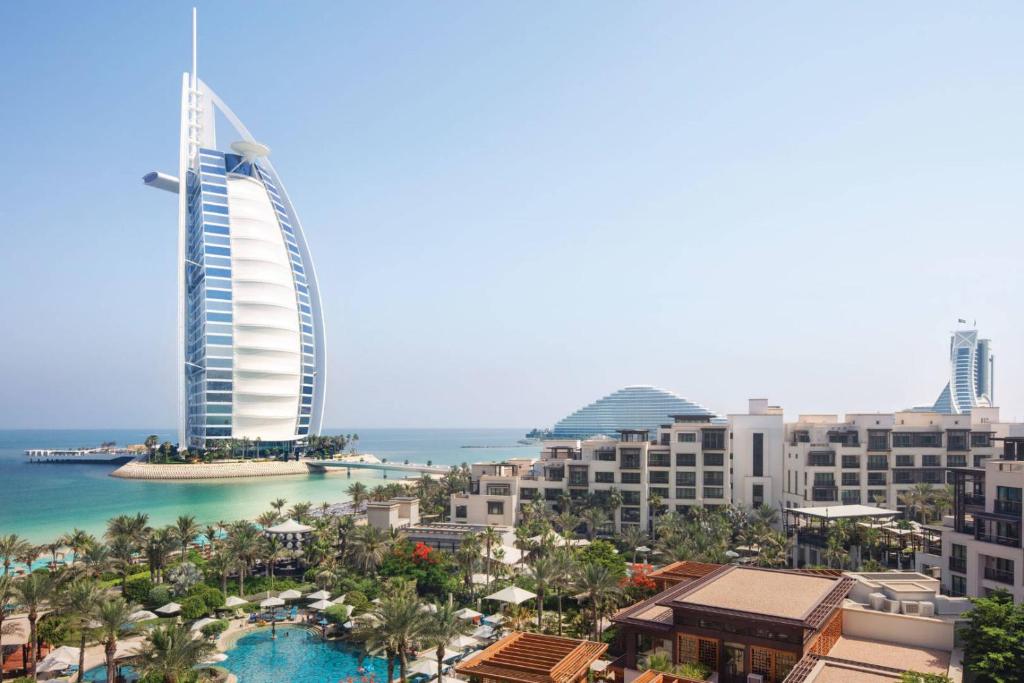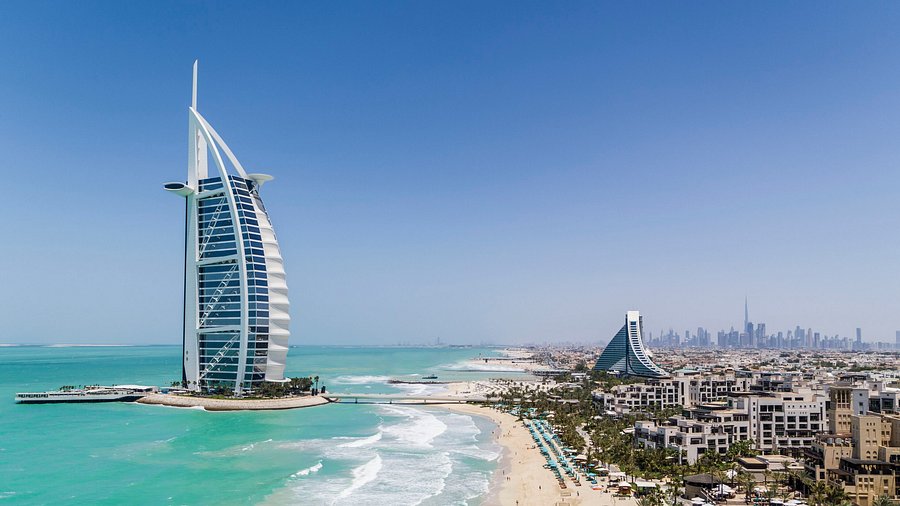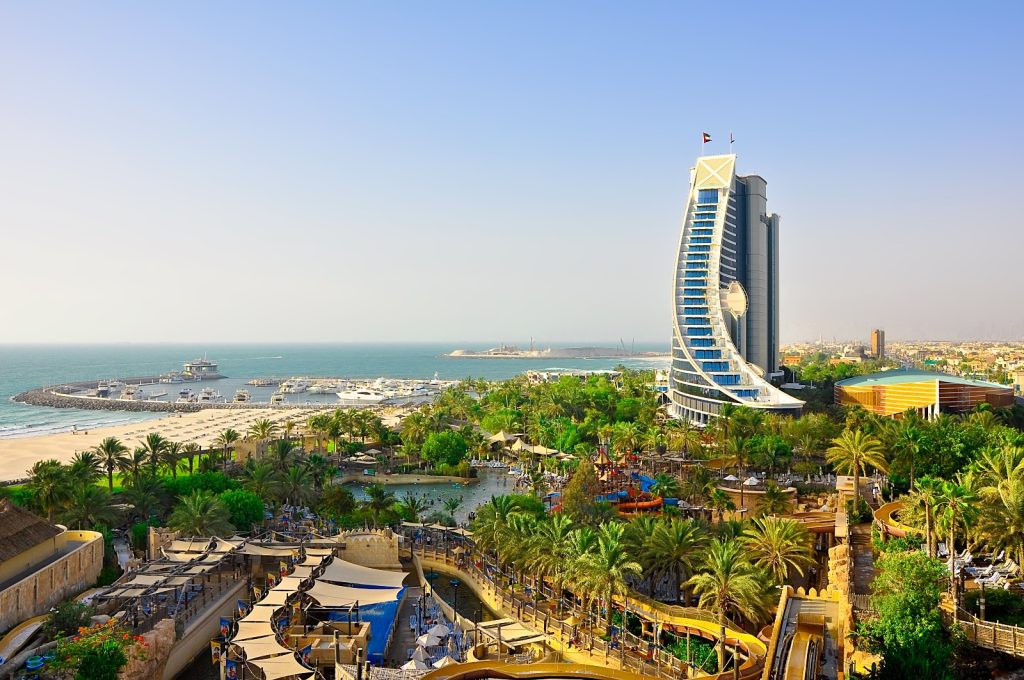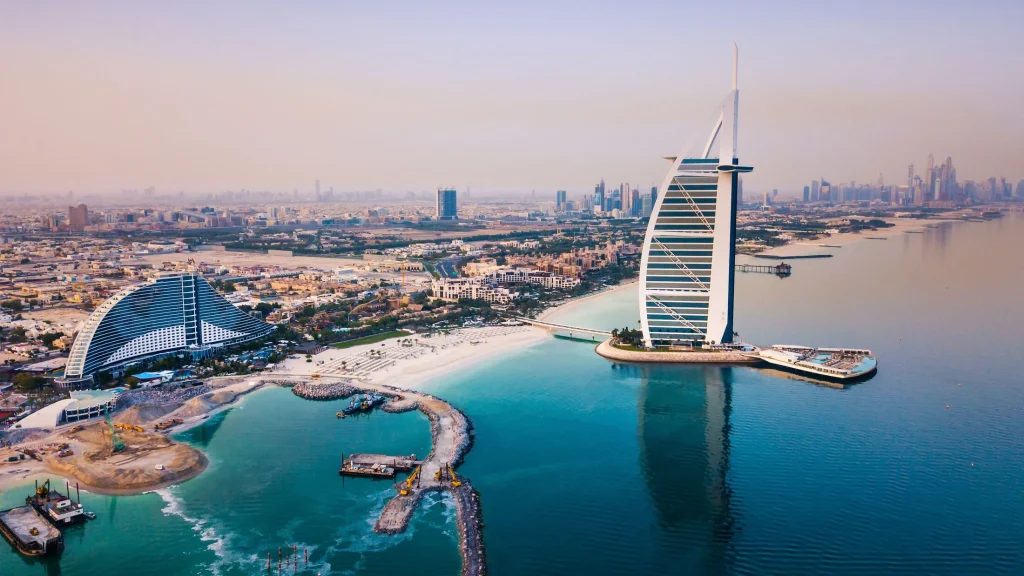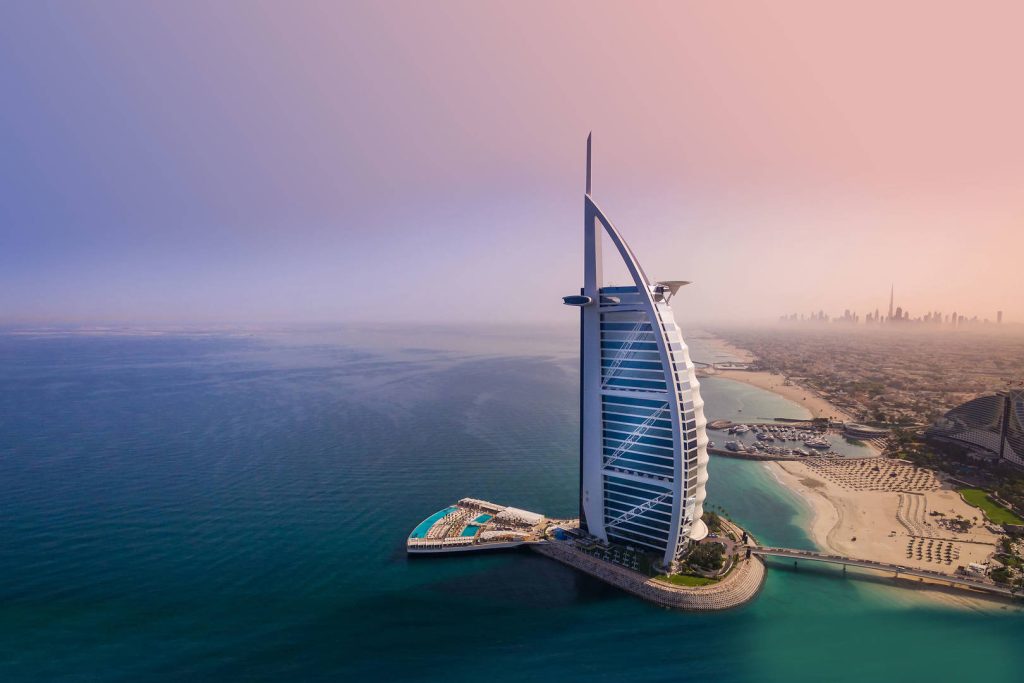
Dubai’s elite coastal district, Jumeirah, attracts tourists with its luxurious restaurants, unique hotels, and excellent beaches. Although it has fewer attractions than Bur Dubai, Jumeirah impresses with its modern architectural and technological advancements.
Jumeirah is a multicultural and diverse community, home to people of various nationalities, including Filipinos and Pakistanis. It’s a unique miniature blend of Europe, Karachi, and Manila. Europeans particularly appreciate Jumeirah for its proximity to the beach and the opportunity to live in beautiful villas. The area is also popular among expats working in the emirate.
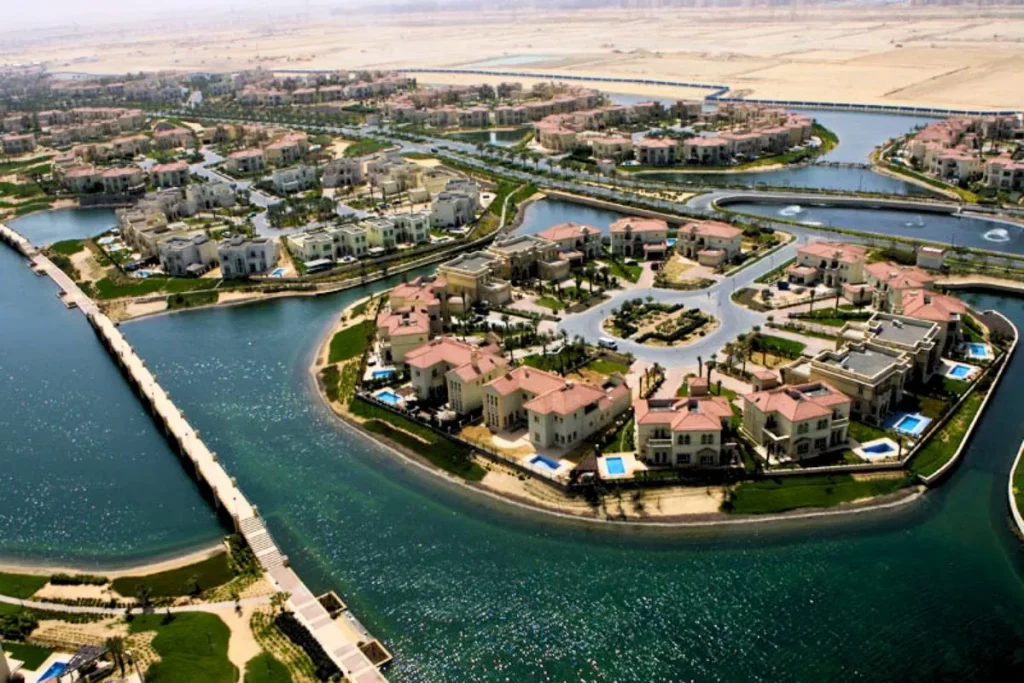
Administratively, Jumeirah is divided into three zones, designated Jumeirah 1, Jumeirah 2, and Jumeirah 3. Each of these areas is built up with expensive homes and more modest townhouses in a variety of architectural styles. The area’s main attractions include Jumeirah Beach, the promenade, and the Jumeirah Mosque.
Jumeirah Entertainment and Attractions
Tourists often flock to the Jumeirah Mosque, a symbol of the harmony of culture, tradition, and modernity. Entry is permitted, and tourists are free to take photographs inside the building. Built in 1979 from pink sandstone, the mosque is designed in a medieval style with two minarets and a majestic dome. It is especially impressive at night, attracting photographers and lovers of beautiful views.
In Jumeirah, archaeologists have discovered significant pre-Islamic sites: the ruins of residential buildings, markets, and palaces. All finds are donated to the historical and ethnographic village located in the Bur Dubai area.
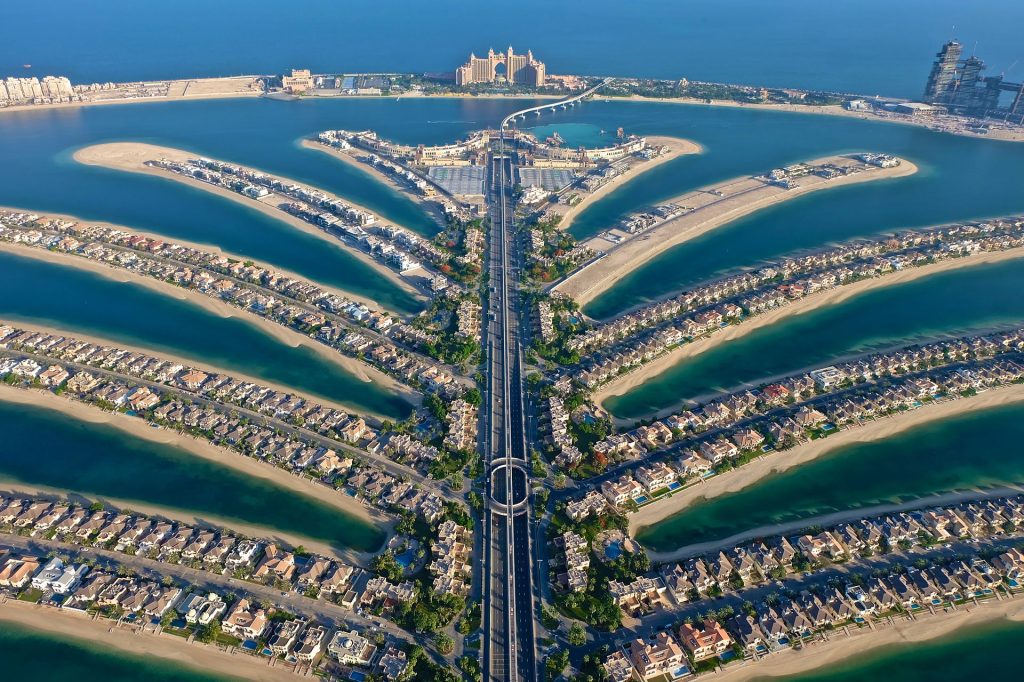
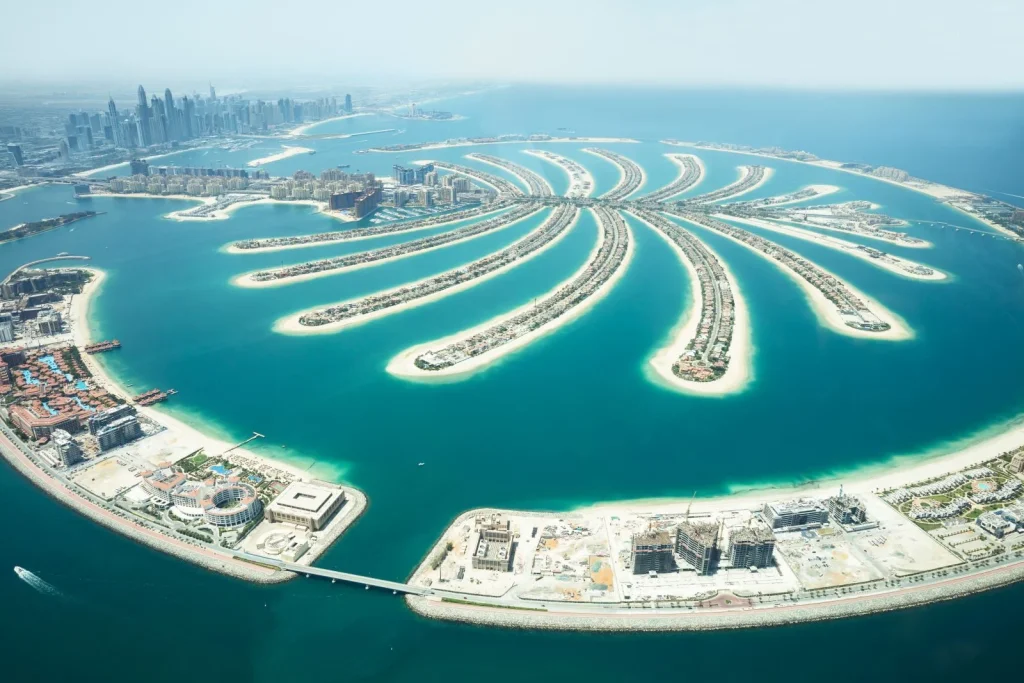
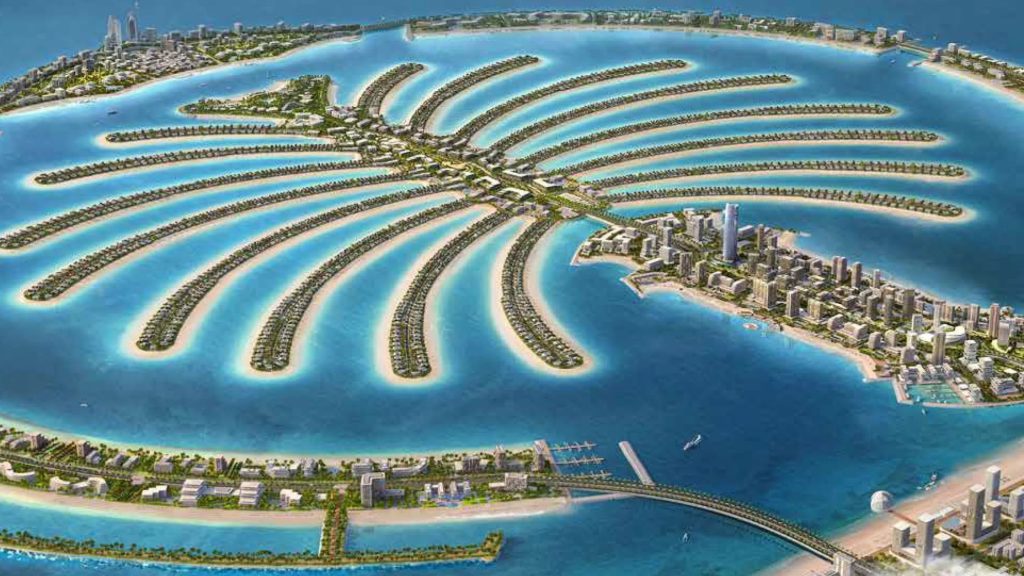
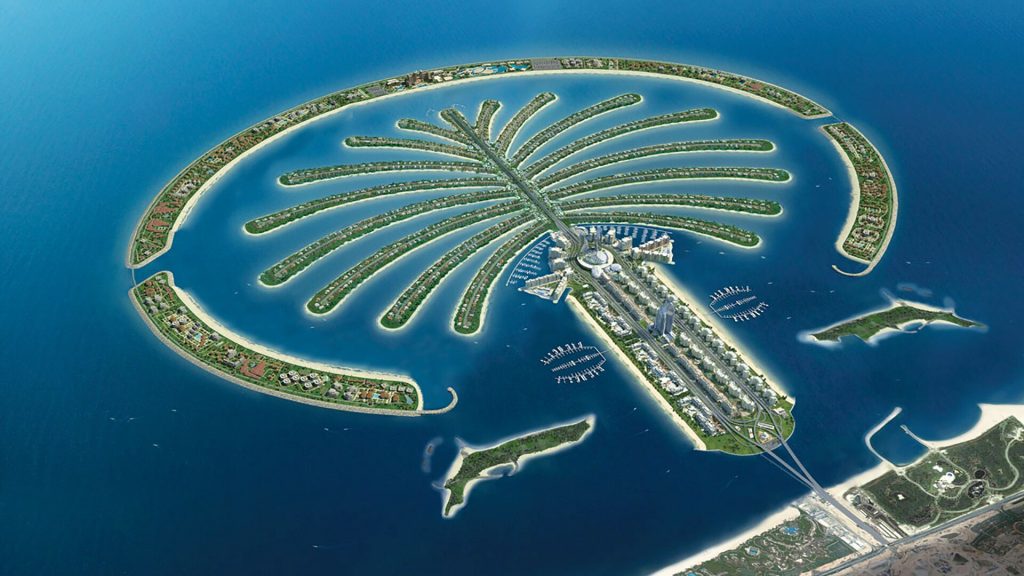
The Palm Jumeirah project is very popular. This artificial island, shaped like a date palm with seventeen fronds, can be explored from the air or by bus or car. The palm is surrounded by a crescent-shaped barrier housing the world’s finest hotels. The central part of the island is lined with shopping malls and high-rise buildings, adorned with parks. An underwater theme park is also planned.