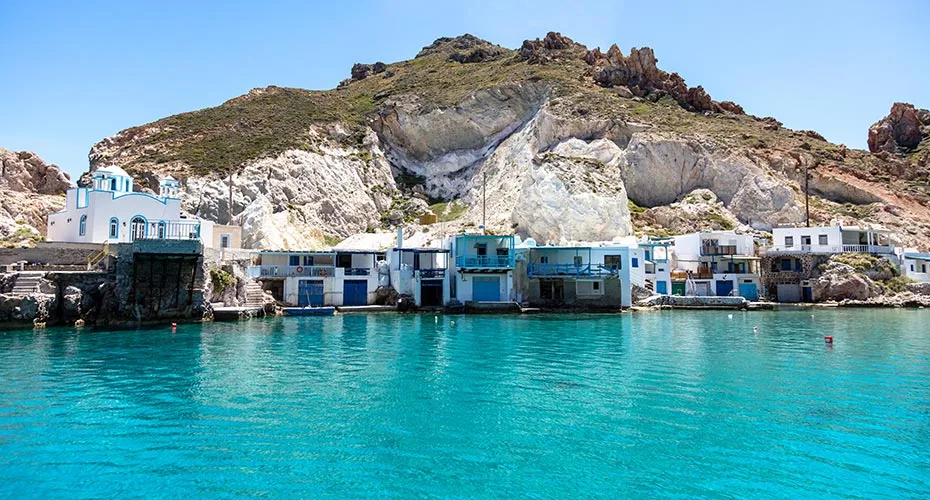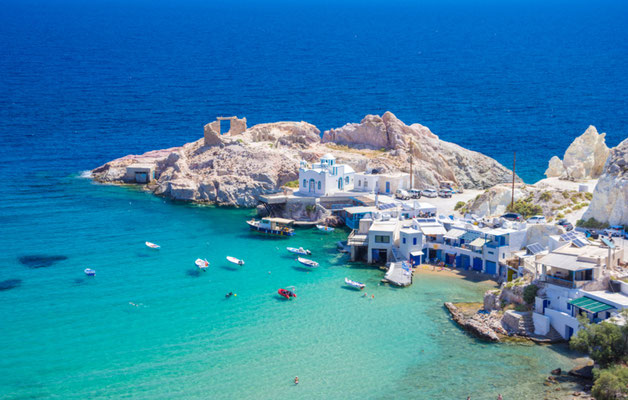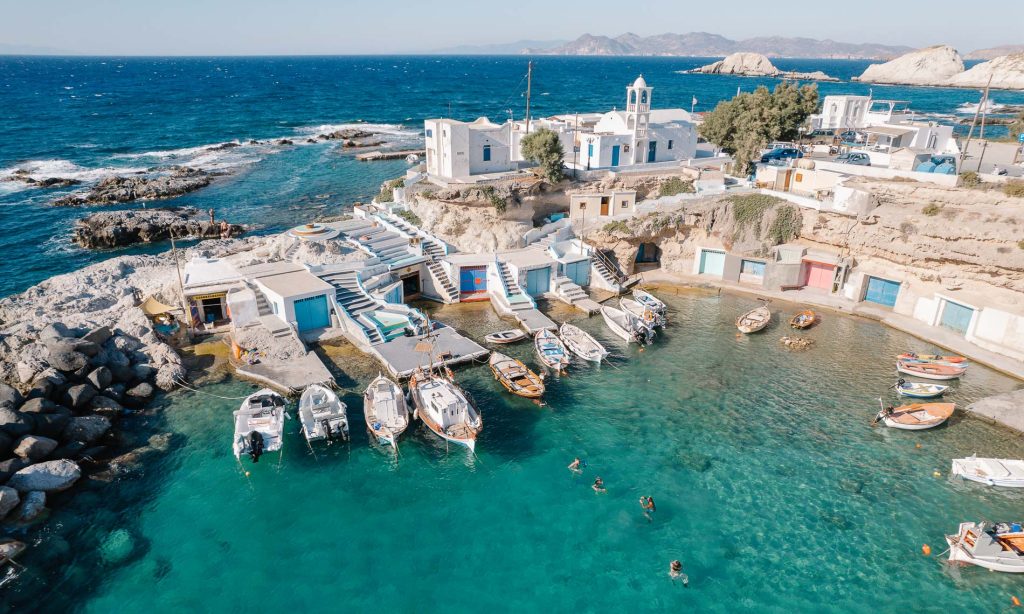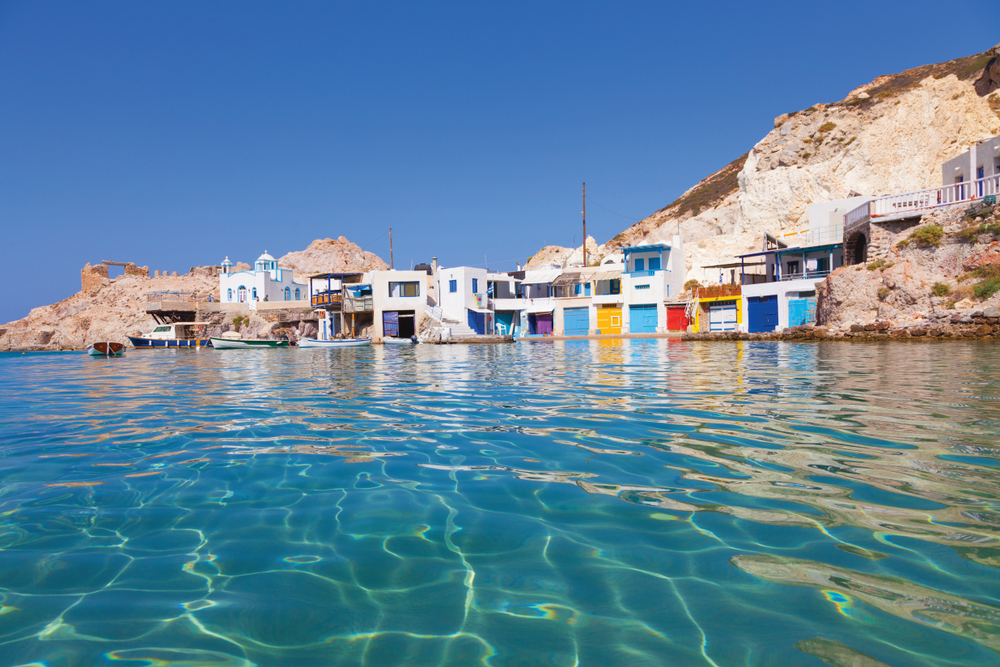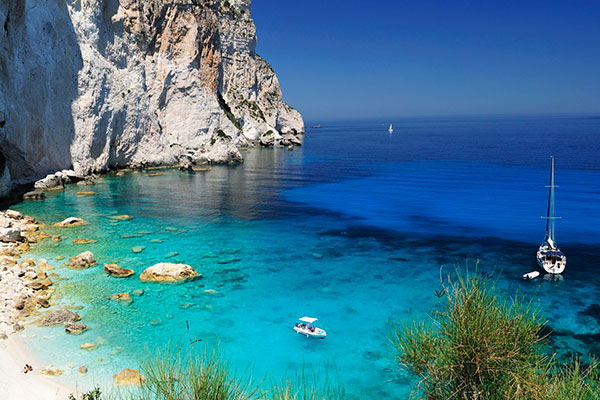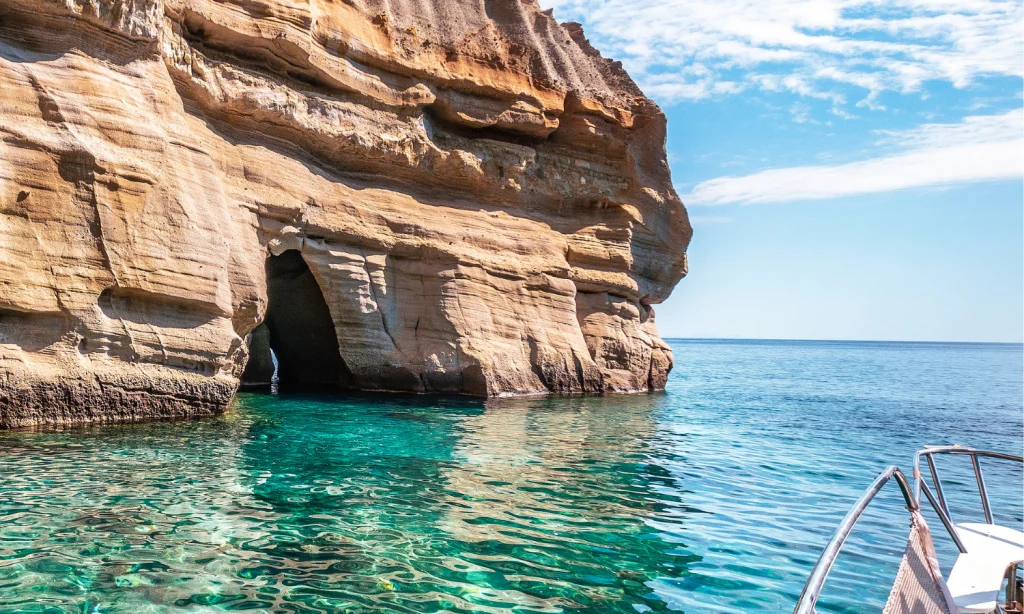
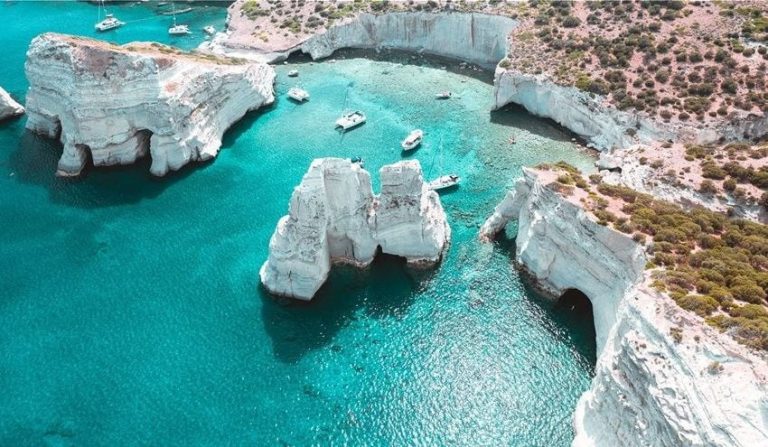
 Milos is one of the richest islands in Greece. It has more beaches than any other island in the Cyclades—a whopping 74.
Agriculture can be practiced here 10 months a year. The landscape on Milos is incredibly diverse, with forests, rocky ridges, bays, plains, and volcanic formations. It was on Milos that the statue of Aphrodite, now housed in the Louvre in Paris, was discovered.
Milos Beaches
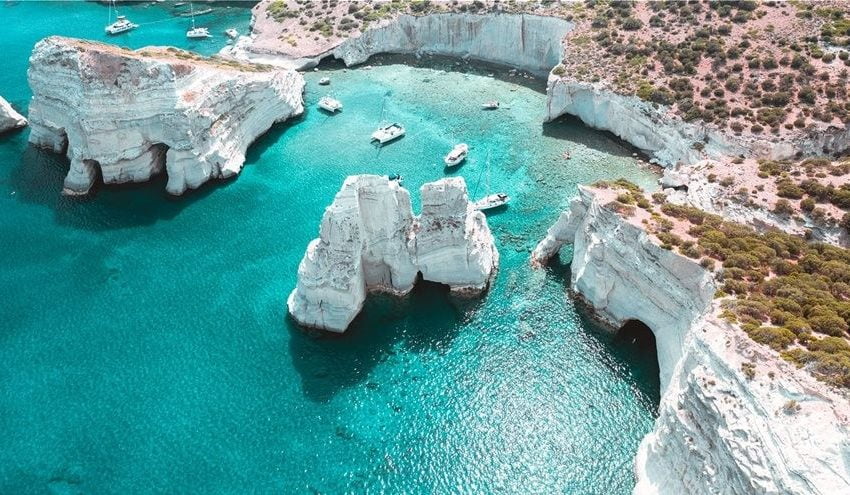
Paleochori is the best beach on the island. Clean, long, and picturesque, this beach is also known for its underwater hot springs and unusual cliffs. Nearby is another beautiful beach, Agia Kyriaki. Several beautiful beaches line Milos Bay.
The best of these is Chivadolimni, but be sure to visit Provatas Beach, surrounded by colorful cliffs. For those seeking solitude, the sandy beach of Tsigrado is perfect. It can only be reached via a narrow crevice using rope ladders or by boat.
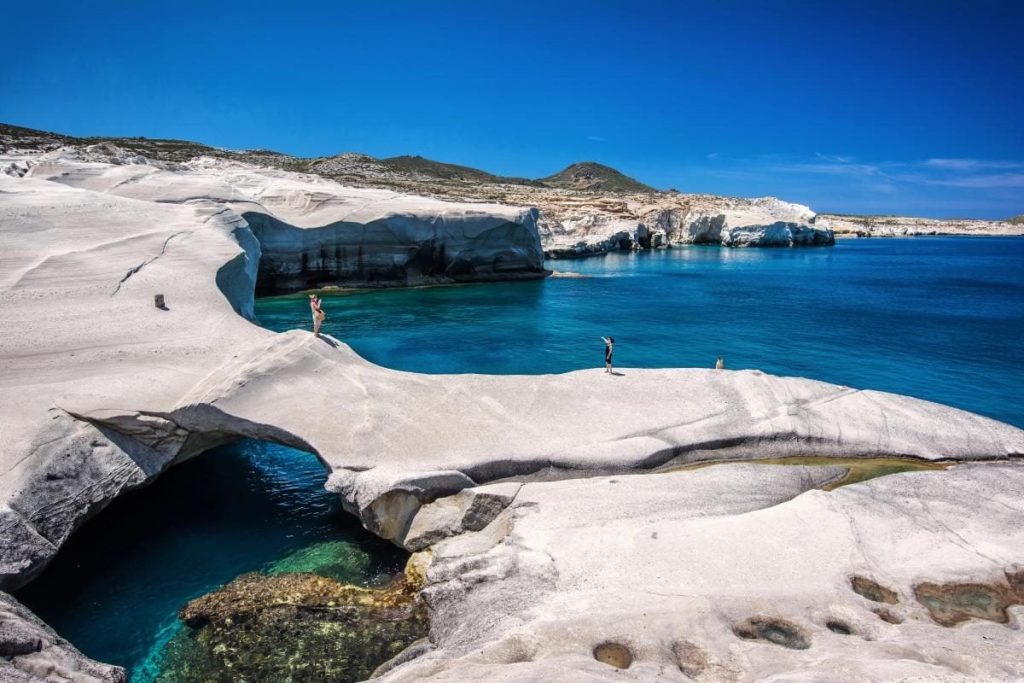
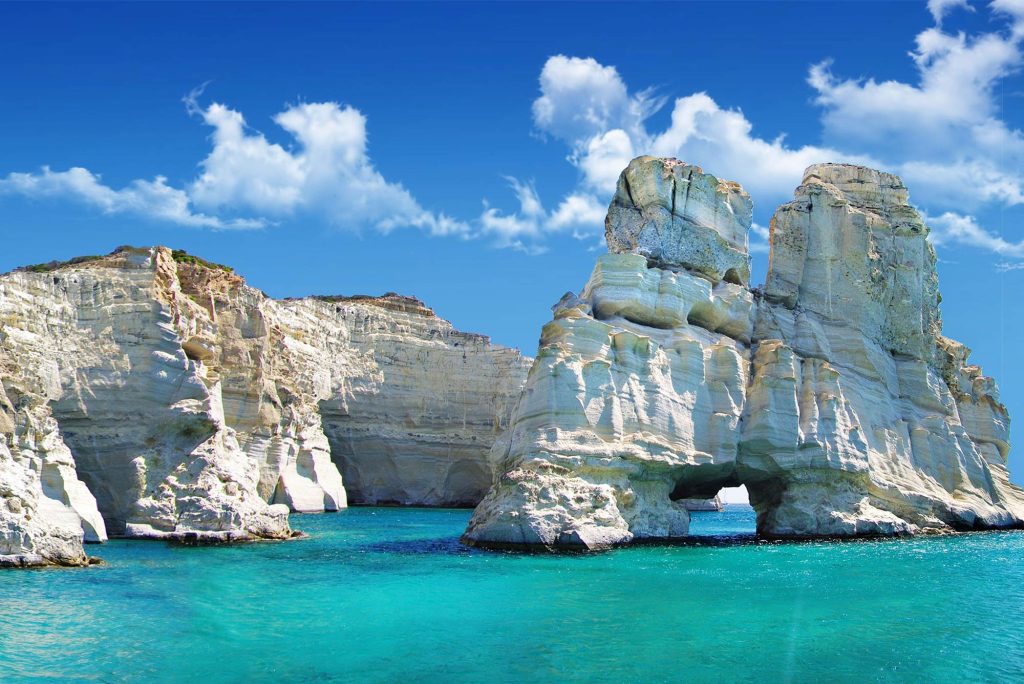
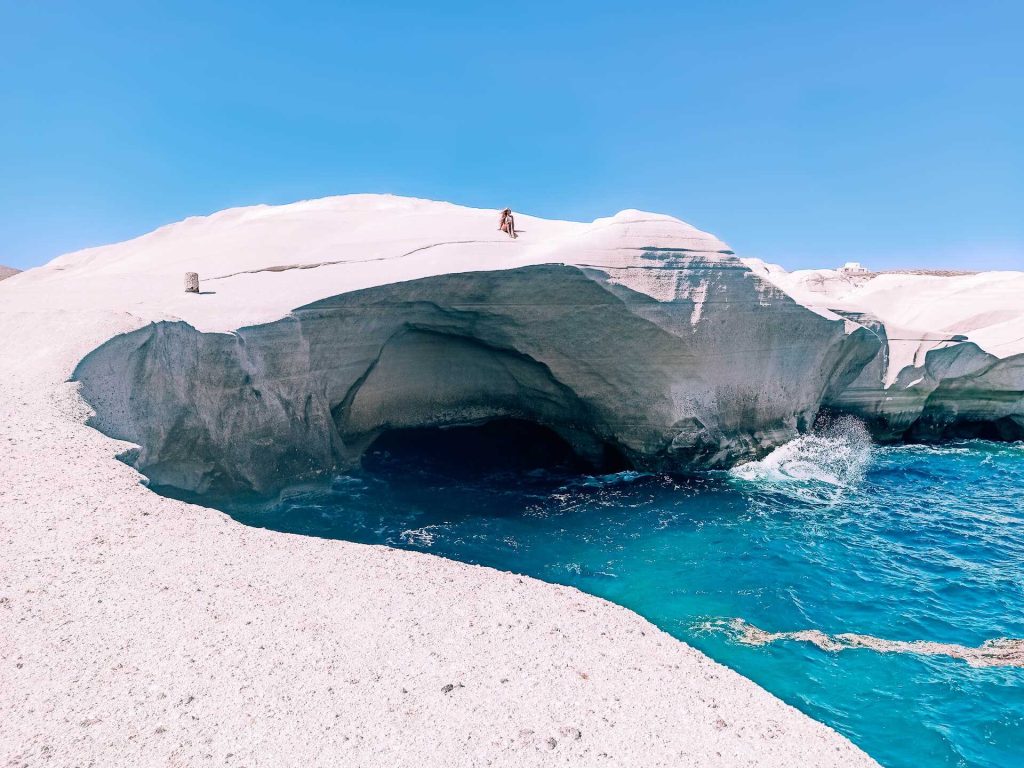
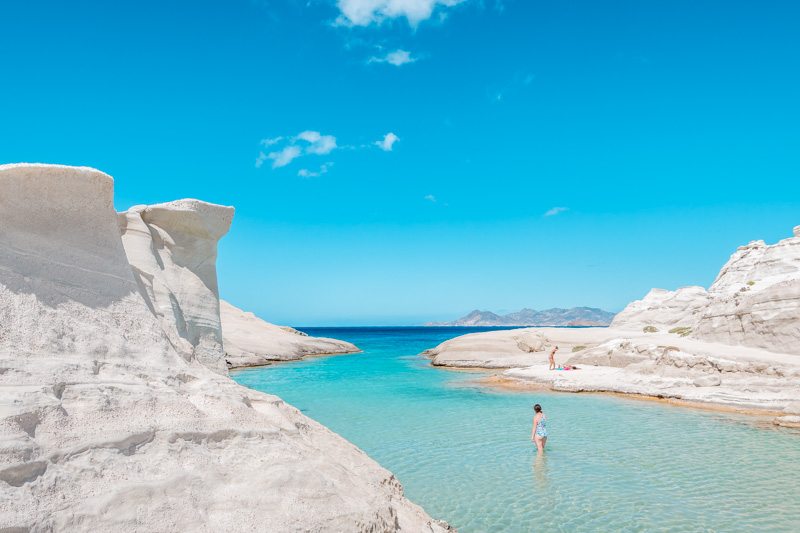
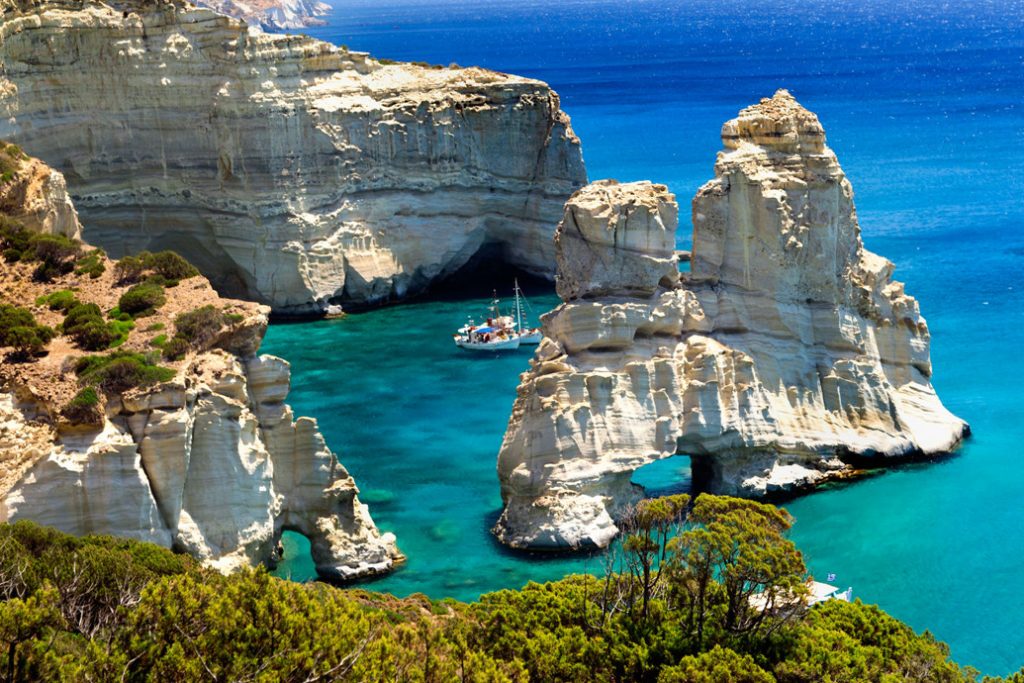 In the north of the island, strong, continuous winds are common, so there are very few beaches and virtually no villages. However, this area is home to the stunning Sarakiniko Bay, with a sandy seabed and shimmering white cliffs on the shore. Also in the north of the island, visit the small Papafranga Gorge, where the sea rushes through a white arch and washes a miniature beach.
Activities and Attractions in Milos
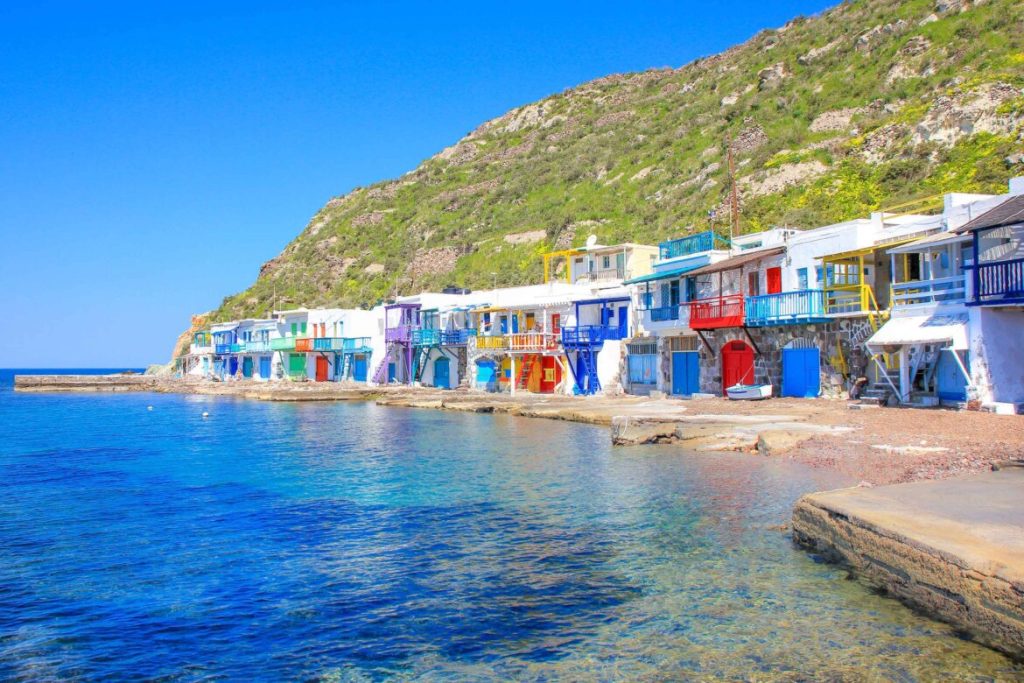
The village and main harbor of Adamas, although considered a port, is a very pleasant place. Tourists may find the mineralogical museum and the Anglo-French cemetery containing the remains of soldiers from the Crimean War and two World Wars, as well as the beautiful Church of the Holy Trinity, of interest here.
The island’s capital, Plaka, is the most attractive village in the Cyclades. Only a very narrow road leads here, so the town is accessible only by motorcycles and mopeds. In Plaka, visitors should visit the Church of Panagia Thalassitra, the 13th-century Crusader castle, the Archaeological Museum, and the Ethnographic Museum.
Also worth visiting is the ancient city of Melos, located south of Plaka. Remains of the city walls, the foundations of a temple, and the ruins of a Roman theater have been preserved there. It was here that the dusty statue of Aphrodite was discovered in 1820.