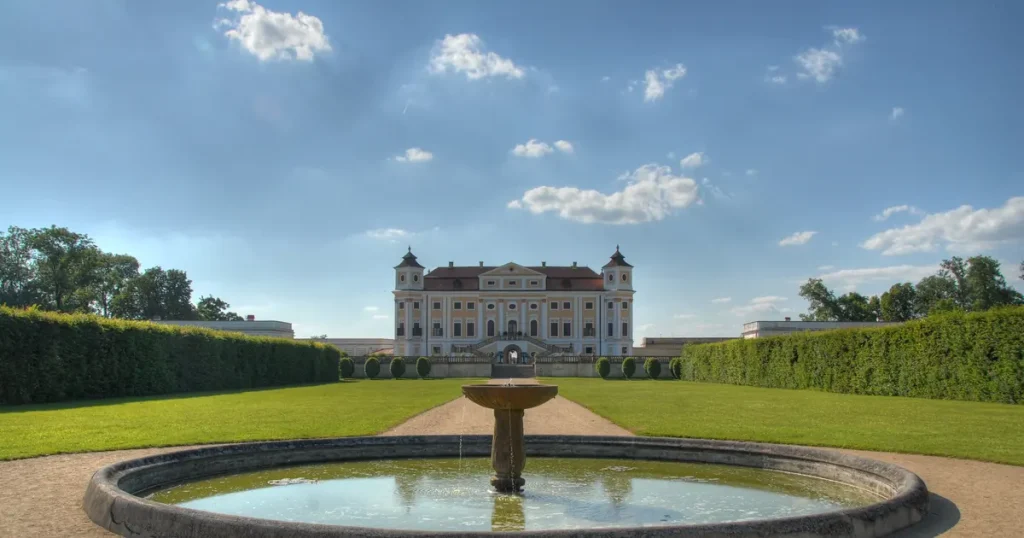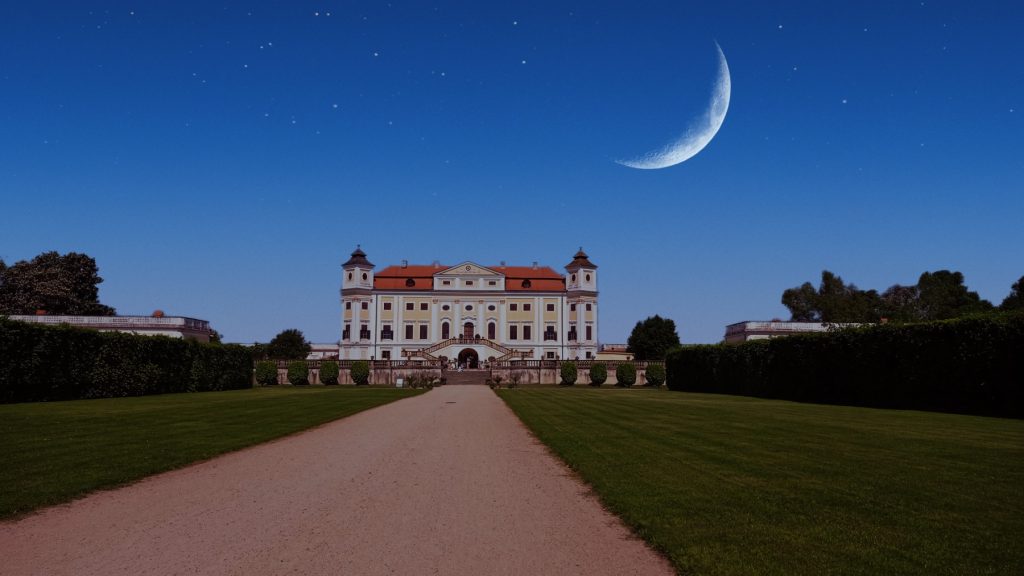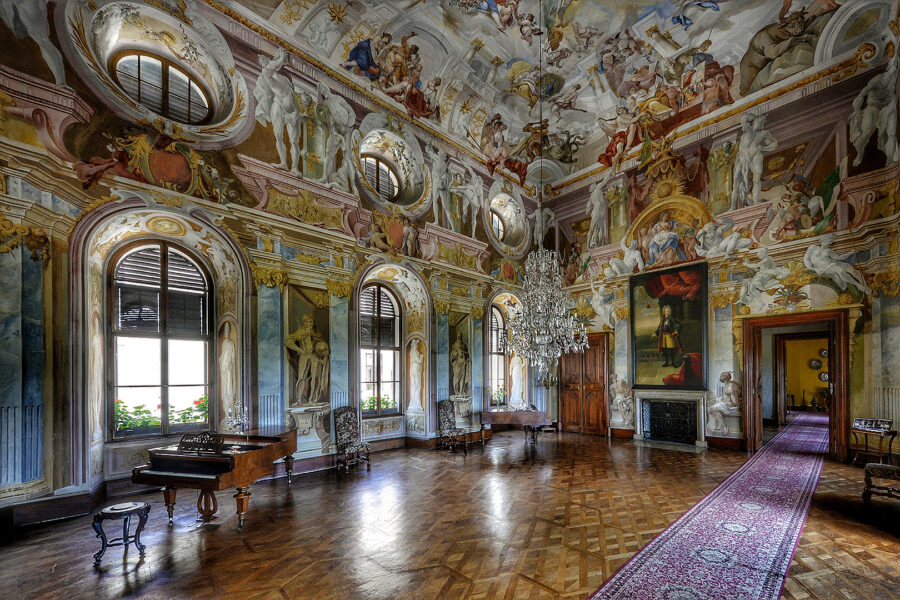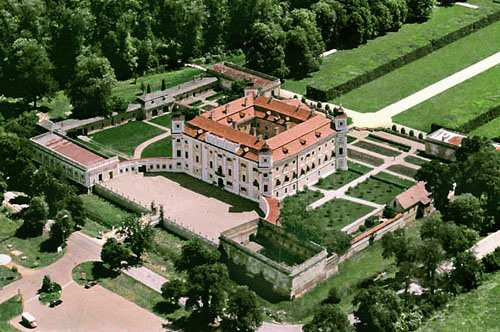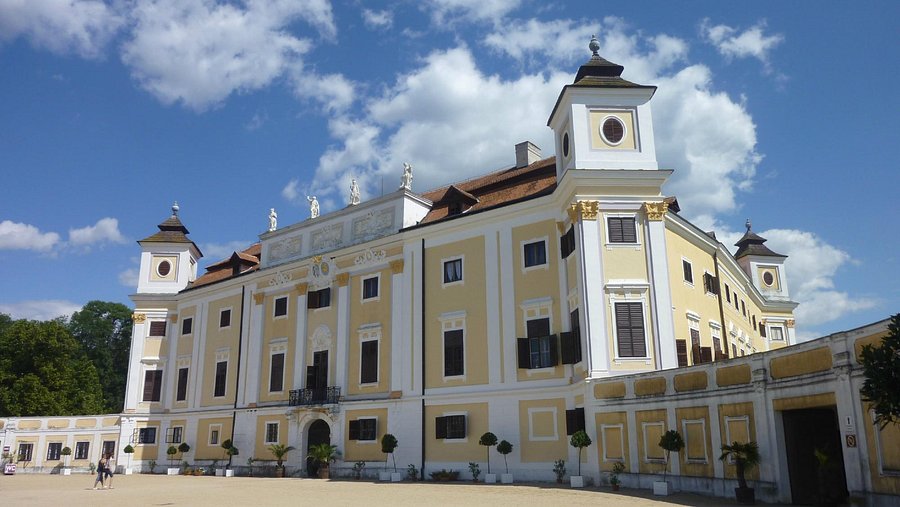
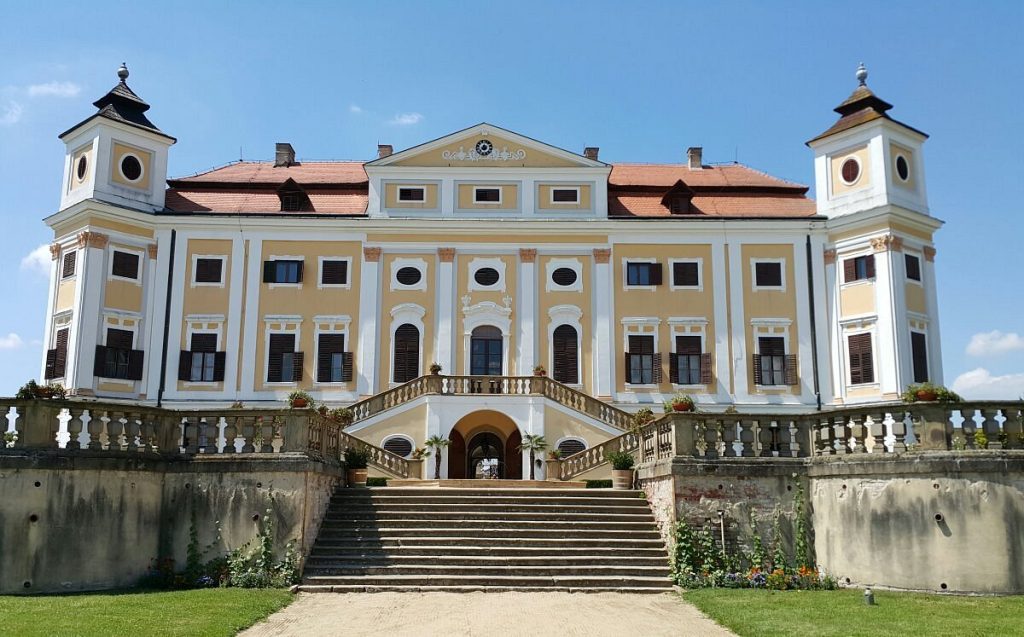
Milotice Castle is located in the town of the same name. The first mentions of the fortress date back to the 14th century. During the Renaissance, the fortress was converted into a residential castle. Despite extensive renovations, the castle’s architecture has retained its Renaissance style to this day.
The castle acquired its current appearance in the 17th century. At that time, four corner towers were added. After the Thirty Years’ War, Gabriel Serenyi took possession of the castle, and his family owned the estate until the early 19th century.
In the early 18th century, the castle was rebuilt by Count Karel Anton Serenyi. The reconstruction was carried out in two stages – from 1719 to 1725 and from 1738 to 1743.
All property of the castle’s last owner was confiscated in the 1940s. In 1948, the castle was opened to tourists. Today, the castle hosts folk and classical music concerts, temporary and permanent exhibitions, and other celebrations.
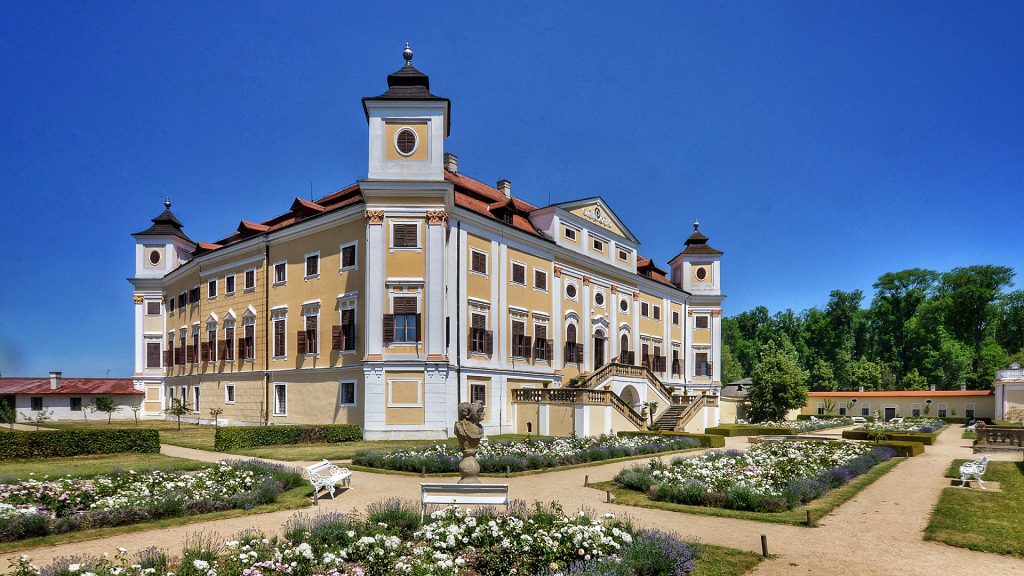
The castle was built on a quadrangular plan with a tower at each corner. The castle’s facades are decorated with pilasters and pilasters without capitals. The pediments and oval windows of the towers, the attic with reliefs, and the Baroque staircases add palatial touches to the facade. The ground floor of the courtyard features open colonnades, partially filled in during renovations.
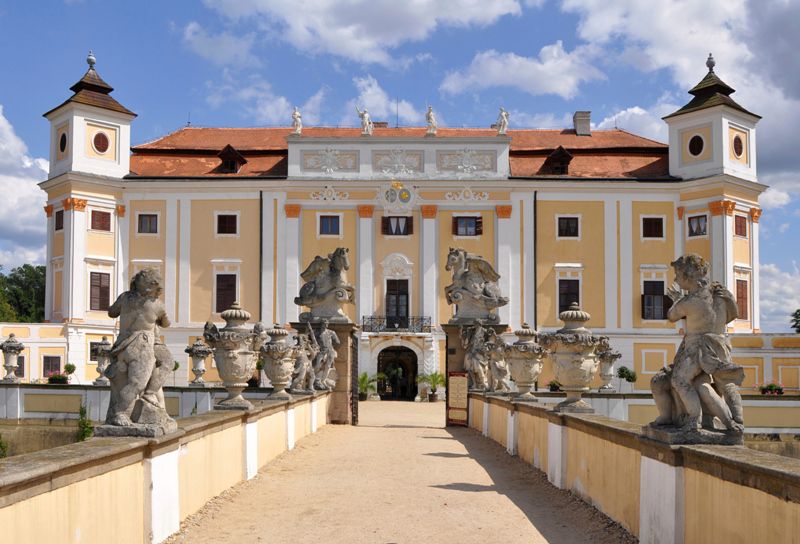
A stone bridge and moats remain from the main entrance. The entrance to the main courtyard is adorned with Baroque gates featuring sculptures of winged horses. The main entrance to the palace itself is adorned with sculptures of sphinxes with female heads, warrior figures, and decorative vases. Jakob Schletter created the sculptures. The castle chapel retains frescoes by the renowned 18th-century artist Josef Ignaz Mildorfer. Behind the palace, a formal garden, divided by a decorative balustrade, is laid out on small terraces. Antonín Cinner, a landscape architect, created the garden in the first half of the 18th century.