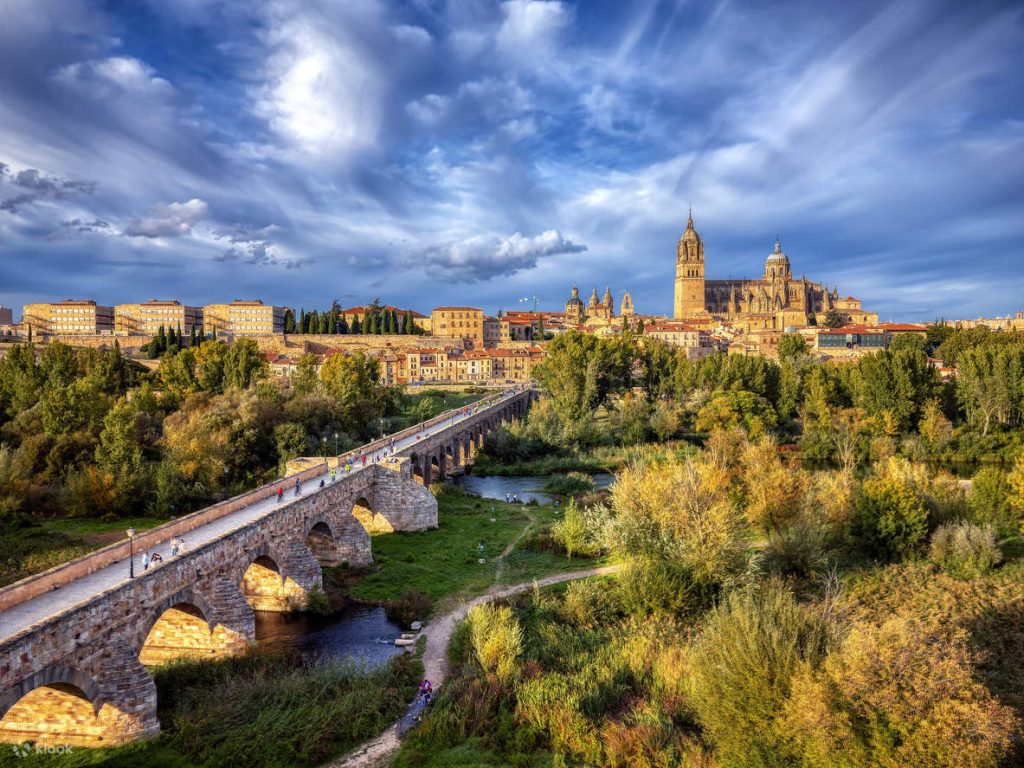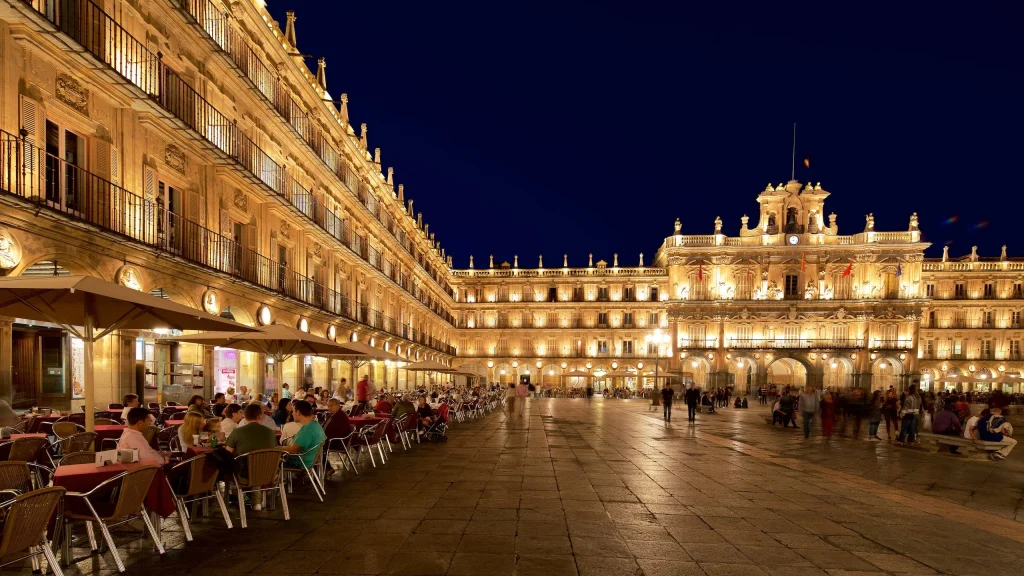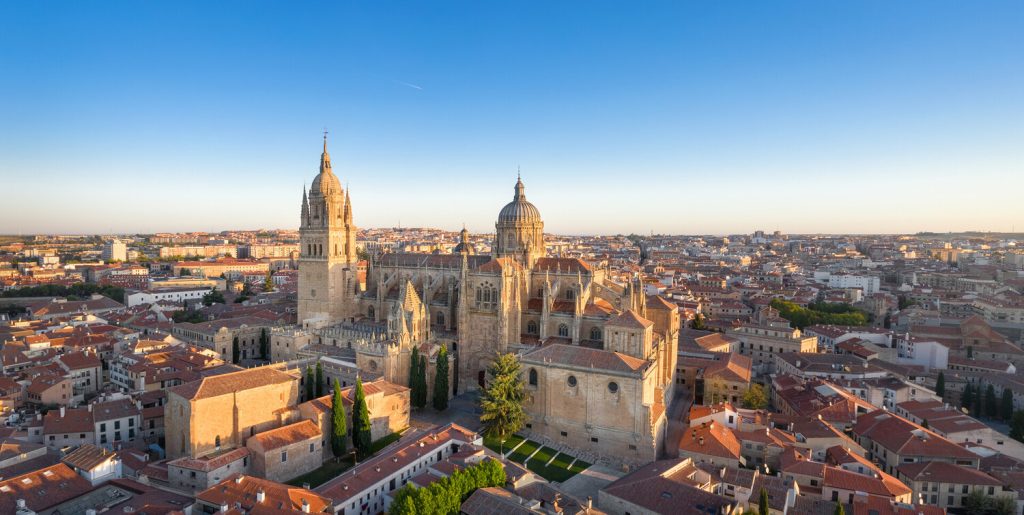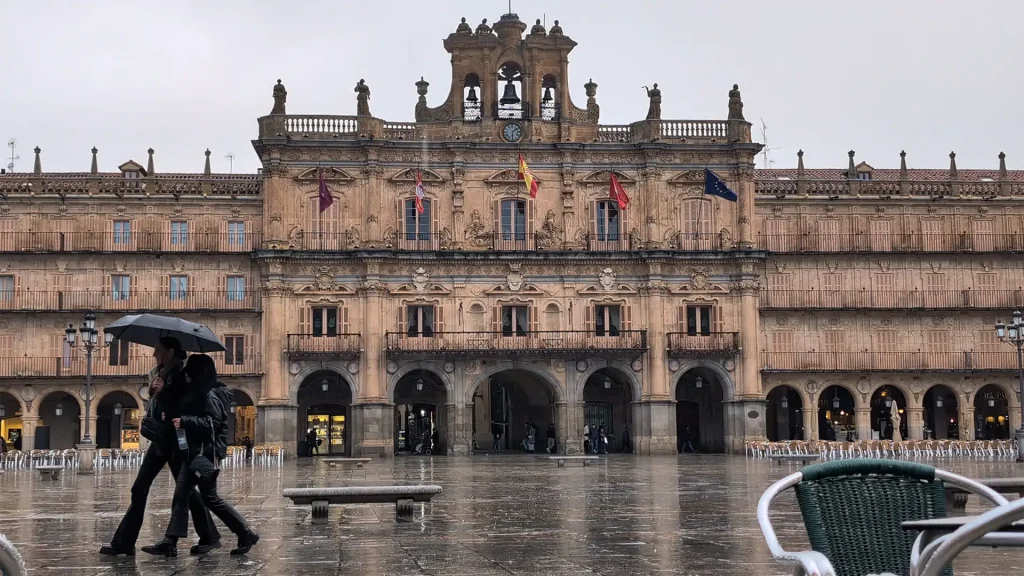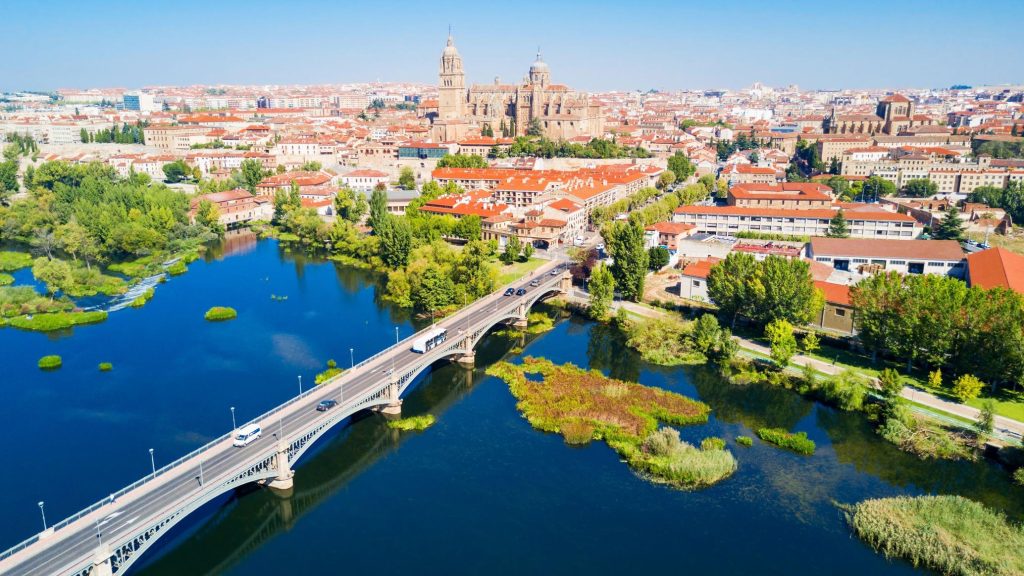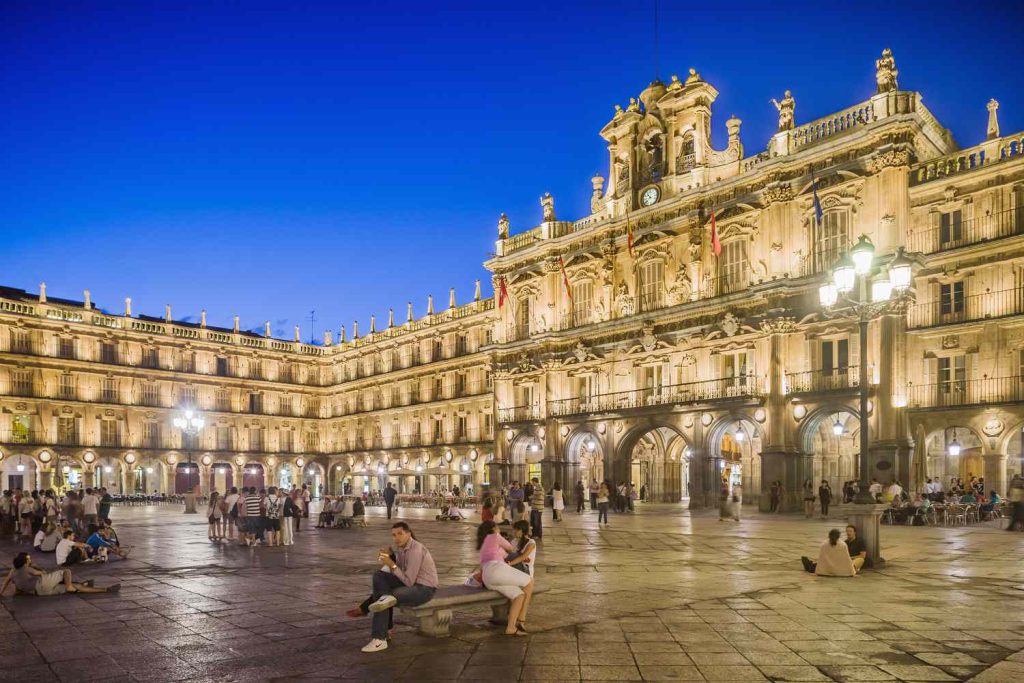
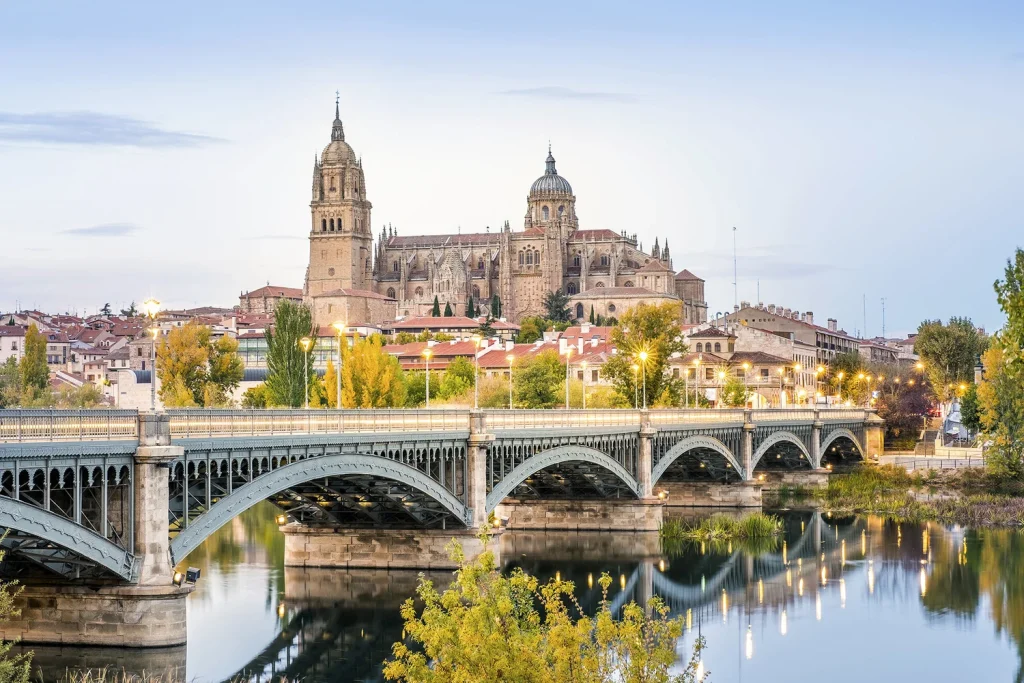
 Salamanca is one of the most enigmatic and mystical cities in Spain. It was founded by the Carthaginian general Hannibal in 220 BC. Salamanca was located on the so-called Silver Road, which ran from north to south along the Portuguese border.
Over the course of its history, the city has accumulated numerous legends associated with many significant buildings. To this day, historians disagree on whether all of its legends and mysteries are truly fiction.
Salamanca Landmarks
House of the Shells
The House of the Shells was built between 1493 and 1517. The first owner was Don Rodrigo Maldonado de Talavera, a knight of the Order of Santiago and professor of law at the University of Salamanca. The emblem of the Order of Santiago is the scallop shell, hence the unusual decoration of the house’s walls.
There are two stories associated with this building, one of which is certainly true. The Shell House once had its own tower, but by order of King Charles I in 1522, it was shortened by two-thirds, making it virtually invisible.
As for the other story, it may also be true. According to legend, an ounce of gold (over 31 grams) is hidden under one of the house’s walls. In the Middle Ages, it was a tradition to place a few coins in the foundation of a building under construction for good luck, so a small treasure can be found in the Shell House.
Frog on the façade of the University of Salamanca
The University of Salamanca, founded in 1218, has many different elements on its façade, but one of them is believed to bring good luck. A frog can be seen on one of the three skulls. Students believe that before exams, they must find it with their eyes, and they still do so to this day.
Tentenecio and Pozo Amarillo Streets
These places are associated with Saint Juan de Sahagún, the patron saint of Salamanca.
According to legend, an escaped bull was rushing through the city streets, terrifying all its inhabitants. Juan de Sahagún confronted the enraged animal and said, “Tente, necio!” The hypnotized animal instantly became docile, and peace was restored to the city. Since then, this street has been called Tentenecio.
On another street in Pozo Amarillo, there was a yellow well. In 1475, a child fell into it. There was no way to reach him or bring him back to the surface. But Saint Juan caused the water to rise and carry the child away alive.
Salamanca Cave
According to legend, in this cave, the devil taught black magic to groups of seven students for seven years. After class, one of the students was required to remain with the devil to serve him. The Marquis of Villena was one of the chosen ones, but he managed to escape. However, during his escape, the Marquis lost his shadow, which was considered a sign of Satan’s servant at the time.
House of the Dead
At the beginning of the 19th century, the entire family living there was murdered in this house. The building was subsequently given its name by the locals.
El Mariquelo
In 1755, an earthquake damaged the New Cathedral of Salamanca but did not destroy it. El Mariquelo is a legendary figure who, every year on All Saints’ Eve, must climb the cathedral’s bell tower to thank God for saving the cathedral. This tradition continues to this day.