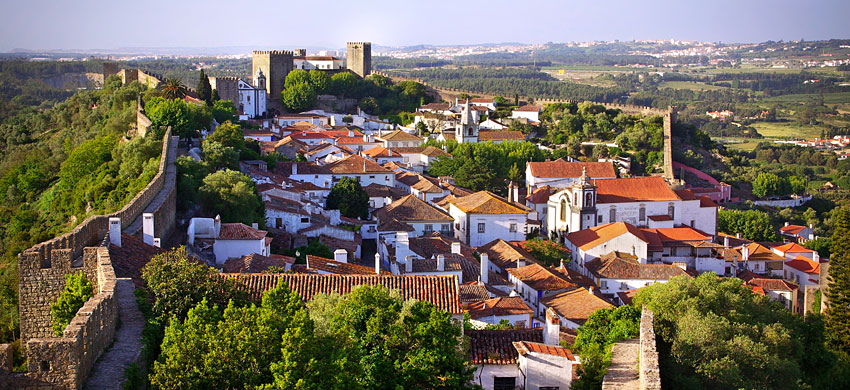
Óbidos is one of the oldest cities in Portugal, founded by Celtic tribes. During the Roman Empire, it was a significant port, later falling under Visigoth and Arab rule. In the 12th century, King Alfonso Henriques established Portuguese rule here, which is reflected in the city’s architecture, which incorporates elements of various cultures.
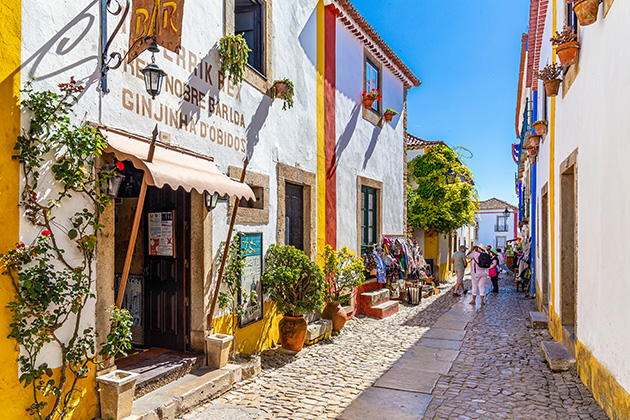
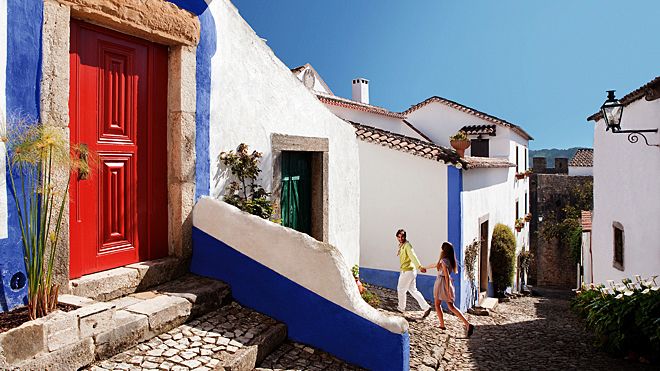
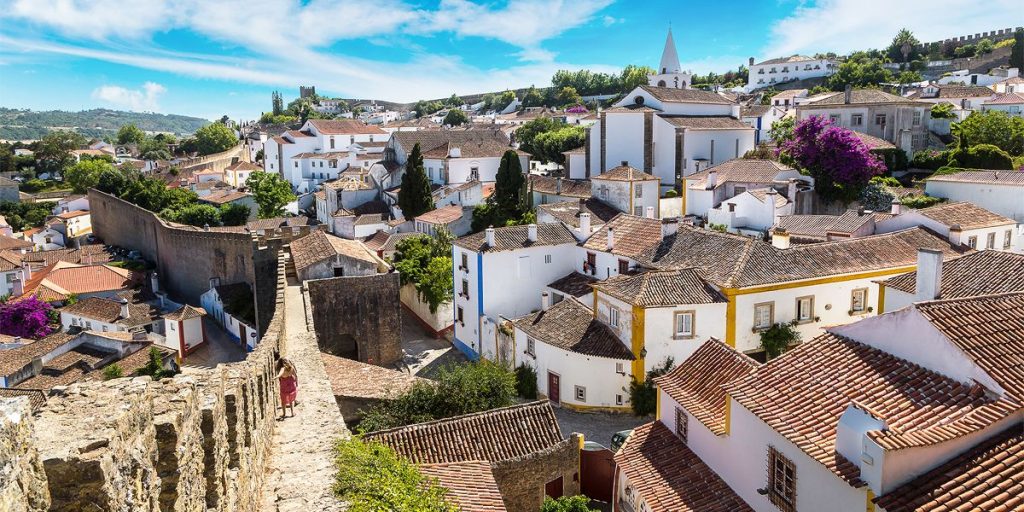
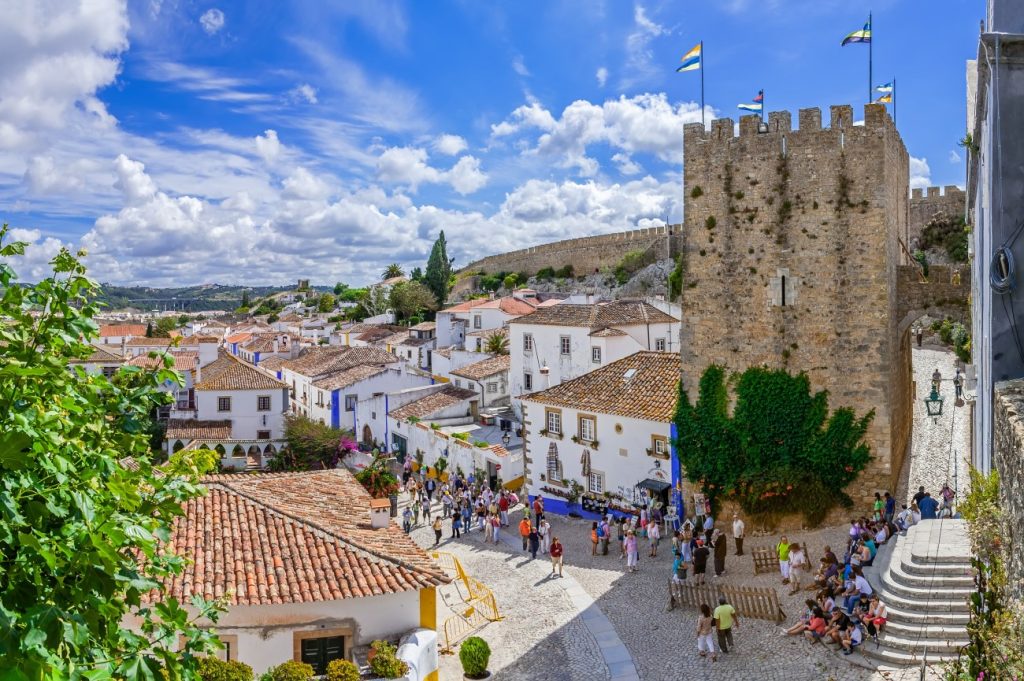
Nowhere else can you find such a cozy and picturesque town. Flowers, fruit trees, white villas, cobbled paths, and quiet streets resemble a fairytale setting. Perhaps this is why Óbidos was chosen as the wedding venue for the young heir to the Spanish throne, Alfonso V, and his even younger cousin.
Attractions in Óbidos
Óbidos is home to numerous ancient cathedrals with beautiful chapels. One of the most popular tourist attractions is the Cathedral of Santa Maria, famous for its unique “child wedding.” The oldest church in the city that is still in use is the Cathedral of Santiago de Compostela, built in the early 12th century. Nearby is the Church of Santiago de Compostela, which attracts tourists with its exquisite Chapel of Santiago de Martino.
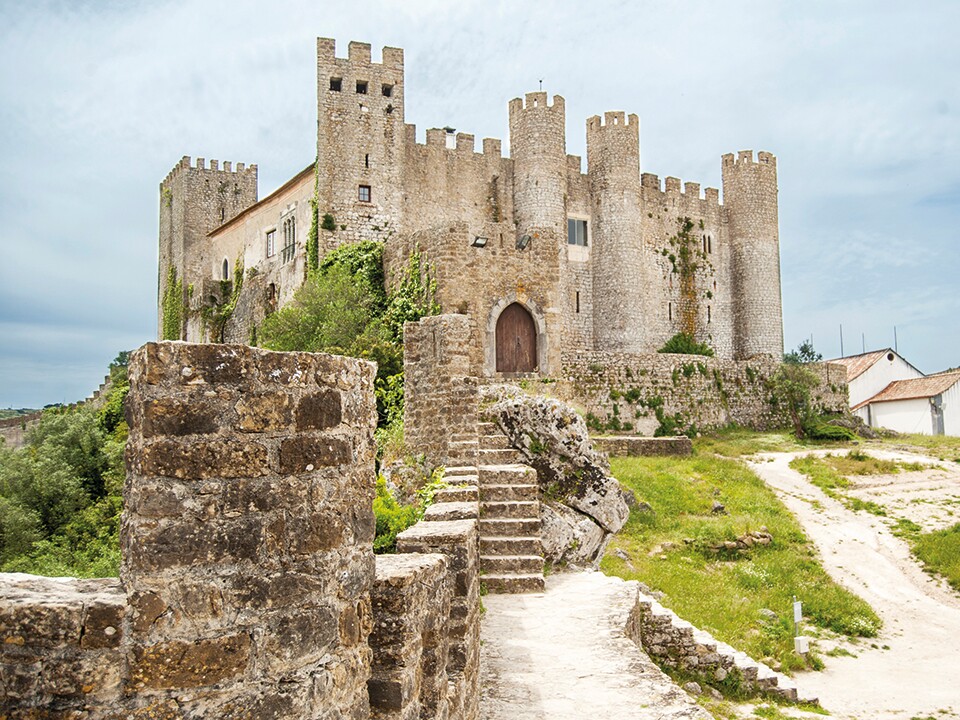
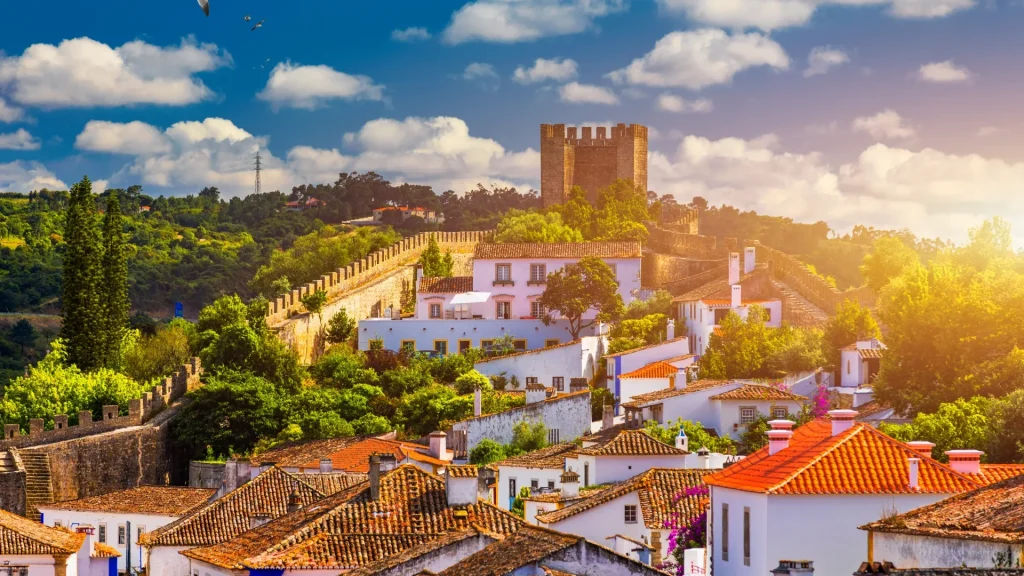
It’s hard to believe, but this tiny town, consisting of two streets and a population of less than ten thousand, was once an impregnable fortress. This is reflected in its name, which translates as “citadel.” Proof of this is the ancient castle of Do Castelo, built by the Arabs and reconstructed by order of Alfonso Henriques. The later fortified walls protected the city from attacks by corsairs, and traces of these attacks are still visible on the walls.
Today, Do Castelo is one of the seven outstanding architectural monuments of Portugal. In the 20th century, a luxury hotel complex, Pousada Do Castelo, opened on its grounds, one of the first of its kind in the country. Now, anyone can immerse themselves in the atmosphere of the Middle Ages and feel like part of a royal family. Óbidos also offers more affordable accommodation options.
Óbidos is unique in that it has no natural freshwater bodies; water is obtained from wells. The oldest aqueduct in the city was built in the 16th century. However, the city is located near the ocean, accessible by scenic paths suitable for walking and cycling.