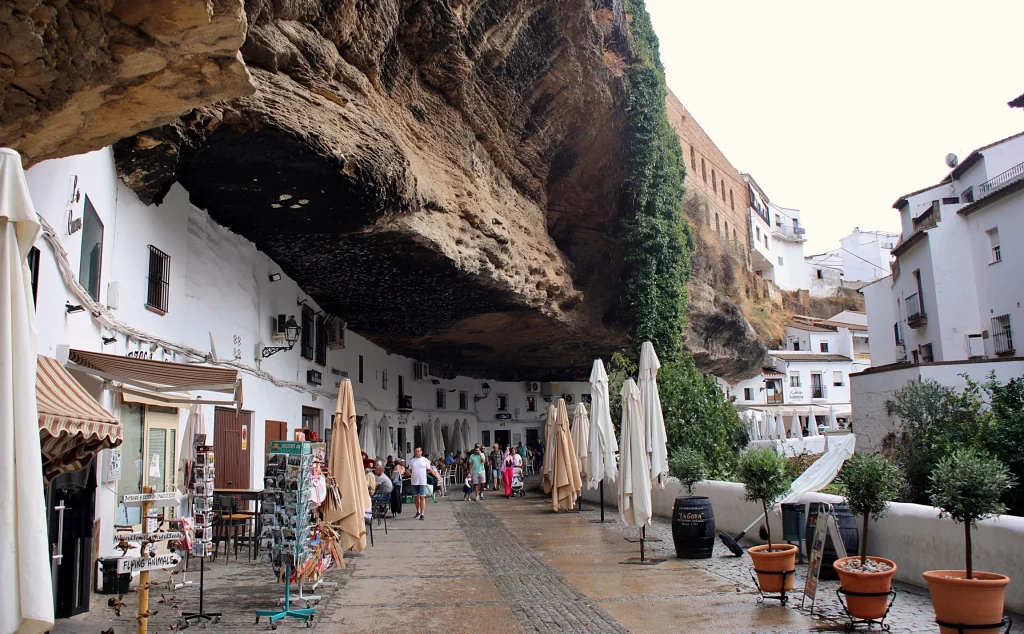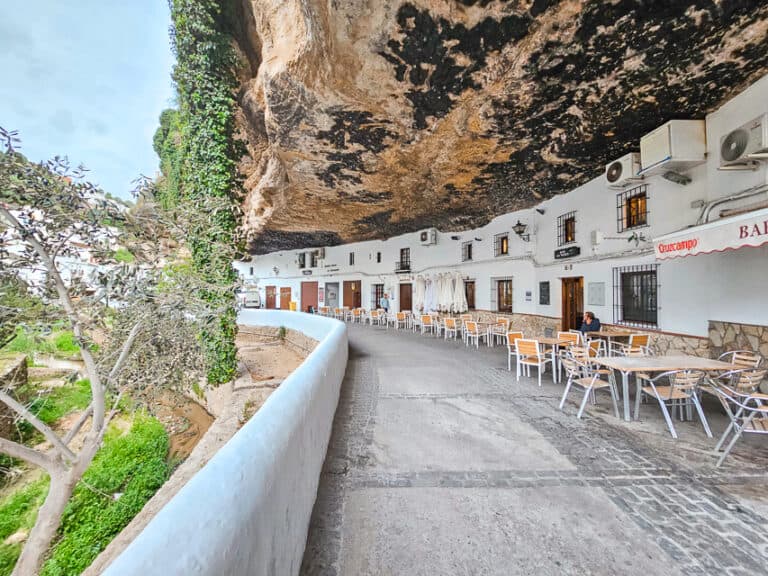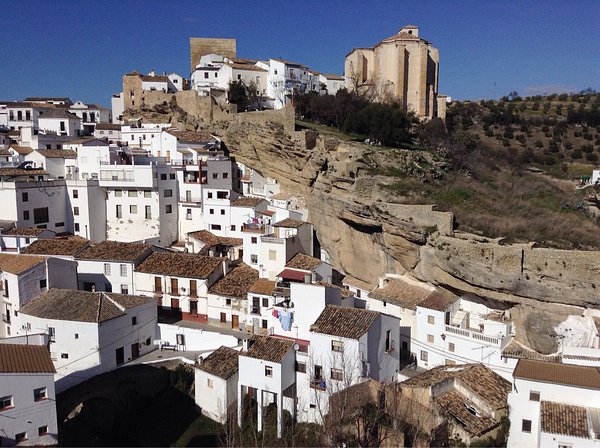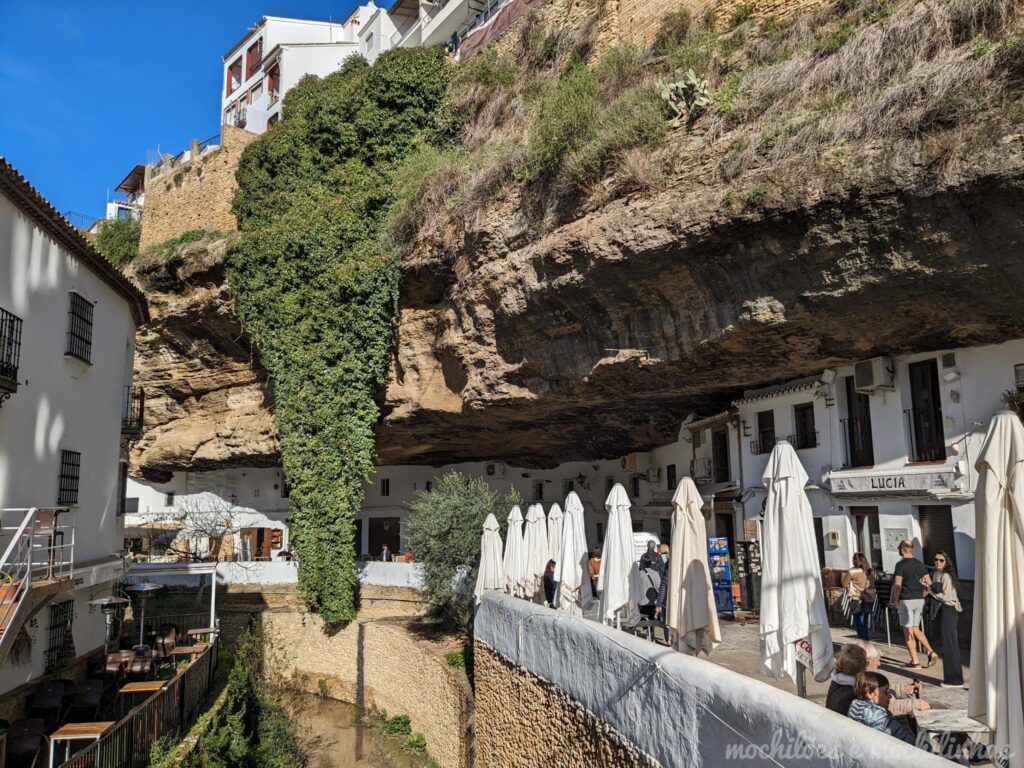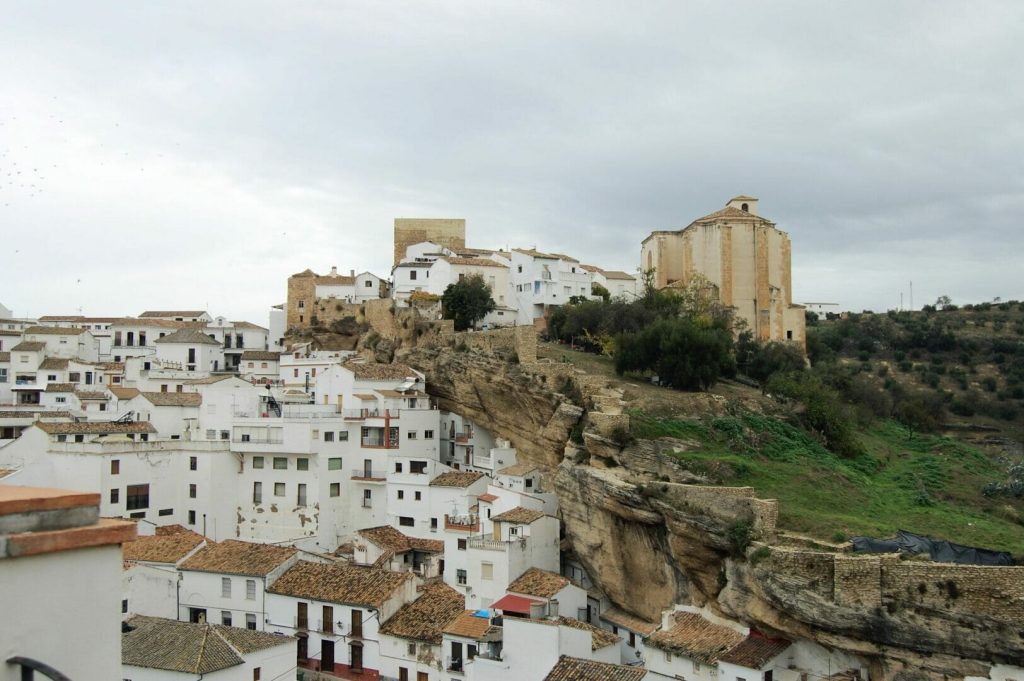
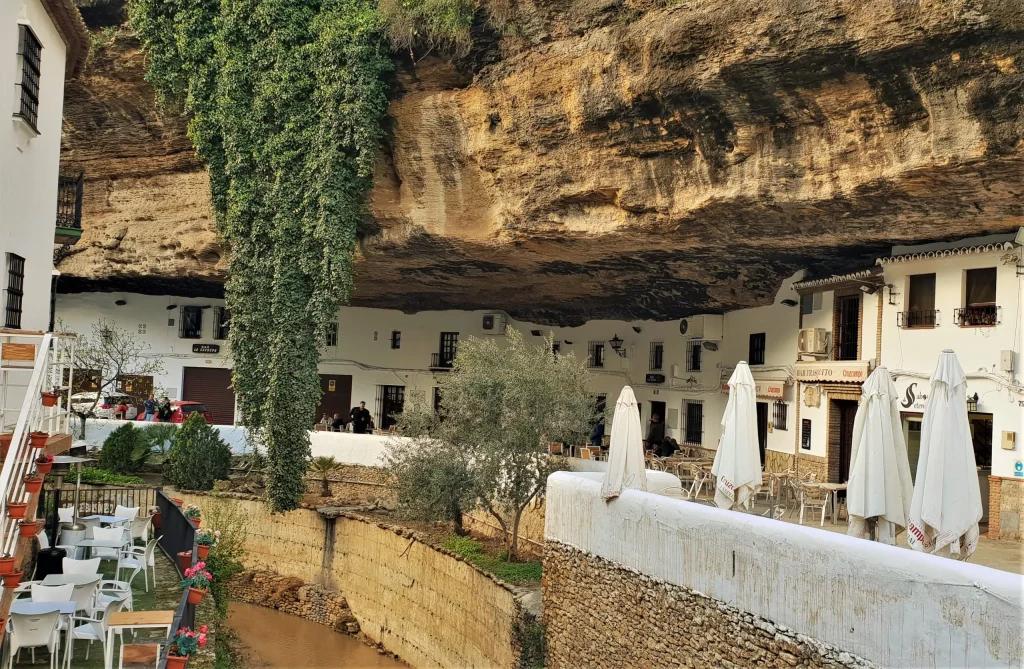
 While most towns and villages in the region are perched on hilltops, Setenil de las Bodegas is hidden among the ancient caves of the Trejo River Valley.
The row of bright, white houses stands out stunningly against the gray cliffs and vegetation. Although the rock formations loom ominously, no collapses have been recorded.
Cuisine and Restaurants in Setenil de las Bodegas
The pride of the local cuisine is, first and foremost, pork dishes. Several chorizo and other sausage producers operate in and around the town. You can sample them in farm shops and restaurants. Setenil is located in Andalusia, so you should definitely try gazpacho and its relative, joblanco—a puree of ground almonds, garlic, bread, and olive oil; puchero—a stew of chickpeas or rice with various vegetables and meat; and gachas—a thick gravy of flour, spices, and offal.
Sights
The city’s modern history began in 1484, although human habitation in these parts dates back 25,000 years. Among the historical landmarks, the only notable ones are the Cathedral of La Encarnación, the ruins of the Moorish castle, and the town hall. They are located atop the city’s highest hill, right next to each other.
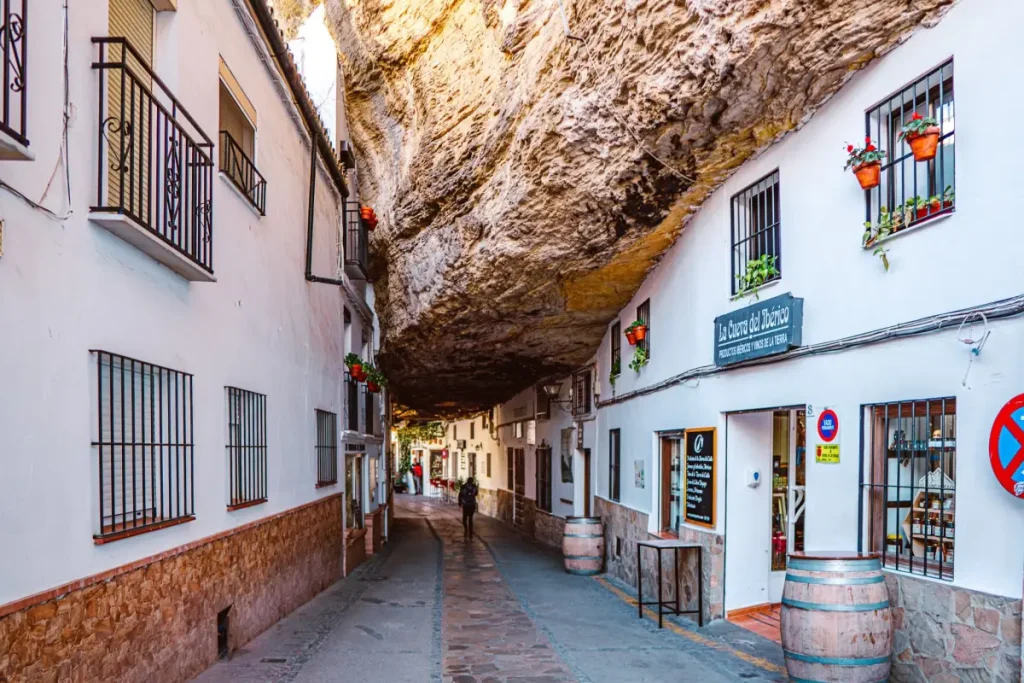
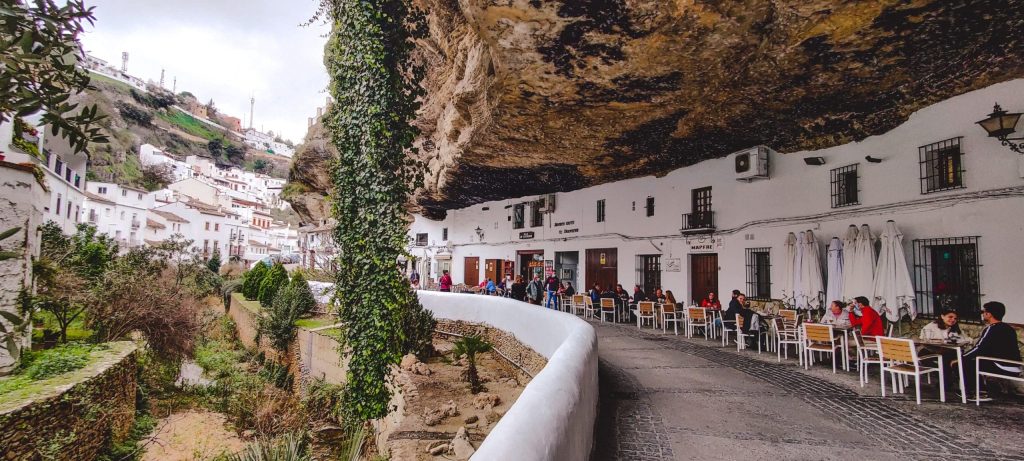
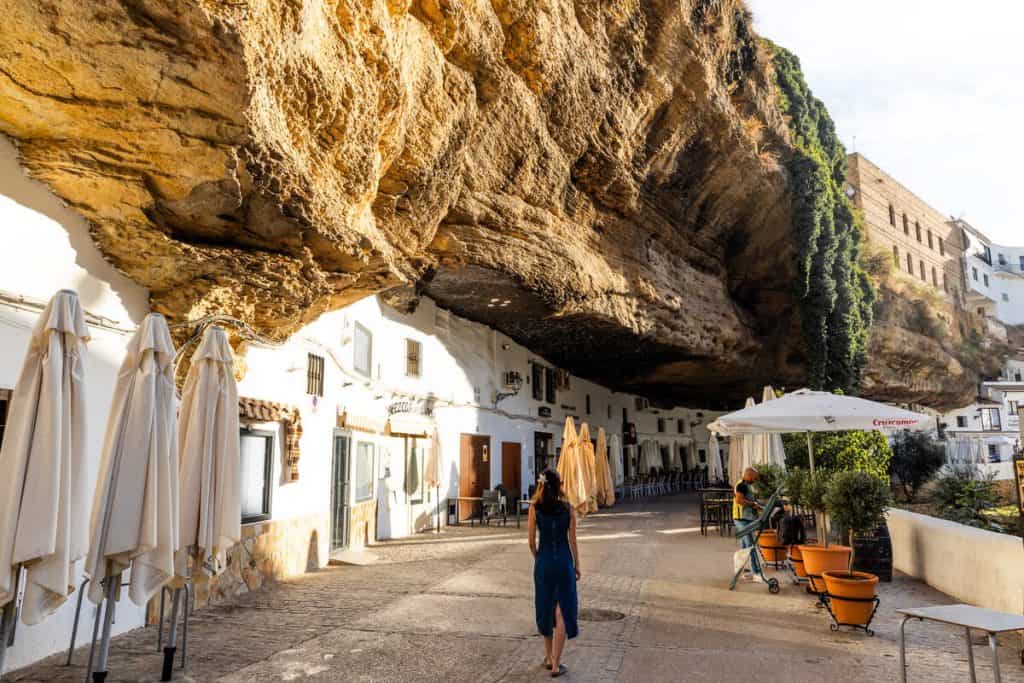
Setenil itself is a major attraction. Even houses in this city that have no architectural merit are impressive and attract the attention of seasoned tourists. The roof is replaced by multi-ton rock cornices, the edges of which, in addition to the houses themselves, also cover the sidewalks.
The city has two main streets: Cuevas de Sombra and Cuevas del Sol. The first name translates as “Caves in the Shadow” due to the constant gloom from the cliffs hanging overhead. The second, accordingly, is “Sunny Caves”—the houses on it are located on the sunny side.