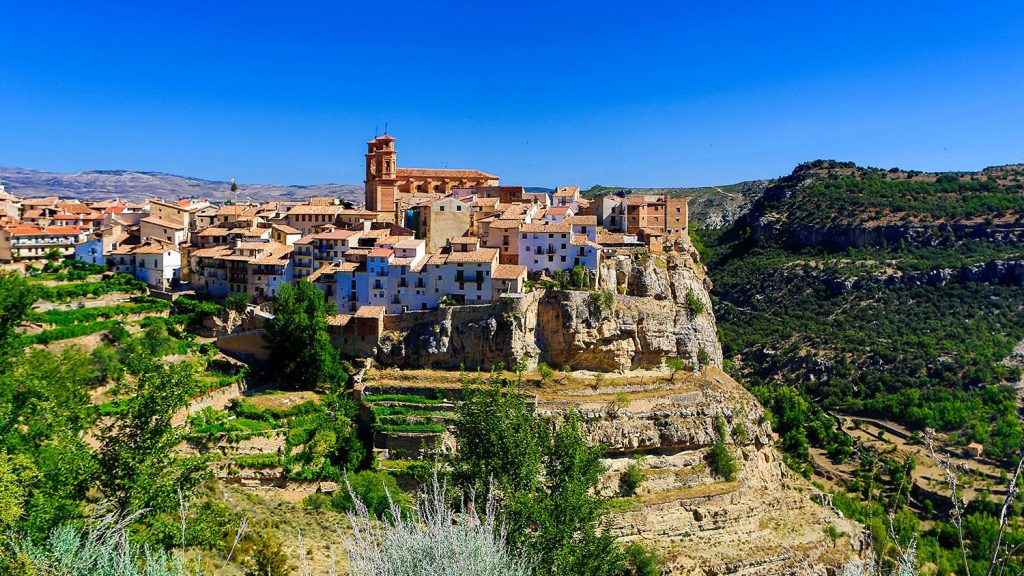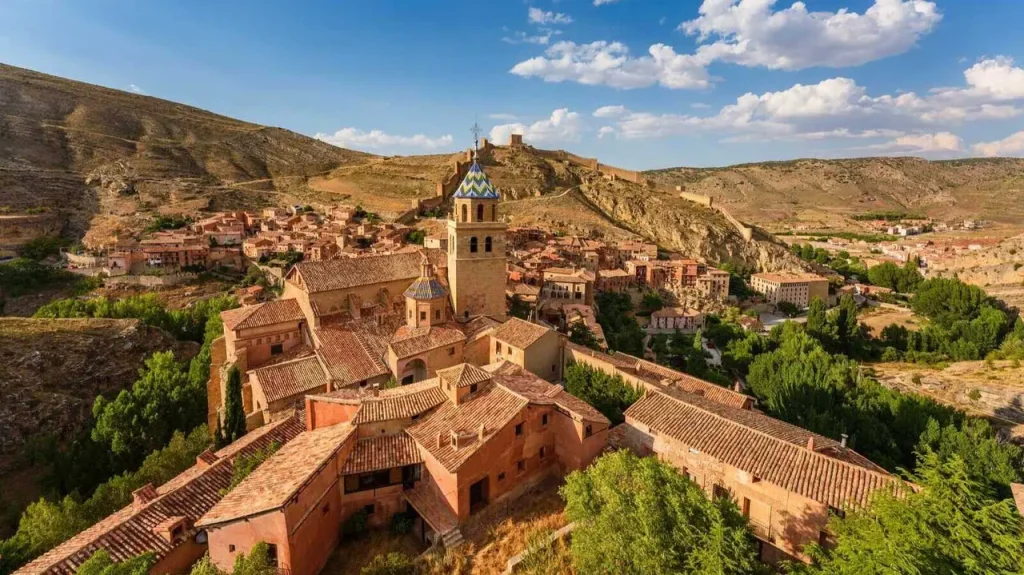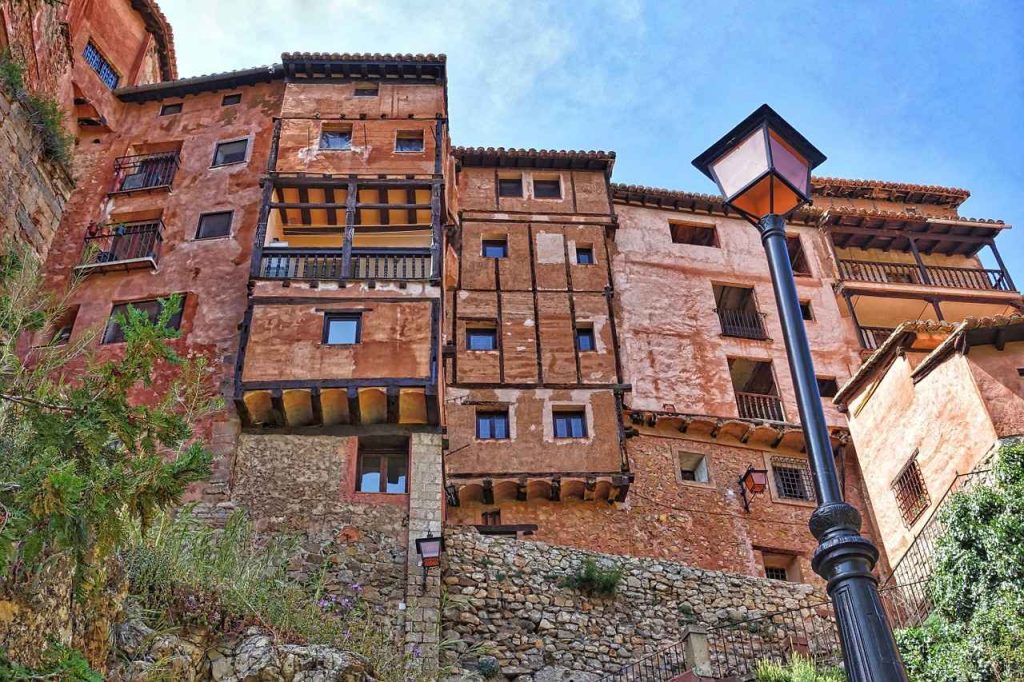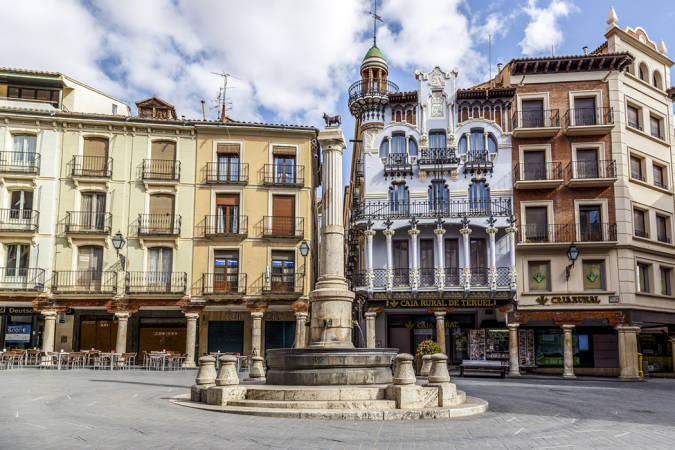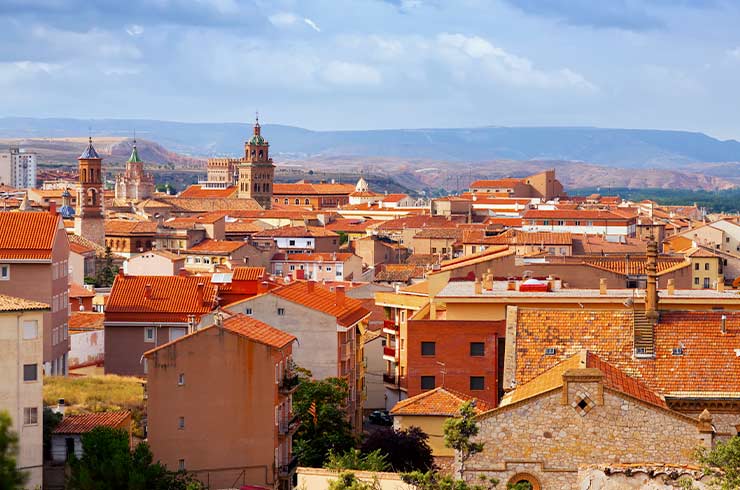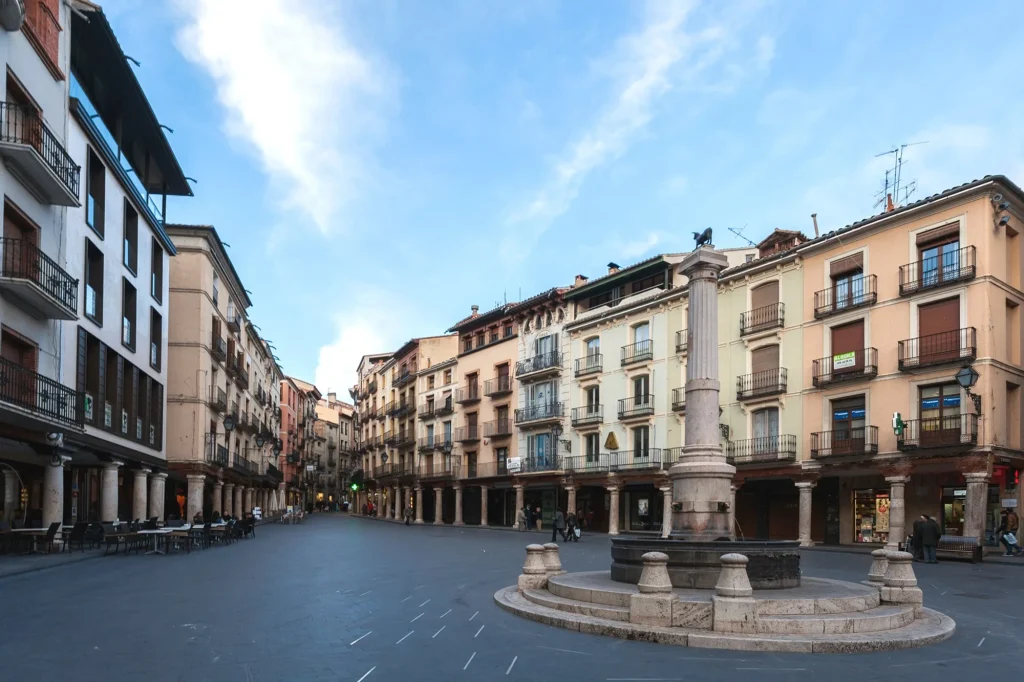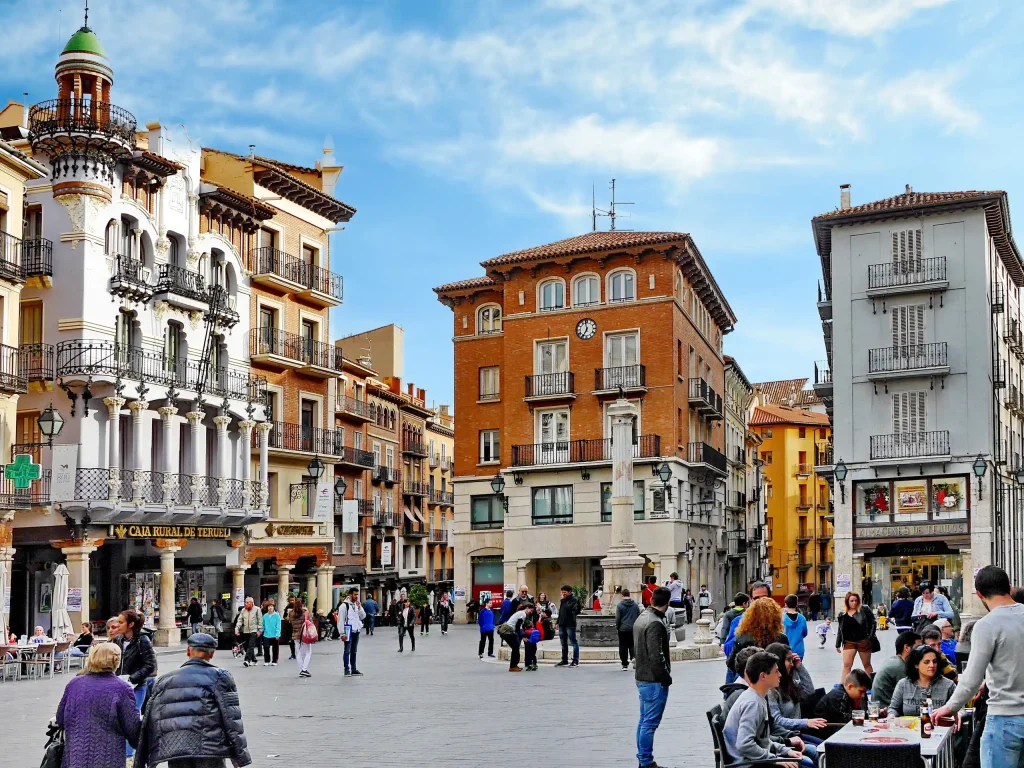
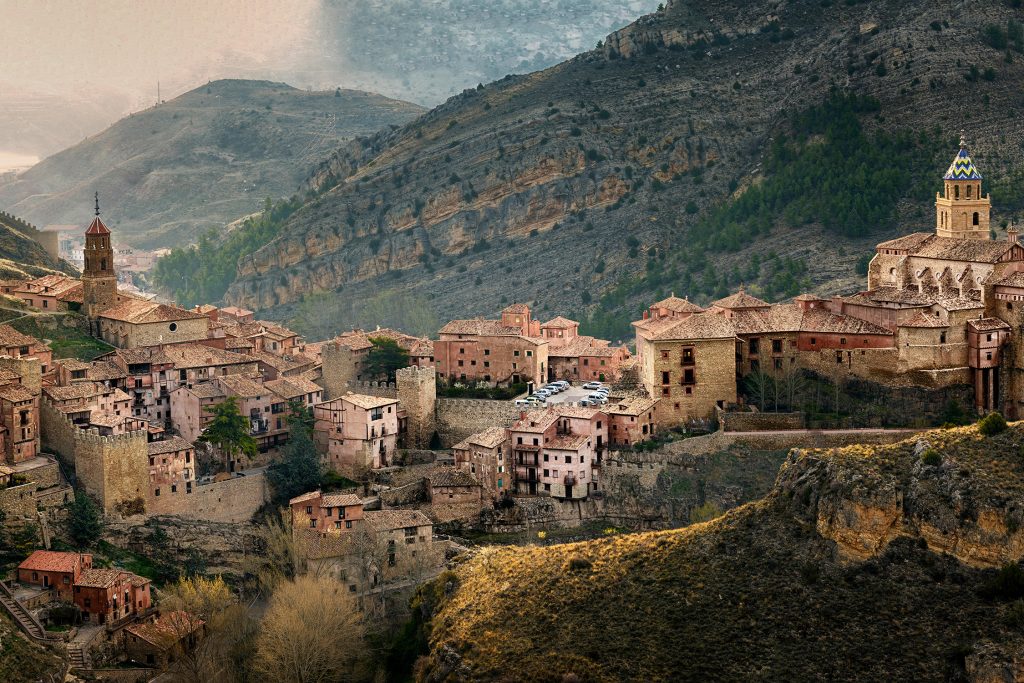
Teruel is considered one of the most picturesque cities not only in Aragon, but in all of Spain. Its historic center, renowned for its unique Mudéjar architectural style, is like a living open-air museum. This architectural style emerged on the Iberian Peninsula in the Middle Ages, when Spain liberated itself from Islamic rule, but gave local Muslims the opportunity to develop their arts in a now Christian state.
Attractions
Identifying specific attractions in Teruel is truly difficult, as every building in this city has its own unique appeal. However, it is possible to identify a few of the most characteristic sites.
From the moment you arrive at the train station, you are immediately immersed in Teruel’s unique atmosphere, steeped in the Mudéjar style. The route from the station to the Old Town begins with the majestic brick Esculinat staircase, built relatively recently, in 1921. It amazes with the abundance of Muslim patterns embedded in the tiles, unique stonework, and mosaic paintings on the walls.
The Cathedral of Santa Maria de Meliavilla (Plaza de la Catedral) is the symbol of the city and a fine example of the medieval Mudéjar style, a UNESCO World Heritage Site. Built by the Moor Jusaff in 1171 on the site of an older church, this temple combines Romanesque, Oriental, and Gothic elements. The Mudéjar tower, with its gate and walls adorned with decorative ceramic tiles, was erected slightly later, in the 13th century.
One of the most significant Renaissance monuments, the Teruel Museum is a landmark of the city. This 17th-century building features a three-story façade, with the upper floor adorned with a colonnaded gallery. The museum displays exhibits related to paleontology, archeology, and fine art. In addition, an ethnographic exhibition is located on the site of the former museum stables.