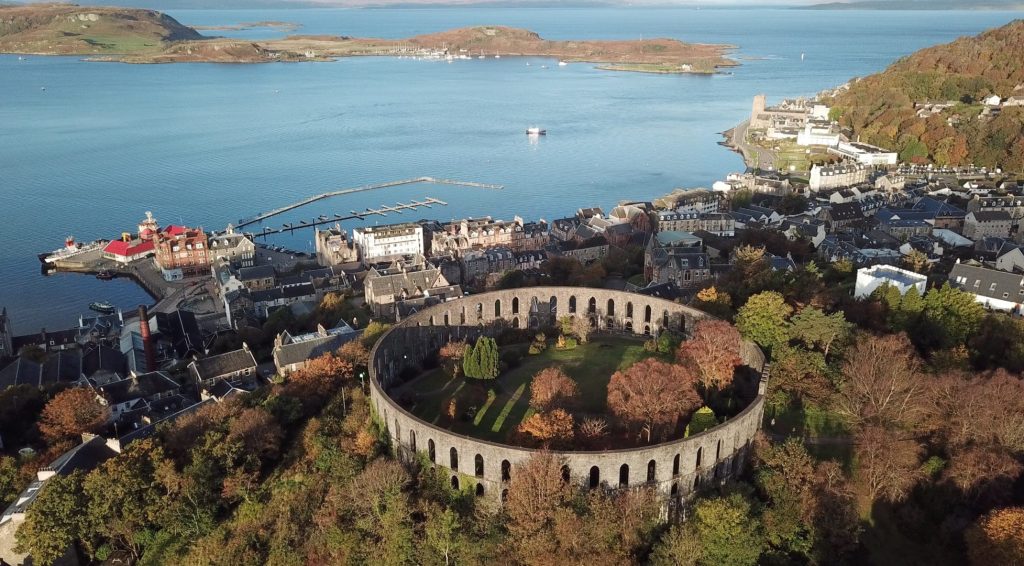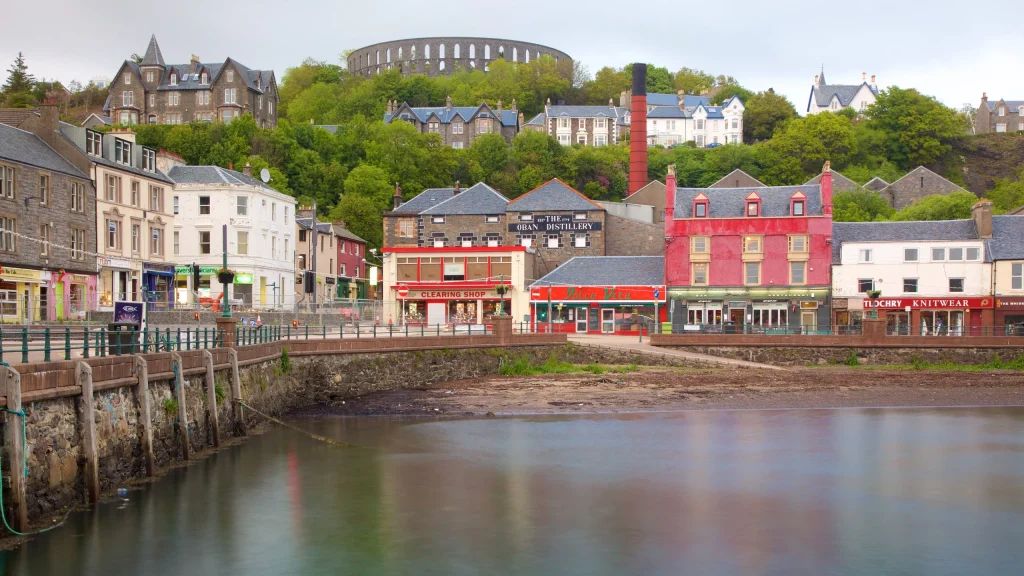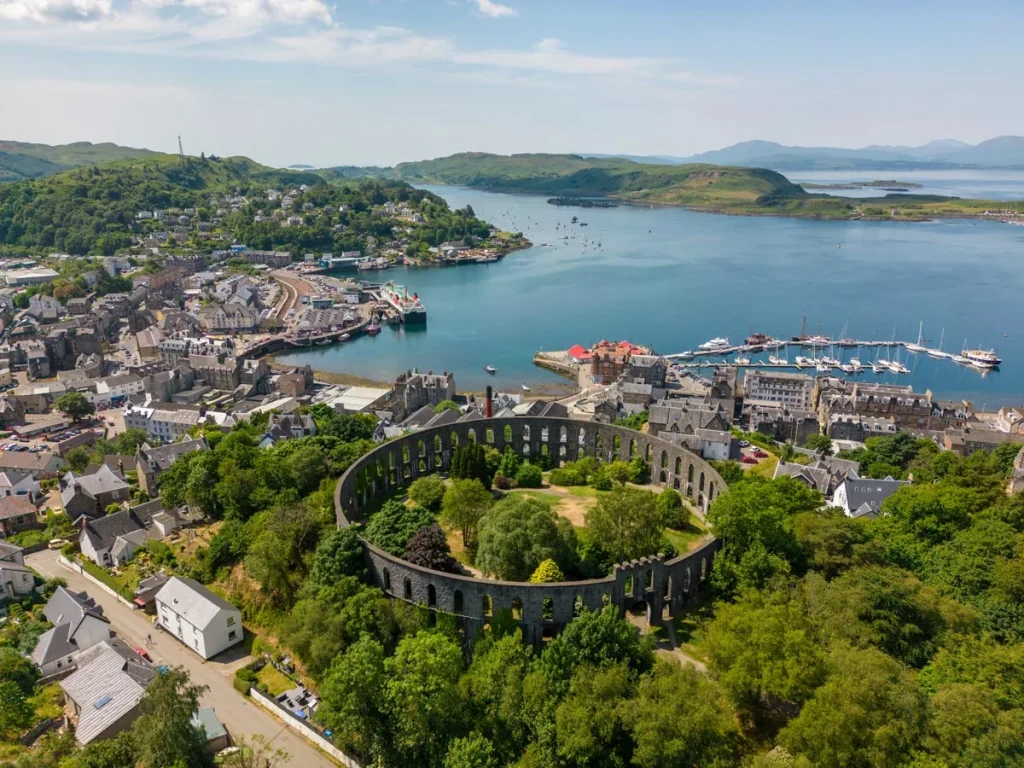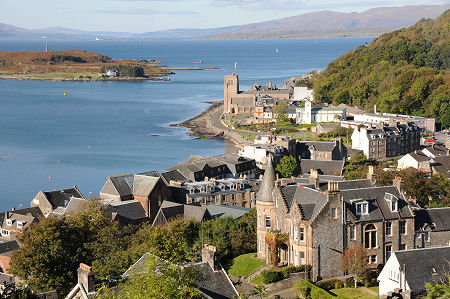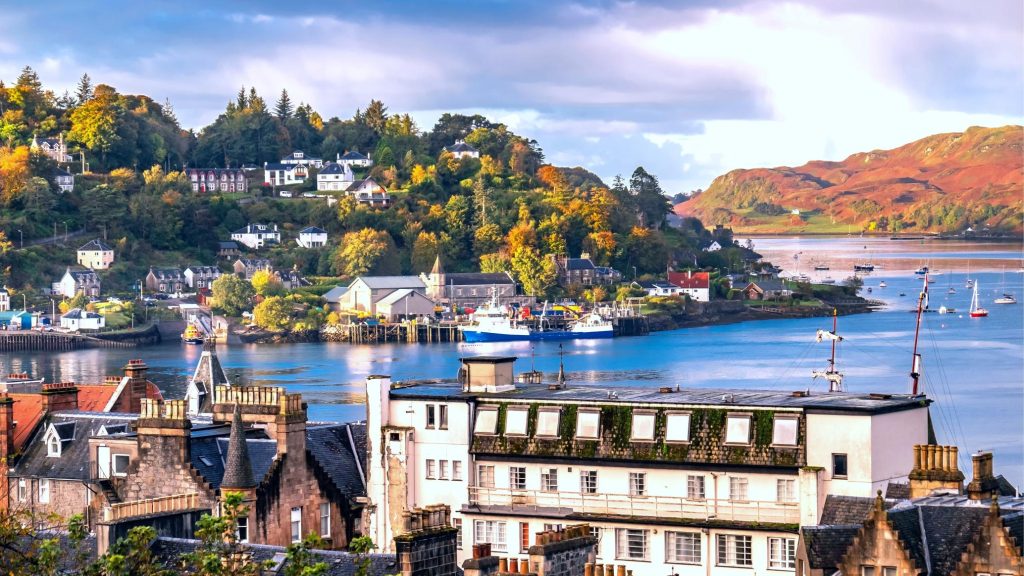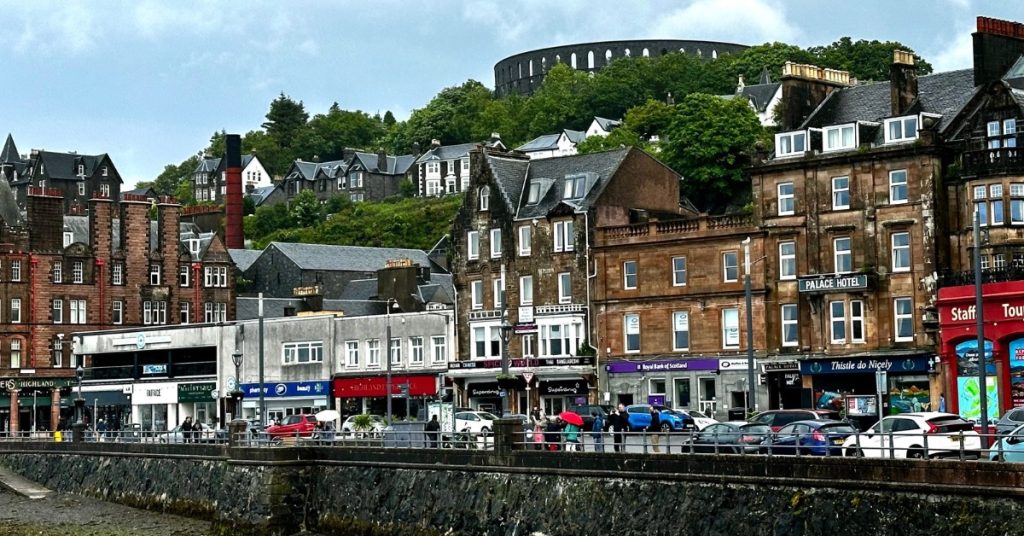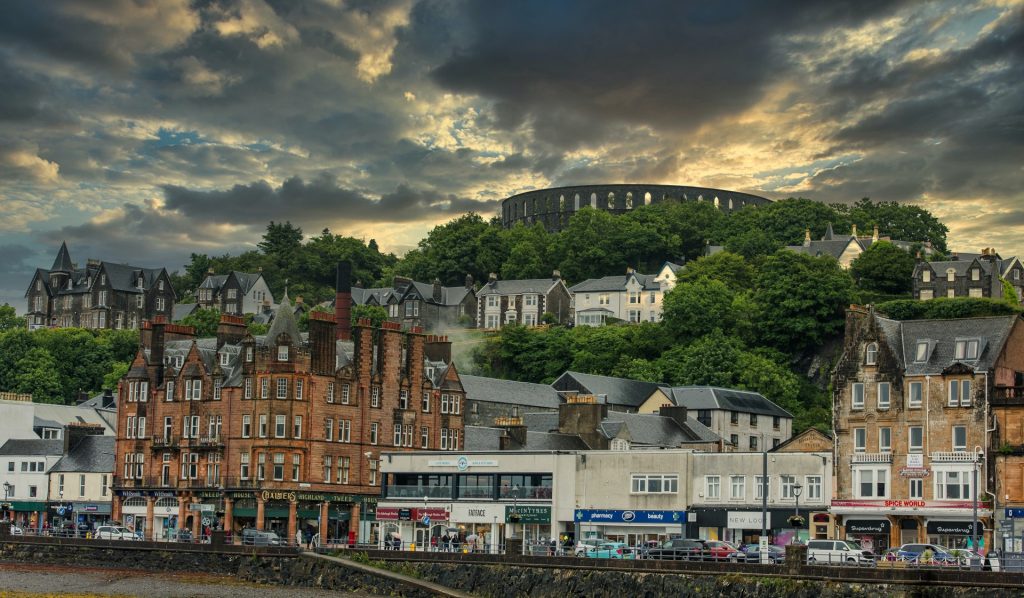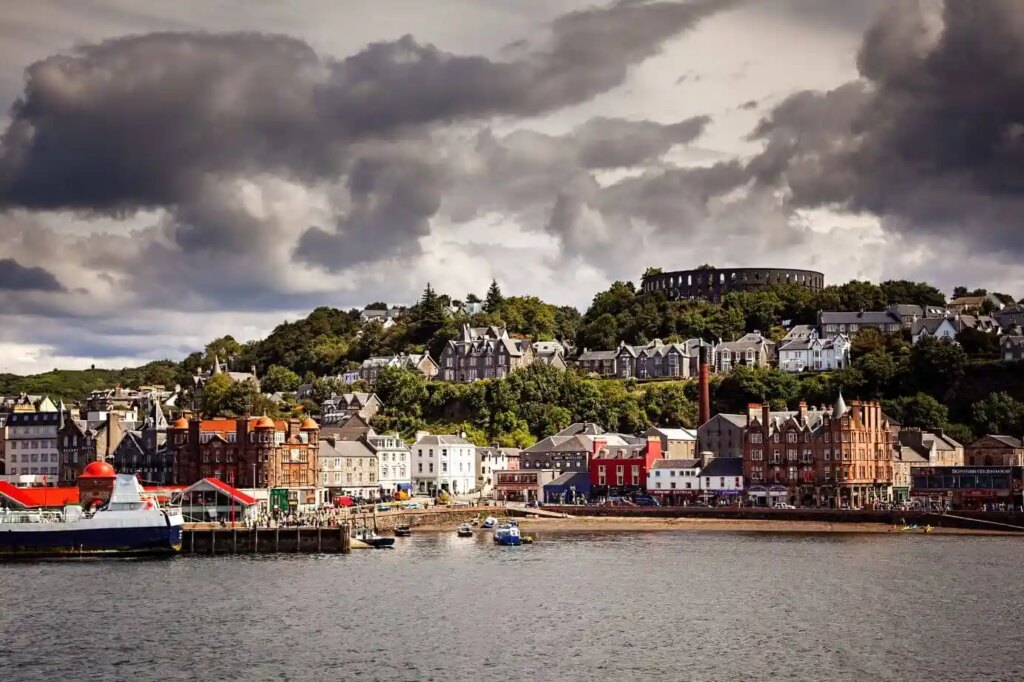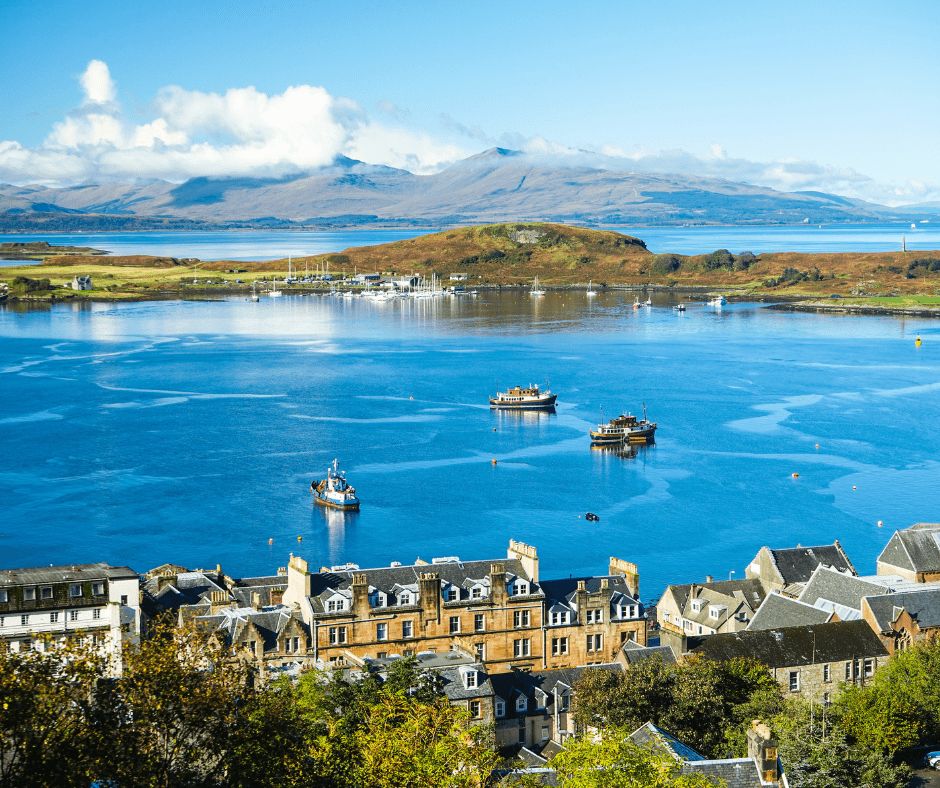
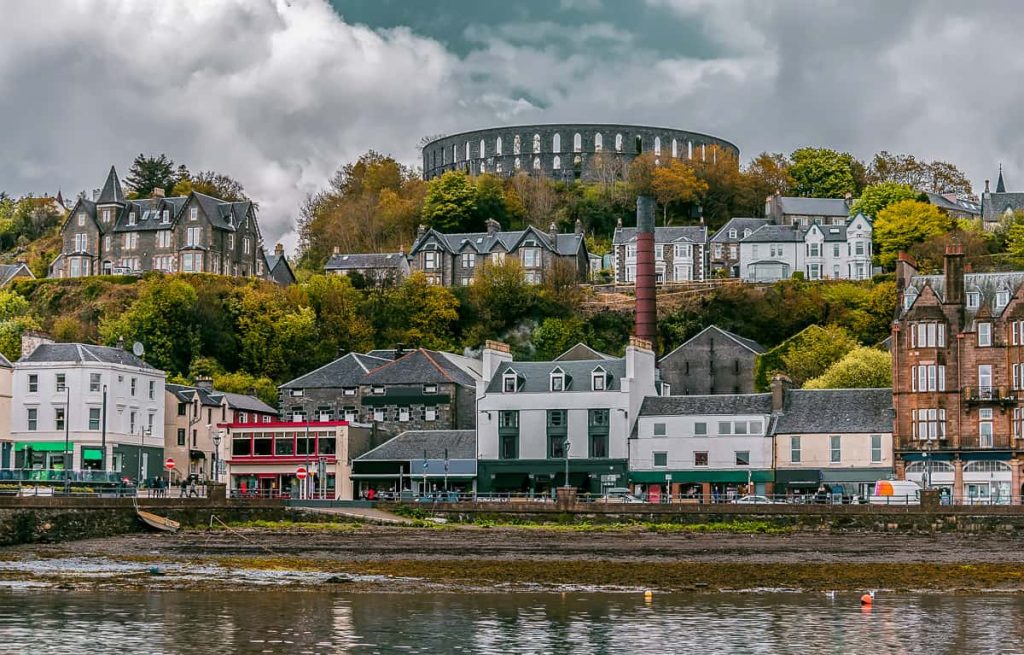
Oban is a resort town located on the Bay of Lorne. The local bay is horseshoe-shaped, protected from wind and waves by the islands of Kerrera and Mull. Thanks to the warm waters of the Gulf Stream, temperatures here rarely drop below freezing even in winter.
Attractions and Attractions in Oban
Oban Castle has a wild and picturesque appearance, although not much remains. The ruins date back to the 15th century, but another castle was built on this site in the 7th century. It belonged to the wealthy local MacDougall family until they moved out in the mid-18th century. The MacDougall Collection, housed in the castle, features an exhibition about the lives of working people and their domestic life.
On the way to the castle, near the lighthouse, is the Oban War Memorial. St. Columba’s Cathedral is the main church of the Roman Catholic community. The cathedral in its current form was built between 1932 and 1959. Designed by J.G.
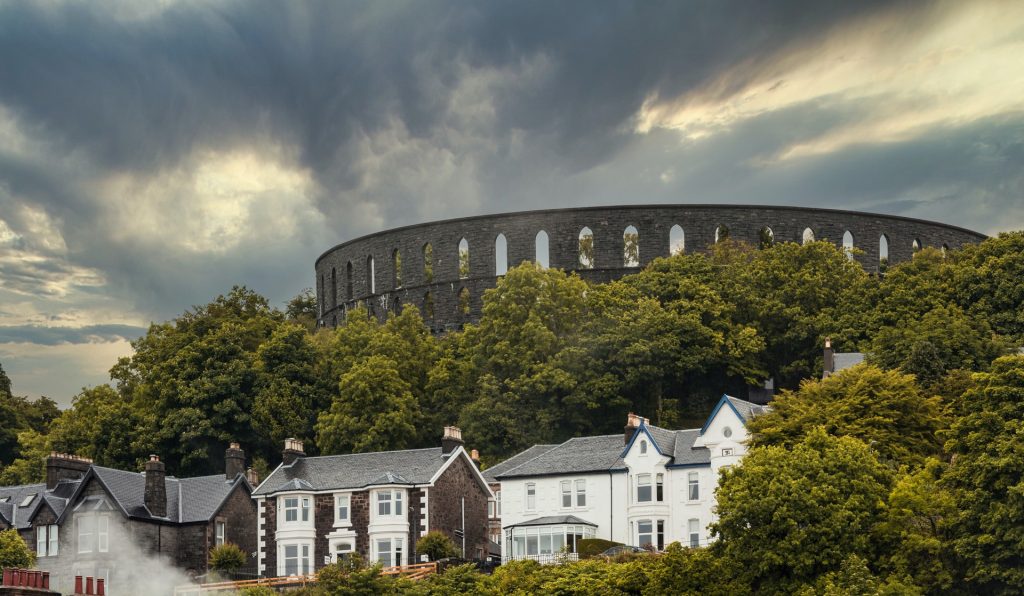
Scott, the architect behind Waterloo Bridge and the red British telephone box, the tower is one of Oban’s most famous landmarks. One of Oban’s most famous landmarks is the McCaig Tower, a structure perched on a hill, modeled after the Roman Colosseum. Its construction was funded by local benefactor John McCaig. His goal was, firstly, to provide work for local masons during the winter and, secondly, to perpetuate his family name.
The War and Peace Museum features collections and exhibits of historical and cultural interest. A museum is also located on the grounds of the town’s distillery, chronicling the history of whisky production in the town, beginning with the very first batch in 1794.