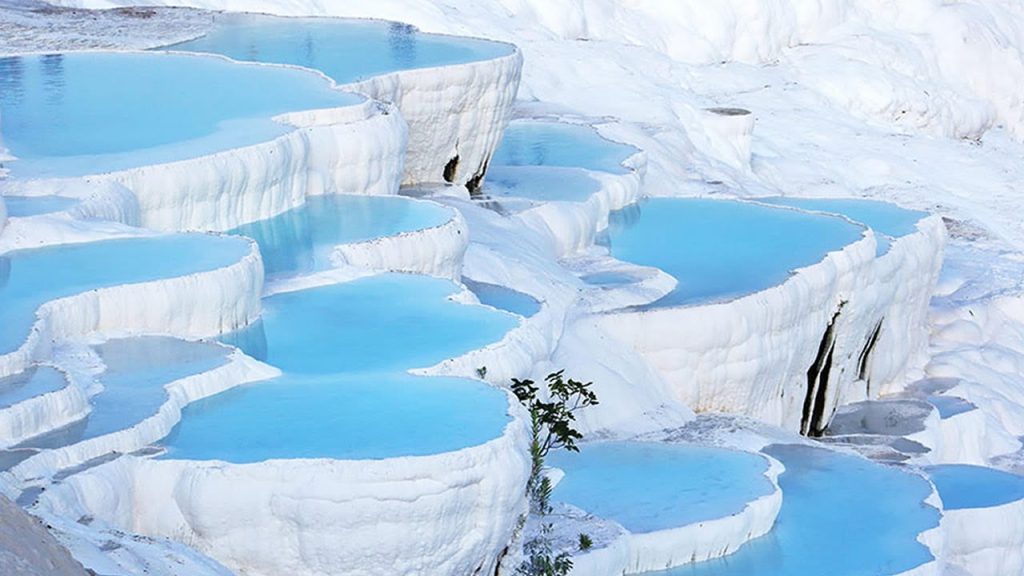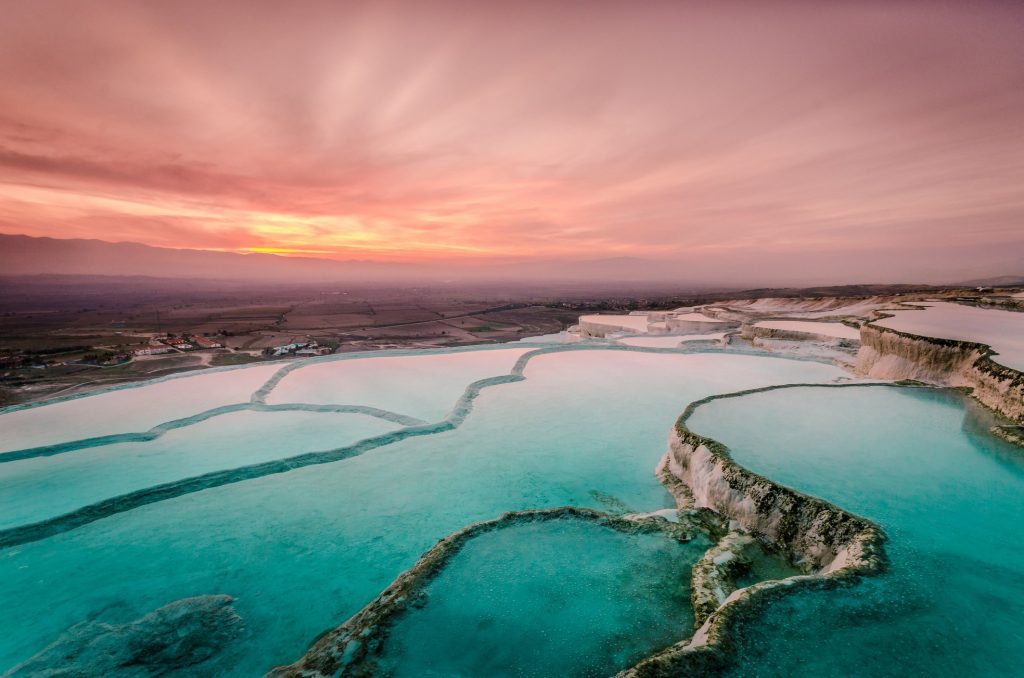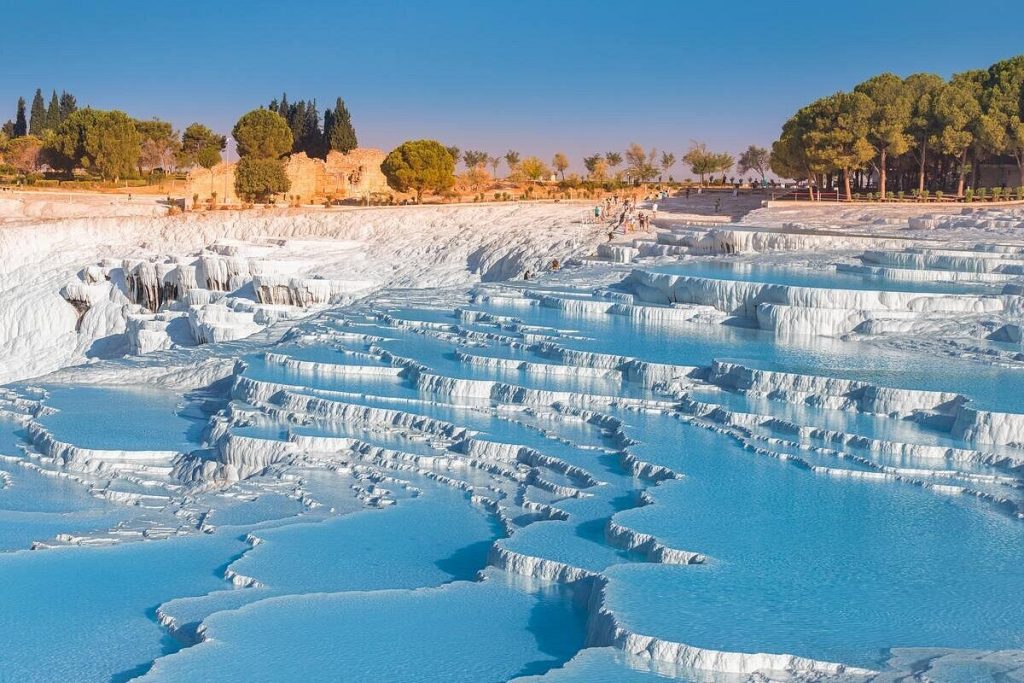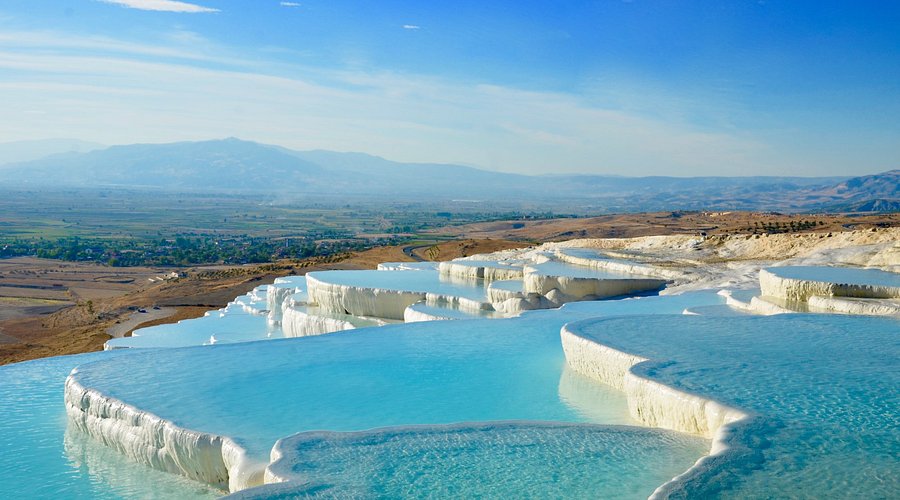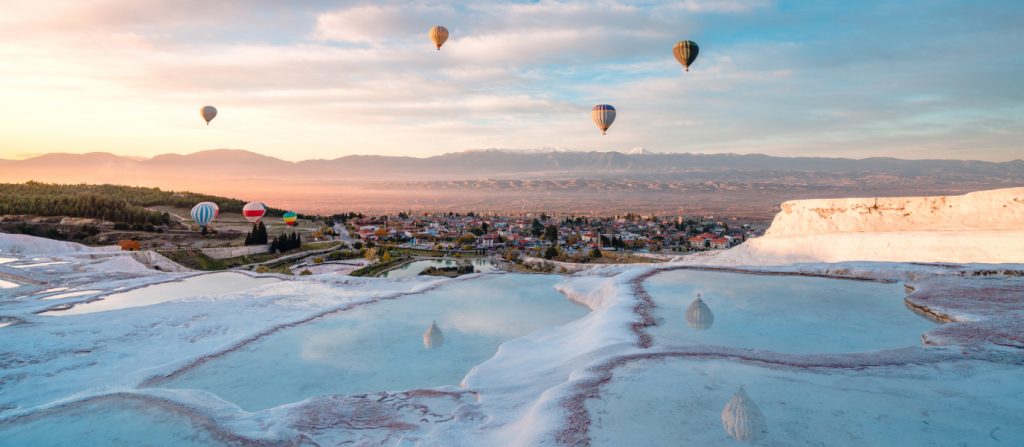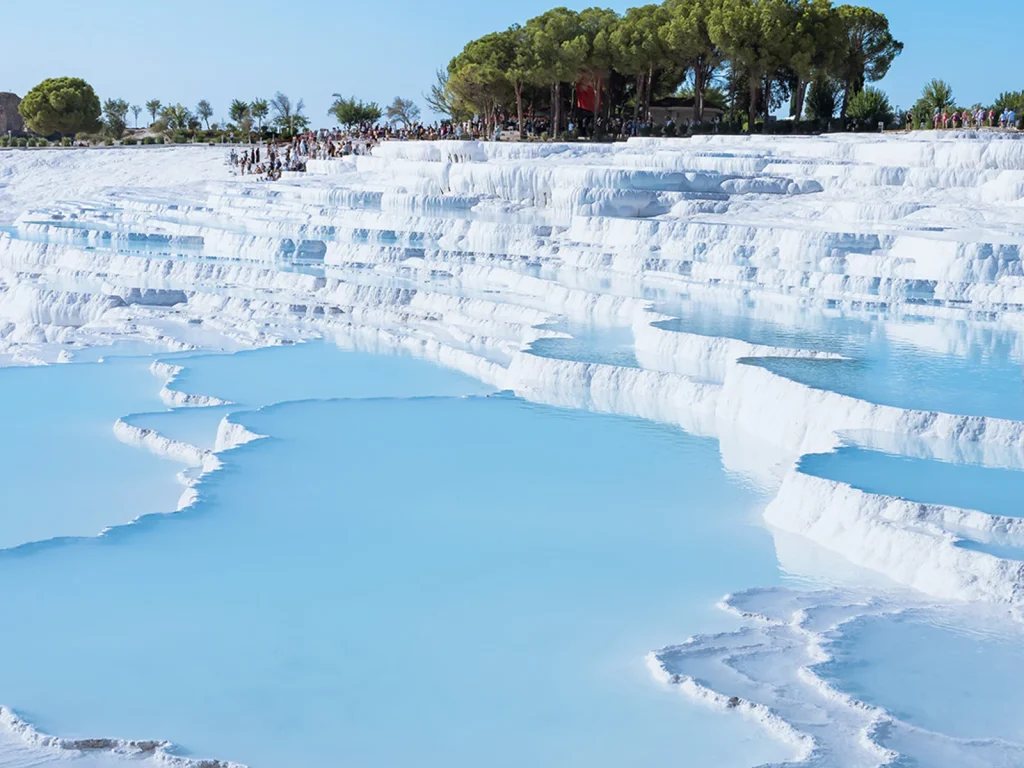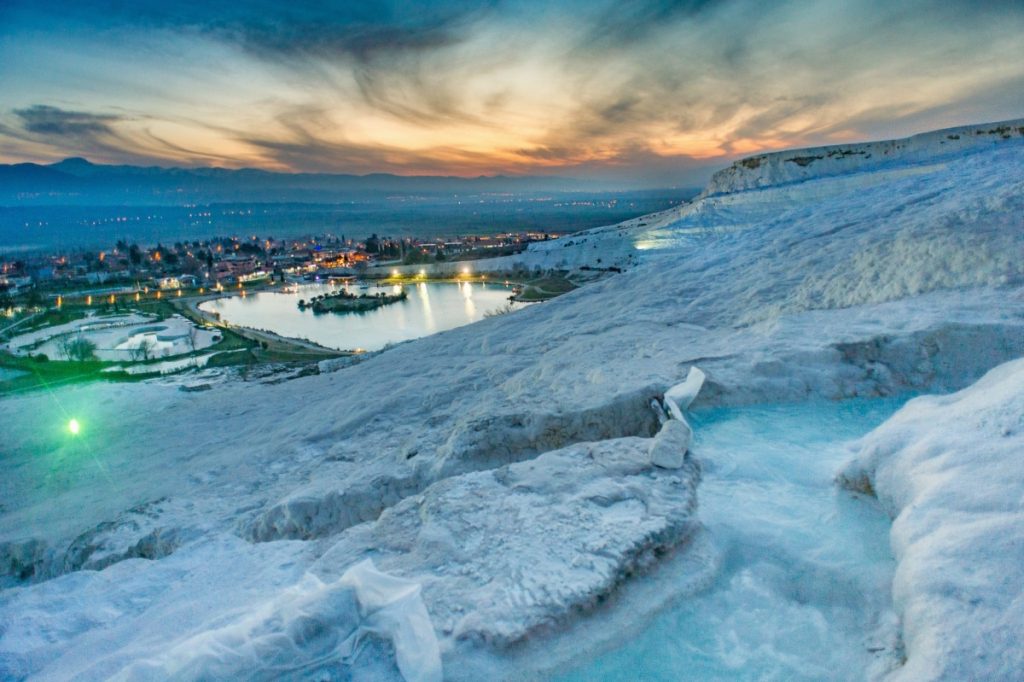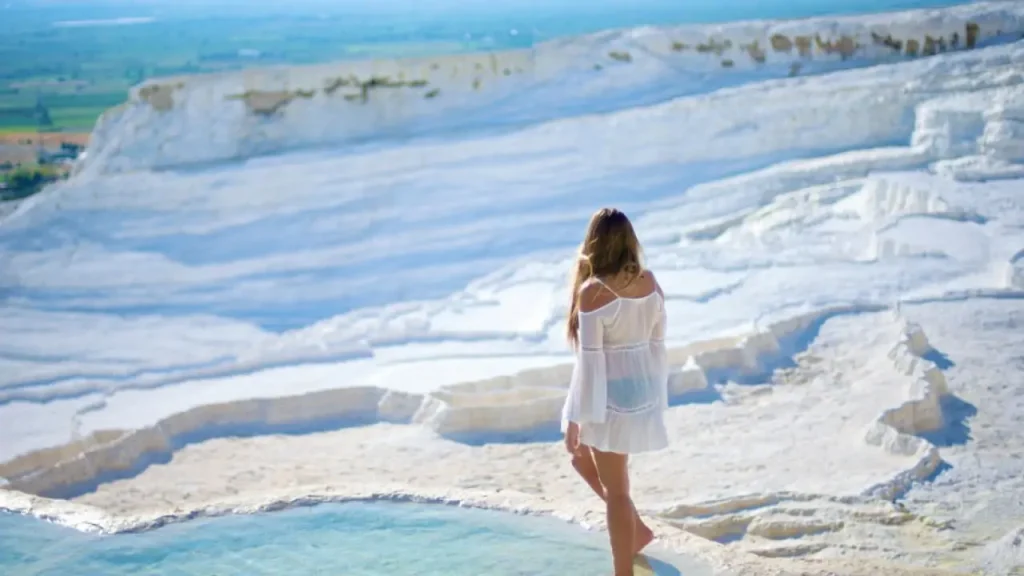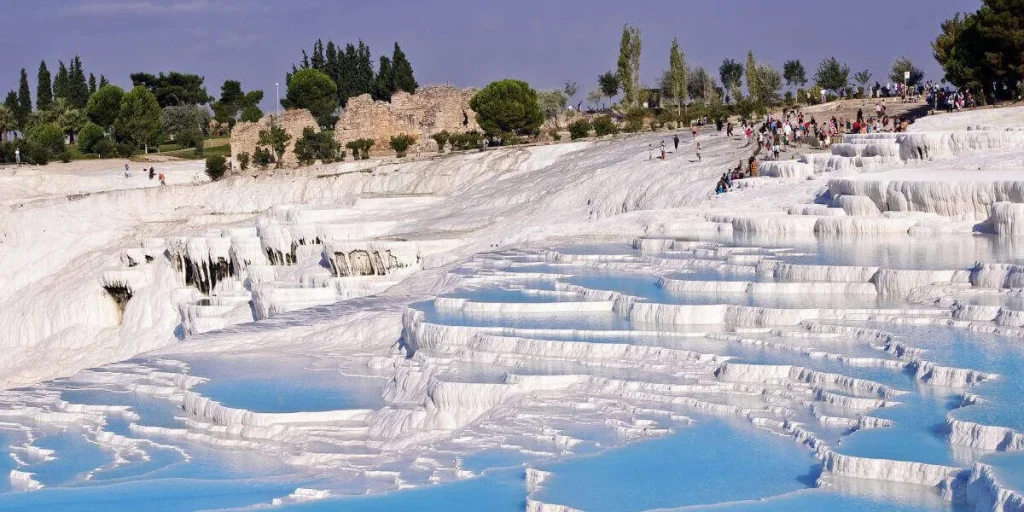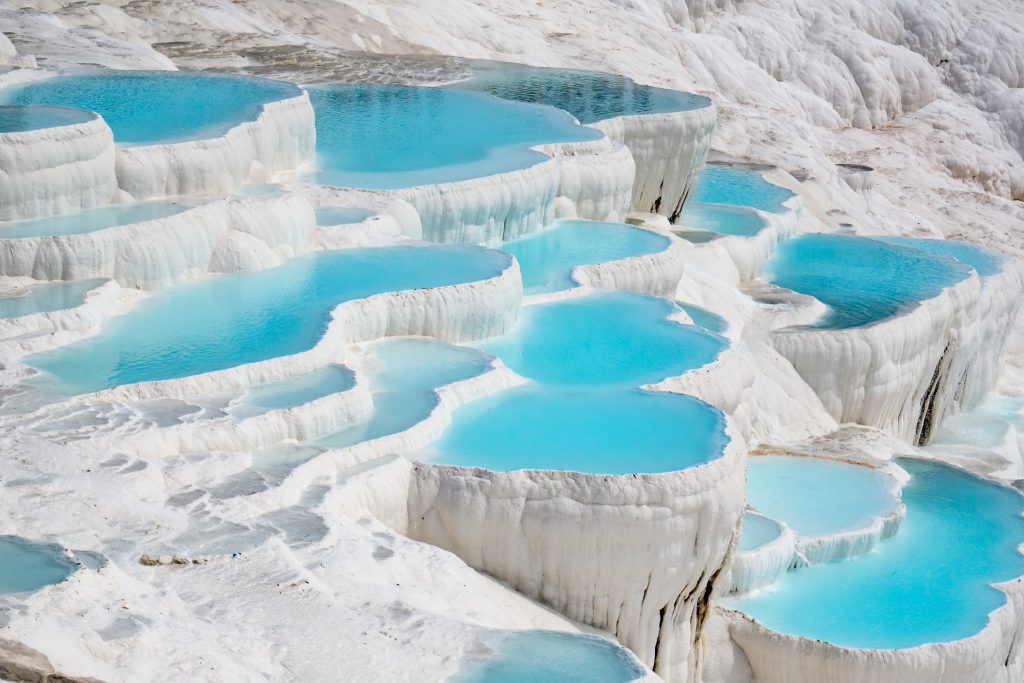
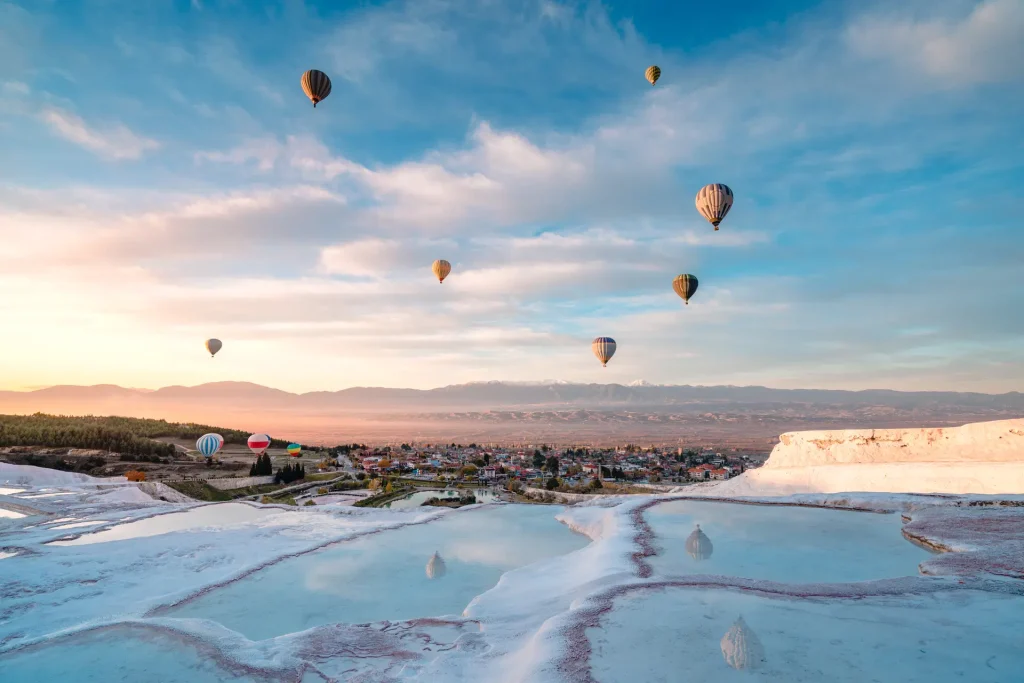
 From a distance, Pamukkale resembles a worked quarry, but upon closer inspection, you understand why it attracts tourists from all over the world. The plateau rising above the river is covered in smooth travertine, reminiscent of lilies, shells, and bowls.
Treatment in Pamukkale
Therapeutic treatments offered at the hotels of Pamukkale and Karahayit are primarily based on the local thermal waters. The resort offers 17 types of mineral water, the most popular of which is “kırmızı su” (red water), rich in iron.
The lower village is primarily frequented by foreign guests, while the upper village is predominantly Turkish. Strict morals prevail here; for example, sunbathing in public places is discouraged and alcohol is not sold. The resort treats various skin conditions, rheumatism, and rickets, and supports the cardiovascular and digestive systems. Furthermore, the mineral waters help relieve fatigue and combat stress.
Entertainment and Attractions
The main attraction in Pamukkale is the travertine terraces, a natural park, part of which is open to the public. The ancient city of Hierapolis is located near the terraces. The site can be accessed through two entrances—the South and North. Visitor centers and ticket offices are located near each.
On the way to the terraces, you can stop at the tourist information center, where you can get a free map of the park and village or tour the Archaeological Museum. Operating thermal baths are also nearby.
Excavations are still ongoing at ancient Hierapolis, but the abundance of monuments is already impressive. The main attractions include the nymphaeum, or fountain house, the Temple of Apollo and Pluto, a kilometer-long colonnaded street, a basilica, a Roman theater, a necropolis, the tomb of Flavius Zeuxis, and the city walls. Most of the structures are well preserved; for example, the theater retains not only the spectator rows and stage but also numerous bas-reliefs. Furthermore, a mineral spring is located in the center of the ancient city. It was thanks to this spring that the city was founded here in the 2nd century BC.
Cleopatra’s Pool is a true tourist pilgrimage site. It is an artificial reservoir where guests are allowed to swim. According to legend, Cleopatra herself loved to bathe here, emerging from them rested and refreshed.
Near Pamukkale are two other historic cities: the ancient kervansaray in Akhane and ancient Laodicea.