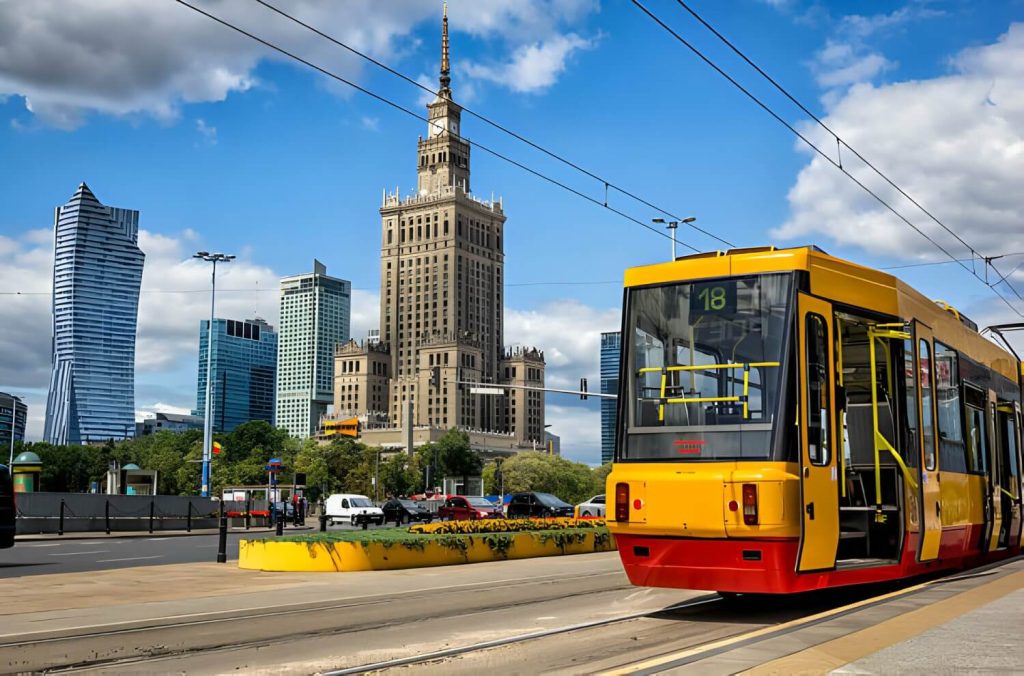
 Warsaw’s public transportation system includes buses, trams, and the metro. Buses operate on a schedule, with route schedules posted at all stops, along with information indicating the type of bus arriving at a given time—low-floor or regular. A single ticket costs between 3.40 and 7 PLN, a daily ticket costs 15-26 PLN (depending on the service area), a weekend ticket (from 7:00 PM Friday to 8:00 AM Monday) costs 24 PLN, and a three-day ticket costs 36-57 PLN. All tickets are valid for all modes of transport and require validation. If you plan to stay in Warsaw for a month, it makes sense to purchase a season ticket (110 PLN). For groups of up to 5 people, a weekend group ticket costs 40 PLN. Tickets are sold at kiosks or from the driver. Warsaw is a great destination for bike enthusiasts—the city is flat and has bike paths everywhere.
From March 1st to November 30th, the Veturilo bike-sharing system operates with 368 stations and approximately 5,319 bicycles, including tandems, children’s bikes, and electric bikes. To use it, you need to register on the website and pay an initial fee of 10 PLN. The first 20 minutes are free, after which time-based pricing begins (from the 21st to the 60th minute it’s 1 PLN, the second hour is 3 PLN, the third is 5 PLN, and the fourth and each subsequent hour is 7 PLN).
Car Rental
Warsaw has offices of major international car rental companies, such as Europcar, Avis, Hertz, and Budget. They are not open 24/7, so it’s not possible to rent a car at night. It’s cheaper to book a car online in advance, and you’ll have a wider selection. Generally, rentals are easy to find in the city—there are plenty of rental locations.
Parking is more expensive in the city center than in the outskirts. There are park-and-ride lots near metro stations where you can leave your car and continue your journey by public transport.