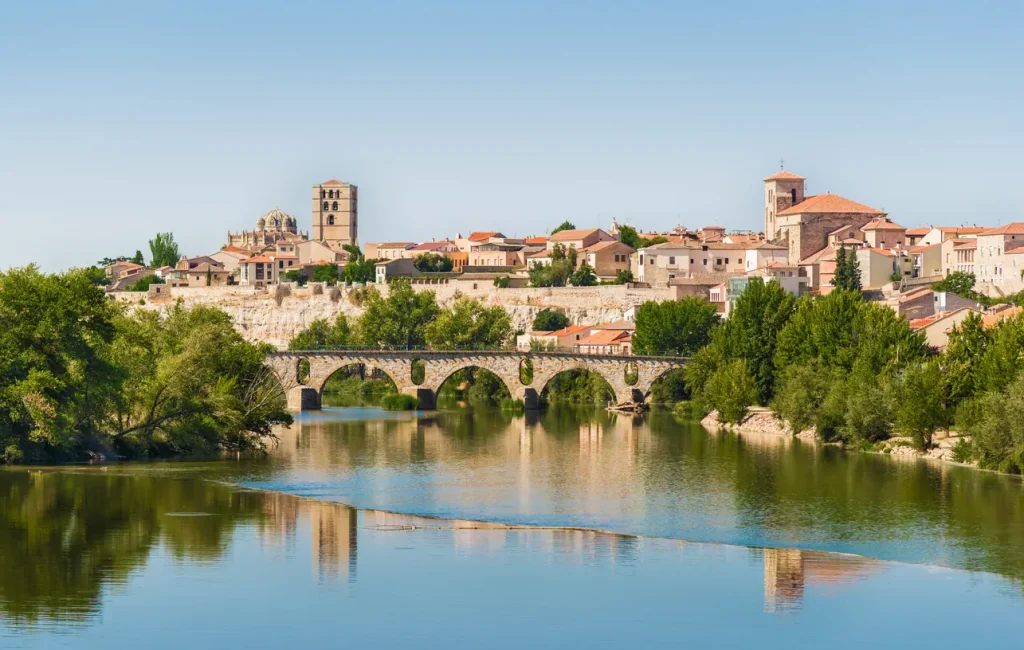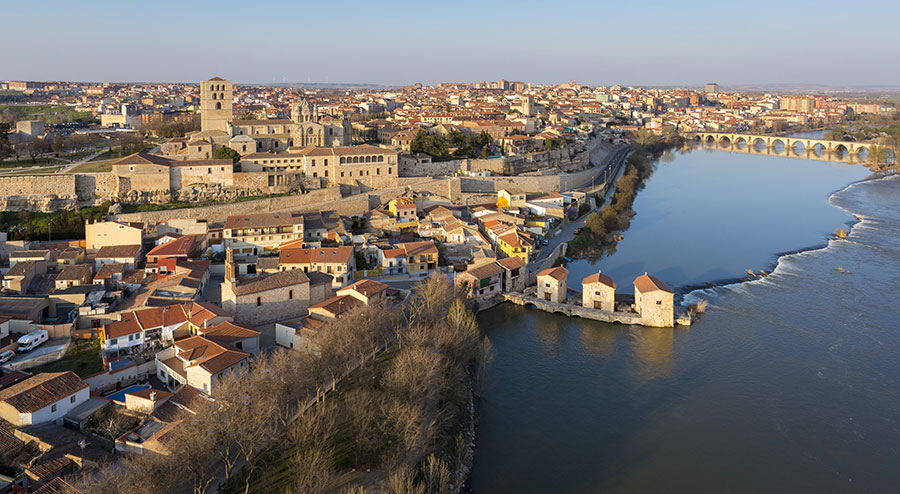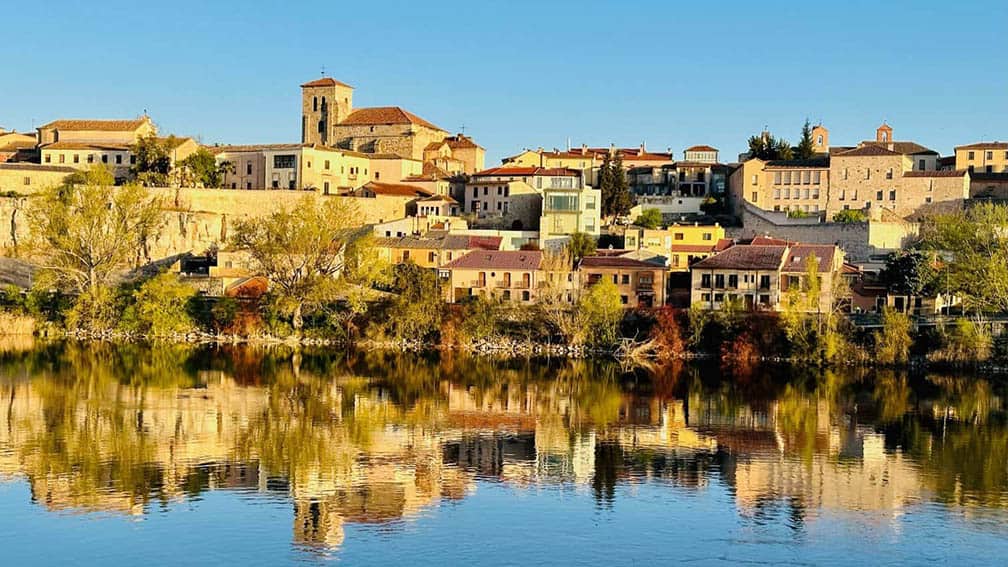
Zamora is a small Spanish city located just 50 kilometers from the Portuguese border. Situated on the high right bank of the Duero River, the city played an important role as a strategic stronghold throughout its history, attracting many claimants to its territory.
Attractions in Zamora
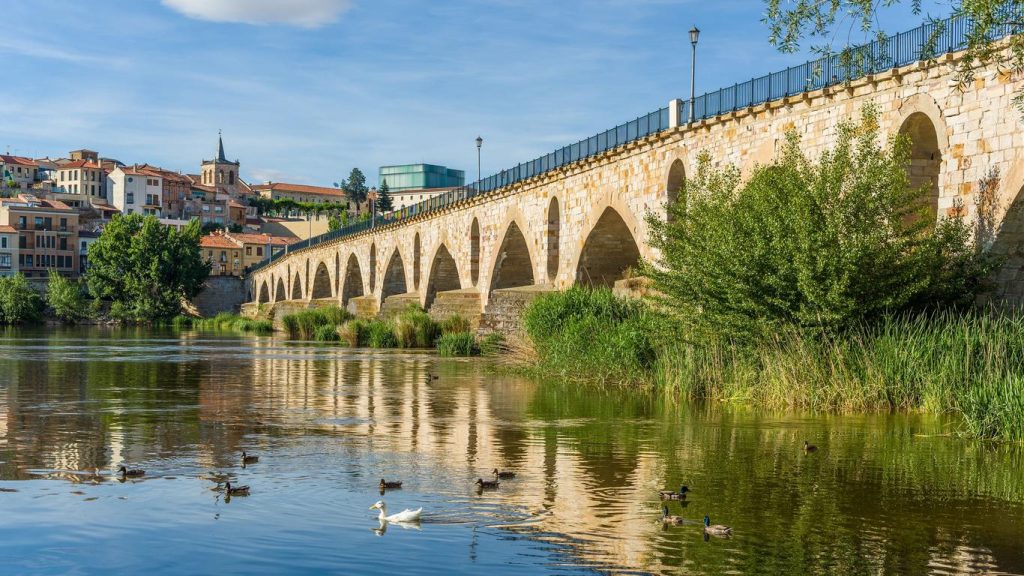
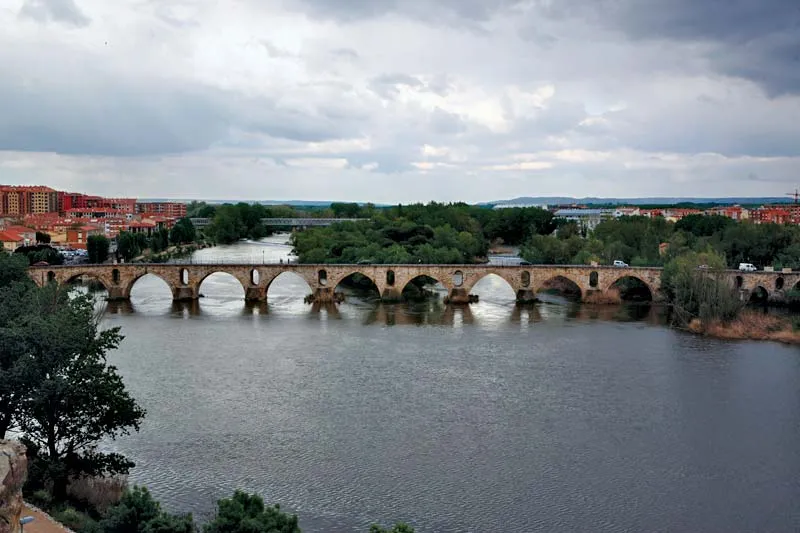
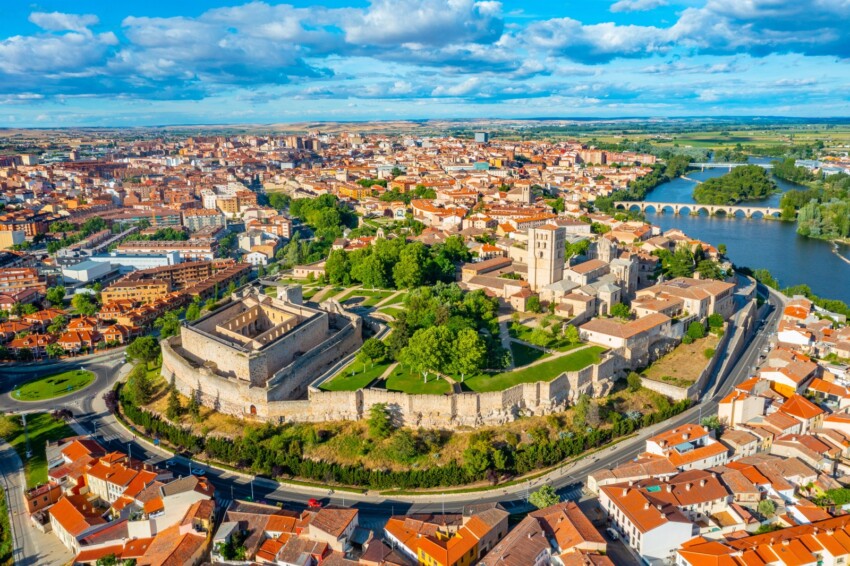
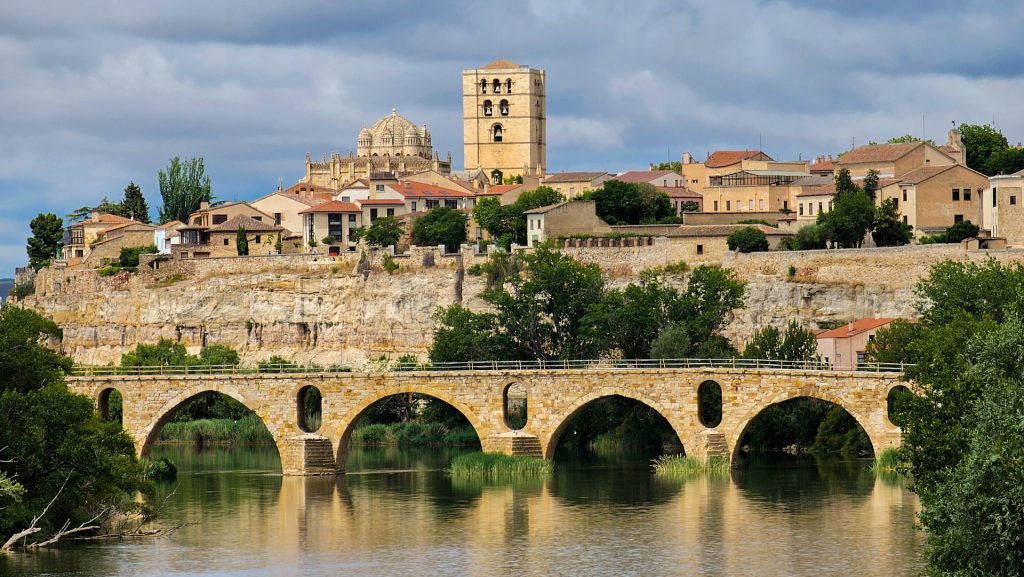
Zamora’s Old Town is particularly attractive, steeped in an ancient atmosphere and surrounded by centuries-old fortress walls. Access to this historic district is provided by the Roman bridge Puente de Piedra, and along the entire length of the fortress walls are three key entrances to the city: Doña Uracá, Puerta Traición, and Olivares, through which one can reach the cathedral.
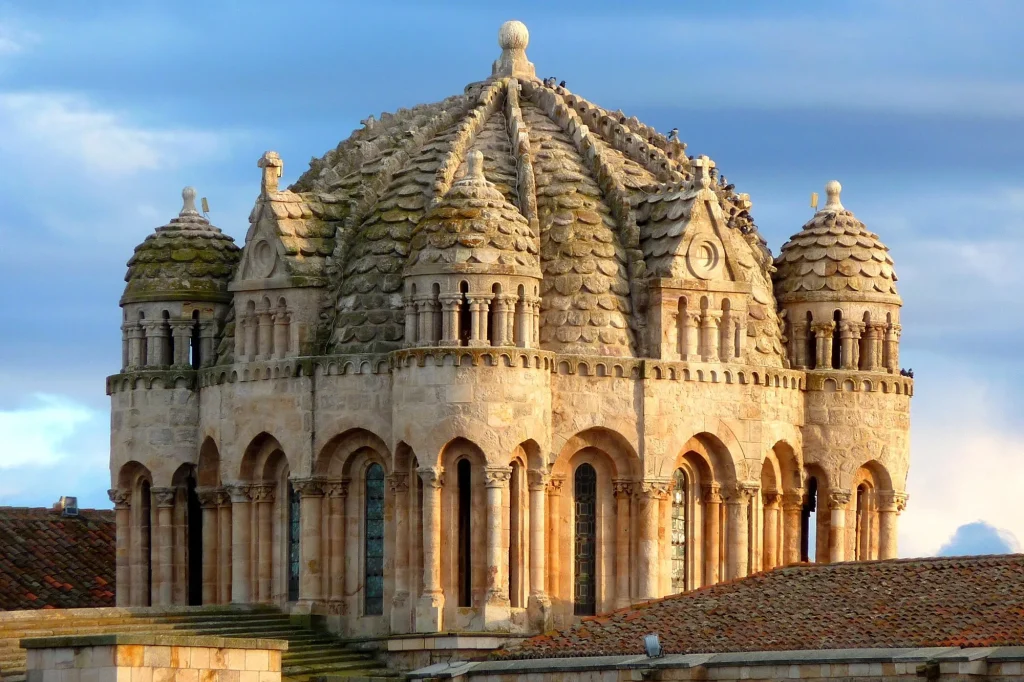
The cathedral, built on a hill in the mid-12th century, symbolizes the city’s rich history. This majestic temple is adorned with four Byzantine-style towers and windows with exquisite arches. Inside the cathedral, you can admire 16th-century carvings, as well as a 15th-century altarpiece and a chapel with a 16th-century image of Christ by Gaspar Becerra. The cathedral also houses a museum displaying a rich collection of religious art, including ancient tapestries. Surrounding the cathedral is a park containing the ruins of a medieval castle built between the 10th and 12th centuries.
Almost all of Zamora’s famous Romanesque churches are located along Calle de los Francos, which runs from the Plaza Mayor to the Cathedral. This picturesque area of the city also boasts a number of other interesting architectural and cultural sites, such as the City Hall, the Archaeology Museum, which displays archaeological finds relating to the history of the area from prehistoric times to the 20th century, and the Museum of Fine Arts.
Equally noteworthy is the 12th-century stone bridge over the Duero River, which graces this area. Also noteworthy are the Renaissance architectural masterpieces: the hospital, which today serves as the local government office, City Hall, and the 15th-century Momos Palace. These buildings give the city its distinctive character and tell the story of its rich cultural heritage.