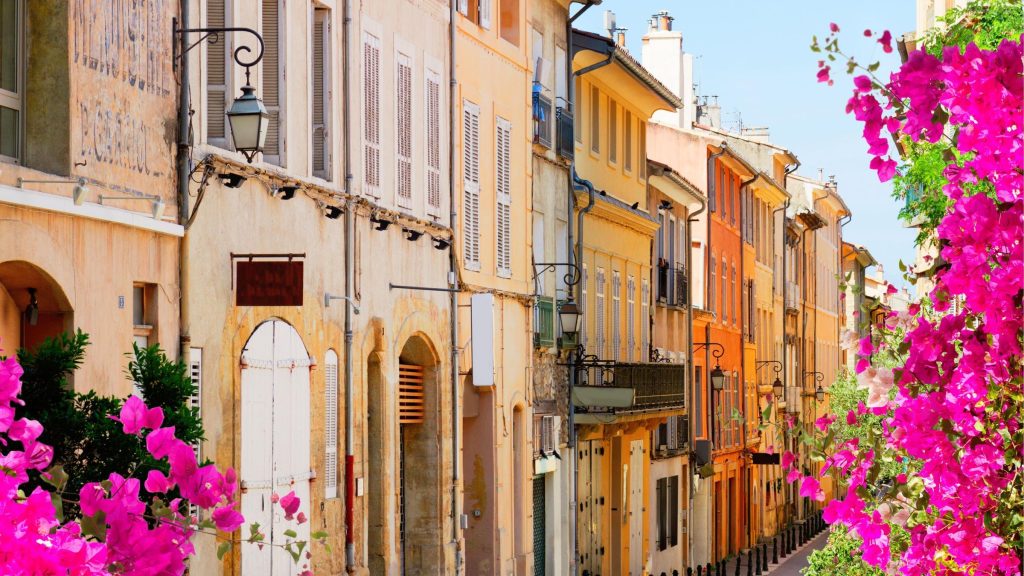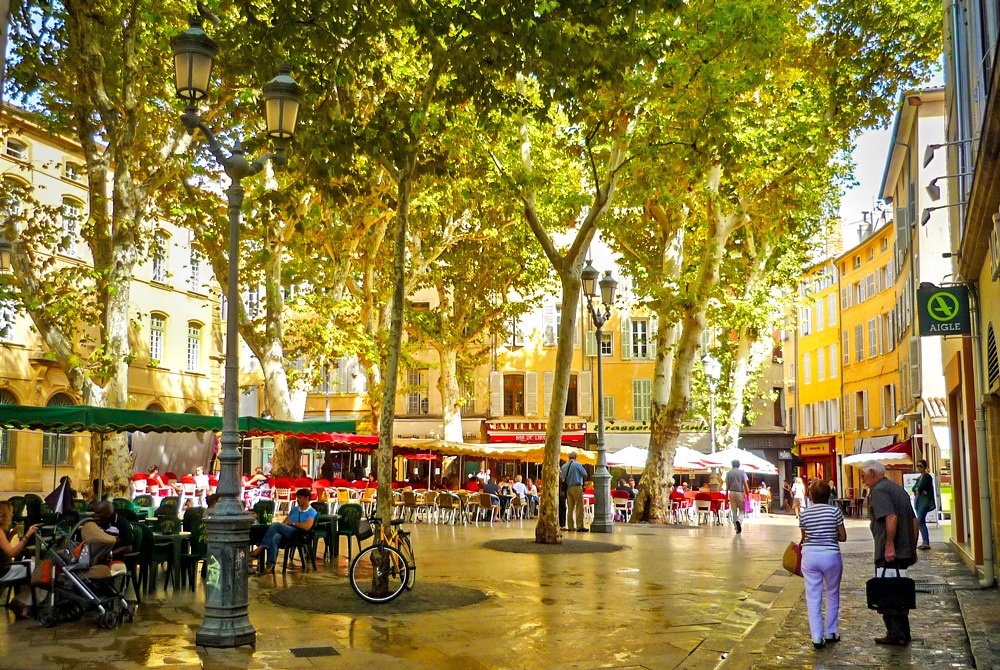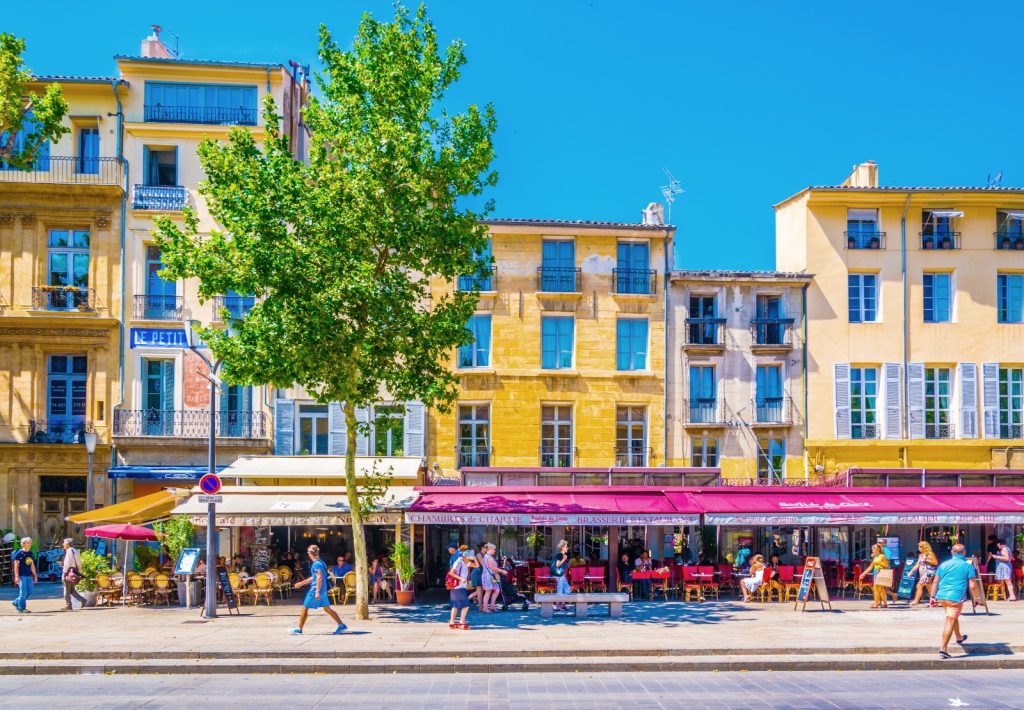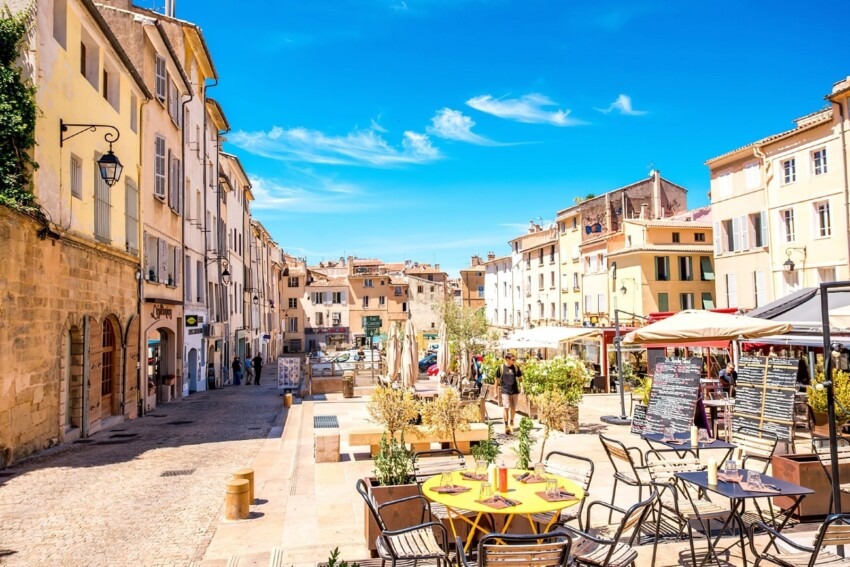
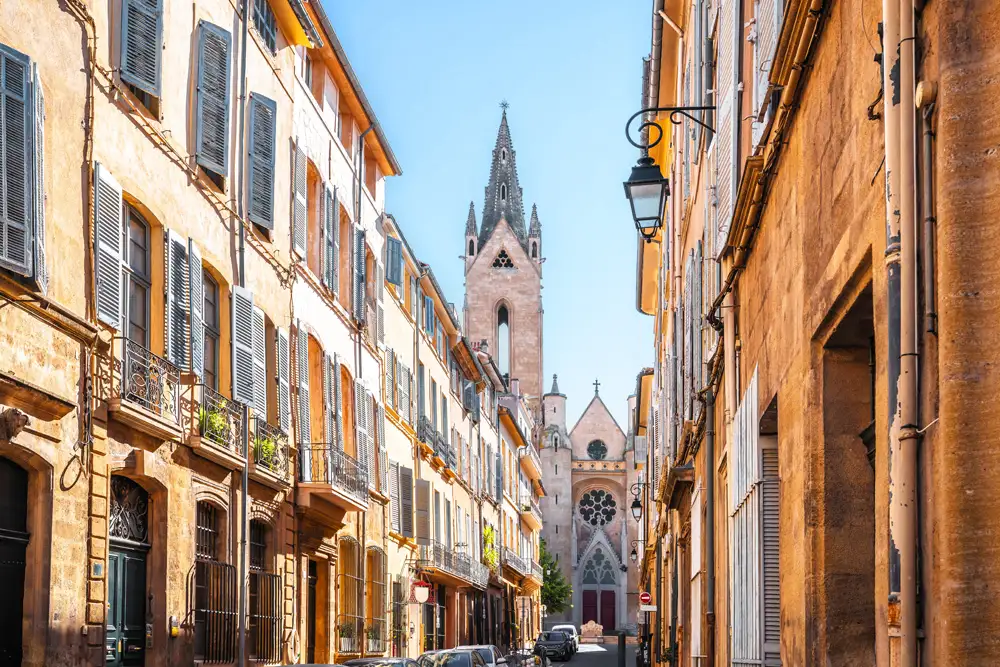
Aix-en-Provence is located between the Luberon mountain range and sunny Marseille. Narrow cobbled streets, majestic Italian Baroque palaces of the Provençal nobility from the 17th and 18th centuries, the exquisite facades of ancient mansions with wrought-iron balconies, the town hall with its Gothic clock tower, and countless fountains that once saved the city from the plague—all create a unique atmosphere.
Aix-en-Provence Attractions
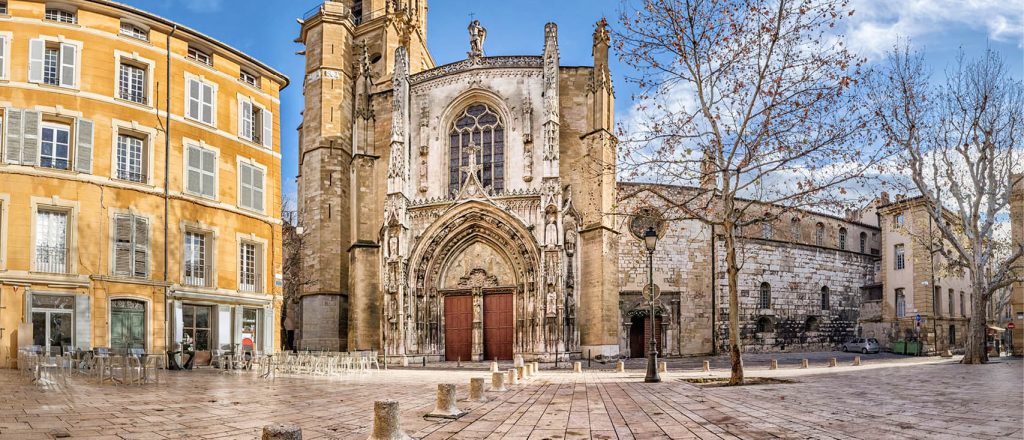
Start your stroll in the historic quarters of the Old Town, heading north from the Boulevard Mirabeau, which was built in the 18th century on the site of the former city walls. Among the picturesque squares and narrow streets, you’ll find the Church of Sainte-Magdalene, decorated with paintings by Rubens and Van Loo, the medieval façade of the town hall, the former grain exchange building, and the Saint-Sauveur Cathedral, built in the 15th and 16th centuries. This Gothic church with a cozy cloister courtyard is famous for its triptych “Burning Bush” by Nicolas Froment.
The former archbishop’s palace of Ancieux-Archevèche now houses the Tapestry Museum. Here you can see unique tapestries from the 17th and 18th centuries from Beauvais.
Don’t miss the first Gothic church in Provence, Saint-Jean-de-Malte, which belonged to the Hospitaller Order. Its austere architectural style, bright interior, 19th-century stained glass windows, and works of art, including Delacroix’s “Crucifixion,” will impress even the most discerning traveler. The tall bell tower (67 meters) is the city’s most prominent landmark.
To the south of the boulevard is the fashionable Mazarin district, built in the 17th century. Here, on Place Saint-Jean-de-Malte, a building dating from 1671 houses the Musée Granet. Its collection includes archaeological finds and works of art, including those from the ancient city of Entremont.
On Place d’Albert, you can see a complex of elegant 18th-century buildings and a small fountain. These buildings, with their Italian palazzo-style façades, were commissioned by Jean-Baptiste d’Albert, President of the Court of Auditors.
Read too: Strasbourg travel guide