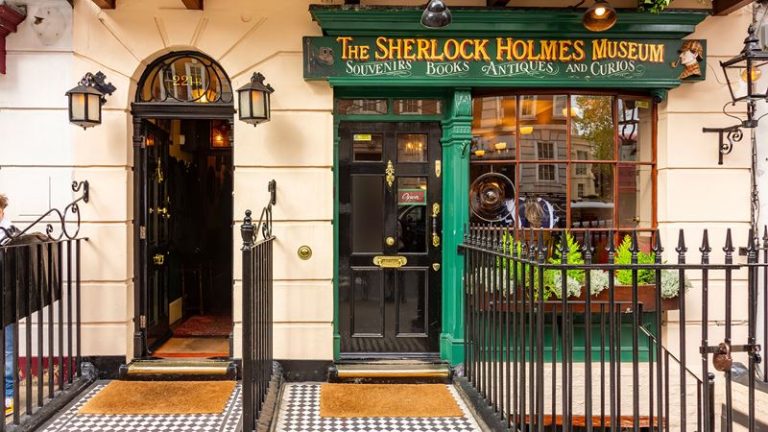
Those who come to England today to personally visit the sites associated with the life and work of the famous detective and discover the England of Sherlock Holmes are met with a well-oiled machine to profit from the gullible tourists flocking to Baker Street.
Sherlock Holmes is the most popular literary hero of the 20th century, as indelibly associated with good old England as porridge or the London fog that once shrouded the city streets. Sherlock Holmes was “born” in 1887, and the 1950s and 1960s saw the heyday of Sherlock mania—during the turbulent years of the collapse of the British Empire, ordinary Englishmen remembered the always-victorious private detective and his faithful friend. The queues for ale at the Sherlock Holmes pub no longer exist, but it would be a mistake to think that the master of deduction’s fame has faded. Quite the contrary, Sherlock mania is experiencing a resurgence. Modern film adaptations of the adventures of Holmes and Watson have contributed significantly to this renewed interest.
Interestingly, according to a 2011 survey, one in five Britons believes there was a real-life prototype for Conan Doyle’s character.
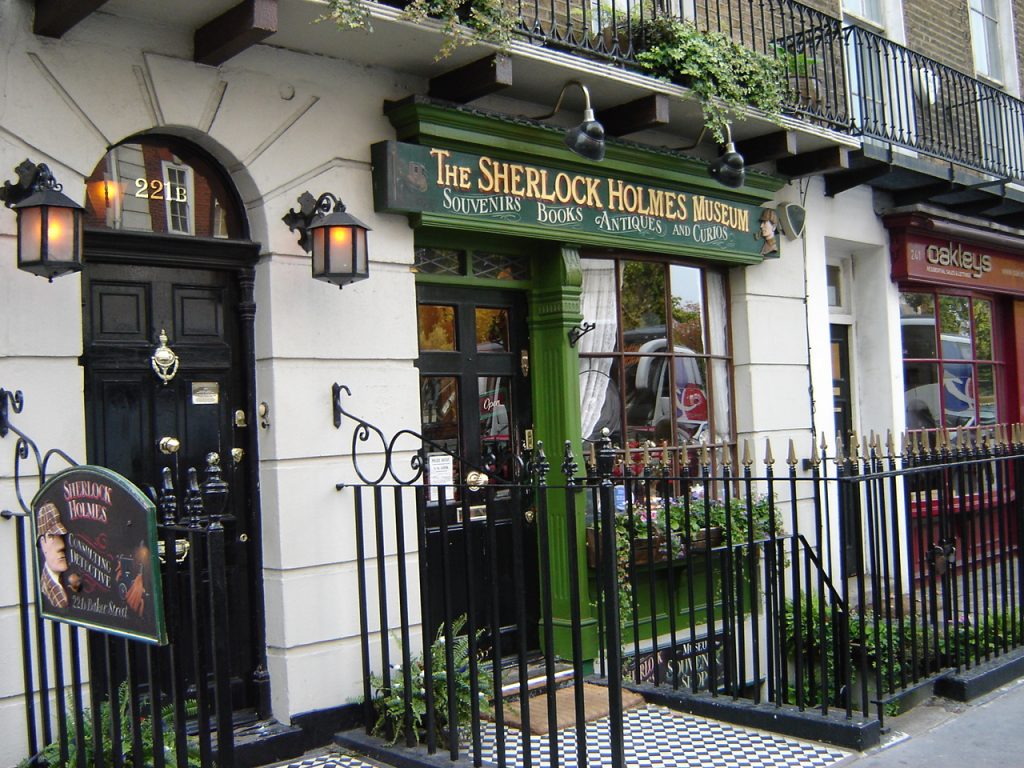
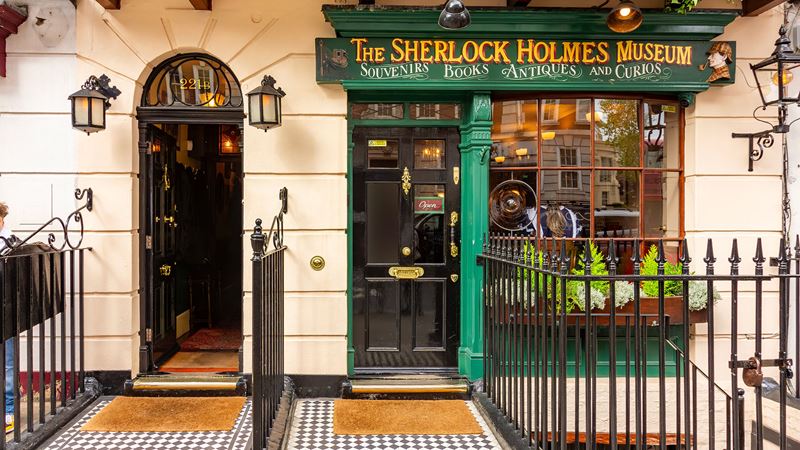
Those who come to England today to personally visit places associated with the life and work of the famous detective and discover the England of Sherlock Holmes are faced with a well-oiled machine for profiting from the gullible tourists flocking to Baker Street. Of course, missing the London house museum is unforgivable, but limiting yourself to this essentially tourist attraction is not a true Sherlockian.
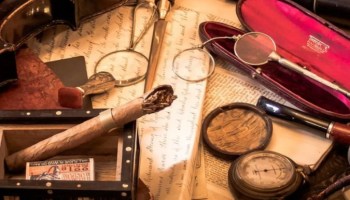
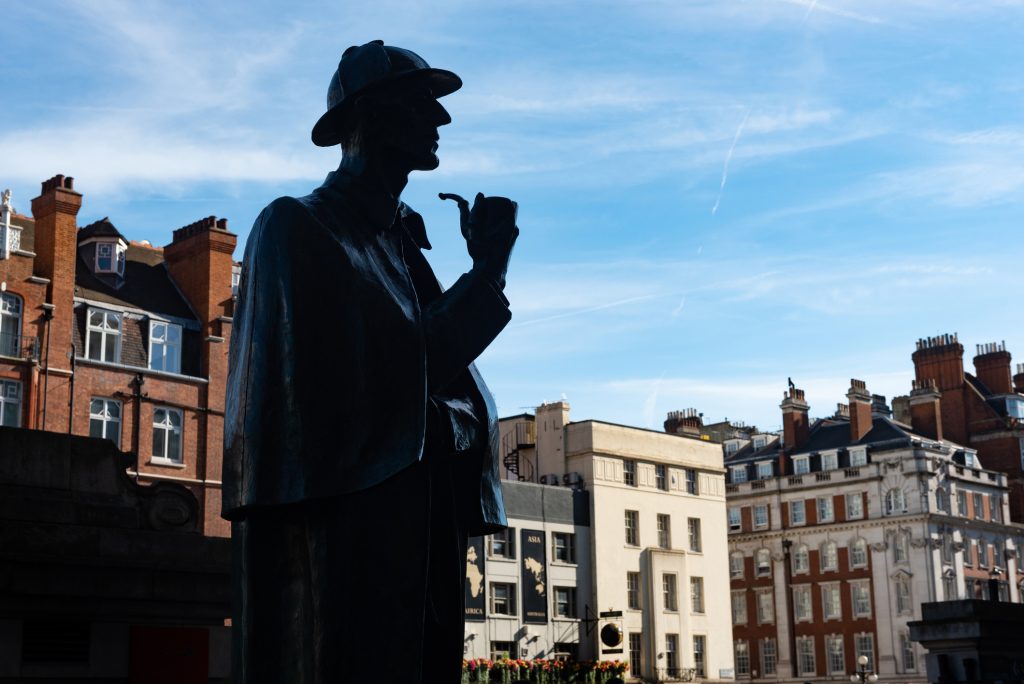
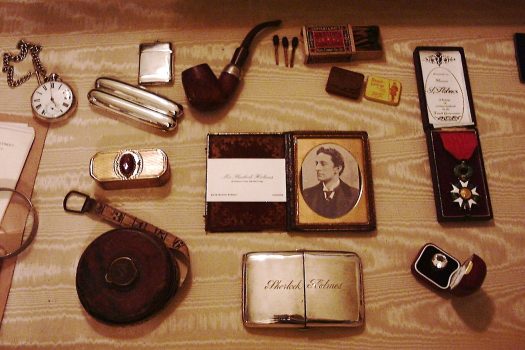
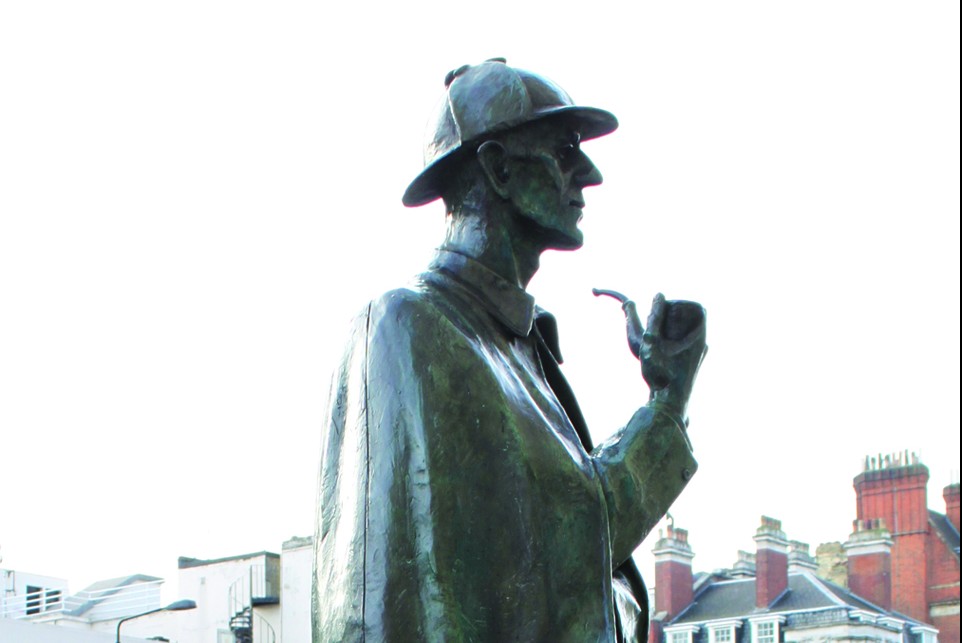
The famous aquiline profile, with his ever-present pipe between his teeth, greets those arriving at Baker Street station as an ornament adorning its walls. And already on the street, opposite the station entrance, stands a bronze Holmes, dressed in a cape and a tartan double-peaked cap (which, incidentally, is not mentioned at all in Doyle’s texts). In the Victorian era, the street ended at number 80, so the museum here is little more than a backdrop. This doesn’t stop visitors, young and old, from happily accepting the game and delightingly examining Holmes’s “personal effects,” taking photos with the costumed stationmaster, trying on a “Dierstalker Cap,” settling into an armchair by the fireplace, and meticulously choosing souvenirs in the small shop on the ground floor. More details: Sherlock Holmes Museum in London.
Shop
Opposite the house museum is an excellent souvenir shop, the Sherlock Holmes Memorabilia Co. Upon exiting, tourists are greeted by a colorful character, conspiratorially offering a tour of the authentic Baker Street. However, we’ve already mentioned that Sherlock fans are a lucrative target for the London tourism industry. Completely free, you can explore the stretch of Baker Street from 19 to 35 (now a shopping center), recognized as the “real” home of our hero, and the building opposite the shopping center, number 32, from which Colonel Moran aimed at the window of Holmes and Watson’s living room.
The Sherlock Holmes Pub
This building only became a pub in 1957. Before that, it housed the Northumberland Arms Hotel—the same one where Sir Henry Baskerville once stayed, and where Stapleton stole his shoe so his terrifying dog could sniff it. Today, the pub houses another reconstruction of the deductive virtuoso’s sitting room. Here, you can enjoy soup “from Mrs. Hudson” and have your photo taken next to the wax Holmes.
Westminster Library
This library houses the archives and books assembled in 1951 for a major exhibition dedicated to Sherlock Holmes. Members of the London Sherlock Holmes Society, who have a sort of headquarters here, base their adventure-intellectual game on the theory that Conan Doyle’s stories are not fiction, but rather accounts of real events. According to the club’s members, there are hundreds of Sherlockian locations in London—enthusiasts are constantly searching for new ones, consulting Dr. Watson’s notes.