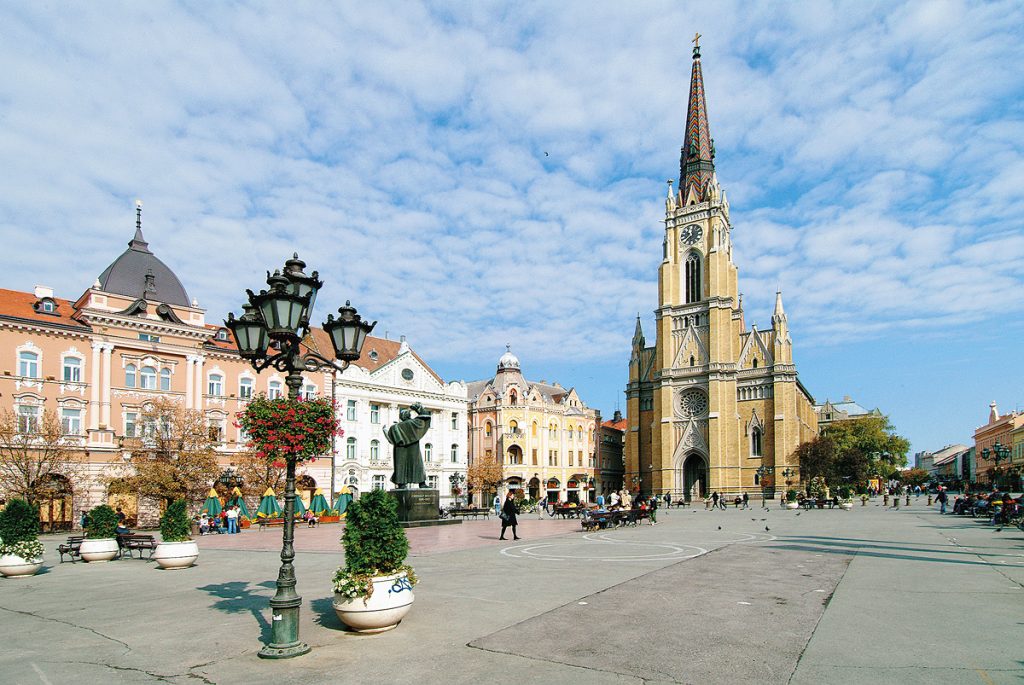
Novi Sad, the second largest city in Serbia, is located on the northern bank of the Danube. Founded by Orthodox Serbs in 1694, it had become a cultural center and a significant commercial and industrial hub by the 18th and 19th centuries, earning it the nickname “Serbian Athens.”
Entertainment and Attractions
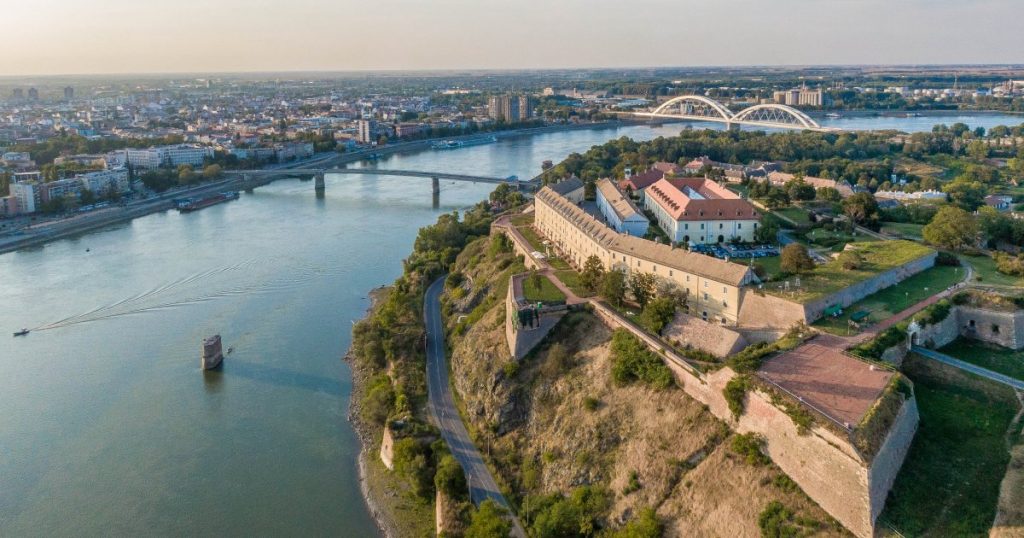
Petrovaradin Fortress, known as the Hungarian Gibraltar, is an imposing fortification, the construction of which began in 1692. After the Austrians captured Petrovaradin in 1687 during the Great Turkish War, they began constructing new fortifications on the site of the old ones. It was here that the decisive battle between Turkish and Austrian forces took place, resulting in an Austrian victory, ending the Turkish threat in Central Europe.
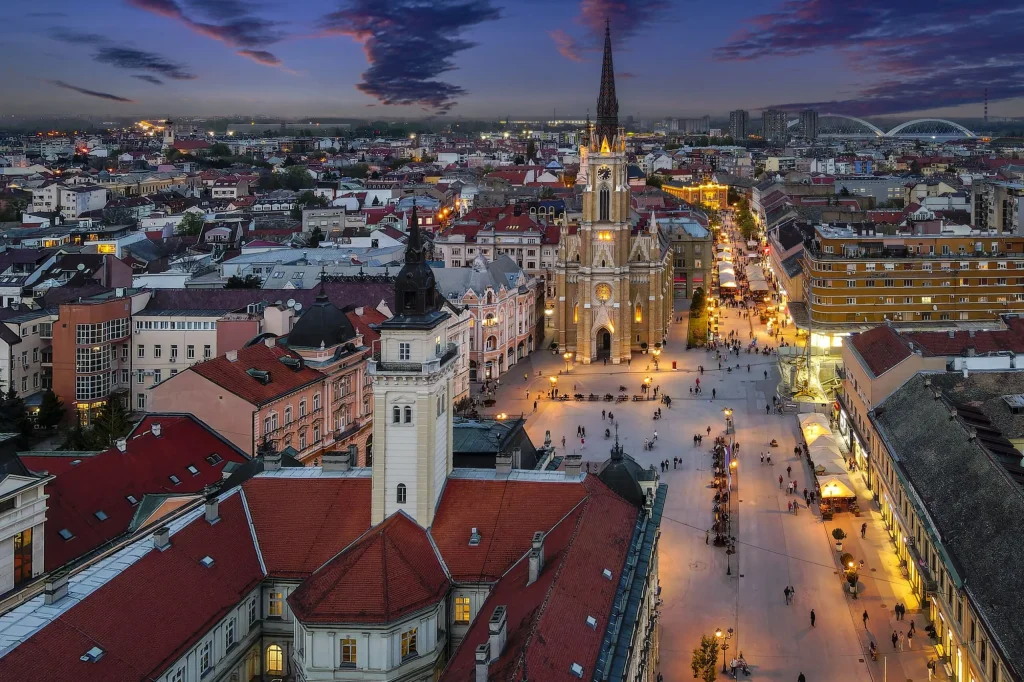
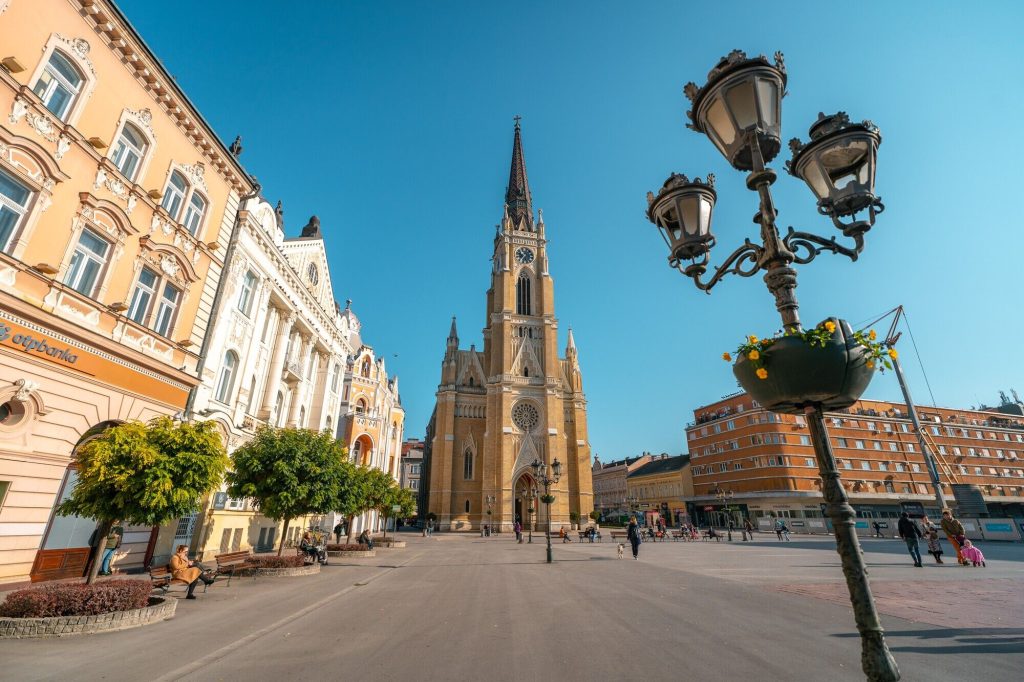
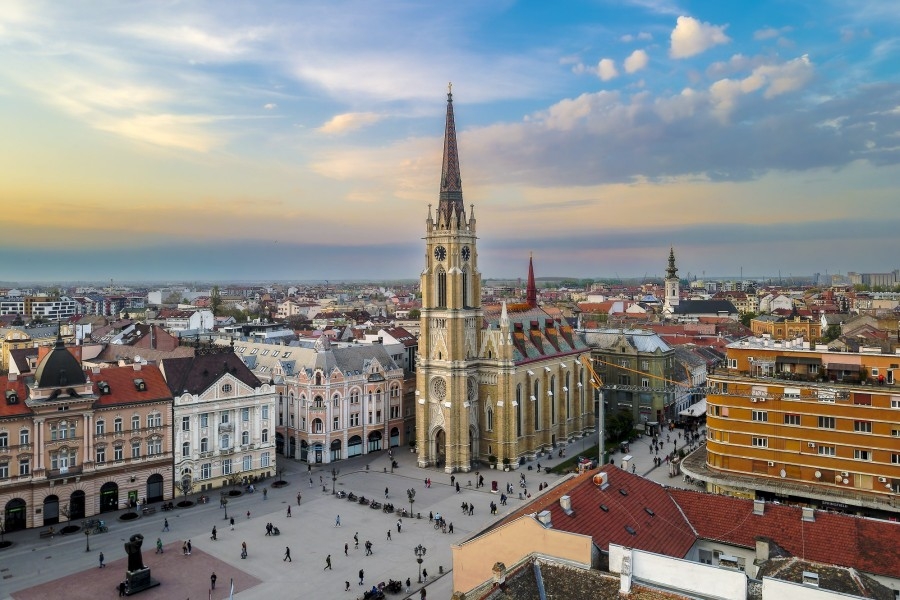
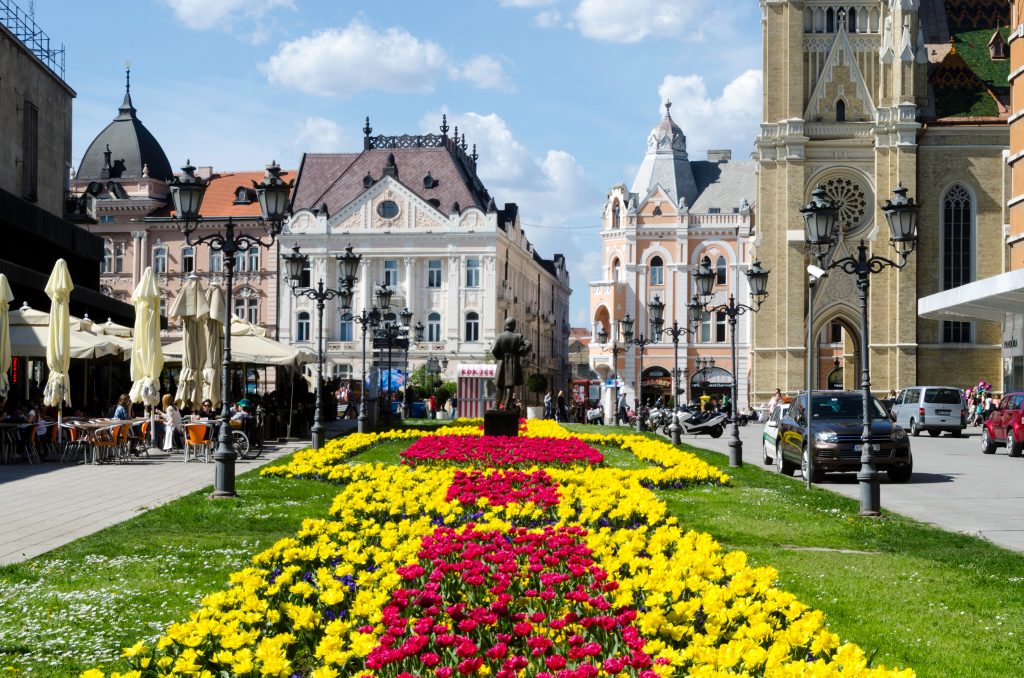
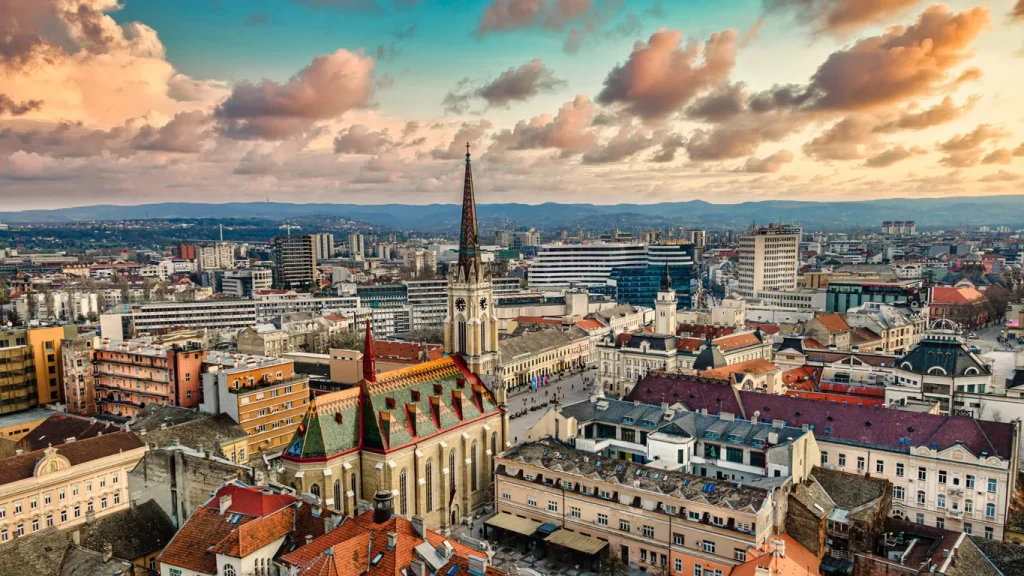
Novi Sad’s Old Town is home to a concentration of churches and temples built in the 18th and 19th centuries. Among them are Orthodox, Roman Catholic, Protestant, and Uniate churches, synagogues, and mosques. The city’s main Orthodox church is the Church of St. George the Great Martyr, built in 1742, while the Catholic Church of the Holy Virgin Mary, distinguished by its Gothic style, is one of the architectural landmarks of the city center.
Novi Sad’s historical heritage is preserved in its museums and galleries. Particularly noteworthy are the Museum of Vojvodina and the Brvnara Ethnic Complex, the Novi Sad City Museum in the fortress with its collection of international art, the Vojvodina Theatre Museum, the Museum of Contemporary Art, and the Živanović Cultural Museum.
To the south, Novi Sad is protected from the winds by the northern slopes of Fruška Gora, a nature reserve that protects the region’s unique flora and fauna. Fruška Gora retains 16 Serbian Orthodox monasteries, founded in the early 16th century. Some have been partially restored, while others remain in ruins.
Hidden among the densely forested slopes of Fruška Gora is the small Ledinačko Lake, formed as a result of NATO bombing. In 2009, the lake was drained, and quarrying continues despite environmental protests. Company representatives claim that after the permitted operating period expires, the quarry will be refilled with water, and the lake will become a tourist attraction for Fruška Gora National Park.